REVIEW · TAIPEI
4-Hour Morning Cycling City Tour (incl. breakfast)
Book on Viator →Operated by Taipei Bike Tours · Bookable on Viator
Taipei clicks into place fast. This 4-hour morning ride mixes markets and landmark stops with enough context to understand what you’re seeing. You start with breakfast, then pedal through the historic core and “feel” how Taipei works—faster than walking and more personal than a big bus tour.
I especially love the small-group size (max 9) and how it keeps the ride relaxed enough to actually ask questions. I also like that the tour includes a real traditional Taiwanese breakfast, not a generic hotel bite.
One thing to think about: this is a standard bike experience with no e-bikes, so you’ll want to be comfortable riding for about four hours.
In This Review
- Key Highlights You’ll Care About
- A Half-Day Taipei Orientation on Two Wheels
- Breakfast at the Morning Market: Fuel and Local Taste
- The Route: Temples, Markets, and Major Civic Landmarks
- Stop 1: Wenchang Temple Inside the Morning Market
- Stop 2: Shuanglian Market for a Real-World Snapshot
- Stop 3: The Reconstructed East Gate of the Capital Wall
- Stop 4: Chiang Kai-shek Memorial Hall and the Changing of the Guards
- Stop 5: Presidential Office Building (Built in the Colonial Japanese Era)
- Stop 6: Longshan Temple, Taipei’s Best-Known Temple Stop
- Stop 7: Dadaocheng Pier Plaza and the River Views
- Stop 8: Dihua Street, a 19th-Century Trading Hub
- Final Stop: Taipei Xia Hai City God Temple and Free Tea
- Bike Comfort, Pace, and What 4 Hours Actually Means
- Group Size and Your Guide’s Storytelling
- Price and Value: What You’re Really Paying For
- Who This Tour Fits Best (And Who Should Skip It)
- Quick Logistics: Meeting Point and Timing That Help
- Should You Book This Morning Cycling City Tour?
- FAQ
- What time does the Taipei bike tour start?
- What’s included in the tour price?
- Do they provide e-bikes?
- How big is the group?
- Where does the tour meet and end?
- Are admission fees included for the stops?
- Is the tour suitable for children?
Key Highlights You’ll Care About
- Small group (max 9): easier conversation and a tour pace that feels human
- Breakfast included: fuel at a traditional market stop, before you start cycling
- Big Taipei landmarks, explained: from the Chiang Kai-shek Memorial to government buildings
- Temple-hopping with purpose: see major sites like Longshan Temple and learn the story behind them
- Practical ride support: helmet, water, and a rain jacket included (rain is part of life)
- A strong orientation route: you cover a lot of “first-day” territory without burning your feet
A Half-Day Taipei Orientation on Two Wheels
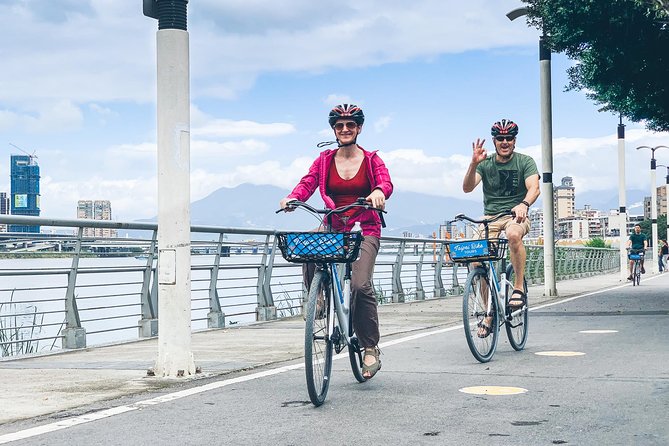
If this is your first morning in Taipei, a bike tour can be a cheat code. You cover more ground than walking—yet you still move slowly enough to notice details like temple styles, market rhythms, and old-city street layouts. And because the tour is structured as a sequence of key areas, it feels like a guided map you can later revisit on your own.
This tour runs about four hours and comes with the basics that make the morning smoother: bike, helmet, water, and a rain jacket. You’ll also get an English guide who connects what you’re passing with the bigger story of Taiwan’s past and present. For me, that combination matters: biking handles the movement, and the guide handles the meaning.
The route is also designed for comfort. Taipei is known for being fairly bike-friendly in many areas, and this ride is paced so you’re not racing through traffic. It’s an active half-day, not a casual stroller stroll, but the effort stays reasonable.
You can also read our reviews of more tours and experiences in Taipei.
Breakfast at the Morning Market: Fuel and Local Taste
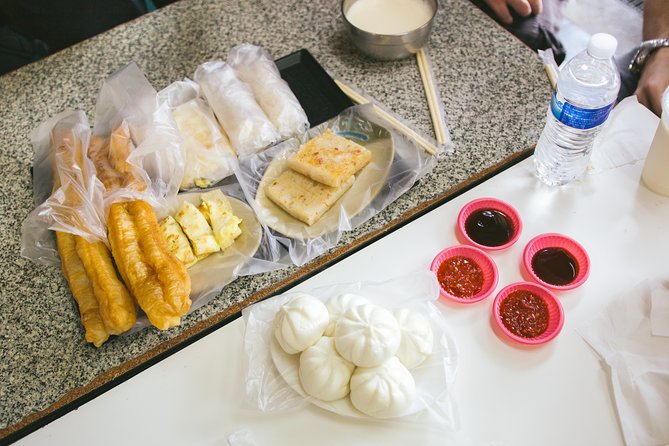
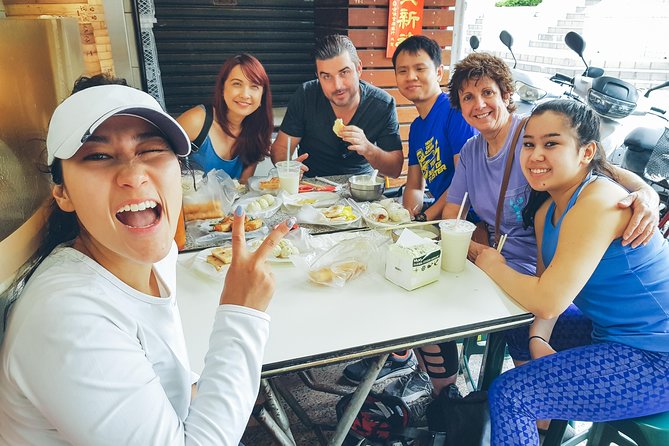
You start with breakfast, and it’s one of the best ways to begin a Taipei trip. Food here isn’t an afterthought; it’s part of daily life. Instead of eating first and asking questions later, you eat while you’re still in “learn-the-city” mode.
What I like is that the breakfast is described as traditional Taiwanese food, and it’s followed by coffee and/or tea as part of the included package. That means you can focus on the experience without doing mental math in your head about snacks, timing, and where to sit. You’re already set up for the ride.
Also, a market-area breakfast helps you visually connect the dots as you cycle. You’ll soon pass major temples and historic neighborhoods, and those areas often overlap with where people shop, pray, and gather. When you eat first, the rest of the route feels less like sightseeing and more like watching real routines.
The Route: Temples, Markets, and Major Civic Landmarks
The itinerary is built around a “layer-cake” of Taipei. You’ll see older religious sites, market streets, and then jump into the grand civic symbols that shape modern national identity. Here’s what each stop adds, and what to expect.
Stop 1: Wenchang Temple Inside the Morning Market
Wenchang Temple is a Daoist temple linked to culture and literature. One reason this stop works well on a morning ride is the setting: it’s inside the morning market area. You get two things at once—spiritual tradition and everyday commerce—before you move on to bigger sights.
The stop is short, about 10 minutes, and there’s no admission cost listed. That makes it an easy “anchor” point early on.
Stop 2: Shuanglian Market for a Real-World Snapshot
Shuanglian Market is the kind of place locals use for essentials. You’ll pass through a traditional street-market environment where people come for produce, meats, clothes, and other daily necessities. This isn’t a museum stop. It’s the working city.
The time is also about 10 minutes, and it stays informational rather than long-winded. It’s great if you want context fast—especially on day one.
Stop 3: The Reconstructed East Gate of the Capital Wall
Then you hit something more symbolic: the reconstructed east gate of the wall that once enclosed the capital city. Gates are powerful historical cues. They remind you that this urban core used to have clear boundaries—political, defensive, and administrative.
This is a short stop, but it helps you understand why the surrounding streets and neighborhoods developed the way they did. Even if you’re not a “history person,” gates make the story tangible.
Stop 4: Chiang Kai-shek Memorial Hall and the Changing of the Guards
At the Chiang Kai-shek Memorial Hall, you’ll get a big, dramatic landmark moment—plus the chance to watch the changing of the guards. This stop is listed for about 15 minutes, and admission is free.
There’s a practical upside here: you’ll likely see this as a lively public ceremony in the middle of a quiet morning ride. It also gives the tour a modern political chapter, right after the older street-and-temple stops.
Stop 5: Presidential Office Building (Built in the Colonial Japanese Era)
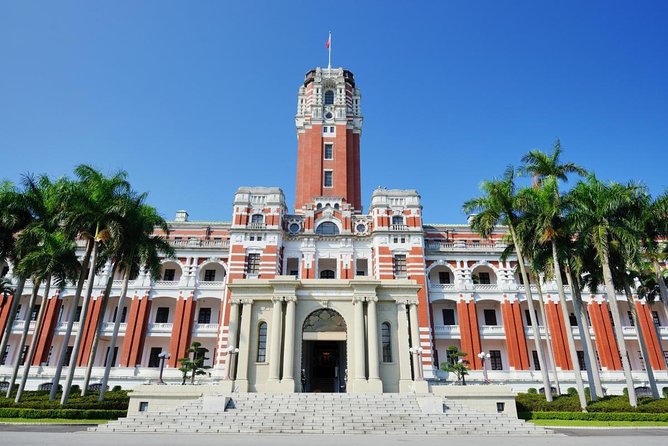
Next is the Presidential Office Building, described as being built by the colonial Japanese, and now serving as the office of Taiwan’s leader. This is one of those stops where architecture is the lesson. You’re not just looking at a building—you’re seeing how regimes leave fingerprints through materials and design.
Time here is about 10 minutes, with no admission cost listed. If you like “walk by and learn” history, this is a good fit.
Stop 6: Longshan Temple, Taipei’s Best-Known Temple Stop
Longshan Temple is arguably the star of Taipei’s temple scene, and it’s right on this route. The stop is around 10 minutes with free admission listed.
What makes Longshan special for a bike tour is timing and flow. You don’t get stuck wandering for too long. Instead, you get a concentrated feel for incense-and-prayer culture and the temple’s scale, then you’re moving again. That keeps energy up while still making the experience memorable.
Stop 7: Dadaocheng Pier Plaza and the River Views
Dadaocheng Pier Plaza is a visual break from the inland streets. It’s used primarily as a ferry port now, but it used to be the main shipping port of Taipei. You’ll also get views across the river toward New Taipei City, with the Yangming mountain range visible in the distance.
The stop is about 10 minutes. It’s short, but it matters because your brain gets a reset: you’re on a bike, in a dense city, and suddenly you get water, depth, and skyline.
Stop 8: Dihua Street, a 19th-Century Trading Hub
Dihua Street is described as a 19th-century riverside trading hub for herbs, medicines, dried goods, fabrics, teas, and more. This is where the tour connects the dots between what you ate at breakfast, what you saw in markets, and the kinds of goods that historically moved through the city.
Expect this to feel like a “trade routes meets storefronts” moment. Time is about 10 minutes, free to enter as listed.
Final Stop: Taipei Xia Hai City God Temple and Free Tea
The last major stop is Taipei Xia Hai City God Temple, a festive temple often visited by people seeking improvements in love life. You’ll also have a tea moment here—free tea is mentioned.
Time is about 10 minutes, free admission listed. This ending feels friendly and human because it’s not just stone and ceremony; it’s also warmth, conversation, and a quick stop to slow down before the ride wraps back at the meeting point.
Bike Comfort, Pace, and What 4 Hours Actually Means
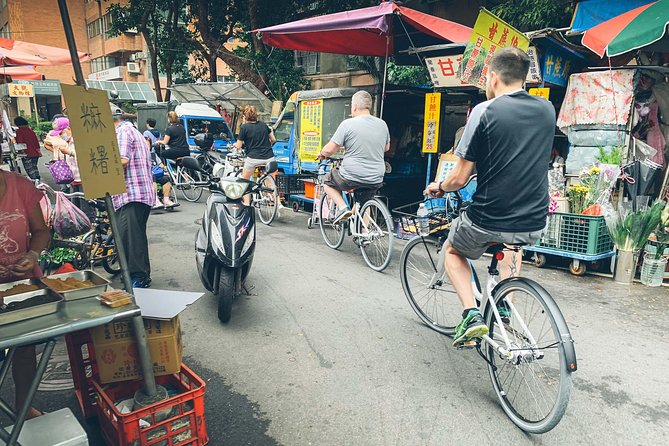
This tour is designed to be rideable for many people, but you still need to pedal. The tour requires a minimum height of 150cm, and it notes that children under 12 aren’t part of the experience. So think of this as an adult-and-teen leaning activity.
The bike itself is included, along with a helmet and water. There’s also a rain jacket provided, which is a big deal because Taipei weather can be unpredictable. Even when the day looks fine, the morning can still change.
From the general feel of the ride: it’s described as relatively easy, with a manageable pace and lots of stops. Plus, the city is often flat in the areas this tour covers, so you’re not stuck in a constant uphill grind.
That said, it’s four hours of riding time plus stops. If you haven’t ridden a bike in a while, plan for a little stiffness the next day. The upside is that the tour keeps you moving through “interesting stops,” so you’re never just suffering through empty streets.
Group Size and Your Guide’s Storytelling
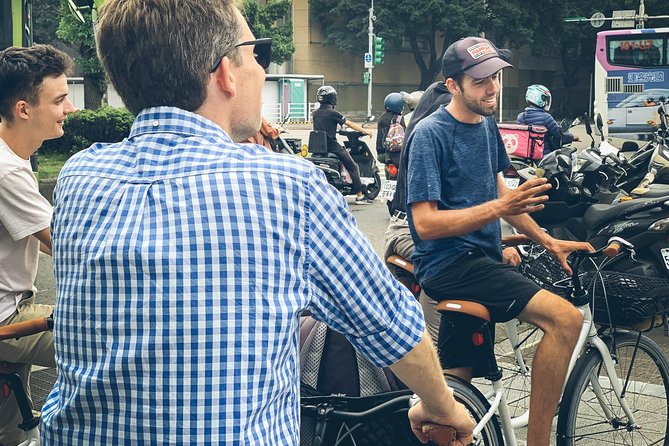
The tour caps at 9 travelers, and that’s a big quality factor. On a group ride, this matters because it affects how long you spend waiting. It also affects how well you can hear explanations when you stop near busy areas.
The guide is central to the value. You’re not only seeing locations—you’re getting the story behind them: Taiwan’s complex past, how different eras shaped the built environment, and how daily life connects to tradition. Guides named in the experience range include Mike, Tony, Priscilla, Rita, Edward, and Edwin, and they’re repeatedly praised for mixing history with real-world context.
There’s also a practical social bonus: some guides help with photos during stops. That’s useful because you’ll be on a bike most of the time, and you won’t want to fight traffic angles while holding handlebars.
Overall, the guide’s job is to make the route “make sense.” You’ll likely end the ride with better instincts for where to go next, and why certain neighborhoods feel the way they do.
Price and Value: What You’re Really Paying For
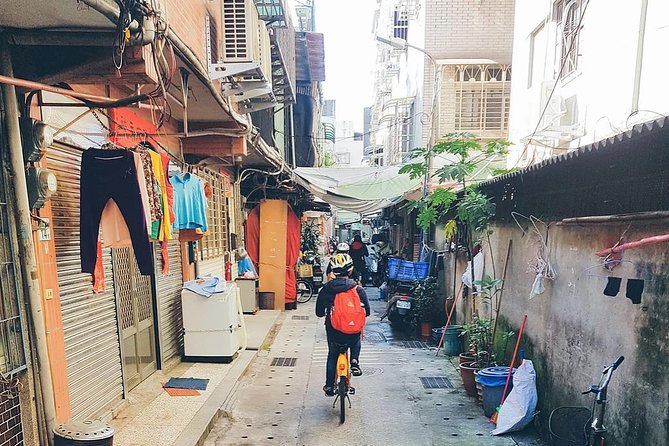
At $83 per person, you’re paying for several things at once: breakfast, an English guide, bike use, helmet, water, rain jacket, and coffee and/or tea. That’s a lot bundled into a single morning.
If you try to recreate this on your own, the cost splits fast. You’d need a bike rental, you’d need a plan for breakfast in the right areas, and you’d still be figuring out what landmarks mean and how they connect. A guided route reduces that friction. You’re not paying only for transportation—you’re paying for direction and interpretation.
The best value angle is how much you cover without burning your body or your morning. A four-hour bike tour hits a sweet spot: long enough to see major sites, short enough to still enjoy the rest of the day.
The only time the price feels steep is if you already know Taipei well and you don’t care about history context. If you want a guided orientation, though, this is a solid use of a first-day time block.
Who This Tour Fits Best (And Who Should Skip It)
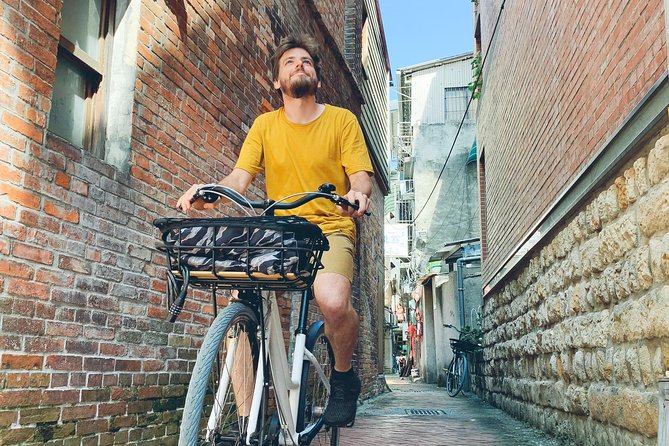
This is best for you if:
- You’re on your first day in Taipei and want an orientation you can build on later.
- You like a mix of food, temples, and big civic landmarks rather than only one category.
- You can ride a standard bike and are fine with a moderate effort for around four hours.
- You want a smaller group experience with time for questions and a smoother pace.
It may not be ideal if:
- You want an e-bike or you’re not comfortable riding without electric assist.
- You’re traveling with someone who doesn’t meet the height requirement (150cm) or who is under 12.
- You prefer long, unhurried wandering with no “stop and go” structure.
If you’re coming from a long layover, it can also be a strong choice because it’s concentrated and doesn’t require you to commit to a full day out of the airport rhythm.
Quick Logistics: Meeting Point and Timing That Help
This tour starts at 9:00 am and runs about four hours. It returns you to the meeting point, so you’re not hunting for a new pickup location later.
The meeting point is listed as No. 9, Lane 70, Section 2, Chongqing N Rd, Datong District, Taipei City, Taiwan 103, and it’s described as near public transportation. You’ll also receive a mobile ticket, and confirmation is provided at booking time.
Weather matters. The experience requires good weather, and the rain plan is covered with a jacket—still, if conditions are poor, the tour may be rescheduled or refunded.
Should You Book This Morning Cycling City Tour?
If you want the fastest path to feeling oriented in Taipei, I think this is a smart booking. The included breakfast makes the morning start memorable, and the route hits key anchors—markets, temples, landmark buildings, and waterfront views—without turning into a marathon.
Book it especially if you like your sightseeing with context: not just seeing Chiang Kai-shek Memorial Hall, but understanding why the building and ceremony matter. And if you’re the type who loves getting food recommendations and a sense of where to go next, this tour format is a good match.
The main reason to pause is the lack of e-bikes. If standard cycling isn’t your thing, look for an alternate option. But if you can ride comfortably and want a compact, high-information morning, this is one of the better ways to spend your first day in Taipei.
FAQ
What time does the Taipei bike tour start?
It starts at 9:00 am and runs for about 4 hours (approx.).
What’s included in the tour price?
The tour includes traditional Taiwanese food, bicycle use, water, rain jacket, helmet, an English guide, and coffee and/or tea.
Do they provide e-bikes?
No. E-bikes are not included.
How big is the group?
The tour is limited to a maximum of 9 travelers.
Where does the tour meet and end?
It meets at No. 9, Lane 70, Section 2, Chongqing N Rd, Datong District, Taipei City and ends back at the same meeting point.
Are admission fees included for the stops?
The itinerary lists free admission for each stop, including Wenchang Temple, Chiang Kai-shek Memorial Hall, and Longshan Temple.
Is the tour suitable for children?
It requires a minimum height of 150cm and notes no children under age 12.