REVIEW · SHIGA PREFECTURE
Japan’s Rural Life & Nature: Private Half Day Cycling Near Kyoto
Book on Viator →Operated by Biwako Backroads - Rural Japan Tours · Bookable on Viator
This is the kind of day that feels like you slipped past the crowds. You start with a short shinkansen ride to Maibara Station, then roll through farmland, villages, and temples on a beginner-friendly 13km loop with your English-speaking guide, plus coffee/tea, water, and snacks along the way. What I especially like is how the stops are small and specific (Saienji, Iwaya Zenkodo, and a community spring), so you see how rural life connects to mountains and water. One heads-up: there’s no lunch included, and the tour depends on good weather, so you’ll want to plan your timing and snacks accordingly.
What makes this work well from a value point of view is that it’s a private half-day format with bike use and cultural context built into the route. In plain terms: you don’t just pedal—you get stories that help the places make sense, and you can ask questions without feeling rushed. A small drawback to consider is that you’ll be on a bike for a short but steady stretch, and the activity asks for moderate fitness.
If you’re coming from Kyoto, the trip is set up to be practical: you hop the bullet train to Maibara, meet your guide, and then ride rural Shiga without spending the whole day in transit. And if you want more time at the water or a castle view, the plan even allows optional extra time around Lake Biwa or Hikone Castle.
In This Review
- Quick Key Points Before You Book
- From Kyoto to Maibara: The Shinkansen Jump That Saves Your Day
- The 13km Ride: Short Enough to Enjoy, Structured Enough to Learn
- Maibara Station to Farmland: How Rural Shiga Is Shaped
- Saienji: A Chinese-Influenced Zen Stop and a Village Pattern You’ll Recognize
- Iwaya Zenkodo Temple: A Short Mountain Climb with Cave Stories
- A Community Spring Near Mt. Ibuki and Lake Biwa: See It, Don’t Drink It
- The Farm Area That Used to Be a Lake: Why the Rice Fields Matter
- Lake Biwa or Hikone Castle: A Smart Optional Extra
- Price and Value: What You’re Paying For
- Guide Quality: Why Tako-san’s Approach Works
- Practical Tips So You Enjoy Every Kilometer
- Who Should Book This Cycling Tour
- Should You Book Biwako Backroads Rural Cycling Near Kyoto?
- FAQ
- How long is the cycling tour?
- What distance will I cycle?
- Where do I meet the guide?
- Is this a private tour?
- Is the ride suitable for beginners?
- What stops will we visit?
- What’s included in the price?
- Is lunch included?
- What should I know about the natural spring stop?
- What happens if weather is bad?
Quick Key Points Before You Book
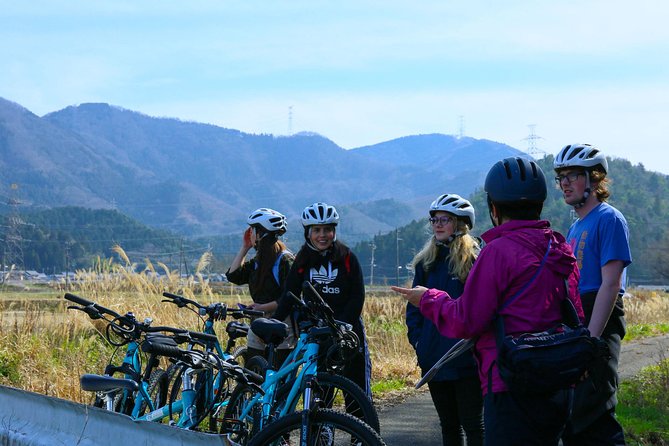
- Private half-day cycling (you and your group only) with a dedicated English-speaking guide
- Beginner-friendly 13km route with multiple short stops that break up the ride
- Real rural stopovers: Saienji village/temple area, Iwaya Zenkodo Temple, a community spring, and working farmland
- Included refreshment breaks: coffee/tea, water, and snacks (no lunch, though)
- Flexible add-on time for Lake Biwa or Hikone Castle if you want it
- Weather-dependent experience, so bring a rain layer mindset
From Kyoto to Maibara: The Shinkansen Jump That Saves Your Day
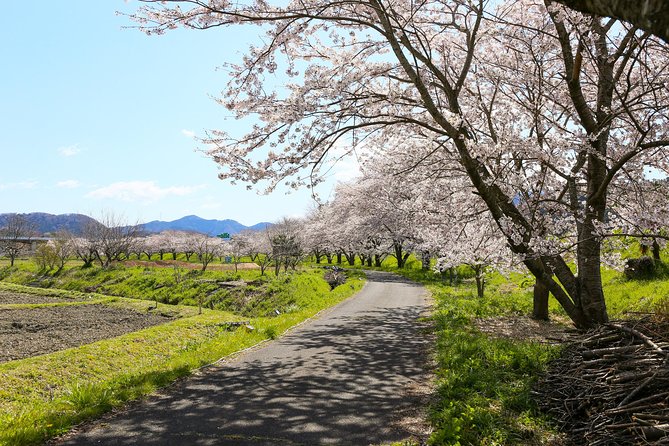
The best part of this outing is how efficiently it gets you out of the city. Instead of spending hours wrestling local connections, the plan starts with a short shinkansen ride to Maibara Station, where your bike day begins. That matters because it turns “half a day” into something you actually feel—time for moving, looking, and stopping, not just commuting.
Once you’re at Maibara, the tour is organized so you can get your bearings fast: you meet at the station, then head straight into the rural loop. Maibara is also a smart jumping-off point for Shiga Prefecture—close enough to Kyoto to feel easy, but far enough that rice fields, small roads, and village temples show up quickly.
If you’re worried about planning, you’re not left alone with a puzzle. You’ll receive a confirmation ahead of time (subject to availability), and the tour uses a mobile ticket.
The 13km Ride: Short Enough to Enjoy, Structured Enough to Learn
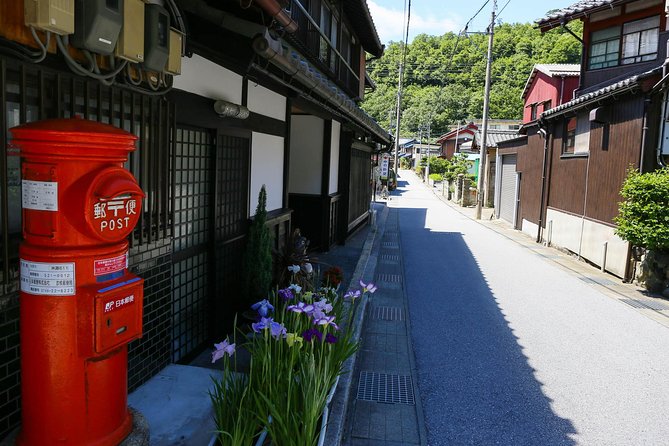
The cycling itself is built for people who don’t want an all-day ordeal. You’ll ride about 9 miles / 13km, and the pace is described as beginner-friendly. In practical terms, this is the right distance for:
- light sightseeing without feeling like you’re constantly “on”
- families who want activity but not a marathon
- travelers who want rural scenery without committing to a full biking day
You also have the advantage of guidance. Your route includes several stops, so you aren’t forced to stare at the road the whole time. Each stop has a reason—temples, a natural spring, and agricultural areas—so you know why you’re stopping and what you’re looking at.
Bikes are provided, and for a private tour, you avoid that common travel headache: you don’t spend your energy figuring out logistics for equipment or a meetup with the wrong group. Everything is geared toward a smooth half-day flow.
One consideration: the tour calls for moderate physical fitness. That doesn’t mean it’s hard-core. It just means you shouldn’t show up expecting an extremely relaxed, barely-moving experience.
Maibara Station to Farmland: How Rural Shiga Is Shaped
The tour starts and ends at Maibara Station, and the route follows farming areas and villages that were merged into Maibara for governing purposes in recent decades. That’s a small detail, but it changes how you see the ride.
When you cycle through the outskirts, you’re not only seeing “pretty countryside.” You’re watching how administrative lines and daily life overlap—how village areas become part of a larger town, but still keep their farming rhythms. It’s one of those things that only becomes obvious when someone explains it while you’re riding.
In a city like Kyoto, it’s easy to think of Japan as one big museum. This ride flips that. It shows Japan as a living place where land use, water, and community spaces matter every day.
Saienji: A Chinese-Influenced Zen Stop and a Village Pattern You’ll Recognize
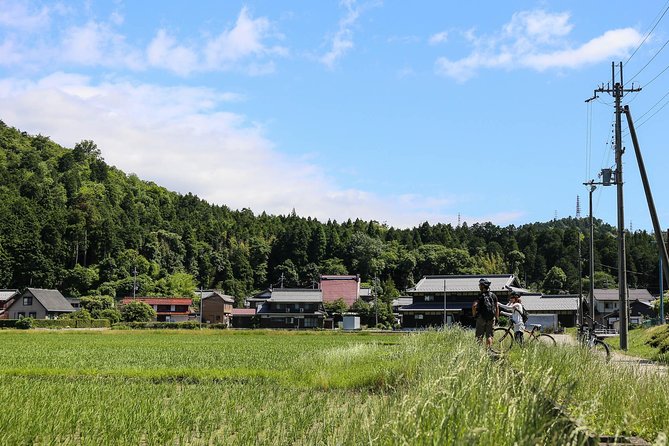
Saienji is one of the brief stops, but it’s also one of the most “local-life” feeling parts of the tour. This area includes a Chinese-influenced Zen temple, and the same name is used for the surrounding small village community.
Here’s why I like this kind of stop: it’s not just about the building. You get a look at how temple areas function as community anchors. Even if you only spend a short time, the village layout helps you understand what “rural” really means—access roads, farm-adjacent homes, and the way one religious site can sit at the center of daily movement.
The stop is short (about 15 minutes), which is perfect. It keeps the ride moving while still giving you a meaningful cultural pause.
Iwaya Zenkodo Temple: A Short Mountain Climb with Cave Stories
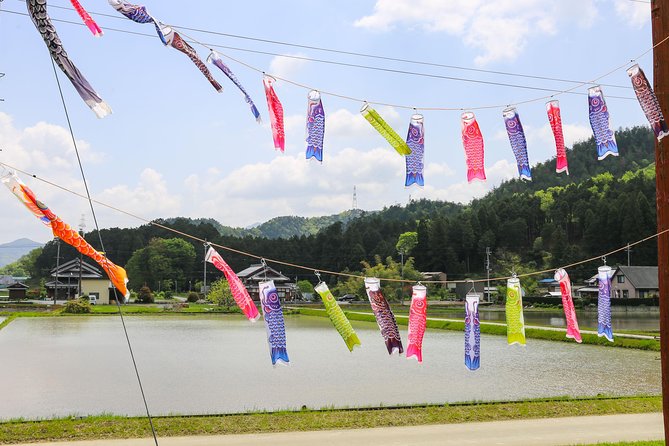
Then comes the Iwaya Zenkodo Temple stop. You’ll head to a small 120-meter-high mountain for a short hike and refreshments. The temple is built into the side of the mountain—exactly the kind of placement that makes you pause and look twice when you’re cycling past everyday buildings.
This stop also includes a few specifics that help it stick in your memory:
- an Inari Shrine on site
- an old manmade cave with a unique history
Even without going deep into details, you can see why a guide is useful here. When a temple is literally attached to the rock, you need context to understand how and why it was built there—and that context is the point of the stop.
Time-wise, plan on about 30 minutes. It’s long enough for a quick climb and a look around, but short enough that it won’t derail the rest of your ride.
A Community Spring Near Mt. Ibuki and Lake Biwa: See It, Don’t Drink It
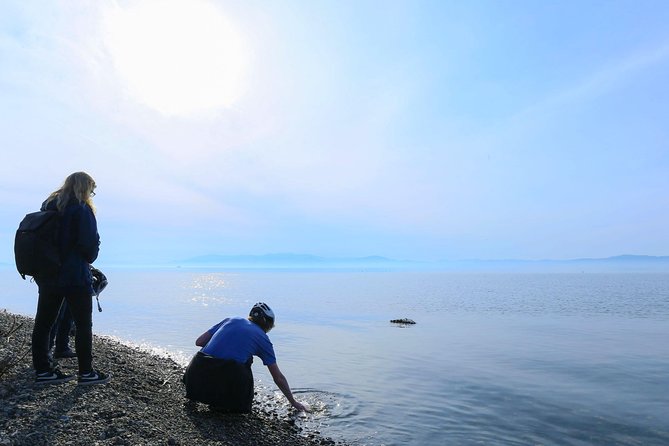
One of the most interesting stops is the natural spring well locals share. It’s part of an underground waterway system connected between Mt. Ibuki and Lake Biwa. The tour makes one thing clear: this water is untreated, so it’s not for drinking. Locals use it for washing and daily tasks.
That’s a small detail, but it’s also the difference between “tourist photo” and learning how places actually function. You’re seeing infrastructure shaped by geography—mountain water finds its way down underground, and the community uses it.
The stop is brief (about 10 minutes), and it’s also free admission as part of the tour plan. Think of it as a quick sensory break: cooler air, mountain water context, and a short cultural stop that doesn’t eat your ride time.
The Farm Area That Used to Be a Lake: Why the Rice Fields Matter
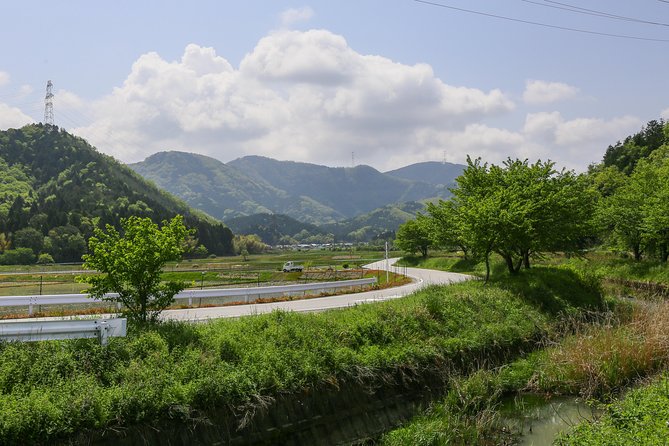
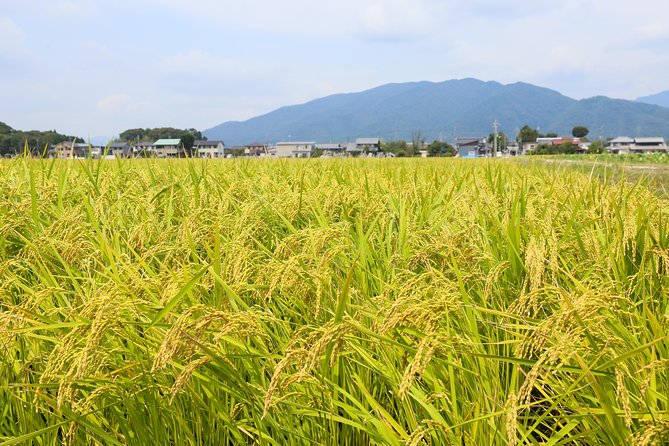
The last part of the route focuses on agricultural scenery. The tour explains that, before the war, this farm area was actually a smaller inland lake near Lake Biwa. After the war, it was drained and converted to farm land to provide much-needed rice for the recovering country.
This is the kind of history that doesn’t feel like trivia. It gives your eye something to hold onto while you’re passing rice fields. You can look at the shapes of the land and understand why the area looks the way it does—leveled fields, water management, and the practical logic of farming near a major lake system.
And because this segment is on bike, you’re not stuck with a viewpoint from one spot. You get to move along the edges of the agricultural landscape, letting it unfold gradually.
Lake Biwa or Hikone Castle: A Smart Optional Extra
If you want to stretch the day, the plan allows you to spend more time at Lake Biwa or Hikone Castle. That flexibility is a real advantage for two kinds of travelers:
- those who come for scenery and want a longer water or castle pause
- those who plan a Kyoto-focused itinerary but want one different “anchor” for the day outside city sights
You don’t have to turn your biking tour into a full second tour. It’s more like adding a bonus stop if the timing and weather cooperate.
If you’re the type who likes to see how a landscape connects to culture, Lake Biwa is an easy extension. If you want a stronger landmark feel, Hikone Castle offers that shift.
Price and Value: What You’re Paying For
The price is $255 for this private half-day cycling experience, about 3 to 4 hours total. On paper, that can sound steep compared with bus tours.
Here’s the value logic that makes it more reasonable:
- you’re paying for privacy (your group only)
- you get a professional guide and English interpretation
- bike use is included
- refreshments are included: coffee and/or tea, plus water and snacks
In other words, you’re not paying just for a route. You’re paying for someone to set it up, lead it, and explain what you’re seeing—especially helpful at places like Iwaya Zenkodo Temple and the spring water stop, where context turns sightseeing into understanding.
Also, the tour notes group discounts are available. So if you’re traveling with friends or family and want a shared cost, it can feel much more like a “worth it” day than an expensive niche activity.
Guide Quality: Why Tako-san’s Approach Works
The tour’s guides are a big part of the satisfaction. One standout detail from guest experiences: Tako-san is fluent in English (she lived in the States for a while), and she brings a handy binder with local and historical context.
That’s exactly the kind of preparedness that makes a short tour feel longer in a good way. It means you’re not guessing what you’re looking at, and it means you can ask questions without the conversation freezing up.
You also get that human touch—one review described an interaction with an older man who greeted the guide and spent time with the group. That kind of moment is why private, local-led tours can feel more meaningful than just following a printed checklist.
Practical Tips So You Enjoy Every Kilometer
This is a rural ride. Keep it simple and you’ll be fine.
- Bring a rain layer. The experience depends on good weather, and rain changes how comfortable cycling is.
- Expect no lunch. The tour includes coffee/tea and snacks, but it specifically doesn’t include lunch, so plan a meal before or after.
- Wear comfortable shoes and dress for temperature shifts. This is outdoors for several hours, and the stops include short walking and a short hike.
- Take advantage of photo stops. The route has multiple stops, so you’ll have chances to pull over and look closely instead of trying to photograph while moving.
- If you’re debating Lake Biwa vs. Hikone Castle, decide based on your “mood.” Water time feels restorative; castle time feels more landmark-focused.
Who Should Book This Cycling Tour
I think this tour is a great fit for you if:
- you want a break from Kyoto city sights
- you like learning while walking through real places, not only big attractions
- you’d enjoy villages, temples, farming scenery, and water-linked geography
- you prefer a private experience with an English-speaking guide
It’s also smart for families who can handle a moderate ride and short walking segments, since the route is described as beginner-friendly.
If you’re looking for a fast, action-packed biking challenge, this probably won’t scratch that itch. The value here is scenery plus explanation, not athletic intensity.
Should You Book Biwako Backroads Rural Cycling Near Kyoto?
If your goal is to see Shiga Prefecture beyond the usual tourist map, I’d book it. The short shinkansen access, the beginner-friendly 13km route, the included refreshments, and the mix of temples, a community spring, and farmland history make it feel like a complete half-day—even though it’s only 3 to 4 hours.
The main reason not to book is simple: if you’re very sensitive to weather changes or you need a guaranteed meal stop, you’ll want to plan around the no-lunch reality and the good-weather requirement.
FAQ
How long is the cycling tour?
It runs about 3 to 4 hours total.
What distance will I cycle?
The course is about 13km (roughly 9 miles).
Where do I meet the guide?
The tour starts and ends at Maibara Station in Shiga Prefecture.
Is this a private tour?
Yes. It’s private, and only your group participates.
Is the ride suitable for beginners?
The ride is described as beginner-friendly, with a 13km route and an English-speaking guide.
What stops will we visit?
You’ll visit Maibara, Saienji, Iwaya Zenkodo Temple, a natural spring well, and a farming area. Optional extra time can be added for Lake Biwa or Hikone Castle.
What’s included in the price?
A professional guide, bicycle use, and coffee and/or tea are included.
Is lunch included?
No, lunch is not included.
What should I know about the natural spring stop?
The water is untreated and not for drinking. Locals use it for things like washing.
What happens if weather is bad?
The experience requires good weather. If it’s canceled due to poor weather, you’ll be offered a different date or a full refund.