REVIEW · MANALI
Multi-Day Trip Himalayan Cycling Expedition from Manali to Leh
Book on Viator →Operated by Unventured Expeditions Pvt Ltd · Bookable on Viator
One long road trip starts here, then turns into altitude training. This Manali to Leh cycling expedition lines up daily rides with big-pass days, plus meals and a support vehicle, so you can focus on pedaling and breathing at altitude.
What I like most is that it’s not just pretty scenery on a map: you ride real routes, hit famous passes like Rohtang and Khardung La, and the plan builds in rest and recovery where it can.
Second, I love the balance between effort and support. You get bikes and helmets included, meals/snacks are handled, and the group stays small (max 12), which makes it easier for your guide to keep everyone moving safely and calmly.
One drawback to consider up front: daily distances vary and some days are extremely challenging, with multiple high passes over 4,800m, so this is not a casual weekend pedal.
In This Review
- Quick take: key details that matter
- Price and value: what $2,400 actually buys you
- Bikes, helmets, and the support vehicle you’ll be glad exists
- The itinerary: how each day earns its altitude badge
- Day 1: Delhi to Manali by bus (13–14 hours)
- Day 2: Manali check-in and bike assembly (easy start)
- Day 3: Marhi (3,000m) and the valley views
- Day 4: Rohtang Pass (3,978m) and the snow-wall vibe
- Day 5: Jispa (3,200m) and a calmer village pause
- Day 6: Zingzingbar and camping above 4,000m
- Day 7: Himachal to Jammu & Kashmir via Bara-lacha La (4,870m)
- Day 8: The double-pass grind (Nakee-la 4,950m and Lachalung-la 5,060m)
- Day 9: Moore Planes and the feeling of nothingness
- Day 10: Taglang-la (5,359m), second highest motorable pass in India
- Day 11: Ladakh towns and Buddhist-influenced life
- Day 12: Khardung La (5,602m) and a big 90 km day
- Days 13–15: Leisurely drive into Leh
- Accommodation: tents and twin sharing, with the altitude in mind
- Meals, snacks, and the water approach that helps you stay consistent
- Fitness and altitude reality check: who should do this
- What can go wrong (and how the plan helps)
- Should you book the Manali to Leh cycling expedition?
- FAQ
- Where does the tour start and what time is pickup or meeting?
- How long is the trip?
- What is the biggest group size?
- Are bikes and helmets included?
- What meals and drinks are included?
- Do you use bottled water?
- Is there a vegetarian option?
- What’s the minimum age?
- Is the experience refundable?
Quick take: key details that matter
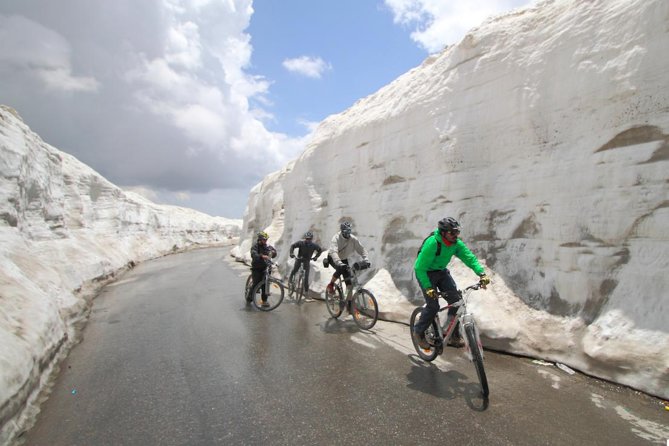
- Big passes with specific altitudes like Rohtang (3,978m), Nakee-la (4,950m), Lachalung-la (5,060m), Taglang-la (5,359m), and Khardung La (5,602m)
- Meals, snacks, and filtered drinking water included, with coffee/tea along the way
- A support vehicle runs with you through the journey for safety and practicality
- Small groups up to 12 riders so you get personal attention
- Mix of tents and hotels/homestays on twin sharing, depending on the day
Price and value: what $2,400 actually buys you
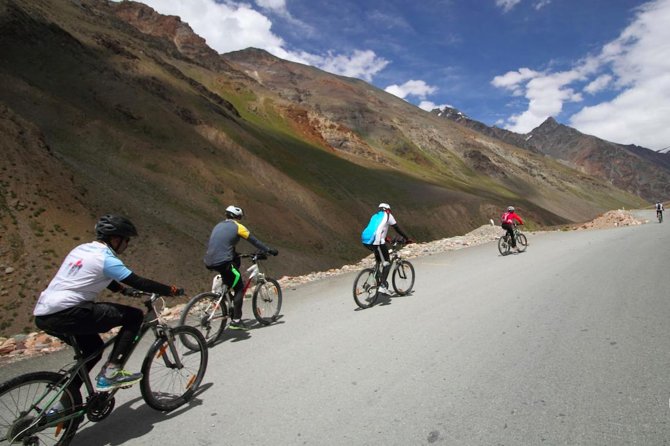
At $2,400 per person for about 15 days, this is firmly in “serious expedition” territory. The good news is that you’re not paying just for bikes and views. You’re paying for the whole machine: guide, support vehicle, daily meals, and the logistics that make high-altitude cycling possible along a remote corridor.
Here’s how the value stacks up. You’re getting bicycle + helmet, full board (breakfast/lunch/dinner) plus snacks and drinking water, and the day-by-day routing support of a professional team. That matters because in places like this, the cost of doing it on your own is not only money. It’s time, risk, and the headache of coordinating transportation, food, and contingency plans.
Also, the tour is designed around altitude with a realistic rhythm. The daily ride distance is usually in a 40 to 80 km band, but the difficulty varies from manageable to extremely challenging. When you’re paying for something this demanding, you want it to be matched by support, not just a route description.
Bikes, helmets, and the support vehicle you’ll be glad exists
The tour includes use of a bicycle and use of a helmet. That’s a big deal for travelers who don’t want to source and pack gear before they ever reach Manali. It also means the bikes and helmets are part of the trip’s planning, not an afterthought.
Then there’s the support vehicle. You’ll have a vehicle with a driver on hand throughout the journey. In practical terms, it gives your day some structure: if the weather shifts, roads slow down, or a rider needs help managing the day’s effort, the team isn’t improvising. The tour also uses a small group size (maximum 12), which helps the guide handle pace and regrouping without chaos.
One more practical angle: the tour avoids bottled water and instead provides filtered water. That’s good for the environment, and it also cuts down on plastic clutter in places where you really don’t want extra waste.
The itinerary: how each day earns its altitude badge
This trip has two big phases: the road approach from Manali, then the high-pass climb toward Leh, followed by easier driving days into Leh.
Day 1: Delhi to Manali by bus (13–14 hours)
Your day begins before you even pedal. Participants are expected to arrive in Delhi by 3:00 pm, then board a bus for the 13–14 hour drive to Manali. This is one of those days where you do the heavy lifting without a calorie burn calculator. Plan for it like a travel day: eat, hydrate, and try to sleep in chunks.
Why it matters: starting well-rested makes altitude cycling safer. It also means you’ll be ready to assemble and ride on Day 2 without feeling like a zombie.
Day 2: Manali check-in and bike assembly (easy start)
Day 2 is about getting set. You arrive in Manali, check in to your hotel, and after breakfast you inspect and assemble your cycles. Then there’s a short ride and time to rest before the expedition begins the next day.
This is a smart transition. You get a chance to feel how the bike handles on local terrain without committing to the harder mountain days. If you’ve never ridden with high-altitude gear before, this is where you notice fit and comfort before things get serious.
Day 3: Marhi (3,000m) and the valley views
You cycle 36 km through sparse alpine vegetation as you gradually ascend. Along the way, you can look back toward the Manali valley below as you approach Marhi (3,000m), a small settlement on the route toward Rohtang La.
Why it’s a good setup: it’s not a shock day. It’s a day for warming up your lungs and learning your pace on climbing roads.
Day 4: Rohtang Pass (3,978m) and the snow-wall vibe
Day 4 is 50 km and includes the famous Rohtang Pass at 3,978m. The day’s description focuses on riding through walls of snow as you cross this dramatic pass.
What to be ready for: high passes can feel slower and harder than the numbers suggest. Even if your legs are okay, the air can make every effort feel heavier.
Day 5: Jispa (3,200m) and a calmer village pause
You cycle 58 km toward Jispa, a small village around 3,200m with only a few hundred households. It’s a known stopping point for mountaineers and adventure tourists along this corridor.
This is one of the “reset” days in the middle. You’ll still be riding, but the setting is quieter than the pass crossings. Expect that day’s pace to feel more human after the higher, sharper climbs.
Day 6: Zingzingbar and camping above 4,000m
Day 6 is 32 km, and you camp at over 4,000 meters at Zingzingbar. This area is described as a basic road-works camp, so don’t expect it to feel like a resort. The point is the altitude and the progress.
This is also when “camping at altitude” becomes real. You’re in independent tents, and the weather and temperature swing can be intense. Pack to stay warm and accept that sleep might not be perfect.
Day 7: Himachal to Jammu & Kashmir via Bara-lacha La (4,870m)
Day 7 cycles 62 km and crosses from Himachal Pradesh into Jammu & Kashmir. You’ll hit Bara-lacha la (4,870m), another high altitude pass on the Manali–Leh highway.
Why it matters: it’s a political/geographic shift, but what you’ll feel most is the altitude rhythm. Days like this test your ability to pedal steadily without turning every climb into a sprint.
Day 8: The double-pass grind (Nakee-la 4,950m and Lachalung-la 5,060m)
Day 8 is 64 km, and it’s tough by design: a cycling day that includes two high passes, Nakee-la (4,950m) and Lachalung-la (5,060m).
This is the kind of day where your training and mindset show. You don’t need hero energy; you need consistency. Slow pedal turns into momentum. When the air is thin, steady effort is the winning strategy.
Day 9: Moore Planes and the feeling of nothingness
Day 9 covers 43 km. It’s about wide-open space and the feeling of emptiness at Moore Planes.
Even if you don’t love long, exposed stretches, there’s value here: it’s a mental breather after the double-pass intensity. Also, openness makes it easier to read the terrain and manage your pace.
Day 10: Taglang-la (5,359m), second highest motorable pass in India
Day 10 cycles 68 km and crosses Taglang-la (5,359m), described as the second highest motorable mountain pass in India.
You’ll feel this day. Once you start riding around that altitude band, everything slows down. Your breathing becomes louder. Your legs may burn less than earlier passes, but you’ll still need patience.
Day 11: Ladakh towns and Buddhist-influenced life
Day 11 covers 68 km. Instead of focusing only on the pass, the day rolls through small towns where Buddhist-influenced Ladakhi way of life shows in daily life and surroundings.
This is where the trip becomes more than an endurance event. You’re still cycling, but you start connecting with the human side of the route: the towns, the pace of life, and the way the land shapes everything.
Day 12: Khardung La (5,602m) and a big 90 km day
Day 12 is 90 km, and it hits Khardung La at 5,602m. The pass was opened to motor vehicles in 1988, which gives you a sense of how long this route has been part of regional travel.
Ninety kilometers at high altitude is not “long” in an ordinary sense. It’s long in a thin-air sense, which changes how you should judge effort. If you’ve been pacing well, this can feel like the culmination day rather than a final test.
Days 13–15: Leisurely drive into Leh
The last three days are described as a leisurely drive across picturesque Leh. That’s not a throwaway ending. It’s smart recovery time after the highest riding days.
You also get space to enjoy Leh without forcing your body to keep climbing. It’s the kind of finish that helps you actually remember the trip instead of only remembering the leg burn.
Accommodation: tents and twin sharing, with the altitude in mind
Accommodation is in independent tents and hotels/homestay on twin sharing. That mix is exactly what you’d want on a route like this: camping for the remote high-altitude nights, then hotels/homestays where the logistics allow.
A practical note: tent nights at altitude can be cold. The tour gives you meals and support, but you’ll still benefit from packing for warmth. Layering is key, even if you’re not “cold” at first glance.
Meals, snacks, and the water approach that helps you stay consistent
All meals are included: breakfast, lunch, and dinner, plus snacks, juices, and refreshments. Coffee and/or tea are also included. Filtered drinking water is provided, and bottled water is not part of the package, since the tour avoids plastic.
In a trip like this, meal reliability matters as much as meal quality. When you’re riding 40–80 km at altitude, you can’t afford to miss fuel. This itinerary handles that for you, so you’re not hunting for food at inconvenient times.
Vegetarian options are available too, which is helpful if you follow a veg diet. (Still, double-check your preference early during booking so the team plans correctly.)
Fitness and altitude reality check: who should do this
This is for people with moderate physical fitness and real comfort riding long distances. The daily distances are listed as 40–80 km, with difficulty ranging from easy/manageable to extremely challenging. In other words, you should expect at least a few days where the ride feels bigger than the miles.
If you’re deciding whether to book, ask yourself:
- Can you ride 50–60 km on rolling terrain without killing yourself?
- Can you handle long climbs where you feel the air get thinner?
- Are you okay with some cold and some imperfect sleep during tent nights?
This trip also sets a minimum age of 15 and says children must be accompanied by an adult. So it’s not aimed at little kids who might struggle with endurance and altitude.
What can go wrong (and how the plan helps)
Even well-designed routes can meet weather or road problems. The tour notes that if something happens beyond control, like bad weather or road blocks due to landslides, that can affect the journey. Also, evacuation charges are not included, so you’ll want to understand that risk category and have your own travel coverage.
On the plus side, the tour does have a support vehicle and a professional guide. That combination is where safety and logistics meet. It’s a big part of why the trip feels “adventure” instead of “DIY gamble.”
Should you book the Manali to Leh cycling expedition?
Book it if you want a guided, structured way to ride major Himalayan passes with meals, filtered water, bikes, helmets, and real support. It’s also a good fit if you like the rhythm of back-to-back riding days, where you earn the views one pedal stroke at a time.
Hold off (or ask more questions) if you’re looking for an easy vacation, or if long rides plus altitude would be a stretch. The itinerary includes extremely challenging difficulty days, multiple passes above 4,800m, and a 90 km day near the end.
For the right person, this is exactly the kind of trip that turns “I want to see Ladakh” into something you remember for years: the effort, the thin air, the pass crossings, and then the relief of cruising into Leh.
FAQ
Where does the tour start and what time is pickup or meeting?
The start is in Manali, Manali, Kullu District, Himachal Pradesh, with a start time of 3:00 pm.
How long is the trip?
The duration is 15 days (approx.).
What is the biggest group size?
The tour has a maximum of 12 travelers.
Are bikes and helmets included?
Yes. The trip includes use of a bicycle and use of a helmet.
What meals and drinks are included?
Meals included are breakfast, lunch, and dinner, plus snacks, juices, and refreshments. Coffee and/or tea is also included. Drinking water is filtered.
Do you use bottled water?
No bottled water is included. The tour provides filtered drinking water and notes it avoids plastic.
Is there a vegetarian option?
Yes, a vegetarian option is available.
What’s the minimum age?
The minimum age is 15 years. Children must be accompanied by an adult.
Is the experience refundable?
No. The experience is non-refundable and cannot be changed for any reason.