REVIEW · SINGAPORE
Trails Of Tan Ah Huat : Singapore 1920s. A storytelling guided bicycle tour!
Book on Viator →Operated by Lets Go Tour Singapore Pte Ltd · Bookable on Viator
A bike tour with a story twist. This one rolls through Singapore at a gentle pace while a 1920s tale brings old streets to life. I like how it’s built around storytelling (with recurring characters), not just “look at that building” stops.
Two things I’m especially fond of: first, the route is designed to feel easy to manage with a flat ride, so you spend your energy listening and watching. Second, there’s a real break at a coffee stop where you try the featured coffee and snack during the story’s next turn.
One consideration: there’s no hotel pickup, so you’ll need to get yourself to the start point at 462 Crawford Ln. (The good news: it’s in the city area and near public transportation.)
In This Review
- Key points at a glance
- A 1920s story you can ride at your own speed
- What makes Tan Ah Huat’s route work so well
- Stop-by-stop: from Kampong Gelam’s old shore to Sago Street’s fate
- Kampong Gelam: the Muslim settlement and a shoreline that changed
- Raffles Hotel Arcade: an upmarket landmark seen through the 1920s lens
- Queen Elizabeth Walk: Chinese arrivals and the Singapore River’s pull
- Cavenagh Bridge: how one crossing can feel both love and tension
- Read Bridge (Malacca Bridge): a favorite hangout, especially in the evening
- Pek Sin Choon Pte Ltd: Nanyang tea history and how a heritage business changes
- Jinrikisha Station: transportation needs you can picture
- The Chinese Theatre: a philanthropy story tied to love
- Singapore Centre: the coffee shop as a Chinese community hub
- Trengganu Street: Chinatown’s darker stories
- Sago Street (Street of the Dead): fate, name, and meaning
- Price and what you get for $79.89
- Getting there: 462 Crawford Ln and a smooth morning
- Who should book this tour (and who might skip it)
- Should you book Trails Of Tan Ah Huat?
- FAQ
- How long is the Trails Of Tan Ah Huat bicycle tour?
- What time does the tour start?
- Where is the meeting point?
- Is there hotel pickup?
- What’s included in the tour price?
- Is the route difficult to ride?
- How large is the group?
- What if the weather is bad?
- When will I get confirmation after booking?
Key points at a glance
- Small-group size (max 10) keeps the pace calm and the guide’s attention focused.
- 1920s Tan Ah Huat narrative links neighborhoods and landmarks into one continuing plot.
- Flat, easy riding makes this a practical way to see a lot without lots of stairs.
- River-area classics show up early, including the Singapore River and bridges that mattered for arrivals and trade.
- Coffee shop stop gives you a food-and-drink break tied to the story’s theme.
- Lockers + bottled water help you travel lighter and stay comfortable.
A 1920s story you can ride at your own speed
This is a guided bicycle tour with a specific concept: you’re not just sightseeing, you’re following Tan Ah Huat through Singapore as the city changes around him. The guide shapes each moment so the landmarks connect to daily life—tea, rickshaws, shop-houses, and the rhythms of street corners.
Because the ride is designed to be flat and easy, you can actually enjoy the streets instead of fighting your bike. And with a small group (maximum 10), questions land naturally, and the pace doesn’t feel rushed.
I also like that it feels flexible in practice. You cycle at a pace that works for your group, which matters in Singapore where crowds can change how long it takes to move between points.
You can also read our reviews of more tours and experiences in Singapore.
What makes Tan Ah Huat’s route work so well
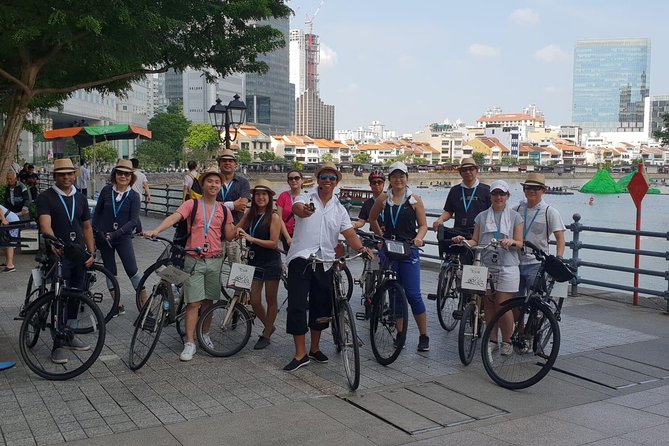
The magic here is how the story turns “important sites” into places with habits and consequences. Instead of treating each stop like a museum label, the guide explains what those locations meant to people in the 1920s—especially immigrants and traders trying to make a living.
Guides named in feedback include Alfie, Yap, and Simon, and the common thread is clear, spoken explanations. You get history in plain language, tied to what you can see right now: the river bends, the shop-house streets, and the kinds of places where people ate, waited, or traveled.
If you like history best when it comes with scenes—people meeting someone, or finding trouble in one street and then turning a corner—this format tends to click fast.
Stop-by-stop: from Kampong Gelam’s old shore to Sago Street’s fate
You’ll start at 9:00 am at 462 Crawford Ln, then pedal through a tight cluster of heritage areas and river landmarks. You’ll also get a bottled water and have lockers available for your bags during the tour, which is a relief if you’re carrying something bulky.
Each stop is short (often around 10 minutes), but the guide keeps the storyline moving so you don’t lose the thread. Here’s how each segment feels and what’s worth paying attention to.
Kampong Gelam: the Muslim settlement and a shoreline that changed
Your first stop focuses on Kampong Gelam and the question of what Tan Ah Huat was doing in a Muslim settlement. Even if you know the neighborhood today, the story frames it through a different angle: community life, contact between groups, and the idea that the city’s edges have moved over time.
One particularly interesting detail in this segment is the lesson on where Singapore’s shoreline once stood before major land reclamation. When you hear that while standing near where the shoreline used to be, the present-day streets feel less fixed—and the river-city relationship makes more sense.
Raffles Hotel Arcade: an upmarket landmark seen through the 1920s lens
Next you’ll roll to the Raffles Hotel Arcade area, a place tied to the era’s “upmarket” feel in Tan Ah Huat’s time. The guide uses the setting to talk about what someone like Tan Ah Huat might notice when the city shifts from street-level commerce to more formal trade and hotel life.
It’s a quick stop, but it helps you understand class and consumption in the 1920s, not just the stereotypes. You get to connect “where people went” with “what opportunities they had.”

Queen Elizabeth Walk: Chinese arrivals and the Singapore River’s pull
Then you move to Queen Elizabeth Walk near the mouth of the Singapore River. This is where the tour slows your thinking a bit: the guide explains how Chinese immigrants arrived and why the river mattered so much for them.
You’ll also hear about historical landmarks that have endured, which works well because you can look around at water-adjacent views and imagine trade routes. The river segment is one of the best “zoom out” moments because it turns individual streets into a bigger system of movement and work.
Cavenagh Bridge: how one crossing can feel both love and tension
Cavenagh Bridge is where the story gets more emotional. The guide frames the river as something Tan Ah Huat both loved and hated, using the bridge as a turning point for the kinds of situations people ran into along the water.
This stop is brief, but it’s memorable because bridges are naturally symbolic in a city like Singapore. You get the sense of movement, waiting, and division—who crosses, who watches, and what changes when you shift from one side of the river to the other.
Read Bridge (Malacca Bridge): a favorite hangout, especially in the evening
At Read Bridge, the guide paints a picture of it as one of Tan Ah Huat’s favorite hangouts. You’ll focus on why it brought people together, particularly in the evening when street life kicks into a different gear.
Even if you visit Singapore in daylight, this stop helps you imagine the same streets under evening conditions. That matters because many places feel different once you understand the local timing of social life.
Pek Sin Choon Pte Ltd: Nanyang tea history and how a heritage business changes
Next comes a tea-focused stop at Pek Sin Choon Pte Ltd. Here the tour shifts from bridges and movement to the daily rituals of what people drank and bought.
You learn about the history of Nanyang Tea and how the business transformed since Tan Ah Huat’s days. What I like about this segment is that it doesn’t treat “tea” as a vague cultural label. It connects the product to business evolution, which is a more realistic way to understand how immigrant communities built income and identity.
Jinrikisha Station: transportation needs you can picture
The Jinrikisha Station stop is short but meaningful. The guide explains the importance of the building in the past transportation needs, using the rickshaw world as the context.
If you’ve never thought about urban transport as part of a story, this segment helps you do it. You can look at the modern city and understand that getting from place to place used to be a very different effort—and that those movements shaped daily life.
The Chinese Theatre: a philanthropy story tied to love
After that, you’ll hear about the iconic Chinese Theatre and how it became known as a greatest token of love by a philanthropist to his wife. The tour uses the theatre as a way to explain community pride and the kind of “public culture” that could grow around entertainment and gatherings.
This stop is especially good if you enjoy learning how individual acts of giving connect to long-term institutions. Even in a fast 10-minute moment, it makes the theatre feel personal rather than just architectural.
Singapore Centre: the coffee shop as a Chinese community hub
At Singapore Centre, the tour turns to food and social life. You learn the significance of coffee shops for Chinese communities in Tan Ah Huat’s era, and the guide connects it to a turning point in his fate.
Then you get to sample Ah Huat’s favorite coffee and a snack here. This is one of the most practical parts of the tour because it gives you energy for the later Chinatown street segments, and it reinforces the theme: people gathered in specific places because those places worked for them.
Trengganu Street: Chinatown’s darker stories
Trengganu Street is where the tour leans into the “dark secrets” behind Chinatown streets. The guide explains how Tan Ah Huat’s twist of fate landed him there, giving the area a sense of risk and consequence rather than only heritage charm.
I like this because it matches how good city stories should feel: real places often have multiple moods. You get to see that Chinatown’s history includes hardship and conflict, not just festivals and family-run shops.
Sago Street (Street of the Dead): fate, name, and meaning
The final street segment is Sago Street, also known as the Street of the Dead. The guide tells you about what it was like during Tan Ah Huat’s days and what fate had planned out for him.
This ending tends to work best if you treat the final stop like closure, not just another photo. By the time you reach Sago Street, you’ve already heard about trading life, arrival routes, and street-level hustles, so the “name meaning” lands with more weight.
Price and what you get for $79.89
At $79.89 per person for about 4 hours, the value here comes from the mix of logistics and storytelling. You get bicycle use, a licensed guide, bottled water, and lockers for bags during the tour. That saves you the “rent a bike, carry stuff, buy water” hassles that can add up quickly.
The other big value lever is the coffee shop stop. You’re not doing a random break; it’s tied to the story’s theme and gives you a chance to reset while the narrative reaches the next chapter.
Also, the maximum group size of 10 helps justify the price. You’re paying for a guided experience where the guide can respond to your pacing and keep the storyline coherent across short stops.
Getting there: 462 Crawford Ln and a smooth morning
Since there’s no hotel pickup, treat this like a meet-at-a-point morning. The start is at 462 Crawford Ln, and the tour ends back at the same meeting point.
Because it’s in the city area near most hotels and close to public transportation, I’d aim to arrive early enough to park your brain at “ready to ride.” If you’re using transit, plan a little buffer so you’re not sprinting to your bike at 9:00 am.
You’ll want practical clothing for riding: comfortable shoes, something you can handle in the weather, and room for a bag if you bring one (lockers help here). The route is described as flat and easy, but you still want to be comfortable staying on a bike for the full stretch.
Who should book this tour (and who might skip it)
This tour is a strong fit if you want a first-timer’s Singapore day that still feels personal. You’ll cover key areas like Kampong Gelam and Chinatown, and you’ll understand the Singapore River as a character in the story, not just a view.
You should also like this if you enjoy narrative travel. The format is made for people who don’t just want facts, but want scenes: meetings, trade, daily habits, and a twisty sense of fate across neighborhoods.
Skip it if you’re unwilling to ride a bicycle for about 4 hours or you strongly prefer a hotel-pickup style tour. This one expects you to show up at the meeting point and pedal.
Should you book Trails Of Tan Ah Huat?
Book it if you want history told through movement—bridges, streets, and coffee stops that make sense as a chain of events. The combination of small group, story-driven guiding, and a flat, easy ride makes it a practical way to see a lot without feeling like you’re rushing.
Don’t book it if the lack of hotel pickup will be a headache for your day. And if you’re picky about weather-dependent plans, keep an eye on conditions since the experience requires good weather.
If you do book, set a simple goal: follow the story thread from Kampong Gelam to Sago Street, and let the landmarks do their job as proof.
FAQ
How long is the Trails Of Tan Ah Huat bicycle tour?
The tour runs for about 4 hours.
What time does the tour start?
The start time is 9:00 am.
Where is the meeting point?
You’ll meet at 462 Crawford Ln, Singapore 190462.
Is there hotel pickup?
No. Hotel pickup is not included.
What’s included in the tour price?
The tour includes bicycle use, a licensed guide, bottled water, and lockers are available for your bags during the tour.
Is the route difficult to ride?
The route is flat and described as easy, and most people can participate as long as they are able to ride a bicycle.
How large is the group?
The tour has a maximum of 10 travelers.
What if the weather is bad?
The experience requires good weather. If it’s canceled due to poor weather, you’ll be offered a different date or a full refund.
When will I get confirmation after booking?
Confirmation is received within 48 hours of booking, subject to availability.