REVIEW · TOKUSHIMA PREFECTURE
Wakimachi BROMPTON Slow Cycling Tour
Book on Viator →Operated by BROMPTON SLOW CYCLING TOURS · Bookable on Viator
Brompton + Yoshino River = a great way to slow down. What makes the Wakimachi BROMPTON Slow Cycling Tour special is that you’re pedaling through places shaped by the river—cars are kept off the embankment road, and the historic town of Wakimachi feels close up, not rushed. I especially like the convenience of a folding Brompton for tight paths and the Udatsu Street atmosphere with optional indigo-dye experiences. One consideration: this is a weather-based outdoor ride, so if skies turn ugly, you may need to adjust your plans.
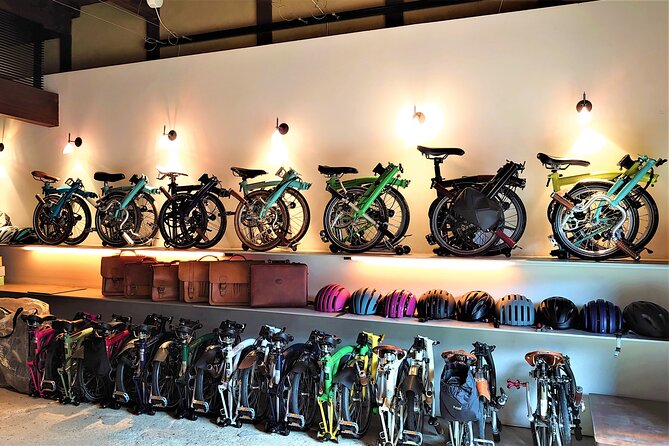
You meet at BROMPTON STATION, a renovated 150-year-old old house, which sets the tone right away: this isn’t just transport, it’s a guided walk-through the past with wheels. It’s also a private experience, so you’ll ride with only your group, with local guidance and tour insurance included. The route loops back to the start, so you don’t have to puzzle out where to end up—just keep your pace slow and your eyes open.
At $85.20 per person for roughly 3 to 4 hours, the value is strongest if you want a guided, story-heavy bike outing rather than a solo rental. You’re getting the bike, the guide fee, and insurance; what’s not covered is getting yourself to the meeting point and meals. In other words: plan your day around the tour, not around logistics.
In This Review
- Key highlights you’ll actually feel on the ride
- Why start at BROMPTON STATION in Wakimachi
- Trading speed for river views on the cars-free Yoshino embankment
- Udatsu Street merchant houses and indigo-dye connections
- Submersible bridge crossing and Mainakajima’s river-shaped past
- Wataru Coffee pacing: how to enjoy the break without losing the rhythm
- The Showa period Odeon Theatre stop: a retro pause you’ll remember
- Price and value: what $85.20 really buys you
- Should you book this Wakimachi Brompton cycling tour?
- FAQ
- Where is the meeting point and where do we end?
- How long is the tour?
- What’s included in the price?
- What is not included?
- What are the tour hours?
- Can I cancel for a full refund?
Key highlights you’ll actually feel on the ride
- Car-free embankment riding along the Yoshino River for calmer, more scenic cycling
- Brompton folding bike support that helps you handle narrow local lanes and turns
- Udatsu Street merchant houses—the kind of streets where details matter
- Indigo dye connections tied to flooding history across the river
- A break at Wataru Coffee with a drink mentioned in the tour description
- Showa period Odeon Theatre for a retro pause that isn’t just a photo stop
Why start at BROMPTON STATION in Wakimachi
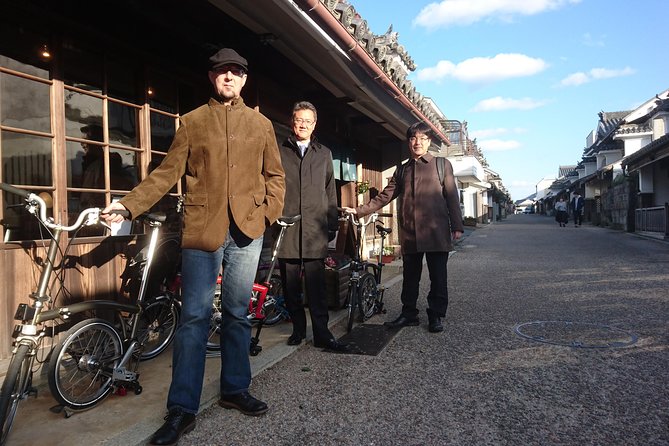
The meeting point matters here. You start at BROMPTON STATION, a renovated house that’s about 150 years old. That gives you a slow-culture vibe immediately: the guide isn’t just handing you a bike and a route map, they’re framing the day around Wakimachi’s river-town identity.
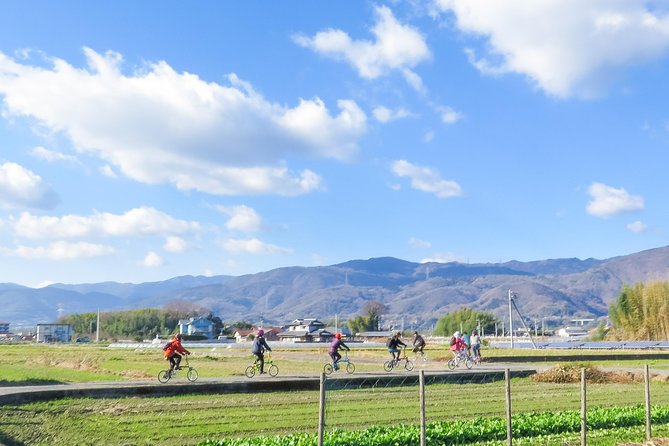
From there, you head toward the embankment road on the Yoshino River, where cars are prohibited. That single rule changes everything. You’re not weaving around traffic; you can actually listen—to water, to footsteps, to the quiet click of a folding bike’s motion.
And since this is a private tour, the pace tends to stay human. If you have questions—about how the river shaped daily life, or why certain buildings look the way they do—there’s room to slow down and ask. It also helps that the tour includes tour insurance and guide fee, so you’re paying for an actual guided experience, not just a bike drop-off.
Trading speed for river views on the cars-free Yoshino embankment
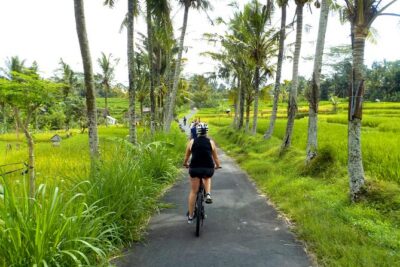
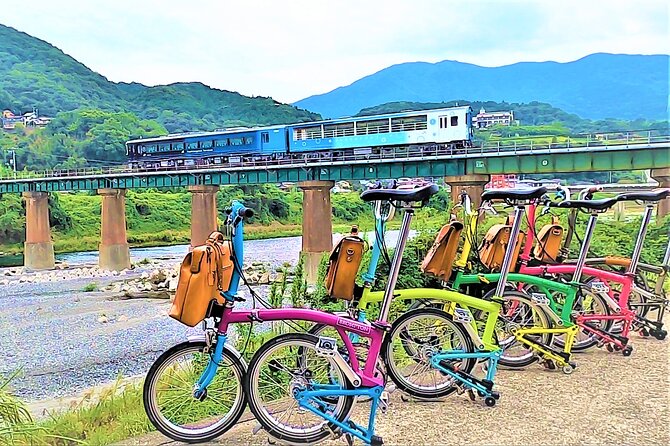
This ride is sold as slow cycling, and you’ll feel that in how it’s paced. You’re following the Yoshino River along a road that keeps cars away, which makes it easier to relax and take your time.
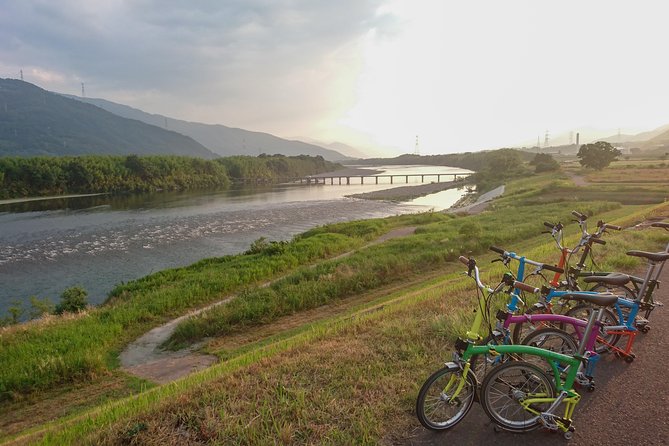
The Yoshino River is described as one of the most beautiful rivers in Shikoku, and that shows in how the route is set up: the water is close enough that you notice shifts in light and weather. In nicer conditions, you can smell spring air as you ride. Even when you’re not hunting for views, the river acts like a moving backdrop.
There’s also a practical upside: a slow pace reduces decision fatigue. With a folding bike like a Brompton, turns and transitions feel simpler when you’re not racing. You can focus on the small stuff—street textures, the way old walls meet modern life, and the gradual shift from river edge to historic streets.
One thing to plan for: you’re outside for most of the 3 to 4 hours. If it’s hot, wear breathable layers and bring water. If it’s cool, you’ll want something light but warm enough for a shaded embankment. The tour itself is weather-dependent, so it’s not the sort of day to cross your fingers and hope.
Udatsu Street merchant houses and indigo-dye connections
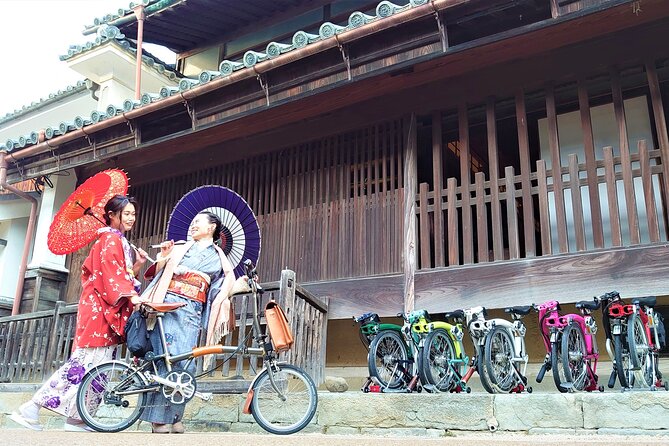
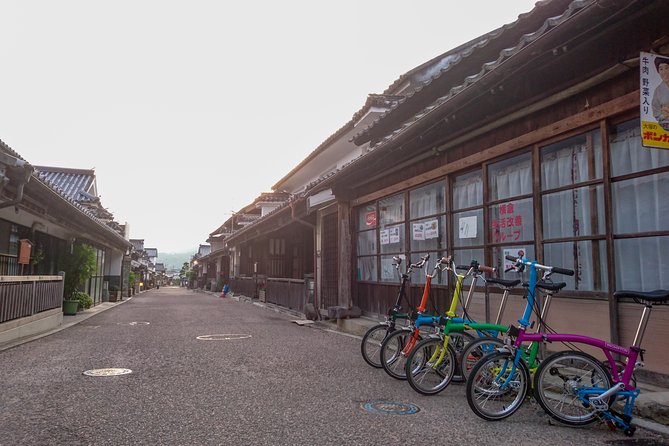
After the embankment riding, you enter Udatsu Street, known for its merchant houses with udatsu—decorative wall elements that many families used to show status and protect their buildings. This part of the tour is where the town starts to feel like a living museum, but without the stiff, museum-style feeling.
The best way to understand Udatsu Street is to cycle slowly enough to notice proportions. You’ll pass rows of older homes and lanes that feel made for strolling, not for driving. The buildings stay close to the street, so you’re not looking at history from behind a fence—you’re right there, at bicycle speed.
The tour also connects this prosperity to indigo. Across the river is Mainakajima, which is described as having been often flooded in the past—but it also produced large amounts of indigo that helped fuel the area’s wealth. So when you’re standing in Udatsu Street, the guide isn’t just talking about pretty old houses. They’re explaining why wealth arrived here, and why the river mattered so much.
There’s even an indigo-dye chance during this segment. The idea is simple: you might not just hear the word indigo; you could get a hands-on experience with traditional dying. That kind of stop tends to stick with you longer than another photo at a viewpoint.
Submersible bridge crossing and Mainakajima’s river-shaped past
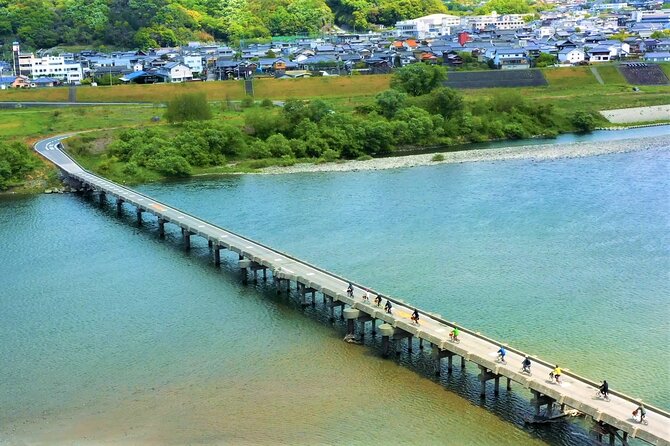
One of the most distinctive beats is crossing a submersible bridge over the Yoshino River. The name tells you the concept: the bridge is designed with the river’s behavior in mind. Even if you don’t know the engineering details, you’ll feel that the route is built around the water, not against it.
Once you cross, the day’s story snaps into focus. You move from river edge to the historic district, and the “why” behind the town becomes clearer. You’re learning that the river was both a risk (flooding) and a resource (indigo production), which is exactly why places develop the way they do.
This matters on a tour like this because it changes what you pay attention to. You’ll likely start noticing how older buildings face the street, how communities organized themselves around trade, and how local life grew alongside a river that never really stayed the same.
If you like historical context that connects directly to what you can see, this is a strong section. It’s not just facts; it’s interpretation tied to the route.
Wataru Coffee pacing: how to enjoy the break without losing the rhythm
You’ll get a break from cycling at Wataru Coffee. The tour description says the drink is included in the price, which is a nice touch because it keeps the tour value feeling complete. That said, the general list of what’s not included mentions coffee and/or tea, so I’d sanity-check at booking time whether your drink at Wataru Coffee is definitely covered for your date.
Even if you end up paying for an extra item, the point of this stop is pacing. In a slow-cycling tour, the break is part of the experience, not a random detour. You can wipe off sweat, adjust your layers, and reset your posture before the final stretch.
Practical tip: treat the coffee stop like a timing anchor. If you take it leisurely, you’ll still finish within the 3 to 4 hour window without rushing the retro theatre portion. If you race through it, you may end up feeling hurried later.
Also, since the tour is near the end back at the start point, you don’t have to plan a separate meal nearby unless you want to extend your day.
The Showa period Odeon Theatre stop: a retro pause you’ll remember
Near the end, you reach the Showa period Odeon Theatre—a retro theatre that’s still active. This is a smart contrast to the river-town walking parts. You’ve just been thinking about merchant houses and indigo economics; now you switch to a different layer of cultural memory.
Even if you’re not a theatre fanatic, the stop works because it gives you texture. It’s not just a pretty exterior. It’s a place still in use, which helps the town feel less like a time capsule and more like a community that kept moving.
And for the bike portion, it’s also a gentle landing. You’re not ending the tour with another long segment of cycling. You get a calm, human-scaled stop, then head back to the meeting point.
Price and value: what $85.20 really buys you
Let’s talk value the practical way. The price is $85.20 per person for about 3 to 4 hours, and the included pieces are the important ones: use of the bicycle, tour insurance, and the local guide fee.
That’s why this can be good value compared with piecemeal alternatives. Renting a bike is one cost; getting a guide who explains the river-history links and the udatsu/indigo context is another. Here, both are bundled, and the bike is a specific type: a Brompton. It’s not just any folding bike.
The main exclusions are also straightforward. You’re not paying for transportation to get to the meeting point, and lunch isn’t included. Coffee and tea aren’t listed as included in the overall add-ons, even though the tour overview calls out a drink at Wataru Coffee, so treat that as a detail to confirm.
Who gets the best match?
- You want a guided, story-led Shikoku day that feels local, not generic.
- You like historic streets and don’t need everything to be huge or museum-grade.
- You’re comfortable riding for a few hours and want a slow pace.
If you prefer long, self-directed exploring, you might find it limiting. But if you like learning why a place looks the way it does while you move through it, this tour is built for you.
One more detail worth noting: guides can include locals with deep involvement in regional storytelling. One example mentioned is AWARE representative 榮さん, who connects the Yoshino River to Tokushima’s history in a way that feels personal rather than scripted.
Should you book this Wakimachi Brompton cycling tour?
Yes, I’d book it if your idea of a great day is calm cycling + historic streets + explanations that connect river life to what you see. The combination of cars-free embankment riding, Udatsu Street’s architecture, a possible indigo dye experience, and the retro Odeon Theatre stop makes this more than a “pretty bike ride.”
I’d pause before booking if you’re traveling during a time when weather is unreliable, since the tour depends on good conditions. Also, if you’re expecting a short, casual promenade with zero cycling, this still includes several hours on a bike—even if it’s called slow cycling.
FAQ
Where is the meeting point and where do we end?
You meet at BROMPTON STATION at the road station Airandoudatsu55 Wakimachi in Wakimachi (Mima, Tokushima). The activity ends back at the same meeting point.
How long is the tour?
Plan on about 3 to 4 hours.
What’s included in the price?
The tour includes use of the bicycle, tour insurance, and the local guide fee. A drink stop at Wataru Coffee is described in the tour overview, but coffee/tea is listed as not included on the general add-ons list—so it’s smart to confirm.
What is not included?
The tour price does not include transportation fees and lunch. Coffee and/or tea is listed as not included, even though a drink at Wataru Coffee is mentioned in the tour description.
What are the tour hours?
The listed operating windows are 9:00 AM–12:00 PM and 1:30 PM–4:30 PM, with the activity running across the dates shown in the schedule.
Can I cancel for a full refund?
Yes. You can cancel for a full refund up to 24 hours in advance of the experience start time. If you cancel less than 24 hours before the start time, the amount paid is not refunded.