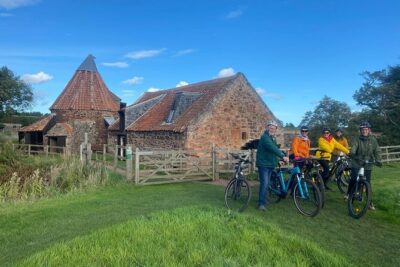
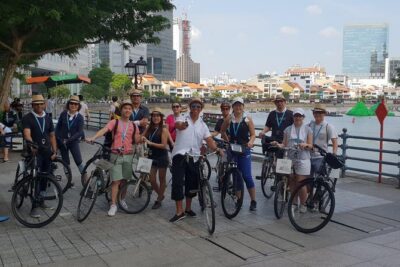
Cycling after a quiet train stop feels magical. This 3-hour trip pairs a small local train ride with a start from an unmanned station, then turns that motion into slow sightseeing through Kakunodate’s Edo-era samurai town. I also love the mix of stops—temples, shrines, farmhouses, and even cafe time—because you’re not just biking; you’re sampling the countryside. The one thing to consider is the pace: you should have moderate fitness for a full cycling outing.
You’ll go as a private group, and it starts and ends back at Kakunodate Station. Pickup is offered, and the tour includes snacks, bike use, a train ticket for the Nairiku Line, plus an insurance fee—so you’re not piecing together transport and tickets like a part-time logistics worker.
Timing and weather matter here. The route depends on good conditions, and if the tour can’t run due to poor weather, you’ll either get a different date or a full refund. If you’re in town chasing sakura, keep your expectations flexible since bloom timing can shift, and the trip still works well as a day of countryside sights.
In This Review
- Key highlights you’ll actually care about
- Why this Kakunodate bike trip starts with the Nairiku Line train
- Kakunodate’s samurai streets: compact, walkable, and great by bike
- Katakurikan chestnuts: more than a snack stop
- Senboku by bicycle: temples, rivers, castle ruins, and rice paddies
- Price and value: what you’re paying for at $126.82
- Timing, tickets, and how the day actually flows
- Who should book this cycling tour (and who should skip it)
- Final call: should you book this 3-hour Kakunodate cycling tour?
- FAQ
- How long is the 3 Hour Cycling Tour in Kakunodate?
- What is included in the price?
- Is pickup available?
- Where does the tour start and end?
- Do I need to buy admission tickets for the stops?
- Is this a private tour?
- What happens if the tour is canceled due to bad weather?
Key highlights you’ll actually care about
- Train-to-bike flow: hop off an unmanned station and start cycling right away.
- Kakunodate in about 2 km: a compact Edo castle-town core that’s easy to enjoy in one outing.
- Katakurikan chestnuts: learn how Akita’s biggest chestnuts tie back to seeds brought from Kyoto and Gifu long ago.
- Senboku on two wheels: temples, rivers, castle ruins, and rice paddies show up along the ride.
- Private tour: only your group participates, so the guide can pace for you.
- Value-packed inclusions: bike, snacks, Nairiku Line ticket, and insurance fee are built in.
Why this Kakunodate bike trip starts with the Nairiku Line train
Most bike tours start with a handshake and a map. This one starts with motion—quiet motion—on the Nairiku Line. You ride a one-car, one-man train, and the point isn’t speed. It’s getting that “local Japan” feeling before your tires ever hit the road.
Then you disembark at an unmanned station. That simple detail changes the vibe. You’re not arriving at a tourist office. You’re starting in a place that feels like the real system of trains and daily life, and that makes the countryside pedal stretch feel earned.
If you like travel that feels practical instead of staged, this sequencing works. It helps you see Kakunodate and the surrounding area like a resident would—train in, pedal out, sights along the way.
Kakunodate’s samurai streets: compact, walkable, and great by bike
Stop 1 centers on Kakunodate, often called Michinoku’s Little Kyoto. The big reason this place gets nicknamed that is simple: it’s a castle town that flourished in the Edo period, and a lot of older buildings and samurai residences remain in a compact core.
What you get from experiencing it by bike is efficiency without feeling rushed. The core is described as about a 2 km radius, which means you can cover a lot of ground in a short time. You’re not stuck on long transfers or waiting to get between scattered sights.
Expect to spend around an hour here, with admission ticket free included. That matters because it keeps the day from turning into a ticket-collecting exercise. You can slow down for the small stuff: the rhythm of old buildings, the feel of a traditional town layout, and the guide’s context as you move through the samurai residence area.
One practical note: old-town streets can be a mix of smooth and uneven. Keep an eye on your footing and wear shoes you’re comfortable cycling in and then standing in right after. (You’ll likely step off more than once for temples, shrines, and short stops.)
Katakurikan chestnuts: more than a snack stop
Stop 2 is Katakurikan, a name that comes with a specific claim: it produces the largest chestnut in Japan. That’s the kind of statement that sounds like marketing—until you hear the story behind it.
This chestnut tradition traces back more than 300 years, when seeds were brought from Kyoto and Gifu to Akita Prefecture for cultivation. The improved seeds became what’s known as Saimyoji chestnuts, and they’re the kind of regional food history that makes you look at a plain ingredient and see a long chain of local knowledge.
You’ll spend about 30 minutes here. That’s a good length: long enough for the guide to connect the dots, short enough that it doesn’t drag. Also, because snacks are included on the tour, this stop isn’t just informational. It’s part of the day’s comfort—especially helpful if the weather is warm or you’re riding a bit harder than expected.
If you like food-linked sightseeing—where agriculture and culture meet—this is one of the smarter stops in the itinerary. It gives you a reason to pay attention beyond photos.
Senboku by bicycle: temples, rivers, castle ruins, and rice paddies
Stop 3 is where the day shifts into pure countryside riding. Semboku doesn’t get singled out as a famous named attraction in the way Kakunodate does, and that’s exactly why it works. This portion is about moving through the original rural scenery of Senboku City.
You’ll ride past temples, rivers, castle ruins, and rice paddies. That’s a strong mix for a 90-minute block because it keeps your eyes changing. You’re not staring at one kind of view for the whole time.
The value here is the travel feeling. By the time you reach this section, your body has warmed up and your mind has stopped thinking of this as transportation. You start noticing small patterns: how water shapes the area, how land use lines up with roads, and how the presence of temples and ruins gives the countryside a sense of long continuity.
One heads-up: if you’re expecting a stop where you park, go inside, and spend an hour indoors, you might find this section more “ride-and-see” than “museum-and-stay.” The itinerary lists admission tickets as free at each stop, which fits the style: you’re paying in time and attention, not in entry fees.
Price and value: what you’re paying for at $126.82
At $126.82 per person for about 3 hours, the price can feel like a lot until you break down what’s included. Here’s what you’re actually getting that reduces your hassle:
- Snacks are included.
- You get use of a bicycle.
- The train ticket for the Nairiku Line is included.
- There’s an insurance fee included.
That’s the core value. If you had to coordinate train tickets, bike rental, and basic day snacks on your own, you’d likely spend time and money getting to the same place. This tour packages those moving parts into one fixed plan that runs on local timing.
Also, pickup is offered. That can be a big deal in small towns where getting from your lodging to the station isn’t always a quick hop. If you’re staying a bit off the main train area, you’ll appreciate not having to do extra route planning right before you ride.
Now, what you should weigh on your side: you still need transportation to the starting point (Kakunodate Station) unless pickup covers you. And you need moderate fitness for the cycling portion. If you’re not confident on a bike for a solid block of time, this price won’t feel worth it because you won’t enjoy the ride—you’ll just endure it.
Timing, tickets, and how the day actually flows
The tour runs for about 3 hours. It moves in three clear segments: Kakunodate for an hour, Katakurikan for 30 minutes, then Semboku for 1 hour 30 minutes.
Admission tickets are listed as free at all stops. That’s a small line item, but it matters. It keeps your planning simple: you’re not juggling entry fees or time-consuming queues.
It also helps the guide manage the pacing. When you’re not constantly thinking about gates and lines, you can focus on the ride, the stories, and the brief stops for temples, shrines, and countryside viewpoints.
You’ll use a mobile ticket. That’s convenient, especially if you travel light and want everything in your phone. Just make sure your battery is healthy before you leave your lodging.
Finally, the tour ends back at the meeting point—Kakunodate Station. That’s a relief for train planning. It means you can build the rest of your day around a known return spot rather than wondering how you’ll get back to your next reservation.
Who should book this cycling tour (and who should skip it)
This is a strong fit if you want Japan that’s local and paced. I think it’s especially good for you if:
- You like sightseeing that mixes history with everyday scenery.
- You’d rather ride through towns and countryside than spend all day indoors.
- You want help with route pacing, so you don’t have to over-plan every turn.
- You’re traveling as a group and like the idea of a private experience.
It may not be the best choice if:
- You’re not comfortable with cycling for the full ~3-hour experience.
- You only want the kind of sightseeing where you can hop off, enter, and sit for long stretches.
- You’ll have trouble getting to Kakunodate Station on your own (pickup is offered, but the tour explicitly says transport to the starting point isn’t included).
If you’re flexible, you’ll find the day’s rhythm satisfying. It’s not a sprint. It’s a guided, practical way to see more than one side of Akita in a short time.
Final call: should you book this 3-hour Kakunodate cycling tour?
I’d book it if you want a day that feels like “transport that also teaches.” The train start plus the unmanned-station bike beginning is a smart formula. It cuts down on tourist friction and gives you a smoother transition from town to countryside.
I’d also book it if you care about small, specific regional details—like the chestnut story at Katakurikan—because it’s the kind of stop that adds meaning to what you see. And with snacks and insurance included, it’s one of the more complete short tours on a day where you don’t want extra shopping or ticket-hunting.
Skip it only if your cycling comfort is low or your schedule can’t handle weather changes. When conditions are good, this tour is the kind of plan that makes a compact region feel big, without making you run around.
FAQ
How long is the 3 Hour Cycling Tour in Kakunodate?
The tour lasts about 3 hours.
What is included in the price?
The price includes snacks, use of a bicycle, a train ticket for the Nairiku Line, and an insurance fee.
Is pickup available?
Pickup is offered, and the tour is near public transportation.
Where does the tour start and end?
You start at Kakunodate Station in Kakunodatemachi, Nakasugazawa, and the tour ends back at the same meeting point.
Do I need to buy admission tickets for the stops?
Admission tickets are listed as free for Kakunodate, Katakurikan, and Semboku.
Is this a private tour?
Yes. It’s a private tour/activity, and only your group will participate.
What happens if the tour is canceled due to bad weather?
If it’s canceled due to poor weather, you’ll be offered a different date or a full refund.
If you want, tell me your travel dates and whether you’re staying near Kakunodate Station—I can help you judge the best way to time the train portion and avoid rushing before the ride.