REVIEW · SHANGHAI
4-Hr Shanghai Tour: Food, Culture, Sightseeing, Cycling, Ferry
Book on Viator →Operated by iTour Shanghai · Bookable on Viator
A good day in Shanghai has variety—and this one delivers. You get skylines plus side streets, mixing a bike ride, a classic Huangpu River ferry crossing, and cultural stops like Xiahai Temple. I especially like the way it pairs big-city views with small, human moments: the tea ceremony and the snack stops feel made for real life, not just photos.
Two standout things for me: the Huangpu River ferry gives you skyline views without the stress of taxis, and the tea ceremony adds local etiquette you can actually use. One possible drawback: the Shanghai Tower deck is optional and costs extra, so your final spend depends on how high you want to go.
In This Review
- Key Points You’ll Care About Most
- A 4-Hour Shanghai Loop That Hits Skyline, River, Temple, and Tea
- Meeting at Lujiazui and Getting Moving on Shared Bikes
- Shanghai Tower Optional Deck: The Skyline Moment (and the Extra Cost)
- Huangpu River Ferry: Nostalgia You Can Feel in 45 Minutes
- Xiahai Temple: A Sea-Goddess Break from the City Tempo
- Raffles City Mall and City Mart Snacks: A Taste of Shanghai Neighborhood Life
- North Bund Tea Culture: Where Etiquette Turns Into a Social Skill
- Hongkou Café Stop: A Small Reset Near Big Landmarks
- Price and Value: Why $93 Can Make Sense (Even With the Optional Tower Fee)
- Who This Tour Suits Best—and Who Might Prefer Something Else
- Quick Booking Notes That Matter in Real Life
- Should You Book This Shanghai Bike-and-Ferry Tour?
- FAQ
- FAQ
- Is the Shanghai Tower admission included?
- How long is the tour?
- What food and drinks are included?
- Do you ride a bike and take a ferry?
- Is the tour private and in English?
- Where do you meet and where does it end?
- Are bikes provided, and what kind are they?
- Does the tour depend on weather, and are there rules for kids or service animals?
Key Points You’ll Care About Most
- Bike + ferry balance: You cover ground fast, but you still get a slow, nostalgic river moment.
- Xiahai Temple entry included: Traditional sea-goddess worship and architecture, with set time to enjoy it.
- City Mart snack tasting: Food here is part of the neighborhood feel, not an afterthought.
- Ethnic tea ceremony + bites and sips: You learn tea etiquette and what tea culture looks like in practice.
- North Bund tea culture stop: A focused pause to slow down and watch locals socialize.
- A Hongkou café break: Short, but useful for catching your breath away from the main sights.
A 4-Hour Shanghai Loop That Hits Skyline, River, Temple, and Tea
This tour is designed for a common problem in Shanghai: you see the skyline, but you miss the city between the skyscrapers. Here, the route moves through Lujiazui’s modern edge, crosses the Huangpu by ferry, and then shifts into temple time, shopping history, and tea culture.
It’s also a smart choice for a short visit. In about four hours, you get a mini sampler of Shanghai’s different “moods.” You’re not trapped in a single building or stuck in one neighborhood. The day feels like a clean circuit.
If you like learning through doing—pedaling, boarding, tasting—this works well. One review summary I liked was the mention of a great guide and a mix of walk and bike even in hot weather. That matches the structure here: you get movement, then you get pauses.
Meeting at Lujiazui and Getting Moving on Shared Bikes
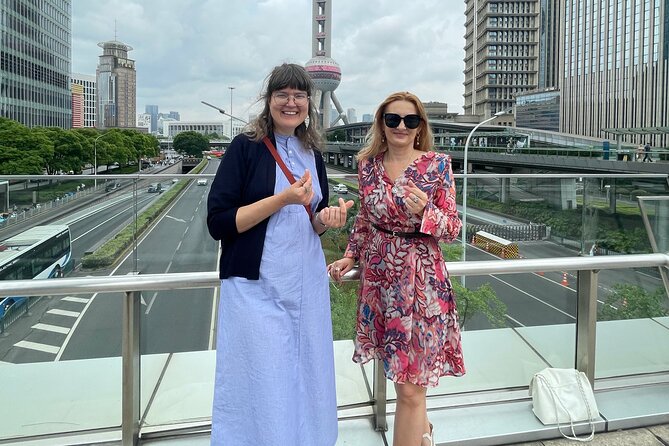
You start near the Lujiazui metro station in Pudong. The location is convenient because you’re not dependent on hotel pickup. Just make your way to the meeting point, and plan to be there on time—your guide won’t wait more than 10 minutes after the scheduled start.
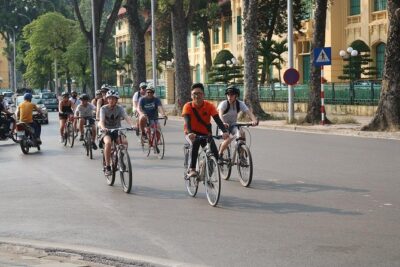
You’ll ride urban shared bikes. Shared bikes are convenient, but they do come with a reality check: you need to be comfortable balancing in city traffic flow. If that makes you nervous, take your time on the first few minutes of practice, and tell the guide if you have concerns before you roll out.
One other practical tip: the tour includes bottled water, but Shanghai heat can still hit hard. If you’re traveling in summer, bring sun protection and dress for short rides. This isn’t a leisurely cruise in a perfect breeze.
Shanghai Tower Optional Deck: The Skyline Moment (and the Extra Cost)
Stop one is the Shanghai Tower area, with an observation deck option. The skyline views from Lujiazui are the obvious reason this stop exists. Even if you’ve seen Shanghai photos online, standing high up changes the scale. You start noticing how construction cranes and new glass towers sit right next to older city textures.
Here’s the key point for budgeting: Shanghai Tower admission is not included. The cost listed for the deck is CN¥180 per person. So you’ll have to decide whether “go higher” is worth the add-on.
How to decide:
- If you want the classic postcard skyline and don’t mind paying extra, take the deck.
- If you’d rather save money and spend time on the river, temple, snacks, and tea, you can still enjoy the rest of the route without committing to the tower ticket.
Either way, you’ll get a solid start: big views early, before the day turns more cultural.
Huangpu River Ferry: Nostalgia You Can Feel in 45 Minutes
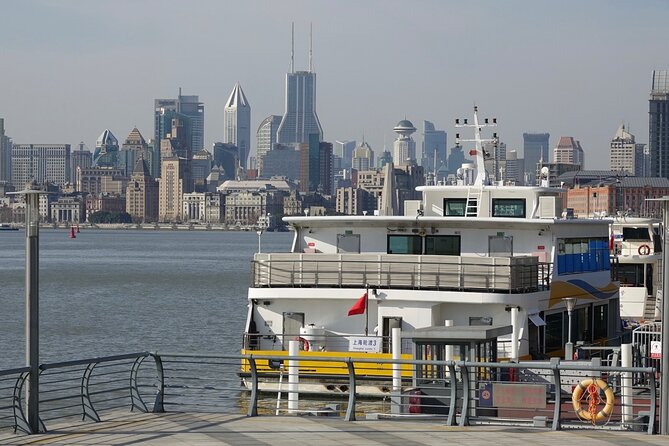
Next comes the Huangpu River and a commuter-style ferry ride. This is the kind of stop that makes the tour feel different from a straight sightseeing checklist. The ferry gives you a moving viewpoint without the usual land-traffic bottleneck.
You’ll see the skyline while the city slides by. The description here also points to an important detail: you’ll spot cranes and construction atop new hotels and office buildings. That’s Shanghai in motion—old and new not neatly separated, but stacked side by side.
Why this part works:
- It’s a genuine slice of everyday transportation, not just a tourist boat.
- The river crossing breaks up the day’s walking and biking rhythm.
- The skyline feels closer and less “model-like” when you’re riding on the water.
The ferry ticket is included, which helps you avoid the annoying add-ons that pop up later.
If you’re prone to motion sensitivity, you might want to sit comfortably near the middle area of the ferry deck, but nothing about the tour suggests anything unusual. It’s a normal river ride.
Xiahai Temple: A Sea-Goddess Break from the City Tempo
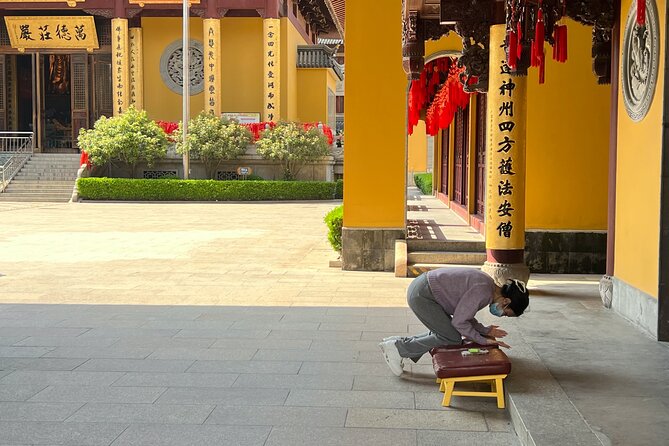
After the river, you’ll shift into quiet mode at Xiahai Temple, also known as the Temple of the Sea. The stop focuses on traditional architecture and the religious context tied to Mazu, the Chinese sea goddess believed to protect fishermen and sailors.
The time here is about 35 minutes, which is enough to slow down without dragging. You’re not just looking at walls. You’re stepping into a place where worship and heritage are part of daily cultural memory.
What makes this stop valuable on a short tour is the contrast. You go from modern skyline and river motion to stillness, incense-style atmosphere, and old stone work. It’s the kind of emotional reset you can feel, especially if your travel day has been packed.
Drawback to consider: if you’re the kind of visitor who wants long unbroken sightseeing time, this is a “taste” stop. You’ll enjoy it, but you won’t get hours here. That’s the trade for fitting everything into four hours.
Raffles City Mall and City Mart Snacks: A Taste of Shanghai Neighborhood Life
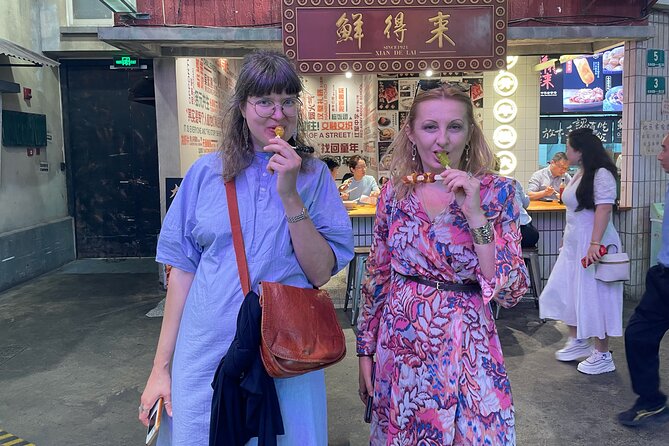
Then you head to Raffles City Mall area, with a focus on City Mart. This is where the tour gets practical and fun. You’ll have a chance to taste signature snacks and get a feel for the way the city preserves aspects of everyday life.
The tour notes that City Mart is an example of protection and careful restoration. In other words: it’s not just a modern mall plopped down next to older streets. You’re getting a version of Shanghai that pays attention to continuity, even in a changing city.
Why you should care about the snack stop:
- It’s timed as a “people-watching” moment, not a frantic food rush.
- The food ties into neighborhood memory from the late 20th-century Shanghai vibe the tour highlights.
- You’ll have a guide to help you navigate what to try and how to interpret the offerings.
A small practical note: the tour also suggests you shouldn’t eat excessively before you start. That’s good advice. Save room for bites and sips, because snack tasting loses its fun if you’re already full.
North Bund Tea Culture: Where Etiquette Turns Into a Social Skill
Next is the North Bund area, with a tea-focused experience. Tea is described as a main social drink, and the tour frames habitual tea consumption as supportive for health—immune system, metabolism, and digestion. You don’t need to treat that as medical advice. But it does explain why tea culture is taken seriously here.
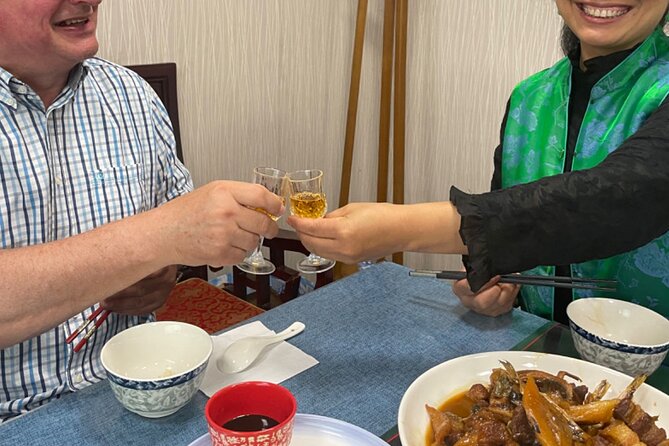
This stop also sets up what comes next: an ethnic tea ceremony experience. You’ll get local etiquette and customs around tea culture, which is more interesting than just drinking something warm. Tea ceremonies are often explained in abstract terms elsewhere. Here, you’ll get the feel of how people perform the ritual in real life.
What to expect from the tea part:
- Guided explanation of etiquette and culture (the “how” matters).
- Bites and sips as part of the session.
- A chance to slow down and step out of sightseeing mode for a bit.
One drawback: if you’re not into tea, you may feel the session takes up time you could spend elsewhere. Still, even tea-haters often enjoy learning the etiquette because it’s cultural behavior, not just a beverage.
Hongkou Café Stop: A Small Reset Near Big Landmarks
The final sightseeing moment is a short 20-minute stop in Hongkou, at a café near notable landmarks. It’s intentionally brief, but it helps the tour end in a human way rather than a sprint to the finish.
This is where you catch your breath, review photos, and recharge before heading off. It’s also a good reminder that you’ve been moving fast across multiple city moods—and now you get a small pause designed for comfort.
If you’re hoping to see a dramatic new sight here, don’t. Think of it as a breather.
Price and Value: Why $93 Can Make Sense (Even With the Optional Tower Fee)
At $93 per person, this tour can be good value if your priorities match the itinerary. Here’s what you’re really paying for:
- A private English-speaking guide service
- Included entry to Xiahai Temple
- Included ferry time on the Huangpu River
- An ethnic tea ceremony plus bites and sips
- Public transportation support through the route (bike/ferry/subway)
- One bottled water per person
Then there’s the optional cost: Shanghai Tower deck admission is extra at CN¥180.
So is it worth it? Usually, yes—because several things that often cost money elsewhere (temple entry, ferry ride, guided tea session, and guided snack support) are already built in. The tour also saves you from piecing together routes on your own when you only have half a day.
What could make it not worth it for you:
- If you only care about one major sight and the rest sounds like “too many stops”
- If biking doesn’t sound comfortable
- If you plan to skip the tea ceremony and snacks (but the format is built around them)
For most visitors who want a tight loop through modern, river, temple, and tea culture, the price feels fair.
Who This Tour Suits Best—and Who Might Prefer Something Else
I’d point this tour toward you if you want:
- A balanced half-day with bike + ferry + culture + food
- A guide to help you interpret the places fast
- A structured route that ends near North Bund / Hongkou, good for continuing your day
You’ll also like it if you’re someone who enjoys short stops with clear themes. Shanghai is too big to “wander until you find it.” This gives you that theme-based wandering.
Skip it or choose carefully if:
- You’re uncomfortable on shared bikes in a city environment
- You dislike organized tastings or tea sessions
- You want long stays at fewer places rather than a quick circuit
Quick Booking Notes That Matter in Real Life
This experience is described as private, meaning it’s only your group. That usually makes a big difference for questions and pacing, especially during biking.
You’ll want good weather. The guide may alter content if weather or access becomes a problem. If the tour gets canceled due to poor weather, you’ll be offered a different date or a full refund.
Finally, keep the day easy on your body. The tour suggests you shouldn’t eat excessively before starting, and that’s practical advice when food tasting plus tea is on the schedule.
Should You Book This Shanghai Bike-and-Ferry Tour?
Yes, if you want a well-paced snapshot of Shanghai that mixes skyline, river history-feel, temple calm, and tea culture etiquette in one smooth half-day. The strongest parts are the balance: you get major views without skipping the human stuff.
If you’re deciding between this and a pure skyline plan, pick this. The ferry and tea parts do the heavy lifting for making your day feel more local and less like a photo tour. And if you’re paying extra for the Shanghai Tower deck, you can do it knowing the rest of the itinerary is already strong.
FAQ
FAQ
Is the Shanghai Tower admission included?
No. The Shanghai Tower observation deck is optional, and its admission fee is not included. The listed cost is CN¥180 per person.
How long is the tour?
The tour lasts about 4 hours (approximately).
What food and drinks are included?
You’ll get an ethnic tea ceremony along with Bites & Sips, plus one bottled water per person.
Do you ride a bike and take a ferry?
Yes. The tour uses bikes and includes a ferry ride on the Huangpu River, with public transportation used throughout the route.
Is the tour private and in English?
Yes. It’s a private tour/activity, and it includes one private English-speaking tour guide service.
Where do you meet and where does it end?
You start at Lujiazui metro station in Pudong, and the tour ends in Hongkou at the North Bund area (postal code 200086).
Are bikes provided, and what kind are they?
Bicycles are supplied as urban shared bikes.
Does the tour depend on weather, and are there rules for kids or service animals?
The tour requires good weather. The guide may alter the route if weather or access is an issue. Service animals are allowed, and anyone under 16 must be accompanied by a parent or guardian.