REVIEW · HAMBURG
Bicycle tour through the “other” Hamburg (min.4)
Book on Viator →Operated by Sightseeingforyou · Bookable on Viator
Hamburg has a second side. This bicycle tour takes you through the city’s contrasts—from areas tied to fine society to streets where drug dealing, prostitution, autonomous scenes, and artists’ quarters show up in the story of the neighborhoods. I like the simple, doable route and the way the guide uses real local context to help you read what you’re seeing as you pedal.
A possible drawback: you ride for about 3 hours 30 minutes, so plan on moderate fitness, and only go in with good weather. The areas you pass through can feel intense up close, even when the pace stays relaxed.
In This Review
- Key points to know before you book
- Price and What You’re Actually Paying For (It’s About Time, Not Just Miles)
- Meet at Schlüterstraße: Starting Point and How to Get Set
- Sternschanze and Schröderstift: Reading Hamburg’s Street-Level Contrasts
- Crossing Into the Schanzen District: Alternative Culture Without the Fog
- St. Pauli Harbor Road and the Portuguese Quarter: A Change of Mood
- Chilehaus and the 1920s Office Buildings: When Modern Hamburg Shows Its Teeth
- St. Georg’s Multicultural Contrast: One District That Explains the Rest
- Inner Alster, Kennedy Bridge, and City Panorama: Slow Down Without Stopping
- Lombards Bridge, Rowing Clubs, and Consulates: Fine Details on the Way Back
- How Hard Is It? Pace, Group Size, and Staying Comfortable
- What the Guide Does Best: Facts, Tips, and Real Answers
- Who This Tour Fits Best (and Who Might Want Another Option)
- So, Should You Book the Other Hamburg Bike Tour?
- FAQ
- How long is the bicycle tour?
- Where does the tour start and end?
- What fitness level do I need?
- What’s the group size?
- Is there a mobile ticket?
- What if the weather is bad or I need to cancel?
Key points to know before you book
- A bilingual guide who handles questions well and shares solid local knowledge
- An easy route that still covers a lot of ground in one go (about 3.5 hours)
- Sternschanze and the Schanzen district: alternative culture plus the real street vibe
- Big scenery shifts from St. Pauli harbor roads to St. Georg’s multicultural life and the Inner Alster
- Classic architecture and landmarks like the Chilehaus and major bridges (Kennedy Bridge, Lombards Bridge)
Price and What You’re Actually Paying For (It’s About Time, Not Just Miles)
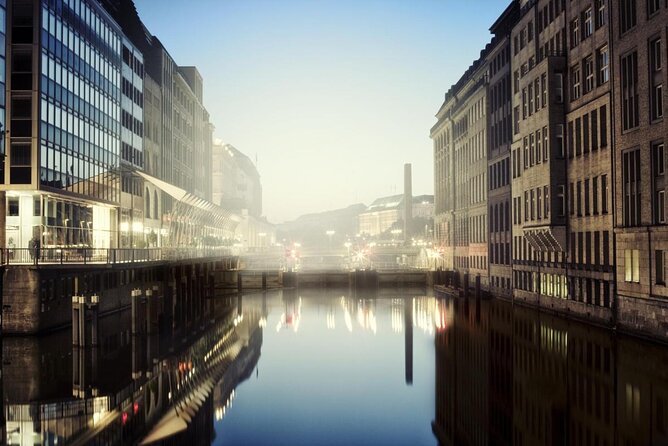
The price—$40.52 per person—is a fair fit for a 3-hour-30-minute guided bike tour in a city like Hamburg. You’re not just cruising a bike path. You’re getting context for neighborhoods that visitors often skip or misunderstand.
With a small max group size of up to 20 people, you usually get the best kind of attention: the guide can steer the conversation, answer questions, and keep the ride smooth. And the route is described as simple and manageable, which matters because it helps you focus on the streets and stories instead of constantly worrying about your balance or speed.
One more practical note: the tour uses a mobile ticket, and you’ll get confirmation when you book. If you like planning that doesn’t turn into paperwork chaos, this setup helps.
Meet at Schlüterstraße: Starting Point and How to Get Set
You’ll start at Schlüterstraße 11, 20146 Hamburg, and the ride ends back at the same meeting point. The location is also near public transportation, which is great if you’re combining this with other Hamburg days.
Here’s how to make your morning (or afternoon) smoother:
- Arrive a few minutes early so you can get oriented and start on time.
- Wear comfortable cycling shoes and keep layers in mind. Hamburg weather can shift quickly.
- If you’re coming straight from a museum or café, take a moment to reset: water, quick snack, then go.
The biggest “logistics win” here is the loop format. You don’t have to worry about a complicated end location after 3.5 hours of riding.
Sternschanze and Schröderstift: Reading Hamburg’s Street-Level Contrasts
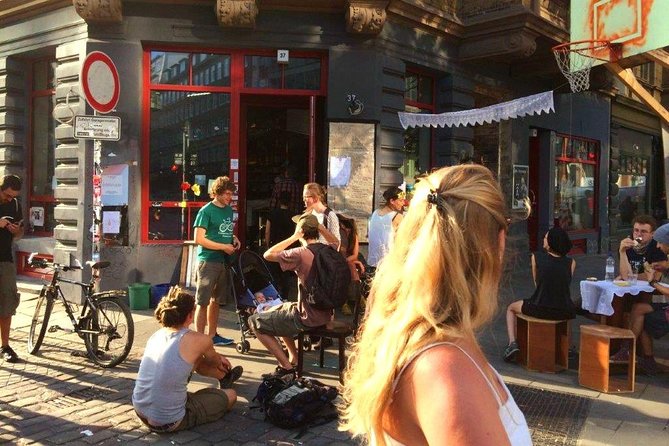
The tour heads toward Sternschanze, and that’s a smart choice. This is where Hamburg’s identity changes fast. You’re crossing from polished, well-to-do surroundings into places that connect to very different social realities—autonomous scenes, artists’ quarters, and the kinds of issues (including drugs and prostitution) that don’t show up in postcard Hamburg.
The guide doesn’t treat this like shock tourism. The route includes a symbolic crossing of a historic district tied to grassroots democratic living. That’s an important way to look at neighborhoods like this: not just as “good” or “bad,” but as communities shaped by activism, politics, and the everyday life that follows.
Two stops make this stretch especially meaningful:
- Schröderstift: you get a named point to anchor what the guide explains, instead of vague “over there” sightseeing.
- Sternschanzenpark: a break in pace and scenery. Parks are where you can actually watch how people move through the district in real time.
If you like tours that give you language for what you’re seeing, this segment is the foundation. You’ll start to understand why Hamburg’s “other” side isn’t separate from the rest of the city—it’s part of the same whole.
Crossing Into the Schanzen District: Alternative Culture Without the Fog
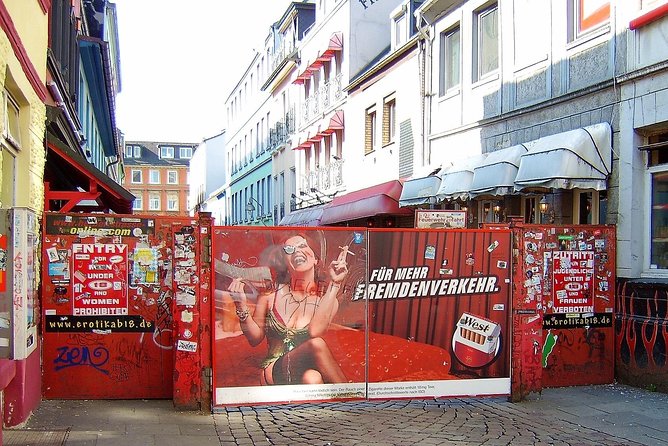
After Sternschanzenpark, you push into the Schanzen district, described as the place where diverse alternative cultural offerings live side by side. This is where you’ll feel the neighborhood’s creative energy through street life, venues, and the visual mix of people and styles.
The practical upside: the ride keeps moving in a way that’s still easy to follow. You’re not stuck in a long series of complicated turns. You’re getting a guided “guided scan”—enough time at the right moments to notice what matters.
The cultural upside: alternative scenes can look chaotic if you only see them from outside. With a guide who has solid local knowledge, you’re less likely to miss the point. And you’ll also learn how these areas function socially—how they fit into Hamburg rather than floating as a side attraction.
St. Pauli Harbor Road and the Portuguese Quarter: A Change of Mood
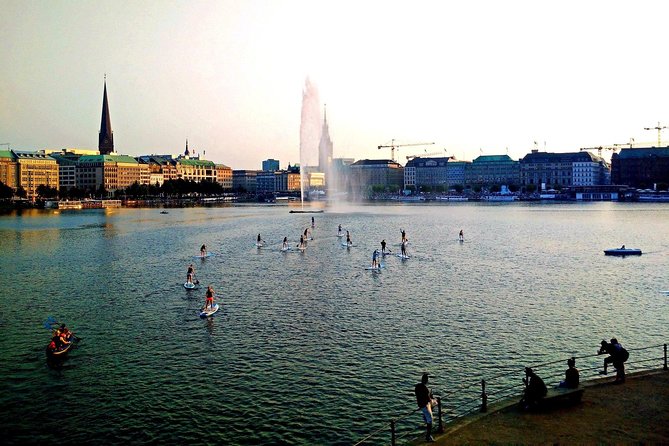
Then you head onto St. Pauli harbor road. That’s a notable shift—harbor corridors tend to bring a different tempo. You go from neighborhood streets into something more industrial and oriented toward movement.
From there you cycle through the Portuguese quarter and onward toward the new town. This is one of those transitions that makes the tour feel like more than “one district, one vibe.” You’re seeing how Hamburg changes as you move city blocks: language, everyday commerce, and the faces you see.
What I like about this stretch is that it’s not only about landmarks. It’s about the lived geography—how districts feel different not because of one building, but because of how people use the streets.
Chilehaus and the 1920s Office Buildings: When Modern Hamburg Shows Its Teeth
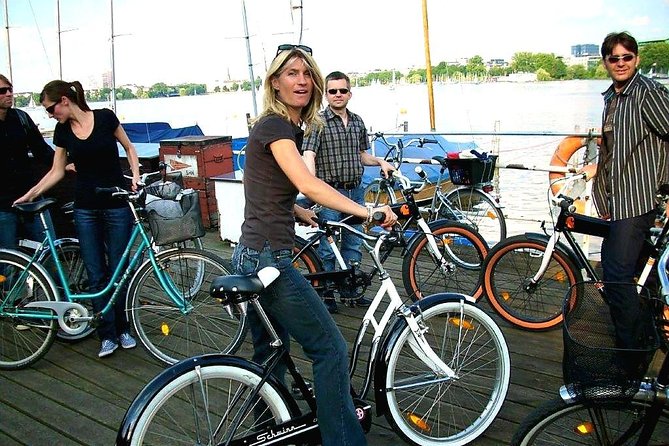
The tour then brings you to the kind of architecture people photograph for a reason. You’ll ride through areas with office buildings from the 1920s, including the Chilehaus.
This stop matters because it balances the earlier “street reality” sections. You go from neighborhoods with messy human stories into a part of the city where design and ambition take center stage. It’s a useful contrast: Hamburg’s alternative and political street life didn’t replace big-city development—it grew next to it, sometimes in tension, sometimes in shared space.
If you like a tour that helps you connect different layers of a city, this segment delivers. You get a visual anchor that makes the route feel structured, not random.
St. Georg’s Multicultural Contrast: One District That Explains the Rest
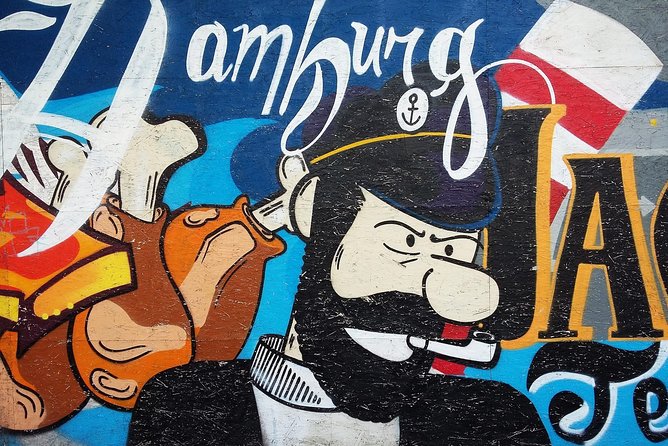
Next comes St. Georg, which the tour overview frames as one of the strongest places in Hamburg for multicultural life. That claim is the kind of thing you should test with your own eyes—and in this case, the ride makes it possible.
St. Georg is where the tour’s theme becomes obvious: Hamburg isn’t one identity. It’s a set of overlapping ones. Different communities, languages, and day-to-day habits show up quickly as you cycle.
This is also where the guide’s value spikes. In a district like this, you can easily get lost in appearances. A good guide helps you connect what you see to what it likely means—how the area got shaped and why it continues to work the way it does.
Inner Alster, Kennedy Bridge, and City Panorama: Slow Down Without Stopping

As you continue, the route leads to the Inner Alster, then crosses or reaches the Kennedy Bridge and a city panorama view. These are “breathing moments” built into the ride.
Waterfronts and bridges do something that walking tours sometimes miss. On a bike, you can switch from neighborhood detail to wide-angle perspective fast. That helps you build a mental map of the city: where the major corridors are, how districts relate, and why certain areas feel central.
This segment is especially good if you want photos without spending your whole time parked somewhere. You’ll have enough viewpoint time to enjoy the scale, then you move again before you get bored.
Lombards Bridge, Rowing Clubs, and Consulates: Fine Details on the Way Back
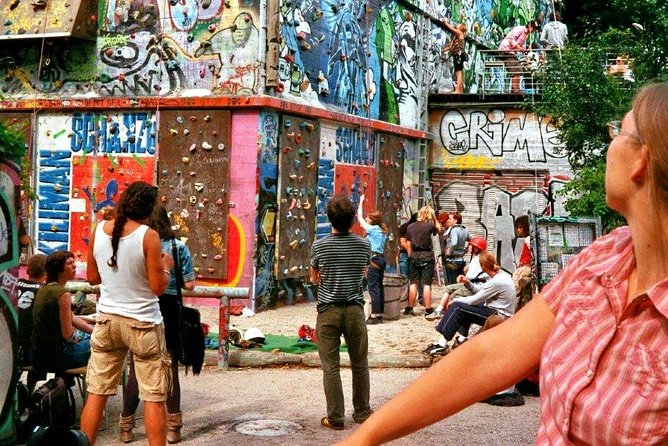
Toward the end, you reach Lombards Bridge, tied to rowing clubs and consulates. This is another useful contrast stop. It’s not only scenic. It signals the international and organized side of the city.
Then it’s back to the bike station and end at the same meeting point you started from. The return format feels tidy and makes the whole tour easier to schedule into your day.
How Hard Is It? Pace, Group Size, and Staying Comfortable
This is built for moderate physical fitness. That doesn’t mean you’ll be sprinting. It means you should be comfortable riding for about 3.5 hours without needing to constantly stop.
The reviews also point to an easy route. That matters because an easy route usually means:
- fewer stressful climbs or tricky navigation moments
- more time for the guide to talk
- less effort spent on staying steady and more on noticing the city
With up to 20 travelers, it doesn’t feel like a giant parade. Smaller group size typically helps the pace stay controlled and keeps the guide from being rushed.
What the Guide Does Best: Facts, Tips, and Real Answers
The most praised aspect is the guide’s fundiertes Wissen (solid knowledge), plus “tolle Hinweise” (great tips). You’ll also get a clear sign of respect for your time and your questions: the guide responds to participant questions and does it in a bilingual way.
Why this matters for you: bike tours succeed when you learn how to look. If the guide only points and talks, you’re left guessing what you’re meant to notice. Here, the guide’s role seems practical—helping you connect the route’s contrasts to actual meaning.
It’s also a good sign that the route is simple. When the ride is easy, the conversation can stay useful instead of turning into constant instructions like, Now watch your wheel.
Who This Tour Fits Best (and Who Might Want Another Option)
This works well if you want:
- a guided view of Hamburg beyond the standard highlights
- a route that mixes street-level life with major landmarks
- a bike experience that stays manageable
You might reconsider if:
- you’re uncomfortable riding for 3.5 hours
- you struggle with cities where some neighborhoods can feel uneasy at first glance
- you’re only interested in quiet, purely “pretty” sightseeing
Also, this tour seems geared toward people who value context. If you like to understand how neighborhoods work—politics, culture, and everyday life—this itinerary gives you enough to chew on.
So, Should You Book the Other Hamburg Bike Tour?
I’d book this if you want an easy-to-follow bike tour that shows you Hamburg as a set of real districts, not a single polished highlight reel. The combination of bilingual guiding, a ride that stays simple, and a route that connects Sternschanze, Schanzen, St. Pauli, St. Georg, and the Alster area makes the $40.52 price feel like time well spent.
Book it with two conditions: you’ll be in good weather, and you’re ready for moderate effort. If those boxes are checked, you’ll leave with a clearer picture of Hamburg’s “other” side—and how it fits into the whole city.
FAQ
How long is the bicycle tour?
It lasts about 3 hours 30 minutes.
Where does the tour start and end?
The tour starts at Schlüterstraße 11, 20146 Hamburg, Germany and ends back at the same meeting point.
What fitness level do I need?
You should have moderate physical fitness since it’s a bike tour over about 3.5 hours.
What’s the group size?
The tour has a maximum of 20 travelers.
Is there a mobile ticket?
Yes. The tour uses a mobile ticket.
What if the weather is bad or I need to cancel?
The experience requires good weather. If it’s canceled due to poor weather, you’ll be offered a different date or a full refund. You can cancel for a full refund if you cancel up to 24 hours in advance.