REVIEW · PHUKET
Half-Day Countryside Cycling Small-group Tour in Phuket
Book on Viator →Operated by Feelphuket · Bookable on Viator
You’ll trade beach road noise for real countryside. This small-group cycling tour in northern Phuket takes you through jungle pockets, pineapple fields, and rubber and palm-oil plantations, ending with lunch by the Andaman Sea.
What I especially like is how smoothly the day is run: hotel pickup and drop-off are built in, and you don’t have to hunt down a bike or fuss with logistics before you pedal.
The food part is a big win, too. You get a proper refuel break with soft drinks, ice coffee or tea, snacks, fruit, and a Thai lunch with a sea view at Laem Sai Pier. The route is designed to show farming life up close, not just pass by it.
One consideration: this is not a stroll. Expect a ride around 20–22 km with some rougher, more technical stretches and hills, so if you’re brand-new to cycling, you’ll want to be honest about your comfort level.
In This Review
- Key highlights at a glance
- Phuket countryside cycling: what makes this day different
- Pickup, bikes, and that first roll-out (Thep Krasattri start)
- Stop in the protected forest: Phuket Forest Nursery Station
- Thalang District: pineapple fields, rubber, palm oil, fish farms
- Toward the coast: Laem Sai Pier and a real sea-view lunch
- How hard is it, really? Terrain, distance, and beginners
- The guide experience: what you’re paying for besides pedals
- Price and value: why $74.97 can make sense
- Where this fits best in your Phuket trip
- What to expect during the stops (so you’re not surprised)
- Should you book this northern Phuket cycling tour?
- FAQ
- What is the duration of the Half-Day Countryside Cycling Tour in Phuket?
- How much does the tour cost?
- Does the tour provide bikes and transportation?
- What food and drinks are included?
- Where does the tour ride and what are the main stops?
- Is pickup available outside Phuket’s main beaches?
- How big is the group?
Key highlights at a glance
- Up to 12 people keeps the pace friendly and questions easy
- Pickup from Phuket’s main beaches plus bike provided means less hassle
- Protected forest stop with coconut tasting and homemade snacks
- Farm-country loop through pineapple fields, rubber, palm oil, villages, and fish farms
- Laem Sai Pier lunch with Andaman Sea views plus plenty of refreshments
- Support vehicle along the route for extra confidence on tougher sections
Phuket countryside cycling: what makes this day different
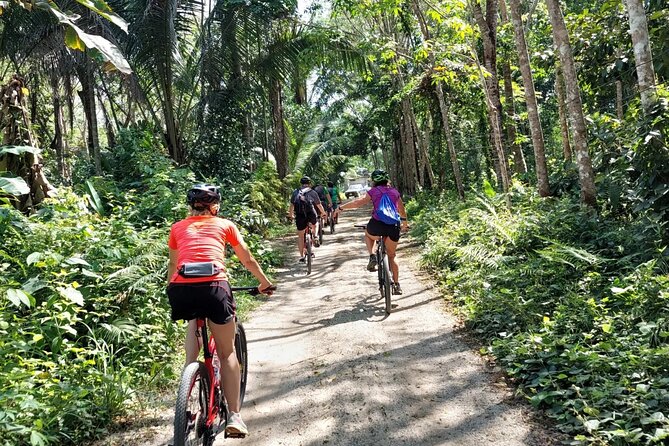
Most Phuket tours push you toward beaches and a quick photo stop or two. This one does the opposite. You’ll spend your morning moving through northern Phuket’s working countryside, where the scenery changes from dense green to open fields, then back toward the coast.
The route is built around a simple idea: you learn by riding through it. The stops aren’t just scenic pull-offs. They’re places tied to how locals live—nursery jungle, crop fields, and coastal fishing areas. And because the group stays small (maximum 12), it feels more like a local outing than a conveyor-belt excursion.
You can also read our reviews of more tours and experiences in Phuket.
Pickup, bikes, and that first roll-out (Thep Krasattri start)
Your day begins at Caltex P.Panachai Sombatpiya (Thep Krasattri). You’ll meet your guide, get a safety briefing, then have time to get familiar with your bicycle before heading into the farming communities.
This “settle in” time matters more than you’d think. A lot of Thailand day tours start fast and leave you adjusting while already moving. Here, you get a short buffer so your hands, brakes, and gears feel right before you hit the road.
Also note the rhythm of the tour: the listed duration is about 5 hours 30 minutes, with multiple stops along the way. That makes it feel like a half-day adventure with real breaks, not a rushed drive-by ride.
Stop in the protected forest: Phuket Forest Nursery Station
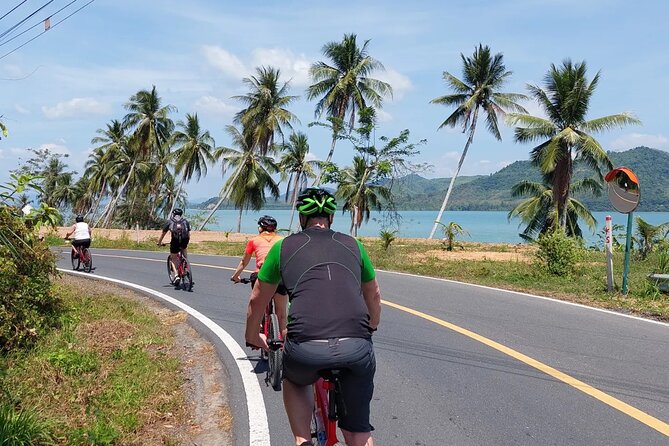
Next you’ll head to Phuket Forest Nursery Station, where the experience is more than “see some trees.” You’re riding through dense jungle and a green corridor that feels like a shaded tunnel—one of the best ways to break the heat while staying active.
You’ll also get time to slow down. This is where you might sample fresh coconut and try homemade snacks from a small local setup in the area, and you’ll have a chance to meet residents. That mix—nature plus a small community moment—is what turns the ride from exercise into something more memorable.
A practical takeaway: jungle sections can be humid and slick depending on conditions. Even if the route isn’t a technical downhill park track, you’re still on outdoor terrain, so steady pedaling and controlled speed are your friend.
Thalang District: pineapple fields, rubber, palm oil, fish farms
Then the route opens up into one of the most interesting parts of the day: Thalang District. This is where you ride through a patchwork of pineapple fields, rubber and palm-oil plantations, sleepy villages, and fish farms.
What I like about this segment is the variety packed into a single ride. You’re not just seeing one crop and moving on. You get a sense of how different types of farming sit next to each other in the same region, and how roads connect fields to homes to coastal work.
This is also a good stretch for paying attention to the small signals of farm life. You’ll pass through areas where people clearly earn their living from the land, and your guide can point out what you’re looking at along the way. In other words, it stops being scenery and starts becoming context.
Toward the coast: Laem Sai Pier and a real sea-view lunch
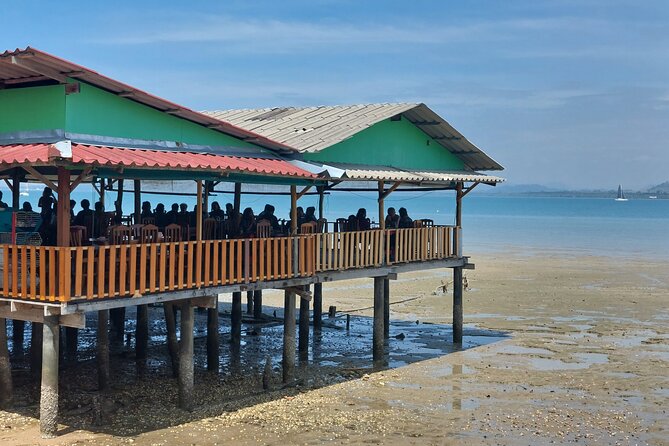
Your final big stop is Laem Sai Pier. The ride shifts to a scenic coastal road, and then you reach the water where your included lunch is served.
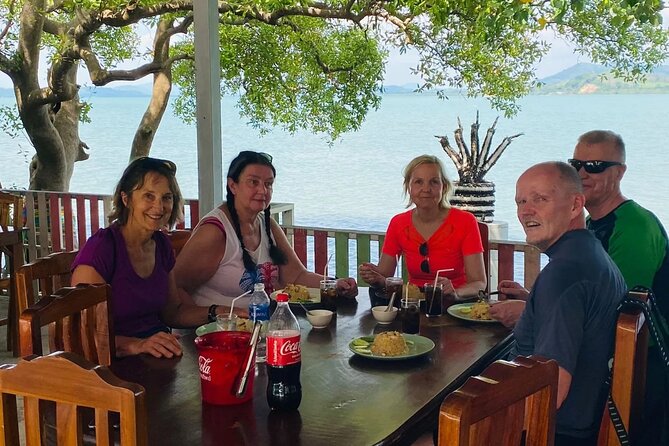
This is the moment many people remember: Thai lunch with a stunning view of the Andaman Sea and the nearby mainland of Thailand. It’s not just food after riding; it’s a reward that makes the effort feel worthwhile. The pier setting also gives you that sense of where the countryside work connects to coastal life.
You’ll also keep getting refreshments here—soft drinks, ice coffee or tea, snacks, and fruit—so you’re not stuck making do with whatever you find on your own.
How hard is it, really? Terrain, distance, and beginners
From the way the route is described and how it’s been experienced, plan on a ride that’s active but not extreme for trained cyclists. You can expect something around 20–22 km, plus some uneven or more technical stretches.
Here’s the honest part: a few segments can feel more demanding than a totally flat city bike path. You may encounter rougher terrain and hills, and there can be short technical sections where you might need to slow down. One big plus is that the tour includes an air-conditioned vehicle that follows the group, so you’re not stuck if you decide a section is too much.
What this means for you:
- If you ride regularly and enjoy mixed surfaces, you’ll likely find it fun and doable.
- If you’re brand-new to cycling, it might still be possible, but you should come prepared for hills and a ride that’s not “sit and cruise.”
- If you’re somewhere in the middle, think of it as a paced day with breaks—just don’t plan on effortless speed.
Guides on this ride (often people like Lee or Pui, and occasionally Joris listed as part of the team) tend to be hands-on and helpful, which makes a difference when a bike tour includes a few trickier moments.
The guide experience: what you’re paying for besides pedals
The value here is not just moving from A to B. It’s learning what you’re passing. The tour is designed around farmland, forest, and coastal areas, which means the guide’s role is to translate what you see into how it works—plantations, nursery forest, crop culture, and local routines.
You’re also likely to get more than one type of explanation during the day: safety and bike setup at the start, nature and local life in the forest portion, farming-style context in Thalang, and a final coastal perspective by the pier.
For many people, that’s the difference between a “bike ride” and an activity that feels like a real day in Phuket.
Price and value: why $74.97 can make sense
At $74.97 per person, this tour isn’t priced like a budget rental-bike deal. But it does include several costs that add up quickly if you do things on your own.
You’re getting:
- Bicycle use (so no rental hunt or deposit games)
- Pickup and drop-off from Phuket’s main beaches and nearby areas
- An air-conditioned vehicle support on the route
- Bottled water plus soft drinks, ice coffee or tea, snacks, and fruit
- An included Thai lunch at Laem Sai Pier (with that sea-view backdrop)
- Small-group format, max 12 people
The “watch out” on value is pickup range. Pickup is included for the main beaches and nearby areas, but if you’re farther out you may pay an extra charge (listed as a maximum of 800 THB per booking). If your hotel is well located, you avoid that added cost.
Also, alcohol isn’t included—so if you like a post-ride drink, plan to handle it separately.
Where this fits best in your Phuket trip
This is the kind of tour that helps you balance the usual Phuket itinerary. If you’re spending your time on beaches, markets, and viewpoints, this gives you a different lens: how northern Phuket grows food and sustains daily life.
You’ll probably enjoy it most if you:
- want to see more than scenery and want real local context
- like active days with breaks instead of long museum-style tours
- enjoy cycling where the reward is scenery plus a stop-and-snack rhythm
If your trip schedule is tight and you want a short day, the half-day format works well. And if you’re tired of crowded tours, the small group size helps keep things relaxed.
What to expect during the stops (so you’re not surprised)
The day flows like this, with stop times built in:
- Start (15 minutes): meeting guide, safety briefing, bike familiarization, then ride into communities
- Forest nursery (45 minutes): jungle riding, coconut tasting, homemade snacks, local meet-and-learn time
- Thalang district (1 hour 15 minutes): pineapple fields, rubber and palm oil plantations, villages, fish farms
- Laem Sai Pier (45 minutes): coastal ride, Thai lunch, sea views, and refreshments
Those stop durations are a big clue about the experience style. This isn’t just “arrive, snap a photo, leave.” You get time to settle, eat, and pay attention.
Should you book this northern Phuket cycling tour?
Book it if you want a real countryside half-day in Phuket: forest shade, plantation views, farm-life context, and a satisfying lunch with an Andaman Sea backdrop. If you’re comfortable with a ride around 20–22 km and you don’t mind some rougher sections, it’s a strong value for the combination of bikes, support, and included meals.
Skip it (or choose a gentler alternative) if you need a fully beginner-flat experience. The route can be demanding, and even with support, you’ll want to feel confident on mixed surfaces and hills.
If you fall in the middle—some cycling experience but not a hardcore rider—this is still a good choice because the day includes breaks, snacks, and a following vehicle. Just show up ready to work a little and you’ll likely come away feeling like you saw Phuket beyond the postcard.
FAQ
What is the duration of the Half-Day Countryside Cycling Tour in Phuket?
The tour is about 5 hours 30 minutes.
How much does the tour cost?
The price is $74.97 per person.
Does the tour provide bikes and transportation?
Yes. You get use of a bicycle, plus hotel pickup and drop-off from Phuket’s main beaches and nearby areas. An air-conditioned vehicle is also included.
What food and drinks are included?
Bottled water and refreshments are included, including soft drinks, ice coffee or tea, snacks, fruit, and a Thai lunch (at Laem Sai Pier).
Where does the tour ride and what are the main stops?
Stops include Caltex P.Panachai Sombatpiya (Thep Krasattri), Phuket Forest Nursery Station, Thalang District, and Laem Sai Pier.
Is pickup available outside Phuket’s main beaches?
Pickup is included for hotels at the main beaches and nearby areas. If you need pickup outside that area, there may be an extra charge (maximum 800 THB per booking).
How big is the group?
The tour has a maximum of 12 travelers, which keeps it a small-group experience.