REVIEW · ROTTERDAM
Kinderdijk Area Cycling Tour
Book on Viator →Operated by Travel Kinderdijk · Bookable on Viator
Kinderdijk can feel like a postcard. This private tour turns it into a full, move-around-your-day experience with windmills from land and water. You get a bike, a waterbus ride, and a guide in the same plan, led by Marco for a personal pace. I especially like how the route gives you multiple angles of the UNESCO site without you having to plot a map.
My second big win is the food stops that feel Dutch and practical: a drink-and-snack pause, a stop at a local biological cheese farm (not on Sundays), and the IJsboerderij ’t Koeiestalletje ice cream break. The only real consideration is weather. This is a good-weather experience, so have rain gear ready and know the day can change.
In This Review
- Key highlights to plan around
- Kinderdijk by bike and waterbus: the format that pays off
- Rotterdam start at Erasmusbrug: how the day actually moves
- Stop 1 at UNESCO Kinderdijk: viewpoints from multiple angles
- The windmill museum + waterways: seeing working structures, not just photos
- Cheese farm and local snacks: the Dutch food moments that make it feel real
- Stop 2 at IJsboerderij ’t Koeiestalletje: fresh-milk ice cream break
- Price and value of a private tour at about $240.30
- Who this tour fits best (and what to bring)
- Should you book the Kinderdijk Area Cycling Tour?
- FAQ
- How long is the Kinderdijk Area Cycling Tour?
- Is the tour private?
- What’s included in the price?
- Where does the tour start and end?
- Is there an ice cream stop?
- Do children get a discount?
Key highlights to plan around
- Private guiding with a local pace so you can linger where the windmills look best
- Bike + waterbus combo for views you cannot get from just one direction
- Windmill museum admission included so you see how the place actually works
- Food breaks that fit the route, including fresh-milk ice cream
- A guide who thinks about comfort, including rain-ready help when needed
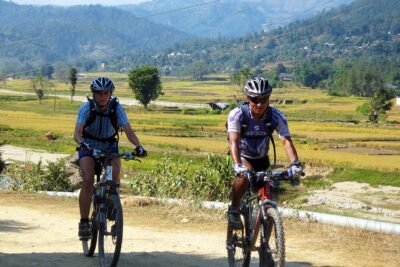
- Flat, easy cycling on maintained paths with a moderate fitness level
Kinderdijk by bike and waterbus: the format that pays off
Kinderdijk is famous, but it is also oddly hard to see well if you are doing it alone. The windmills sit in a network of waterways, dikes, and footpaths, and the best views are often split across land and water. This tour solves that. You cycle into the windmill area, then add water views via waterbus so the scenery keeps unfolding in new directions.
You also get a real guide advantage. Marco knows where the light hits, where the angles feel natural, and how to time things so your camera has something to work with. Even if you are not chasing perfect photos, the route planning helps you feel less like you are rushing between dots on a map.
The other quiet benefit: the day is built for comfort. You ride a bike (so you are not stuck waiting around), but it is not a hard-core cycling outing. The terrain is flat and the paths are described as well maintained, which matters because you want the day to feel like sightseeing, not training.
Rotterdam start at Erasmusbrug: how the day actually moves
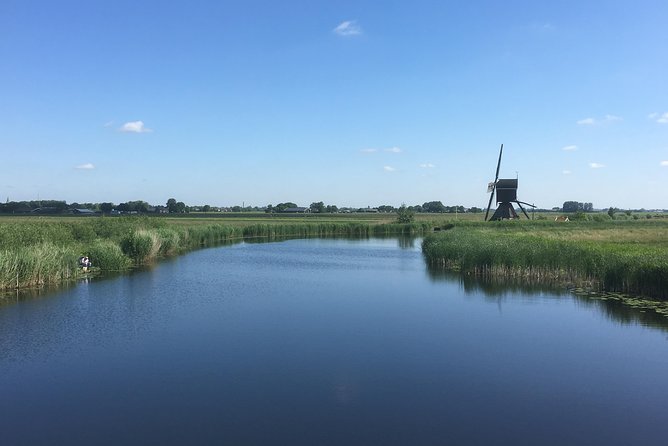
Your tour starts near the Erasmusbrug (3016 DM Rotterdam). From there, you head toward Kinderdijk with pickup or meet-up at the starting point. There is also an option to be picked up at Rotterdam Central Station or a hotel in Rotterdam Center for an extra fee (paid in cash on arrival), so you can match the plan to how you are traveling that day.
What I like about this setup is how it limits hassle. You are not juggling ticket lines and transfers after you arrive from wherever you slept the night before. The plan includes the transport piece and also ends with you being brought back to the waterbus stop in Kinderdijk.
If you are the type who hates timed tourism, you’ll probably appreciate the pacing. The tour runs about 4 to 5 hours, and it is private, so the route can stretch a bit when the moment is right. Marco is also known for quick communication and day-of problem-solving, especially when weather swings.
Stop 1 at UNESCO Kinderdijk: viewpoints from multiple angles
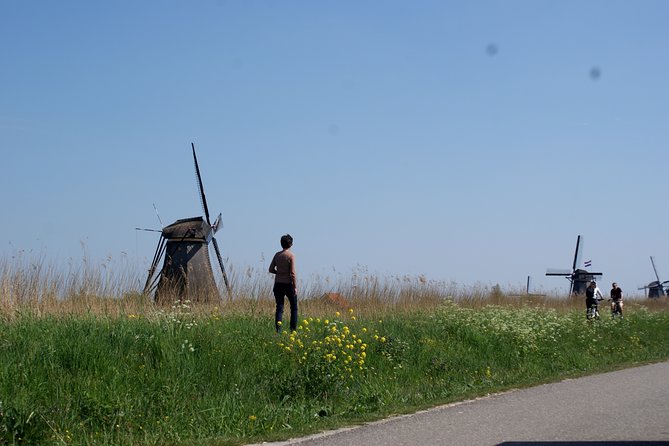
The centerpiece is a private guided cycling visit to UNESCO-listed Kinderdijk. The idea is simple: you approach the windmill area from several perspectives and see it the way locals do—by bike, along the waterways, stopping when a view actually earns the pause.
This is not just exterior sightseeing. Part of the experience includes visiting the official authentic Kinderdijk windmill and museum. That matters because it turns the windmills from a pretty backdrop into an engineering story you can understand with your eyes.
You will also get a mid-route break built into the timing: a stop with a drink and snack on a local spot. That is more than a nice perk. On a cycling day, it keeps your energy stable, and it gives you a natural reset between the “ride and look” parts and the museum portion.
Two practical tips help a lot here: bring your camera, and pack rain gear plus a sun layer plan (suncap or sunglasses). Weather in the Netherlands can change fast, and the tour is outdoors for a good chunk of the time.
The windmill museum + waterways: seeing working structures, not just photos
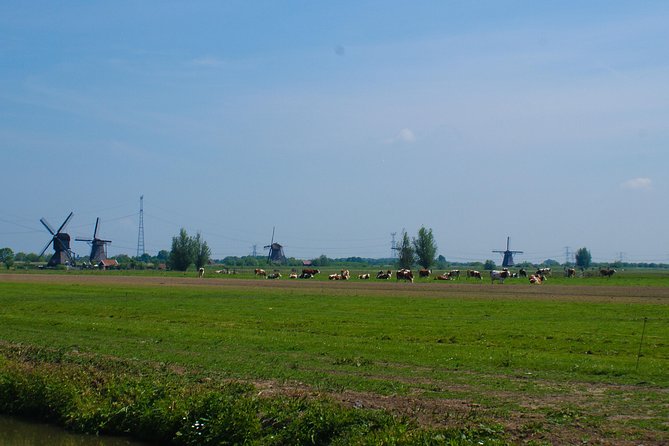
Kinderdijk’s most compelling pull is that the windmills are not frozen relics. They are working features with residents and ongoing maintenance, which is why it feels special even when the weather is plain. The included museum time lets you go inside and understand the machinery rather than just admiring sails from the outside.
Then there’s the waterways piece. The tour includes a boat experience element focused on windmill views from the waterways. If you have ever tried to photograph windmills from only one side, you know the frustration. Angles matter because the line of sight, the reflections, and the spacing of windmills change constantly along the water.
I like that the itinerary gives you both styles: a bike loop that brings you close to paths and structures, plus a water view that re-frames the whole site. This combo is what makes the day feel like more than a checklist.
If you are traveling solo, this format can also feel surprisingly efficient. You still get the personal attention of a private guide, but you are not spending extra time navigating around the site by yourself.
Cheese farm and local snacks: the Dutch food moments that make it feel real
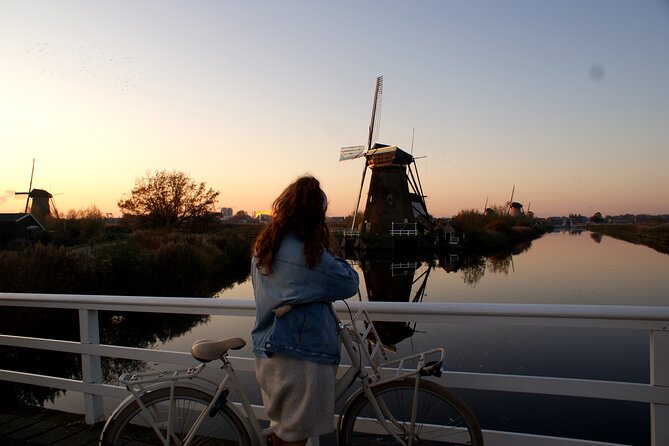
Between the windmill views, you’ll stop for local bites. The plan includes a drink and local pastry, plus additional snack time built into the cycling flow. These breaks are timed so you can keep moving without getting stuck in a long meal schedule.
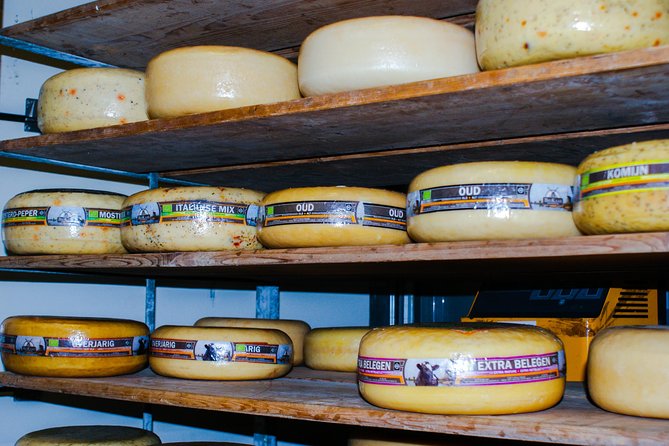
Then comes the local biological cheese farm stop. It is included, but there’s one wrinkle: it is not on Sundays. If your schedule puts you in Kinderdijk on a Sunday, it’s worth asking how the route adjusts so you still get the food and local context without that specific stop.
This is the kind of detour that makes the day feel grounded. Cheese fits the region, and the farm stop is a chance to connect what you see (water management, agriculture, local residents) with what people do there day to day.
If you like food that is simple but thoughtfully local, this is where you’ll feel it. And because the day is private, Marco can usually tailor the rhythm to your interest—more questions if you want context, or more moving if you want more views.
Stop 2 at IJsboerderij ’t Koeiestalletje: fresh-milk ice cream break
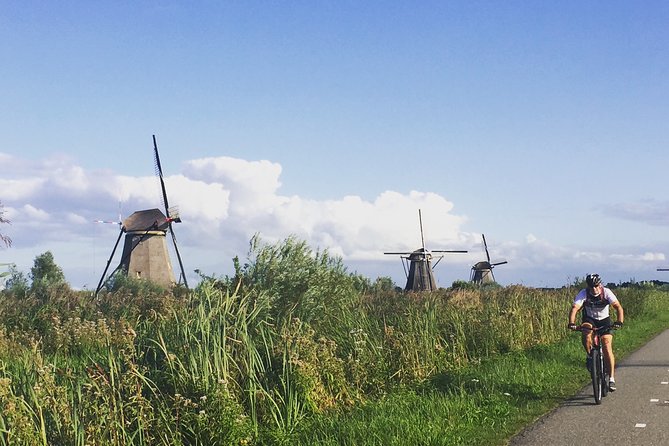
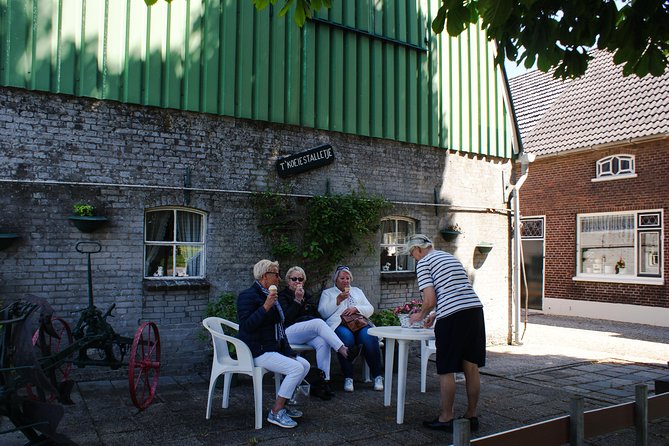
After the windmill-and-water portion, you shift into a classic Dutch treat stop: IJsboerderij ’t Koeiestalletje. The highlight here is homemade ice cream made from fresh cow milk. You’ll also have coffee or tea with the break.
The time is short—about 20 minutes—so it works as a reset rather than a long pause. That helps on a day that is already packed with visuals. It also gives you something to look forward to mid-afternoon, when sightseeing momentum can sometimes fade.
I love this stop because it’s playful but still grounded. You are not just “having dessert.” You are getting a food connection that fits the theme of the day: windmills tied to land use, farms, and the daily rhythm of the polders.
If you are sensitive to dairy or prefer non-dairy options, the tour data doesn’t mention alternatives, so it’s smart to ask ahead. Otherwise, go with the fresh-milk logic and enjoy it.
Price and value of a private tour at about $240.30
At $240.30 per person, it’s not the cheapest way to see Kinderdijk. But when you break down what is bundled, the value starts to make sense—especially because it’s private.
You’re paying for:
- a private guided service
- bicycle use
- entrances tied to the windmill museum experience
- snacks, coffee and/or tea, and a drink-and-snack stop
- a waterbus ride (including return, with pick-up built into the plan)
That combination is what makes this feel like a “day built for you,” not just transportation plus a ticket. Group tours can look similar on paper, but you lose a lot of the practical help—photo angles, comfort adjustments, and the ability to slow down at the best spots.
There is also a quiet logistical value: the tour includes transport so you do not have to stitch it together from scratch. For many visitors, that alone can save time and stress.
If you are a couple, a parent with a child, or a small group, private tours often become the better deal because you are splitting the guide attention and planning effort. If you are traveling solo and want the best views without doing logistics yourself, it can also be worth it.
Who this tour fits best (and what to bring)
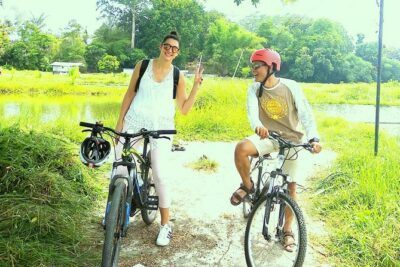
This works best if you want your Kinderdijk day to be active but not punishing. The tour is designed for moderate physical fitness, and cycling is on flat, maintained paths. You should be comfortable riding a bike and spending a few hours outdoors.
It’s also a strong match if you care about photography. Marco is known for photography help, including tips to capture light on a phone or camera, and he may even compose photos for you. If that matters, bring the phone you actually want to use, not the one you forgot to charge.
Bring:
- camera
- rain clothes (and a backup plan if wind or rain gets heavy)
- sunglasses or a sun cap
Also consider how flexible you want to be. The experience depends on weather, and the tour is set up for outdoor cycling and boating. The good news is that Marco’s communication and practical problem-solving are part of the overall reputation, including quick adaptations like arranging e-bikes when weather makes cycling harder.
Should you book the Kinderdijk Area Cycling Tour?
If you’re choosing between DIY Kinderdijk and a guided day, I’d book this one if you want the site from land and water, plus the museum, plus food breaks, without spending your time figuring it out. The private guide angle is the real differentiator, and the included snacks and entrances make the price feel less random.
I would not book it if you are set on a strictly indoor backup plan or if bad weather would ruin your whole trip. Since the tour needs good conditions and much of it is outdoors, plan for rain gear and a flexible mindset.
For many visitors, this is the fastest route to feeling you actually understood Kinderdijk—not just photographed it. And with Marco guiding you through the best viewpoints, it stays fun even when you slow down for one more windmill angle.
FAQ
How long is the Kinderdijk Area Cycling Tour?
The tour runs about 4 to 5 hours.
Is the tour private?
Yes. It is a private tour/activity, so only your group participates.
What’s included in the price?
Includes bike use, entrances, private guiding, coffee and/or tea, one drink and local pastry, snacks, and a return waterbus ticket including pick-up at Rotterdam.
Where does the tour start and end?
It starts at Erasmusbrug (3016 DM Rotterdam) and ends back at the waterbus stop in Kinderdijk.
Is there an ice cream stop?
Yes. You visit IJsboerderij ’t Koeiestalletje for homemade ice cream from fresh cow milk, with coffee or tea.
Do children get a discount?
Children 4 to 12 get a reduced cost. The details are not listed here, but it says to ask for more information.