REVIEW · YOGYAKARTA
Yogyakarta Cycling Tour Around the Villages and Fish Farm
Book on Viator →Operated by Izzati Jogjatour · Bookable on Viator
Sleman feels bigger when you pedal it. This Yogyakarta cycling tour trades packed city rides for quiet village lanes and rice-field views, then finishes with spring-water fish therapy at a local fish farm. I especially like that you get round-trip transfers plus a proper briefing, so you’re not stuck trying to piece together the countryside on your own.
One thing to keep in mind: this is still real cycling. The tour says most people can join, but you’ll be expected to be in fit condition and not ride sick or symptomatic.
In This Review
- Key highlights at a glance
- Why pedal around Sleman instead of just riding Yogyakarta’s streets
- From Izzati Jogjatour base camp to the first village stretch
- Stop 2: Maguwoharjo village cycling and the rhythm of rural life
- Stop 3: Sendang Sombomerti fish farm, fish therapy, and lunch
- Transfers, bikes, and the private-tour feeling that really matters
- Price and value: what $23 buys you in the real world
- What this tour is best for (and who should think twice)
- Should you book the Izzati Jogjatour village bike tour?
- FAQ
- Is pickup included for the Yogyakarta cycling tour?
- How long is the tour?
- What stops are included during the ride?
- What’s included in the price?
- Do I get food during the tour?
- What exactly is fish therapy at Sendang Sombomerti?
- What’s the cancellation policy?
- Is the tour suitable for most people?
Key highlights at a glance
- Private pace through rice fields and vegetable plots in Sleman’s villages
- Transfers included, so you skip the hassle of getting to the start and back
- Bike setup and helmet at the Izzati Jogjatour base camp, with warm-up time
- Sendang Sombomerti fish farm lunch, plus the spring-water fish therapy experience
- Water, cold drinks, and snacks are included so you’re not hunting for food mid-ride
- Health gear provided (masker and hand sanitizer) for safer shared spaces
Why pedal around Sleman instead of just riding Yogyakarta’s streets
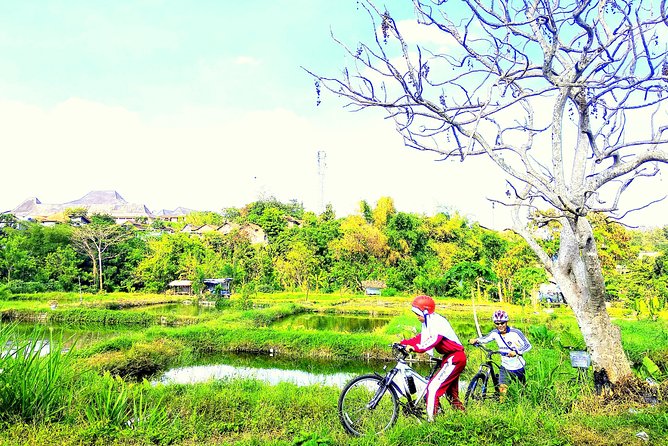
If you want Yogyakarta to feel more like real life than a photo stop, this is the kind of day that helps. The countryside around Sleman is where you see how people actually work and grow food. And because the routes are the kind cars can’t follow, you end up on calmer roads and paths that are hard to find solo.
Another big win is pacing. You’re not in a large group doing the same stop-and-go routine. You ride at a comfortable rhythm that fits a 2 to 4 hour outing, with time for photos and breaks. That matters here because the scenery is visual and also human: rice fields, small vegetable areas, and village routines you can watch at close distance.
Finally, this tour solves a practical problem for many visitors: the area is poorly mapped, so independent exploring can turn into wasted time. Having a guide take you along set routes means you spend your energy on riding and noticing things instead of guessing turns.
You can also read our reviews of more tours and experiences in Yogyakarta.
From Izzati Jogjatour base camp to the first village stretch
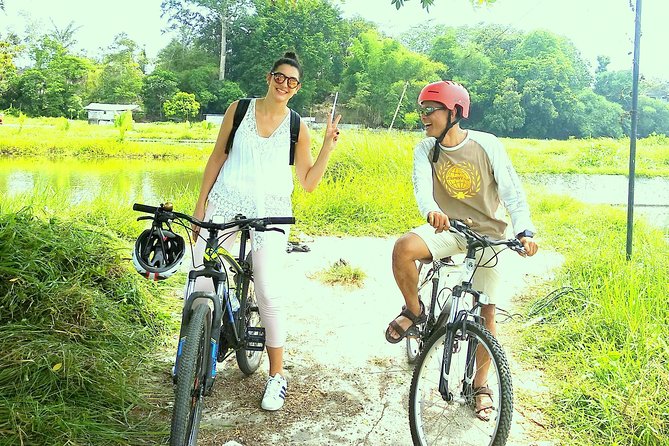
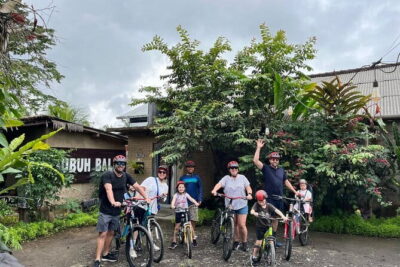
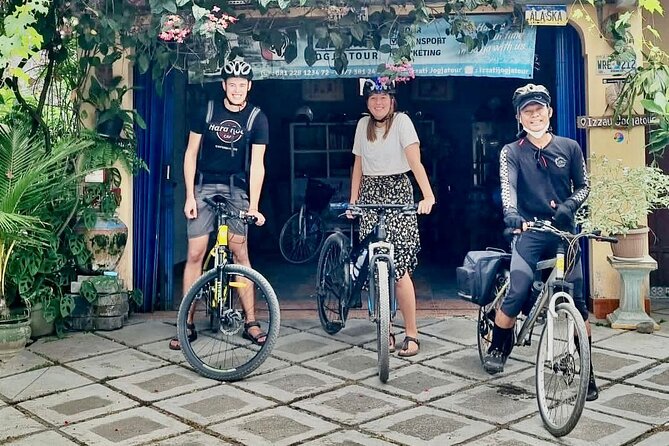
The tour starts at Izzati Jogjatour’s base camp. Here’s what you can expect before you roll: bike setup, a safety helmet, and a briefing. The schedule also includes a short warm-up, which sounds small, but it helps if you’re not used to bikes or you haven’t ridden in a while.
You’ll also get route guidance using Google, which is useful in a place where your phone map might not match what’s actually rideable. In practice, that reduces the “wait, is this the right way?” stress. It also helps the guide adjust the ride to your group’s pace.
Then the countryside opens up fast. You leave the start area and head toward Maguwoharjo, and that shift is the whole point. Instead of city traffic, you get calmer streets and the first views of green areas that signal you’re in “real farming” territory.
Practical tip: bring a little patience for the warm-up and briefing portion. It’s part of why the day flows smoothly afterward.
Stop 2: Maguwoharjo village cycling and the rhythm of rural life
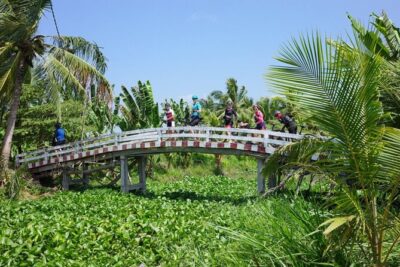
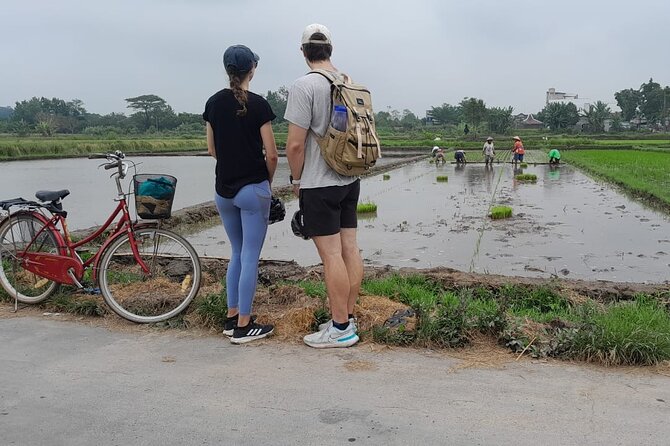
The ride around Maguwoharjo is where you’ll feel what makes this tour different: it’s built for village-to-village movement. You’re not just passing rice fields from a distance. You cycle through areas that let you see the scale of cultivation—green rice fields, vegetable plantations, and small local scenes that you might miss if you only follow main roads.
This stop is also ideal for photos. The timing (about 1 hour 30 minutes in the itinerary) gives you enough stretch to catch different angles: wider rice views, closer shots of plantation rows, and village corners where everyday life happens. Because it’s a bike tour, you can stop where it makes sense instead of only stopping where a car tour bus decides.
A subtle bonus here: riding through villages helps you understand how the countryside connects. You see how small roads link homes, farms, and work areas. That connection can be hard to grasp if you only visit one viewpoint or one temple complex.
Possible drawback: if you’re expecting big, dramatic scenery constantly, this ride is more about repeated, steady countryside moments—green fields plus lived-in village details. If you like that kind of travel (quiet, local, slow), you’ll love it.
Stop 3: Sendang Sombomerti fish farm, fish therapy, and lunch
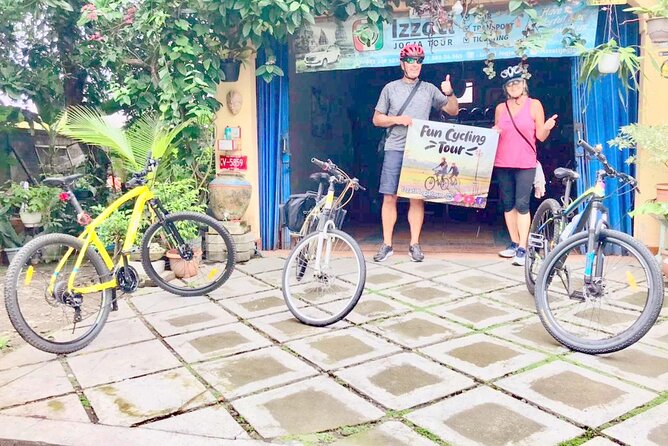
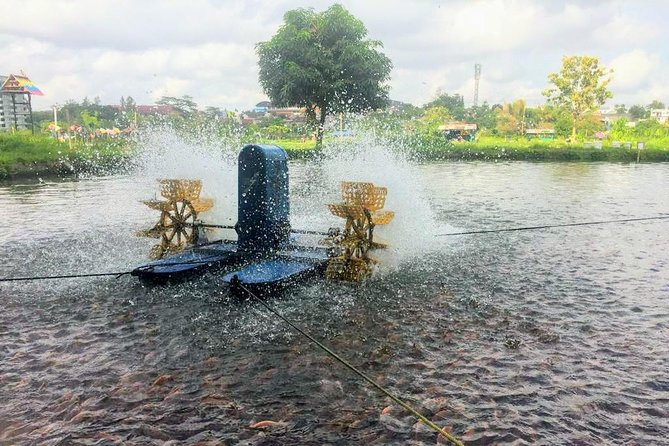
The final highlight is the Sendang Sombomerti spring-water fish farm. This is the stop that turns a countryside bike ride into a very specific Yogyakarta experience.
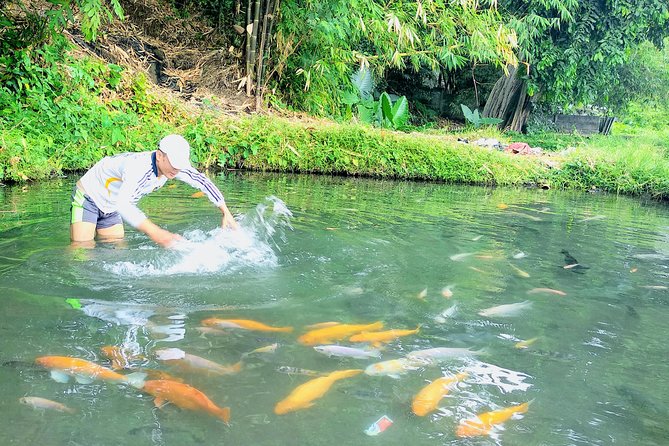
Here’s what you’ll do: you’ll look closely at fresh-water fish farmers at work. Then you can try catching wild fish with your bare hand. That’s not something you can safely recreate on your own, and it’s also not “performance tourism.” It’s hands-on interaction with how this place functions.
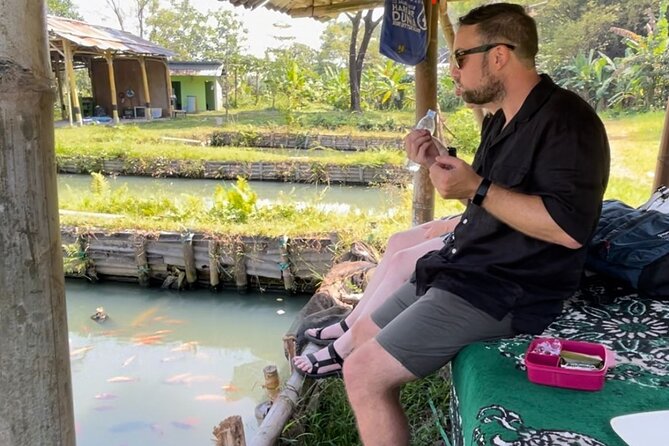
Next comes the part most people talk about: fish therapy. The idea is simple—you use the spring water and let the fish interact with dry skin. It’s one of those activities that feels odd for a minute and then becomes oddly memorable, like you’re inside a local daily routine rather than watching it.
And yes, you’ll eat. Lunch is included at this stop, along with local food and drinks. The tour is set up so you don’t end the ride hungry. You’re also provided with water and cold drinks, plus snacks earlier in the day, so your energy doesn’t crash halfway through.
What to expect emotionally: this stop is more hands-on than the cycling itself. If you’re hesitant about bare-hand activities or feeling small fish in water, you can still watch and participate as much as you’re comfortable with. Just be honest with your guide beforehand.
Transfers, bikes, and the private-tour feeling that really matters
For $23 per person, the value isn’t just that you get a bike. It’s that the tour handles the parts that normally cost you time or energy on your own.
You get private transportation to and from the start point, which means you avoid the common travel headache: figuring out how to reach rural starting points without spending your whole day commuting. You also avoid awkward “What if the route is unsafe?” stress, because the ride is planned around access roads you can actually cycle.
You also get the basic gear covered:
- bike
- helmet
- bottled water and cold water
- snacks
- lunch
- face mask (masker) and hand sanitizer
That safety gear detail might seem minor, but it shows the provider planned for shared public spaces. It’s aligned with the health protocols listed for the experience, including social distancing when needed.
From the reviews, one guide name shows up repeatedly: Wardo. People describe him as friendly and organized, including helping with snacks and keeping the day enjoyable. That lines up with what you want from a private village ride: clear direction, good bike setup, and not rushing you.
One more practical note: this is a private tour/activity. Only your group participates, which usually means fewer interruptions, more flexibility, and less waiting around at roadside stops.
Price and value: what $23 buys you in the real world
At $23 per person, you’re not paying for luxury. You’re paying for transportation, a guided route through areas that are hard to navigate independently, and a full-food plan that includes snacks plus lunch.
Here’s what makes the price feel fair:
- Transfers included (that alone can be expensive if you’re negotiating rides from central Yogyakarta)
- Bike and helmet provided, so you don’t need to rent gear or worry about quality
- Lunch included at the fish farm, which also saves time finding food later
- Time-saving route knowledge in poorly mapped countryside
Could you do parts of it independently? Sure. But “independent” here likely means more time guessing turns and more time trying to figure out a safe route. This tour buys you peace of mind and local context.
Also, the duration range (2 to 4 hours) helps you fit it into a busy travel schedule. If you’re doing temples one day and culture stops the next, this is a nice active interlude without committing to a full day.
What this tour is best for (and who should think twice)
This works best for you if:
- you want authentic countryside without riding through traffic
- you like quiet roads, villages, and small-scale scenes
- you’re comfortable cycling for a couple hours with breaks
- you’re open to a hands-on fish-farm experience
You might think twice if:
- you’re sensitive to the idea of fish interacting with your skin
- you have very limited cycling ability or you’re not feeling well (the tour requires fit condition)
- you only want major landmarks and big sightseeing hits every 10 minutes
If you’re traveling with friends or family and want a calmer day away from the busiest areas, the private setup adds real comfort. It’s not a show; it’s a ride with real stops.
Should you book the Izzati Jogjatour village bike tour?
I think you should book this if you want a countryside day that feels practical, local, and guided. The combination of village cycling, a guided route through harder-to-navigate areas, and the fish farm lunch/fish therapy experience makes this more than just “rent a bike and ride.”
I’d skip it only if you’re looking for nonstop adrenaline or you strongly dislike hands-on activities. Otherwise, this is a strong value pick: you get the whole structure—bike, helmet, transfers, snacks, lunch, and a guide who seems to know how to keep the day relaxed.
FAQ
Is pickup included for the Yogyakarta cycling tour?
Yes. The tour includes round-trip transfers to the start point, so you do not need to cycle around the city to begin.
How long is the tour?
It runs for about 2 to 4 hours depending on timing on the day.
What stops are included during the ride?
The route includes: a start at Izzati Jogjatour base camp, a village cycling section around Maguwoharjo, and a visit to Sendang Sombomerti fish farm for fish therapy and lunch.
What’s included in the price?
The price includes private transportation, bottled water/cold water, snacks, lunch, a bike, a helmet, and personal protective equipment such as mask and hand sanitizer.
Do I get food during the tour?
Yes. You’ll have snacks during the ride and lunch at the fish farm stop.
What exactly is fish therapy at Sendang Sombomerti?
At the fish farm, you can try the fish therapy experience in the spring water after interacting with the fish farmers and the fish activity during the stop.
What’s the cancellation policy?
You can cancel for a full refund up to 24 hours before the experience starts. Changes made within 24 hours of the start time are not accepted.
Is the tour suitable for most people?
The experience says most travelers can participate, as long as you are in fit condition and not sick or showing symptoms of illness.
If you tell me your dates and whether you’re comfortable with bare-hand fish interactions, I can help you decide if this is the right kind of day for your trip style.