REVIEW · MONTEVIDEO
Montevideo Electric Bicycle Tour
Book on Viator →Operated by Beetour · Bookable on Viator
E-bikes turn Montevideo into a quick story, with e-bike comfort that makes distance feel manageable and bike lanes that keep the ride calm and controlled between landmarks. I love the way the route stitches together major sights with short stops, so you get orientation fast. One drawback to plan for: the tour depends on good weather.
What makes it easier is how the tour teaches as it moves. Guides such as Freddy, Santiago, Felipe, and Santi can speak in English and Spanish, and you’ll also get an audio guide in both languages—handy when you want details at your own pace. Plus, you’re issued a helmet and reflective vest for the ride.
For $59, you’re out there for about 3 hours 15 minutes, typically covering close to 18–19 km depending on the group and flow. You start from La Gaceta 1282 (10:00 am) and pedal a full loop before returning to the meeting point. Booking ahead helps too, since this one averages around 45 days in advance.
In This Review
- Key things to know before you book
- Entering Montevideo on Electric Bikes for $59
- The route pace: 3 hours 15 minutes with smart short stops
- Picking up context: UDELAR, Batlle Park, and Estadio Centenario
- Why the bike lanes feel like the secret weapon
- Avenida 18 de Julio: the long “city main street” break
- Old City highlights: Plaza Independencia, Salvo Palace, and Plaza Matriz
- Football, cycling culture, and the Velodrome stop
- The Rambla segment: Rio de la Plata views that make the ride feel easy
- Parks and reflection: Parque Rodo and the Holocaust memorial
- Architecture with character: Salvo, the Obelisco, and Castillo del Alquimista
- Punta Carretas, Pocitos, and the Montevideo sign for your final photos
- Who this Montevideo e-bike tour is best for
- Practical booking advice and how to get the most out of it
- Should you book this tour?
- FAQ
- How long is the Montevideo Electric Bicycle Tour?
- What time does the tour start, and where is the meeting point?
- Is the tour private?
- What’s included in the price?
- Are tickets or entrance fees included?
- What if the weather is poor or I need to cancel?
Key things to know before you book
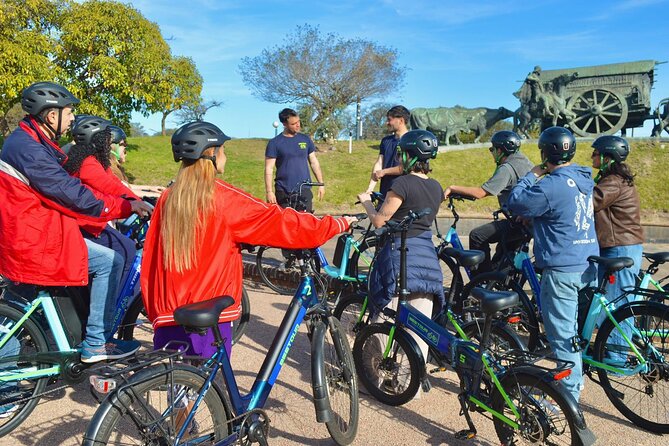
- A real e-bike half-day loop: expect about 18–19 km with minimal strain.
- Two layers of interpreting: English/Spanish guide plus an English/Spanish audio guide.
- Safer-feeling riding: dedicated bike paths and bike-friendly street routing through town.
- Landmarks plus atmosphere: parks, stadiums, plazas, palaces, and coastal viewpoints.
- Admission isn’t a headache: key stops include tickets (and many others are free).
Entering Montevideo on Electric Bikes for $59
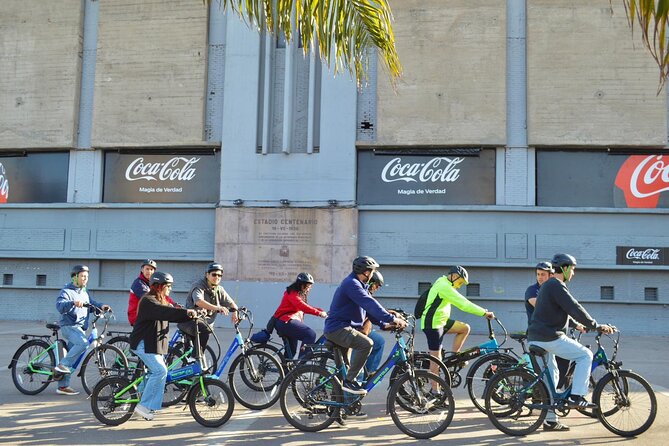
This is the kind of tour that helps you get bearings fast. You’re not stuck with a slow walking pace or a distant bus view. Instead, you cover a lot of the city without feeling like you sprinted for it.
At $59 per person for roughly 3 hours 15 minutes, the real value is in the efficiency. You get a guided “map in motion,” where the landmarks come with context and the route keeps you moving between neighborhoods.
And because it’s on electric bikes, the effort stays practical. One rider even mentioned doing around 19 km without feeling tired afterward, including someone over 65. So if you’re traveling with mixed energy levels, this is often a strong compromise between sightseeing and comfort.
You can also read our reviews of more tours and experiences in Montevideo.

The route pace: 3 hours 15 minutes with smart short stops
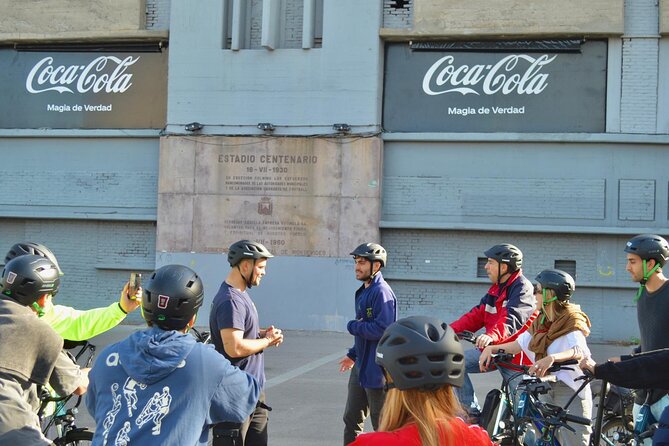
The tour runs from 10:00 am and ends back where you start at La Gaceta 1282. It’s designed as a loop, so you see multiple areas without constantly backtracking or changing transport.
The stops are mostly short—some are around five minutes, and a couple last longer (like the stretch on Avenida 18 de Julio and time along the Rambla). That timing matters because you’ll get a “first look” at many places, then you can choose what deserves a return visit later.
A practical plus: it’s a private tour/activity, so it’s only your group out on the route. Reviews describe small, well-managed groups, including a group of 3 and a group of 8, which helps explain why the pacing feels controlled rather than chaotic.
Picking up context: UDELAR, Batlle Park, and Estadio Centenario
You start with an academic landmark: Hospital Universitario | UDELAR. The big appeal here isn’t just the building—it’s the sense that Montevideo takes public institutions seriously, from health to education.
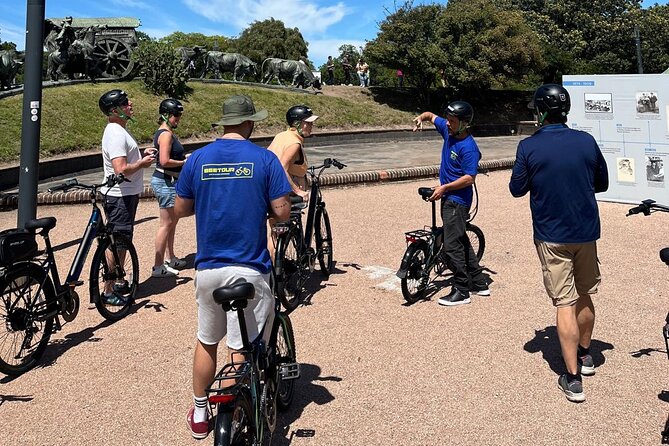
From there, the tour moves to La Carreta, the Batlle Park monument that connects movement and art. This kind of stop is quick, but it’s useful because it gives you cultural “anchors.” It’s a reminder that city art isn’t separate from daily life.
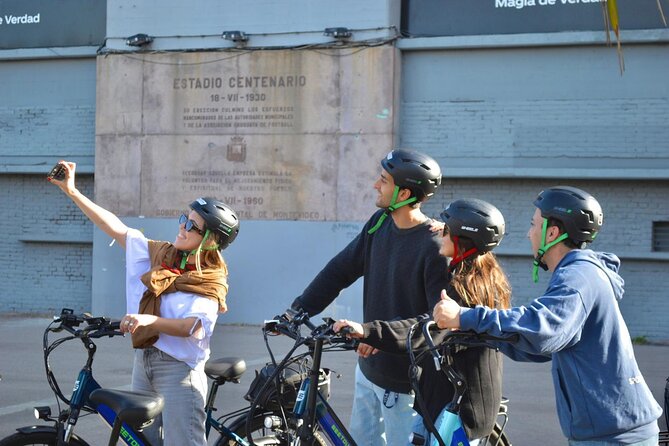
Then you hit Estadio Centenario, the historic stadium tied to the first FIFA World Cup in 1930. Even if football isn’t your main obsession, it’s a powerful place to understand how deeply the sport is woven into local identity.
Why the bike lanes feel like the secret weapon
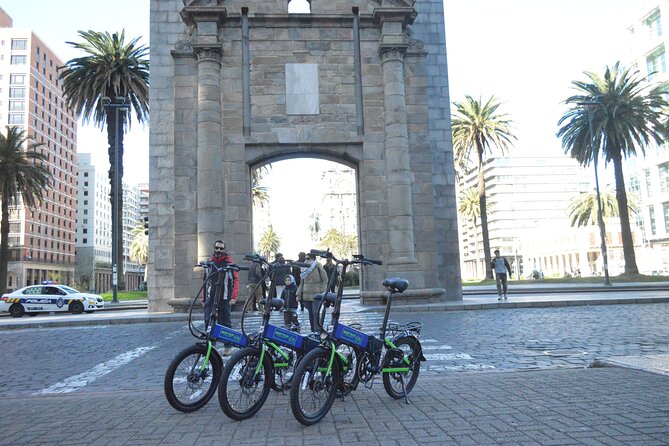
Montevideo is known for bike-friendly infrastructure, and this route leans into it. You ride using dedicated cycling space rather than constantly mixing into unpredictable traffic.
One reviewer described feeling safe the whole time and noted the bike lanes run down the middle of main streets, with clear separation and well-coned guidance. That matters because it changes the whole experience—less stress, more attention on what you’re seeing.
You still encounter city movement and traffic lights, but the tour is set up for that. The guides manage the group together and keep everyone oriented on where to go next.
Avenida 18 de Julio: the long “city main street” break
The tour gives you a longer look at Avenida 18 de Julio, Montevideo’s main artery. This is where the city’s daily rhythm shows up—shops, cafes, storefront energy, and the feeling of an active urban center.
A stop here works because you can watch the city while you ride rather than searching for it later. The pace also gives you a chance to take photos without feeling like you’re constantly stopping every 20 meters.
If you only do one guided orientation tour, this is one reason to pick this one. It helps you understand the city layout quickly: where the old core begins, where major streets run, and how the coastline connects to the urban center.
Old City highlights: Plaza Independencia, Salvo Palace, and Plaza Matriz
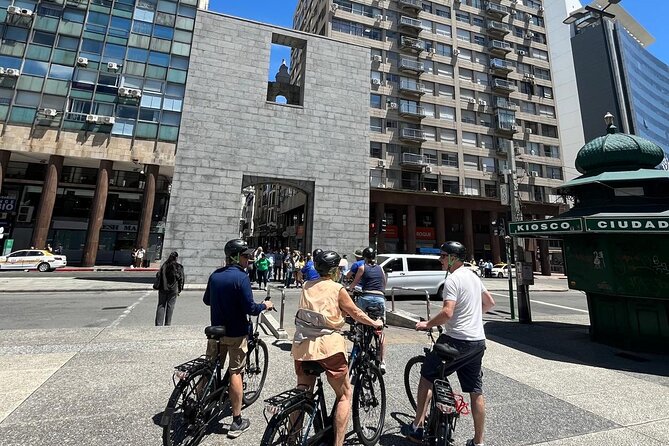
Once you reach the center, the sights get grand and symbolic.
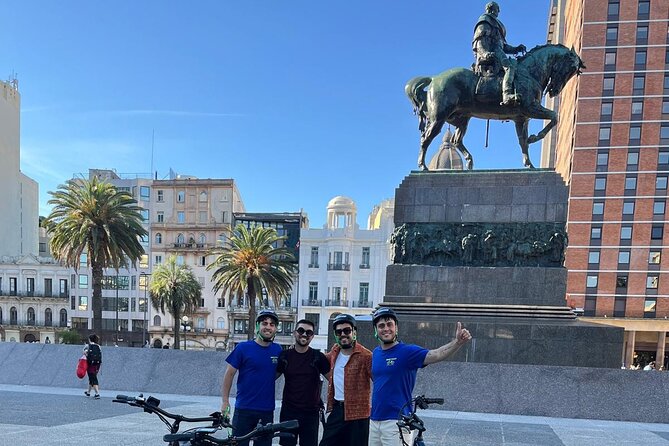
At Plaza Independencia, you’re at one of Montevideo’s most important public squares, with the Artigas monument and the gateway feel to the Old City. This is a good stop because it sets scale—squares like this help you understand why the city shaped around them.
Then comes Salvo Palace, an iconic building that was the tallest in South America at the time. The practical benefit of stopping here on a bike tour is perspective. You get to see the facade from street level while the guide explains what made it stand out historically.
You also pass through Puerta de la Ciudadela, one of the Old City entrances connecting colonial-era memory to the present. And you end up at Plaza Matriz, noted as the oldest square in the country where major events played out across centuries.
This segment is where you get the “postcard moments,” but the guide’s job is to make them more than photo stops. You’re meant to understand what each place symbolizes and how the city’s power moved through time.
Football, cycling culture, and the Velodrome stop
Between big plazas and old streets, the tour includes something locals might care about even more than tourists: cycling culture.
Montevideo Municipal Velodrome is a cycling-focused space for competitions and sporting events. Even if you’re not a track person, it’s a useful contrast to the history stops. It shows that Montevideo supports sports culture right alongside monuments and memorials.
It’s also a quick reset. After the concentration of political and architectural landmarks, a sports-oriented stop re-anchors your experience in modern city life.
The Rambla segment: Rio de la Plata views that make the ride feel easy
If there’s one part of the route that riders talk about with extra enthusiasm, it’s the coastal stretch along Rambla de Montevideo.
The Rambla stop is built for a slower look: about 30 minutes along the waterfront. You get views over the Rio de la Plata, plus the satisfaction of riding an open-feeling route instead of only stopping inside dense urban blocks.
One review called the Rambla the best part and specifically praised the pace and photo stops along the way. That’s a good sign. It means the tour doesn’t just rush you through scenery—it gives time to absorb it.
After the sea-breeze break, you’re ready for the remaining neighborhood mix: parks, architecture surprises, and coastal areas.
Parks and reflection: Parque Rodo and the Holocaust memorial
Montevideo’s “green lung” approach shows up clearly in the tour.
You visit Parque Rodo, described as one of the city’s green lungs, with gardens and lakes and room to breathe. It’s a perfect pause in the middle of the ride because it cools the tempo. You can get off the bike mentally for a moment and reset.
Later, there’s Memorial al Holocausto del Pueblo Judio, a moving stop dedicated to victims of the Holocaust. This isn’t a long linger, but it changes the tone of the tour in a meaningful way.
It’s also a reminder that a city tour can be more than pretty buildings. A good guide helps you treat memorial stops with the right pace and respect.
Architecture with character: Salvo, the Obelisco, and Castillo del Alquimista
The tour threads civic monuments and architectural oddities together.
You’ll see Obelisco a los Constituyentes, commemorating Uruguay’s constituent assembly of 1830. Small stops like this matter because they explain how political identity shaped public spaces.
Then comes a different kind of attraction: Universo Pittamiglio – Castillo del Alquimista. This is an architectural work surrounded by legends and mystery. Even on a brief stop, it offers that “wait, what is this place?” feeling that makes tours memorable.
And that’s the quiet genius of this route design. It’s not only grand and official. It’s also strange, imaginative, and human.
Punta Carretas, Pocitos, and the Montevideo sign for your final photos
In the late part of the loop, you shift toward neighborhoods with an easy “hang out” vibe.
At Punta Carretas, you get an elegant area with cafes, shops, and a waterfront feel. You also have the mention of the shopping “Ex jail,” which adds a historical layer without turning the stop into a museum marathon.
Then you reach Pocitos, another coastal neighborhood known for its beach area and restaurants. It’s a good choice for a bike tour ending because the energy is relaxed and you can keep walking after the ride.
Finally, you stop at Mirador Panoramico de Montevideo, the famous sign of the city. It’s built for photos, but it also gives you a last sweep of panoramic context—so your mental map of Montevideo locks in.
Who this Montevideo e-bike tour is best for
This tour fits best if you want to learn the city fast without over-planning.
It’s especially good for:
- First-time visitors who need a strong orientation
- Travelers who want both Old City landmarks and a coastline break
- People who want a guided day but don’t want bus fatigue
It may be less ideal if you hate time limits at each stop. Because many sights are brief, this isn’t a sit-and-read museum day. Also, the tour requires moderate physical fitness, even with electric assist.
Weather matters too. The experience is listed as requiring good weather, and one review specifically warned that it can be chilly in May/June. If you’re going in cooler months, bring a jacket mindset.
Practical booking advice and how to get the most out of it
Since the average booking lead time is around 45 days, I’d treat this as something worth reserving early—especially if you’re traveling during popular seasons or on days you expect good weather.
Because the route is private for your group, think about matching your schedule to your energy level. Morning usually works well because you’re out before the day’s heat climbs too much.
And when it comes to value, the “included” items are worth noticing. You get the bicycle, a helmet and reflective vest, a bilingual guide, and an audio guide in English and Spanish. That lowers the friction cost of sightseeing. You’re paying for interpretation and movement, not just for a rental bike.
Also, tip isn’t included. If you want to reward good guidance, plan to leave a tip.
Should you book this tour?
Yes, if you want a high-return first look at Montevideo. This is one of the best ways to combine major landmarks, green spaces, and the coastal Rambla without needing multiple rides, tickets, or complicated logistics.
I’d especially recommend it if:
- You only have a short window in Montevideo
- You want both history and neighborhood texture
- You like photo opportunities but still want context
I’d hesitate if you’re expecting a slow, deep museum-style day or if you’re traveling in conditions that might disrupt outdoor plans. With good weather and a reasonable stamina level, this tour is a smart start to your Montevideo trip.
FAQ
How long is the Montevideo Electric Bicycle Tour?
It runs for about 3 hours and 15 minutes.
What time does the tour start, and where is the meeting point?
The start time is 10:00 am. The meeting point is La Gaceta 1282, 11300 Montevideo, Uruguay, and the tour ends back at the same location.
Is the tour private?
Yes. It’s listed as a private tour/activity, meaning only your group participates.
What’s included in the price?
The price includes bicycle use, a helmet and reflective vest, an English and Spanish guide, and an audio guide in English and Spanish.
Are tickets or entrance fees included?
Some admission is included, and many stops are free. In the provided details, La Carreta and Plaza Matriz list admission ticket included, while other stops list free admission.
What if the weather is poor or I need to cancel?
The experience requires good weather. If it’s canceled due to poor weather, you’ll be offered a different date or a full refund. Cancellation is free up to 24 hours in advance for a full refund.