REVIEW · HIROSHIMA
Hiroshima 2hr Peace Cycling Tour with Local Guide
Book on Viator →Operated by Attractive JAPAN · Bookable on Viator
Two hours, one city, hard-to-forget lessons.
This small-group Hiroshima Peace Cycling Tour pairs electric bikes with a local guide raised in Hiroshima, so you can cover real ground without feeling rushed or worn out. The ride is built around the UNESCO-listed Peace Memorial Park and key memorials, plus stop-by-stop stories—often shared with family connection, like guides Shin and Kana.
I especially like how you get both the solemn sites and the everyday Hiroshima between them. You’ll see the A-Bomb Dome area from viewpoints beyond the obvious photo spots, then move through parts of the city where the war is still a reference point in daily life. One drawback to flag: the subject matter is heavy, and the tour’s only about 2 hours, so you won’t linger as long as you might at the Peace Museum.
If you’re coming to Hiroshima for the first time, this format makes a lot of sense—simple on the legs, strong on context, and paced for a mixed group. Just be prepared to feel something, then think your way through it while the city keeps rolling along.
In This Review
- Key moments on the Hiroshima Peace cycling route
- Entering Hiroshima’s Peace Park: Rest House meeting and the opening context
- Peace Memorial Park: Monuments, the Dome, and a 70-year timeline
- Off the beaten track: Seeing the A-Bomb Dome from city viewpoints
- The Hiroshima city ride: A-bombed streetcars and daily-life recovery
- E-bikes and small-group pacing: What it feels like on the route
- Rainy day options: Rain route versus a safe walking plan
- Timing, photos, and practical details that matter
- Price and value: Why $59.69 feels fair for what you get
- Who should book this tour (and who might want another option)
- Final verdict: Should you book this Hiroshima Peace Cycling Tour?
- FAQ
- How long is the Hiroshima Peace Cycling Tour?
- Where is the meeting point and where does the tour end?
- What major sites are included during the tour?
- Are electric bikes provided, and is there a height requirement?
- Is there Wi-Fi during the tour?
- What happens if it rains?
- Is admission included for the Peace Memorial Park?
- Is there a place to store luggage at the meeting point?
- What is the cancellation policy?
Key moments on the Hiroshima Peace cycling route
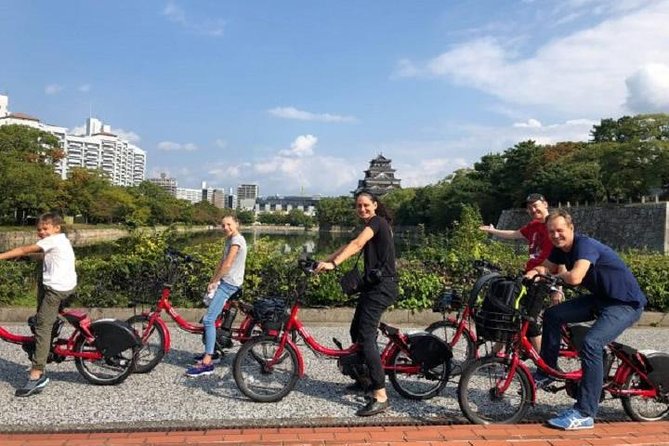
- Up to 10 people keeps the group small enough for real questions and a smoother pace
- E-bikes make the ride easy, even if you’re not a regular cyclist
- Peace Memorial Park focus covers what the monuments mean, not just what they look like
- A-Bomb Dome viewpoints from the city side help you see the area from more than one angle
- Cenotaph, Children’s Peace Monument, and Peace Bell tie the stories together around remembrance
Entering Hiroshima’s Peace Park: Rest House meeting and the opening context
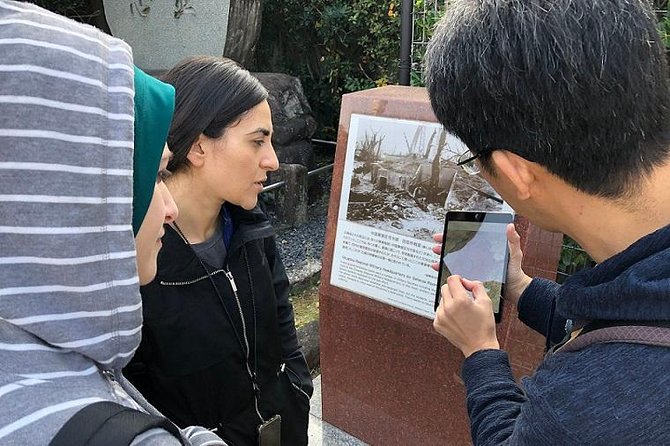
You’ll meet at the Hiroshima Peace Memorial Park Rest House, right in the Peace Park area. The tour typically starts in two daily slots, with a morning meet around 11:00 and an afternoon meet around 15:00, and the timing is tight enough that you’ll want to arrive a few minutes early.
From the start, the tour’s goal is clear: help you understand what you’re seeing before you see it. Stop 1 is quick—meeting up for about 5 minutes—so you can get bikes sorted and hear how the guide plans to pace the group through the park.
This matters because Peace Park can feel like a checklist if you show up cold. With a local guide setting the stage first, you’re more likely to catch the details you would normally miss by walking straight through.
You can also read our reviews of more tours and experiences in Hiroshima.
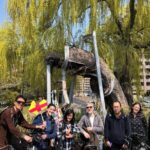

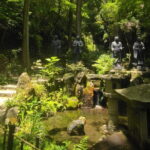
Peace Memorial Park: Monuments, the Dome, and a 70-year timeline
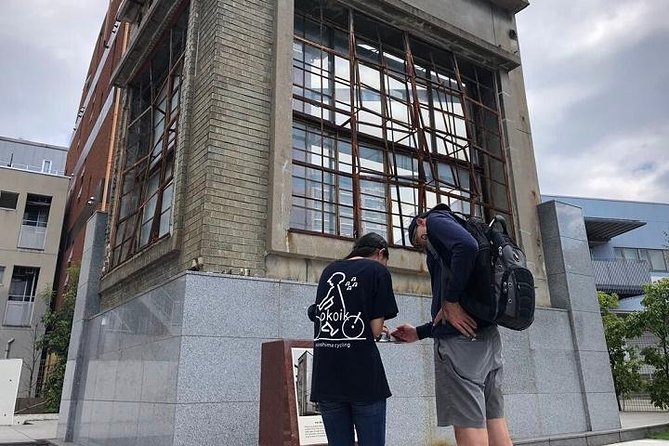
The heart of the tour is the UNESCO-listed Peace Memorial Park, where you’ll spend about 55 minutes. This isn’t framed as a museum replacement. Instead, it’s a guided read of the outdoor space—how the monuments hold memories, and how the Atomic bombing changed Hiroshima’s inhabitants, then and now.
You’ll hear what happened and why the site was built the way it was—what each memorial is trying to protect in people’s minds. The tour specifically includes the major moments you’ll want to match up with your own understanding, like:
- the Cenotaph area
- the Children’s Peace Monument
- the Peace Bell
- and viewpoints for the A-Bomb Dome
Even if you’ve already seen iconic photos online, I like this part because you see how the landmarks relate to each other in real space. The guide also helps you connect the emotional weight to geography—where you stand changes what you notice.
One practical note: the Peace Memorial Park itself involves an admission ticket (so it’s not always included automatically). Expect to plan for that cost separately, while the guide’s time and biking are part of the tour price.
Off the beaten track: Seeing the A-Bomb Dome from city viewpoints
A lot of visitors focus only on the most famous shots. This tour adds something more useful: you don’t just view the A-Bomb Dome as a single postcard image. You get to see it from different perspectives that come from moving through nearby streets and viewpoints.
That shift changes how the scene lands. When you only see one angle, it can feel distant. When you approach it while circling around the area, it turns into something more like an unavoidable landmark—something the city lives with, not something sealed behind rope barriers.
Guides also add story context. In the reviews that people shared after their rides, the most praised moments are usually the combination of local family accounts and detailed site explanations. Guides like Shin and Kana stand out for weaving personal connection with clear historical context, which makes the sights feel less abstract.
If you want a guided way to understand the Dome and the surrounding memorial landscape beyond a photo stop, this route does that job.
The Hiroshima city ride: A-bombed streetcars and daily-life recovery
After the Peace Park block, the tour shifts gears into “Hiroshima as a living city.” You’ll spend about 1 hour riding beyond the park area, still with the guide narrating what you’re seeing.
One of the standout inclusions here is the reference to a train that still runs today that survived the atomic bombing—known as the A-Bombed Streetcars. The guide will point out the idea through the townscape you ride past, connecting recovery and infrastructure to the long shadow of that day.
This section is valuable because it moves you past the museum-only mental mode. Hiroshima after the war isn’t just a monument. It’s buses, streets, rebuilt neighborhoods, and everyday routines—some of them still shaped by memory.
Also, this is where a cycling tour shines. You can cover enough distance to feel the city instead of getting stuck inside one zone.
E-bikes and small-group pacing: What it feels like on the route
The tour uses electric bicycles, which is a big deal for comfort and for access. For adult e-bikes, the requirement is a height of 145 cm or more. If you’re traveling with kids, the tour offers children’s bicycles (cross bike type), and children under 15 can use both children’s and adult bicycles at the child rate, as long as the height range fits (110 cm to 145 cm).
If that sounds fussy, it is—but it’s also practical. Electric assist changes the whole experience, especially in a city where you might want to move at a steady rhythm for a guided route.
The group size stays capped at 10. The guide also adjusts pace if someone in the group isn’t comfortable cycling (especially kids). That flexibility is a big reason the tour is often recommended as a “fun but meaningful” way to see Peace Park.
From the reviews shared, one recurring point is that the ride itself is enjoyable, not stressful. Even in cold or rainy conditions, guides worked to keep it safe and on-track—one person noted the tour shifted appropriately when weather turned ugly.
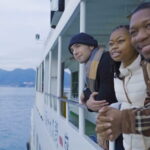
Rainy day options: Rain route versus a safe walking plan
Hiroshima weather can change fast, and this tour is clear about plans if rain hits. If the plan can’t be held due to weather for safety reasons, the tour may be canceled. If rain is the issue, you’ll typically have options: switch to a Rainy Day Limited Peace Route or choose a refund.
The Rainy Day Limited Peace Route keeps the core meaning but changes the movement style and timing. It’s set for the same start slots (11:00 or 15:00), and the route runs something like:
Peace Memorial Park → Atomic Bomb Dome → Hypocenter → Former Bank of Japan → Fukuromachi Elementary School → Main street
and it ends around 13:00 or 17:00.
If the rain is more than mild, there’s also an option to convert to a walking tour only. In that case, you walk around the hypocenter area within about a 0.5 km to 1 km radius. It’s short-range, safer, and it keeps the focus on the most significant ground.
I like having these options because it means you’re less likely to lose the whole day. Just remember that any weather shift can change the exact timetable.
Timing, photos, and practical details that matter
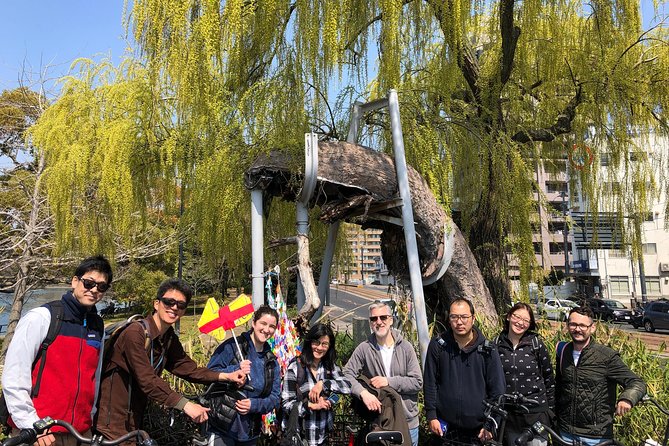
The structure is simple. You meet at the Rest House, spend time in Peace Park, then ride onward to city scenes, and finish back at the meeting point. You’re looking at roughly 2 hours total, with the exact times flowing like this:
- Meet around 11:00 or 15:00
- Peace Memorial Park begins about 5 minutes later and runs around 55 minutes
- City riding continues for about 1 hour
- Finish back at the starting point around 13:00 or 17:00
You’ll also be given data of photos taken on the day. That’s a small touch, but it’s useful when you’re focused on the guide’s story and don’t want to manage camera settings during emotionally intense stops.
A couple practical bits to plan around:
- There’s no luggage storage at the Rest House. Coin lockers are available at the International Conference Center Hiroshima and at the Hiroshima Peace Memorial Museum (about a 6-minute walk).
- There’s no free Wi-Fi on the tour itself. That said, Hiroshima Free Wi-Fi is available across the city, so you’re not totally offline.
If you carry a day bag, plan for lockers near the meeting area. This kind of tour moves, so stopping to solve storage problems can throw off your timing.
Price and value: Why $59.69 feels fair for what you get
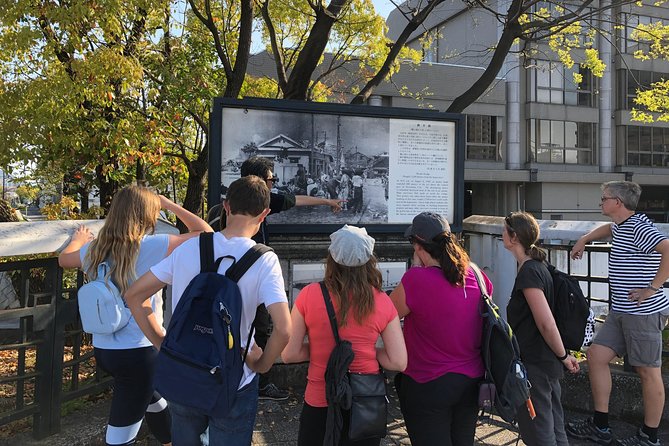
At $59.69 per person for about 2 hours, the pricing is competitive for a guided e-bike experience that focuses on a high-impact topic. You’re not just paying for transportation. You’re paying for:
- an English-speaking local guide (English is referenced in the reviews)
- a small-group setting (max 10)
- electric bikes
- an accident insurance component for bicycle accidents
- and a route that includes major memorial stops plus city-area viewpoints
Also, you’re saving time and effort versus trying to map it all out solo while also reading the meaning of what you see. Peace Park is emotionally intense and easy to misunderstand if you rush through it.
The one cost you should factor separately is the Peace Memorial Park admission since it’s listed as not included for that stop.
For me, the value equation is strong if you care about understanding what the memorials mean, not just ticking off sights.
Who should book this tour (and who might want another option)
This is a great fit if you:
- want a first-timer-friendly way to experience Peace Park plus more of Hiroshima
- like guided context and Q&A time
- want to cover distance without the physical strain of cycling on your own
- appreciate a personal, local perspective (many guides in the reviews shared family-linked stories)
It may be less ideal if you:
- can’t meet the height requirements for the e-bike or children’s bike options
- prefer a longer sit-down experience at individual sites (this is 2 hours, so it stays moving)
- don’t want any emotional or historical discussion tied to atomic bomb remembrance
The cycling format does create a “moving reflection” experience. You’re not stuck standing in one spot. You’re also not sprinting through stops—it’s paced, with the guide controlling rhythm.
Final verdict: Should you book this Hiroshima Peace Cycling Tour?
If you’re going to Hiroshima and you want your Peace Park visit to feel connected—meaningful, clear, and grounded in how locals interpret the story—this tour is worth booking. The combination of electric bikes, small group size, and a guide raised in Hiroshima makes the route feel personal, not like a script on wheels.
My advice is to take it seriously as a learning experience. Wear layers, bring what you need for comfort, and give yourself room to feel the weight of the sites. Then, afterward, you’ll have a stronger sense of why Hiroshima rebuilds the way it does—and why “peace” shows up as more than a word on a monument.
FAQ
How long is the Hiroshima Peace Cycling Tour?
It runs for about 2 hours.
Where is the meeting point and where does the tour end?
You meet at the Hiroshima Peace Memorial Park Rest House, and the tour ends back at the same meeting point.
What major sites are included during the tour?
The tour includes Hiroshima Peace Memorial Park and visits memorial areas such as the Cenotaph, Children’s Peace Monument, and Peace Bell. It also includes views of the A-Bomb Dome and finishes with city riding beyond the park.
Are electric bikes provided, and is there a height requirement?
Electric bikes are part of the experience. For adult e-bikes, the height requirement is 145 cm or more. Children’s bikes are available, including cross bikes, with height ranges and child rate options depending on age and height.
Is there Wi-Fi during the tour?
No. Free Wi-Fi is not provided on the tour, though Hiroshima Free Wi-Fi is available throughout the city.
What happens if it rains?
If the plan can’t be held due to rain, you can choose a Rainy Day Limited Peace Route or get a refund. There’s also an option to switch to a walking tour on rainy days only.
Is admission included for the Peace Memorial Park?
Admission is not included for Hiroshima Peace Memorial Park. The rest house meeting stop is free.
Is there a place to store luggage at the meeting point?
There’s no place to leave luggage at the Rest House. Coin lockers are available at nearby locations such as the International Conference Center Hiroshima and Hiroshima Peace Memorial Museum.
What is the cancellation policy?
You can cancel up to 24 hours in advance for a full refund. If you cancel less than 24 hours before the start time, the amount you paid is not refunded. If you are late for the meeting time without prior notice, the tour will be canceled and a 100% cancellation fee will be incurred on the day of the tour.