REVIEW · ROME
Rome Highlights Bike Tour 3 Hour City Cycling Experience
Book on Viator →Operated by Bici&Baci srl · Bookable on Viator
Rome by bike feels like cheating. In about 3 hours, you pedal past major sights from Campo de’ Fiori to Piazza Navona and the Pantheon, with guide talk that helps the city make sense fast. I like the 10km, all-abilities route and the safety-first vibe I’d expect from guides like Romina. One thing to consider: Pantheon admission and any food/drinks are not included, so don’t plan on freebies built into the ride.
With a group size capped at 15, you get enough motion to cover a lot of ground without feeling like you’re stuck in a slow parade. The pacing is relaxed enough to take photos and ask questions, not just ride from curb to curb. You’ll also see how Rome’s layers overlap—ancient to baroque to modern power—without getting buried in details.
You start at Via Cavour, 302 at 9:30am and end back there. Along the way you’ll roll through classic squares like Trevi, Piazza di Spagna, Piazza del Popolo, and Piazza Navona, plus key ruins like Foro Romano. The only “gotcha” is that you’ll pay for Pantheon entry separately when you get there.
In This Review
- Key highlights to know before you pedal
- A 3-hour Rome bike loop that works on day one
- Via Cavour meet-up: getting ready to ride in Rome
- Foro Romano and the Imperial Forums stops: seeing Rome’s layers
- Trevi Fountain to Piazza di Spagna: big scenes, quick context
- The painter-street vibe and Piazza del Popolo’s classic center energy
- Palazzo di Montecitorio: Parliament power in a baroque shell
- Piazza Navona and the Pantheon: the tour’s final wow moment
- Bikes, helmets, and the feel of 10km in Rome traffic
- Price and value: what $60.34 buys you here
- Who should book this Rome Highlights Bike Tour
- Should you book it?
- FAQ
- How long is the Rome highlights bike tour?
- Where does the tour start and where does it end?
- What sights are included on the route?
- Is Pantheon admission included?
- What’s included in the price?
- Are food and drinks included?
- How big is the group?
- What is the cancellation policy?
Key highlights to know before you pedal
- A true first-day overview: you hit Rome’s top hits in one easy loop
- 10km route, designed to stay manageable: built for most ages and abilities
- Helmet and bike included: you’re not scrambling for gear
- Imperial-era stops, not just postcards: Foro Romano and the Imperial Forums area
- Small group feel: up to 15 people, so the ride stays under control
- Pantheon entry is separate: plan for that ticket cost
A 3-hour Rome bike loop that works on day one
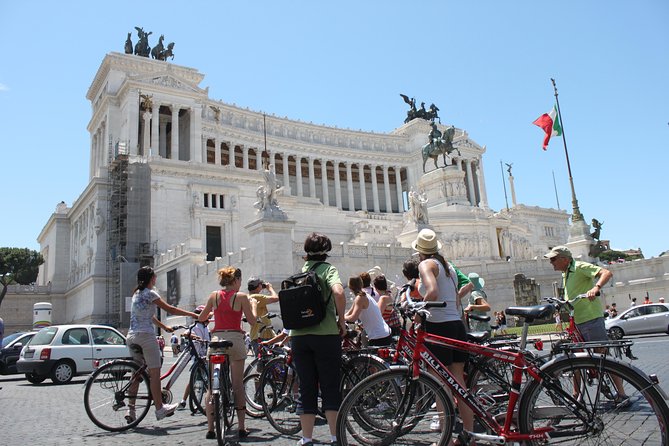
Rome can feel like a blur when you first arrive. Too many ruins. Too many fountains. Too many roads where crossing is a competitive sport. This kind of city cycling experience helps you get your bearings quickly because you’re covering ground at a steady pace, not spending half your time finding your next landmark.
What makes it work is the balance between “big icons” and “supporting context.” Yes, you see the Trevi Fountain and Piazza di Spagna. But you also stop where the city’s power and daily life were organized—Foro Romano and the Mercati di Traiano / Fori Imperiali area. That mix turns a pile of photos into an actual sense of the city’s story.
The other smart part is timing. At roughly 3 hours and about 10 minutes per major stop, you’re getting quick expert framing rather than long lectures. You can still choose to go deeper later with a separate visit if a specific site grabs you.
You can also read our reviews of more tours and experiences in Rome.
Via Cavour meet-up: getting ready to ride in Rome
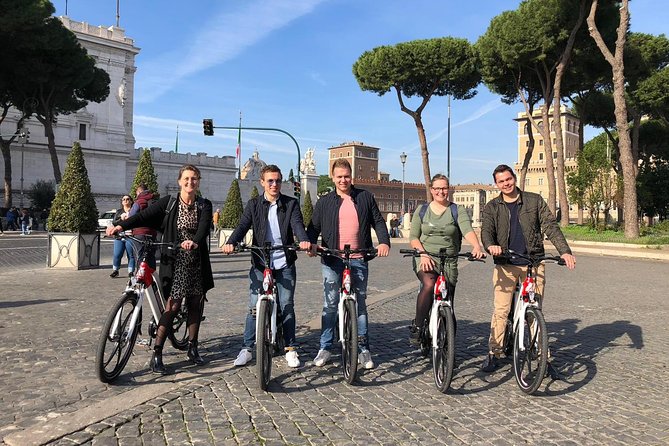
You meet at Via Cavour, 302 in the historic center and head out at 9:30am. The end point is the same meeting area, which keeps the logistics simple—no late-day wandering to find transport.
Gear is covered in a practical way: you get a bike and a helmet. That matters in Rome, where streets can be tight, traffic can be aggressive, and tour groups add their own chaos. With helmets provided, you can focus on the route and the guide’s instructions instead of doing a last-minute equipment hunt.
Dress code is smart casual. That doesn’t mean you need to dress like you’re going to a museum gala, but it does mean comfortable shoes and clothes that let you sit on a bike for a while. Rome involves walking too, even on a bike tour, because you’ll stop and look.
One small “mental tip”: keep expectations flexible. Rome’s streets can get crowded fast, and cycling requires attention even when the route is designed to be easy. Think of it as steady sightseeing with extra awareness, not a leisurely cruise through empty lanes.
Foro Romano and the Imperial Forums stops: seeing Rome’s layers
The ride starts in the zone that helps Rome click: the ancient core. Your first major stop is Foro Romano, where you can literally see buildings and monuments from different eras stacked across the same ground. It’s the political, legal, religious, and economic center that shaped Rome for centuries, and the stop is short enough that the guide can point out what’s worth your attention without turning it into a textbook.
Next comes the Mercati di Traiano – Museo dei Fori Imperiali area. Here the emphasis is less on “look at this one perfect thing” and more on how Rome’s administrative world worked. The Mercati di Traiano building complex was tied to offices connected to the Imperial Forums. In other words, it’s not just ruins for photos—it’s evidence of how the city ran.
Why these stops are valuable on a bike tour: they create a foundation for everything after. When you later see a baroque square or a grand church, you’ll understand what came before and why certain places became power hubs.
The possible drawback is simple: these areas can be busy, and you’ll spend a lot of time in “look, listen, then move.” If you want slow wandering with long video-like explanations, you’ll still want a follow-up visit—but as a kickoff, it’s excellent.
Trevi Fountain to Piazza di Spagna: big scenes, quick context
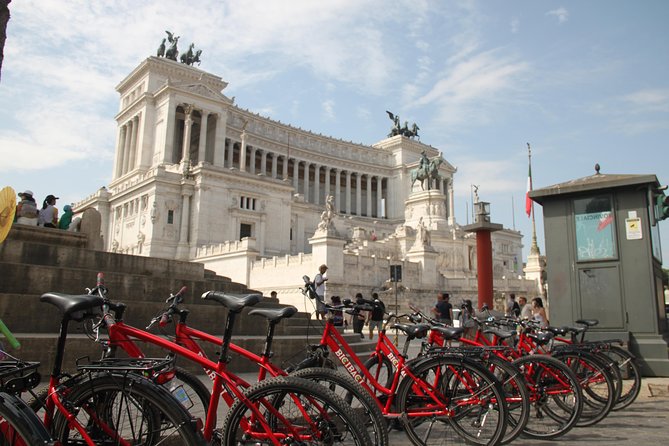
From the ancient core, the tour swings you into the postcard zone—starting with Trevi Fountain. This is one of Rome’s biggest and most famous fountains, and it’s also a place where crowds are almost guaranteed. The advantage of a bike tour is that you arrive as part of a managed group at a set moment, rather than trying to navigate the area while hunting for your own route.
The guide time here is brief—about 10 minutes—so you’ll get the “why it matters” and the “what to notice” without getting stuck. Still, you’ll want to be ready for the usual reality: phones up, people shifting, and the constant need to angle for a clear shot.
Then you hit Piazza di Spagna, the square tied to the monumental stairway of 136 steps. Even if you’re not going up the stairs, the square gives you a sense of how central the Spanish Steps area is for city life. The short stop format helps you see the landmark and keep moving, which is exactly what you need when you’re trying to cover a lot in one morning.
A helpful mindset: treat Trevi and Piazza di Spagna as “major stops for orientation,” not as the only moment you’ll spend there. After this tour, you’ll know where to return if you want slower time and deeper exploring.
The painter-street vibe and Piazza del Popolo’s classic center energy
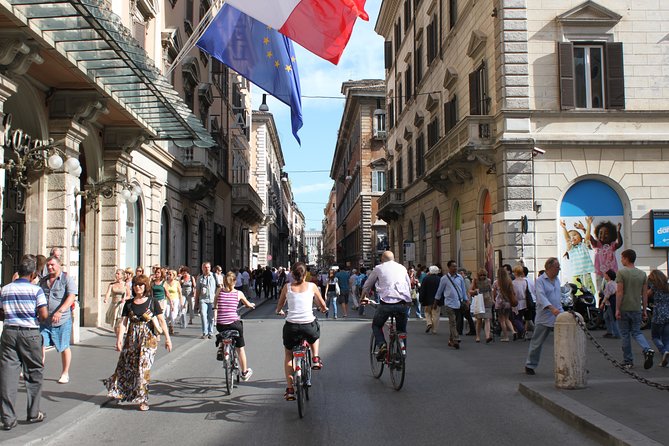
After Piazza di Spagna, you glide toward a quieter but still creative-feeling stretch: a street known for painters and its artistic soul. The tour doesn’t linger for a long stroll, but it gives you a change of pace from the heavy-hitter squares. You start to notice how Rome isn’t only ancient monuments—it’s also neighborhoods with their own identities.
Then comes Piazza del Popolo, an important square where the shopping street of Via del Corso begins. This is one of those places that feels like a crossroads for visitors and locals alike, and it’s especially useful on a bike tour because it acts like a navigation hub—good orientation, then back onto the ride.
You also get a glimpse of a funerary monument still present in the city center, which again supports the theme of Rome layering eras on top of eras. Even when you’re in a bright, busy square, Rome has a way of reminding you that this is a city with deep time.
A practical consideration: if you’re sensitive to crowds, plan for the squares. Rome’s most famous places are popular for a reason, and on a group tour you’ll be moving in the same crowded ecosystem as everyone else.


Palazzo di Montecitorio: Parliament power in a baroque shell
One of the more interesting “not just a view” stops is Palazzo di Montecitorio. It’s a baroque building that once served as the residence of the Ludovisi family, and today it houses the Italian Parliament.
This kind of stop is a gift on a highlights tour. Instead of only seeing Rome as an outdoor museum, you get a quick taste of how politics lives in real buildings you can ride past and look at. It also helps you connect modern Italy to the same city space where ancient power once operated.
Because time at each stop is limited, the guide’s role matters here: you need the clear explanation of what you’re looking at, why it’s important, and what changed over time. When it clicks, you’ll find the photo opportunities more meaningful, too.
Piazza Navona and the Pantheon: the tour’s final wow moment
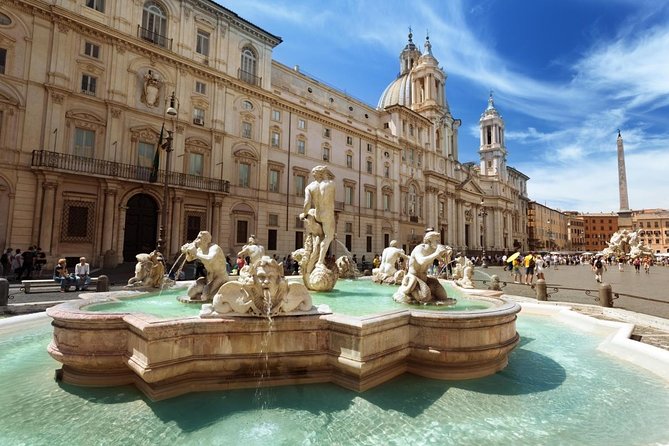
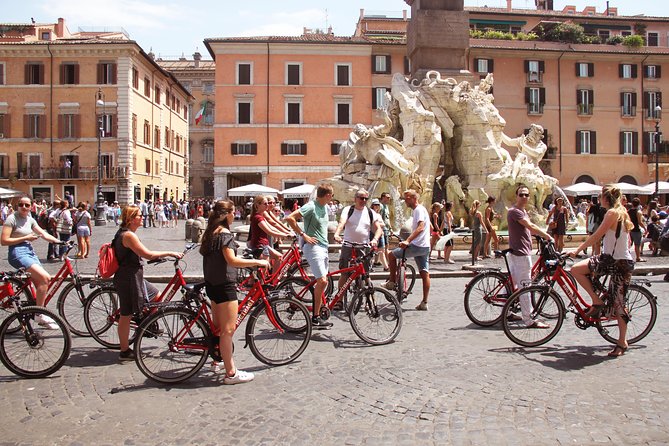
Your last big stop before the finish is Piazza Navona. The square is built on the remains of an ancient Roman stadium, and that alone is a great “Rome layers” lesson. But the headline attraction is the fountain designed by Bernini, which is a perfect example of why Rome mixes art, architecture, and public space into one strong experience.
Again, the stop is timed—about 10 minutes—so you’re seeing the space and key details without spending your whole morning frozen in place. That’s a good thing because Navona is often crowded, and you’ll enjoy it more if you can keep moving.
Then you reach the Pantheon. In the Roman period it was dedicated as a temple to all gods, and today it functions as a basilica where mass is regularly celebrated. It’s also described as the only temple still existing from the Roman period. That combination—ancient structure, religious use today—makes it more than a museum stop. It’s a living building.
Important detail: Pantheon admission is not included. So if you want to go inside during the tour moment, you’ll need to plan for that ticket cost separately.
A smart strategy: if the lines and crowds look intense at the time you arrive, decide quickly whether the inside visit is a must. This is one of the few places where a short “look” can feel very different from actually stepping in, so your priority matters.
Bikes, helmets, and the feel of 10km in Rome traffic
This tour is built around an easy 10km route, suitable for all ages and abilities. That doesn’t mean “effortless.” Cycling in Rome means you’re still negotiating traffic flow, narrow stretches, turns, and stops. But the route design is meant to keep the ride comfortable and accessible.
Helmets are provided, which is a big plus. They remove a common headache—especially for visitors who didn’t plan to rent gear or buy something for one day. The guide also plays a major role in keeping the group together, which is what helps the ride feel safe.
One thing I’d watch for: the streets around top sights can be packed, and riding can get slower when there’s congestion. If you’re expecting a smooth and empty-sounding ride, Rome will gently correct that expectation.
The pacing is still one of the best parts. You’re not dragged through long waits. You’re also not rushed past everything. You get enough time for photos and quick questions, then you move on.
Price and value: what $60.34 buys you here
At $60.34 per person for about 3 hours, the value comes from what’s actually included. You get a local guide, a bicycle, and a helmet, and the price covers all taxes, fees, and handling charges.
That can add up, especially if you were planning to either rent a bike on your own or pay for a guide separately. Even though Rome has plenty of free sightseeing, a guided route helps you avoid the biggest time traps: wandering without structure and missing what makes certain places special.
What’s not included matters too. Food and drinks aren’t included, and Pantheon admission isn’t included. Also, there’s no mention of entry fees for the other stops—many are free from an admission perspective in this tour setup, but the Pantheon is the one called out as paid separately.
My take: this is good value if you want a first-day orientation that mixes major icons with ancient anchors. If you already know Rome well and just want long museum time, you may find the short stops don’t replace deeper visits.
Who should book this Rome Highlights Bike Tour
This is a strong fit if you:
- want a first-time Rome overview without spending half your day walking
- prefer guided storytelling with quick stops at major landmarks
- like cycling but want a route designed for an easier pace (about 10km)
- appreciate a small group size, capped at 15
It’s also a good choice if your schedule is tight and you want a structured loop that covers both ancient ruins and modern city landmarks.
You might think twice if:
- you’re hoping for a slow, lingering museum-style tour (this is more “see and understand,” then move)
- you don’t want to deal with crowds at places like Trevi and Navona
- you’re counting on food or any extras beyond what’s clearly included
Should you book it?
If you’re trying to get oriented fast and you enjoy cycling, this tour is an efficient way to see Rome’s biggest hits in three hours. The combination of ancient anchor stops (Foro Romano and Imperial Forums area) plus the headline squares (Trevi, Piazza di Spagna, Piazza Navona) is exactly what first-timers need.
Just go in with clear expectations: you’ll ride, you’ll stop, you’ll learn, and you’ll move on. Budget for Pantheon entry separately, and don’t plan food as part of the ride.
If you want to get more out of Rome later, this tour sets you up well—because you’ll know what to revisit and what to study more closely.
FAQ
How long is the Rome highlights bike tour?
It lasts about 3 hours.
Where does the tour start and where does it end?
It starts at Via Cavour, 302, 00184 Roma RM, Italy and ends back at the same meeting point.
What sights are included on the route?
You’ll see stops connected to Foro Romano, Trevi Fountain, Piazza di Spagna (Spanish Steps), Piazza del Popolo, Palazzo di Montecitorio, Piazza Navona, and the Pantheon, plus you’ll pedal past Campo de’ Fiori.
Is Pantheon admission included?
No. Pantheon admission is not included.
What’s included in the price?
Included are the local guide, bicycle use, helmet use, and all taxes/fees/handling charges.
Are food and drinks included?
No. Food and drinks are not included.
How big is the group?
The tour has a maximum of 15 travelers, and a minimum of 4 people per booking is required.
What is the cancellation policy?
You can cancel for a full refund if you cancel at least 24 hours before the experience starts.