REVIEW · SHIMANE PREFECTURE
Tsuwano Cycling Tour with Local Guide
Book on Viator →Operated by Yu-na ~Discover Rural Tsuwano~ · Bookable on Viator
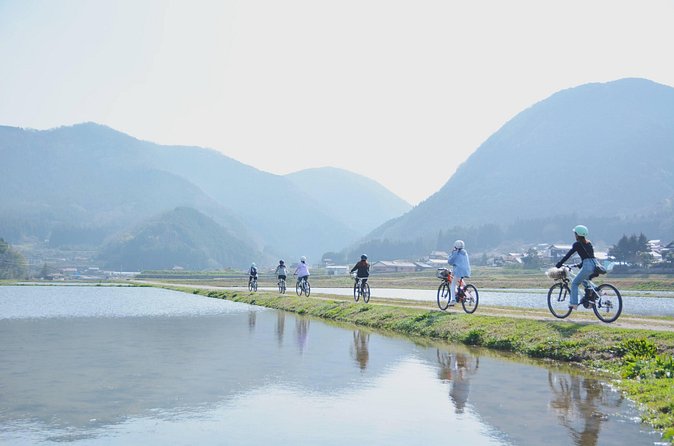
Tsuwano feels like Japan paused in time. This 3-hour electric bike tour turns the famous Tsuwano Hyakkeizu into a practical walking-and-riding plan, so the town’s Edo-era scenes make sense right where you see them. You start in town, roll past old streets and shrines, and connect the present to the past in a way that’s hard to get from maps alone.
I really like two things about this experience: the Hyakkeizu map-to-reality storytelling and the fact that it’s paced for real people. In the best guide accounts shared online, guides like Yui and Ale are praised for friendly explanations, plus using the 100 sceneries to frame what you’re seeing now.
The only real drawback to consider is time and comfort. The ride is short (about 3 hours total), and while it’s designed for most visitors, the day is outdoors and you’ll be moving between several spots—so bring a basic tolerance for walking and uneven ground around shrines.
In This Review
- Key things to know before you ride
- Tsuwano by electric bike: why this route feels like a time machine
- Where you start: Tsuwano Station area setup and getting moving fast
- Tonomachi Street: the old main street that makes your bearings stick
- Yasaka Shrine: Hyakkeizu stories in the calm of a sacred pause
- Narutaki jinja: the waterfall spot plus a simple meditation break
- Washibara Hachiman Shrine: joyato, baba, and the Yabusame link
- Tsuwano Shrine and the rural view of former lords
- The 1,000-year cedar tree: finishing with a living landmark
- Electric bikes in a small town: the practical value of moving this way
- Price and value: why $99 can work if you want guided meaning
- Who this Tsuwano ride fits best
- Quick tips to make your ride smoother
- Should you book this cycling tour?
- FAQ
- What is the duration of the Tsuwano Cycling Tour with Local Guide?
- Where does the tour start and end?
- How much does the tour cost?
- What’s included in the price?
- Are admission tickets needed for the stops?
- Is a snack included?
- How many people are in a group?
- Is the tour suitable for most visitors?
- Do I need good weather?
- Is there a cancellation option if plans change?
Key things to know before you ride
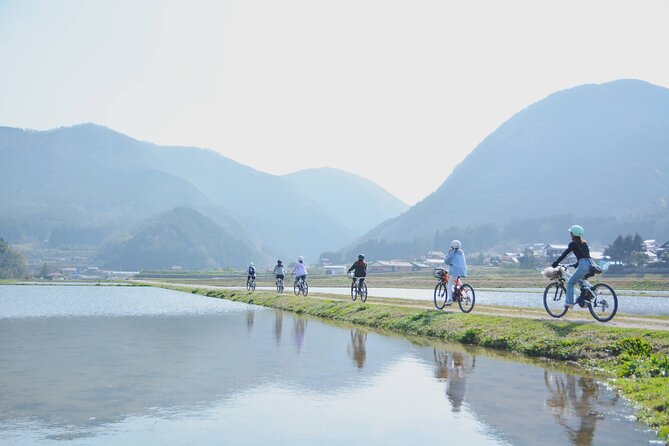
- Hyakkeizu comparisons: expect to see the Edo-era Tsuwano scenes referenced as you pass the real locations.
- Electric bike comfort: you’re not doing this like a training ride, and the pace is set with the group in mind.
- Shrines with specific stories: Yasaka Shrine, Narutaki jinja, and Washibara Hachiman are linked to local legends and rituals.
- A meditation-style pause: Narutaki jinja includes a simple calming moment, not just photos.
- Small group size: limited to 6 travelers, so questions don’t get lost.
- Free admission at each stop: you’re not paying extra to enter the places on the route.
Tsuwano by electric bike: why this route feels like a time machine
Tsuwano is in Shimane Prefecture, and it has that rare quality: a small town with enough surviving old structure that you can still feel the Edo-period rhythm. The Hyakkeizu, also known as One Hundred Sceneries of Tsuwano from the Edo era, is a big reason why. It’s recognized as a Japan Heritage site, and it preserves 100 paintings of the Tsuwano feudal domain from roughly 160 years ago.
What makes this tour worth your time is that it doesn’t treat Hyakkeizu like trivia you read and forget. Instead, the route gives you a way to experience it in sequence—ride, stop, listen, look again, then ride on. When you see the references tied to actual streets, shrines, and water spots, the paintings stop being distant art and start feeling like a field guide to the town.
And yes, it’s an electric bike tour. That matters. You get to cover more ground without arriving wiped out, which means you can actually enjoy the quiet parts too—like the pause by Narutaki’s hidden waterfall area.
Where you start: Tsuwano Station area setup and getting moving fast
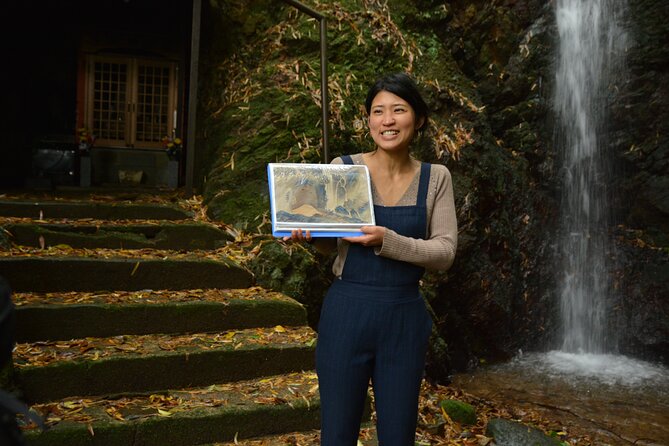
You meet near Tsuwano Station, at Tsuwano Eki mae Ushiroda, and the tour ends back at the same spot. That’s a practical detail I love because it reduces the “where do I go next” stress. You can get in, ride, and get back without juggling public transport after.
You’ll have a bicycle provided, and the guide is included. Admission tickets at each stop are also free, so you’re not constantly digging out small coins or tickets during the ride.
The group cap is 6 travelers. With that size, you don’t feel like you’re being herded. You can hear the explanation, and the guide can slow down when someone wants a closer look at a lantern, a horse-track stone marker, or a specific corner of a street.
Tonomachi Street: the old main street that makes your bearings stick
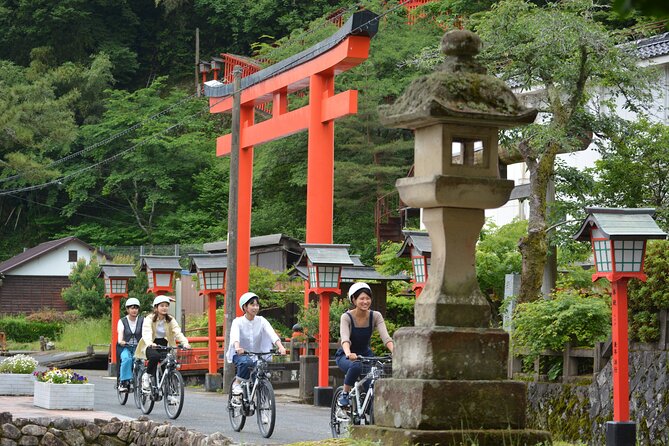
The first stop is Tonomachi Street, the main street of Tsuwano. You cycle along it with your guide, and that early orientation is smart. When you’re in a small town, your biggest challenge is often simple: you don’t yet know what’s central, what’s historic, and what’s just ordinary.
Tonomachi Street gives you that foundation fast. It’s also where you start feeling the town’s “kept” character—the kind of preservation that makes Tsuwano worth visiting in the first place.
What I’d watch for: look for details the guide points out, not just the big view. Small things like street edges and how buildings sit along the road can help you understand why the Hyakkeizu paintings look the way they do.
Possible drawback: since this is only about 30 minutes, you don’t get long browsing time. If you love lingering for photos, you’ll want to keep one small “extra photo budget” for after the tour.
Yasaka Shrine: Hyakkeizu stories in the calm of a sacred pause
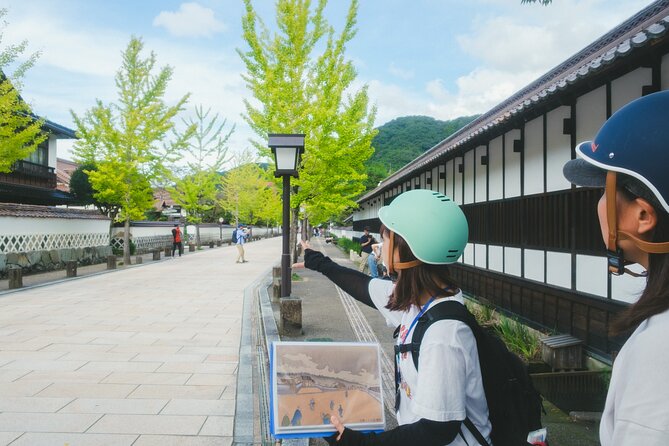
Next you go to Yasaka Shrine. Here, the tour shifts from town-street feel to shrine atmosphere—still moving, but slower mentally. The big theme is the hidden stories behind the Tsuwano Hyakkeizu. You’re not just looking at buildings; you’re learning how the shrine and its setting connect to the painted scenes of late Edo Tsuwano.
This stop is valuable because shrines in Japan often act like historical anchors. They’re where legends gather, where people remember things they didn’t write down in books, and where the community repeats rituals across generations. When the guide ties that to specific Hyakkeizu scenes, your “what am I looking at?” questions turn into “oh, that explains why this looks the way it does.”
You’ll have about 30 minutes here, and the admission is free. In practical terms, you can take your time without feeling like you’ll be rushed out for ticket reasons.
Possible drawback: if you’re expecting a museum-style explanation with a lot of time indoors, this won’t be that. It’s a guided outdoor-and-experience format, built for pacing and context more than reading.
Narutaki jinja: the waterfall spot plus a simple meditation break
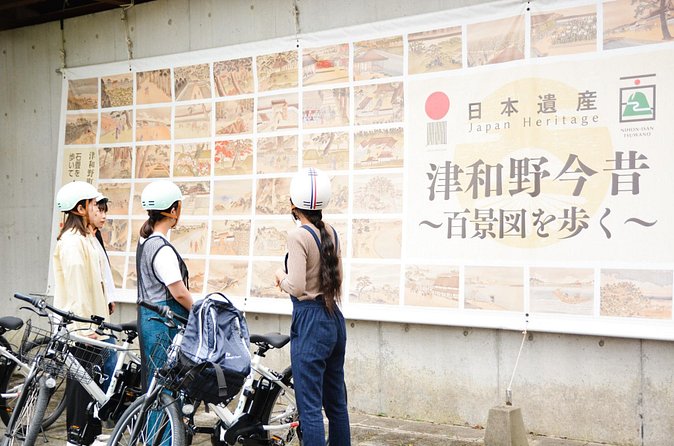
After Yasaka, you head to Narutaki jinja Shrine, which includes a hidden waterfall area. This is a great contrast to the earlier stops. You start with streets, then sacred space, and now you get nature that’s part of local spirituality.
The tour includes a short practice—something described as simple meditation. That’s not just a random extra. It changes how you look at the place. If you’re snapping photos, you’ll still do that, but you’ll also slow down enough to notice water sound, air feel, and the way the area frames the scene.
Why this matters: Tsuwano’s appeal is easy to “overlook” if you treat everything like a checklist. A calm moment helps you reset. It also makes the Hyakkeizu comparisons feel less like homework and more like story.
Possible drawback: the best experience here depends on conditions. If weather is poor, outdoor spots can feel colder or slippery. The tour operator notes that the experience requires good weather, so plan your day around that and keep your mindset flexible.
Washibara Hachiman Shrine: joyato, baba, and the Yabusame link
The next highlight is Washibara Hachiman Shrine, where the guide focuses on specific, tangible elements: the large joyato (stone lantern) and the baba (horse track) connected to the Yabusame ritual, or horseback archery.
This stop is more than pretty stonework. It helps you understand Tsuwano as a living place with traditions that involve skill, training, and community events. When you hear how these items relate to the horseback archery ritual, the shrine stops being a static monument. It becomes a stage for a specific kind of performance and local pride.
You’ll get about 30 minutes at this stop, and again admission is free. With a small group, it’s easier to ask questions about the details you notice—like where the horse-track area would have been used and why the lantern matters.
Possible drawback: if you’re not into rituals or symbolism, this stop might feel more like stories than sights. But even then, you’ll probably enjoy it because the details are concrete, not vague.
Tsuwano Shrine and the rural view of former lords
After the Washibara Hachiman story angle, you visit Tsuwano Shrine. This stop brings the ride back into a wider rural-feeling perspective around the shrine grounds. The guide connects what you see to stories of the former lords of the Tsuwano domain.
This is where the Hyakkeizu theme grows teeth. The Edo era can feel like faraway history unless someone places it near an actual location. When you connect a shrine setting to the people who ruled the domain, it becomes easier to picture the “why” behind the town’s shape and preserved character.
You’re still in a guided, walk-and-look format, with about 30 minutes. That’s enough time to feel the setting and learn the main threads without feeling stuck in a lecture.
Possible drawback: because the stops are timed, you won’t get a slow stroll with long wandering. If you like to roam, treat this as orientation plus meaningful context, then plan a little independent exploring right after.
The 1,000-year cedar tree: finishing with a living landmark
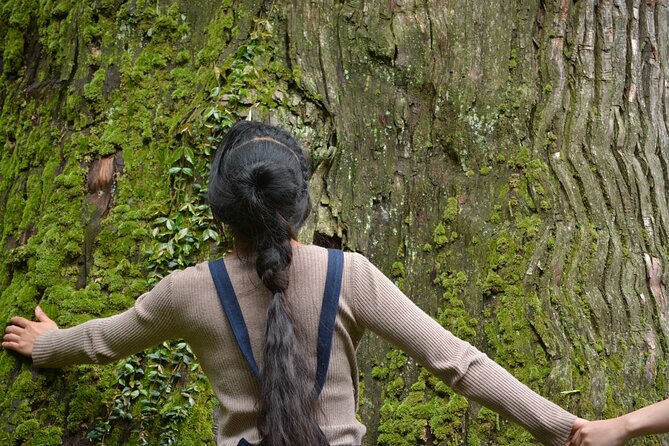
The tour wraps up again at Washibara Hachiman Shrine, finishing at a giant cedar tree that has watched over Tsuwano for more than 1,000 years.
This final stop is a smart emotional button. You start the ride with the town’s main street and end with something that’s basically a long-term witness. It makes the whole “old-to-now” theme land. Even if you forget every detail you heard, you’ll remember that feeling of scale—this is what it looks like when time is measured in centuries, not days.
You get about 30 minutes for this part. Since it’s the end, you can take photos, ask any last questions, and soak in the quiet without the pressure of the next stop.
Possible drawback: if you’re in a hurry for another part of town later that day, you may have to manage your schedule. The tour ends back at the meeting point, but the timing is still fixed.
Electric bikes in a small town: the practical value of moving this way
A guided bike tour can be hit-or-miss, depending on pacing and effort level. This one has an advantage: electric bikes handle the “I want to see a lot” urge without turning your legs into a bargaining chip.
From guide feedback that stands out, the pacing is described as meticulous and supportive, and the electric bikes help even when physical fitness is uncertain. You still walk a bit at each shrine area, and you’ll be riding between points, but the effort burden is much lower than a traditional pedal-only cycle.
Here’s how that helps you as a visitor:
- You spend more time learning and looking, not sweating.
- You can enjoy the quieter stops instead of rushing to “get it done.”
- The small-group format keeps the ride from turning into chaos.
And don’t forget: snacks aren’t included. If you’re doing this as your main activity, you’ll likely want to eat before or plan a meal right afterward.
Price and value: why $99 can work if you want guided meaning
At $99 for about 3 hours, the value comes from what’s included: the bicycle and the guide. Admission is free at each stop, which matters because it keeps the cost from turning into surprise add-ons.
For this price, you’re paying for three things:
- Local storytelling that connects Hyakkeizu paintings to the real town.
- Logistics that are already handled, including starting and ending at the same station area.
- A small-group pace, capped at 6 travelers, which makes the guide’s explanations easier to follow.
If you only wanted photos and basic sightseeing, you could probably do a self-guided walk through some of these places. But the whole point here is the map-to-location thinking—getting the Edo-period scenes to make sense. That kind of guided context is where the money shows up, not in the bike itself.
The biggest way to judge value is simple: ask yourself whether you want history as a lived narrative in the streets, or whether you’re happy with a list of stops.
Who this Tsuwano ride fits best
This tour fits best if you want:
- A first-time Tsuwano plan that helps you understand what you’re seeing.
- A gentle way to cover multiple sacred and historic stops in one morning or afternoon.
- Guided explanations that connect art (Hyakkeizu) to place.
- A calmer experience in a small group.
It’s also a strong match if you’ve got limited time. Three hours is not a full day, but it’s long enough to build a sense of Tsuwano’s identity: street, shrine, waterfall area, ritual details, then the long-time cedar.
If you prefer to wander freely without stopping for explanations every so often, you might find it structured. But even then, the stops are timed to keep things moving, so it won’t feel like you’re trapped for hours.
Quick tips to make your ride smoother
- Wear comfortable shoes for short shrine-area walking.
- Bring a layer. Shrines and shaded spots can feel cooler, even on mild days.
- Plan for no snacks on the tour. If you need energy, eat beforehand.
- If rain or strong wind shows up, be ready for schedule changes because the experience requires good weather.
- Have your camera ready, but also give your eyes 30 seconds without lens. The waterfall area and cedar tree are better when you just watch.
Should you book this cycling tour?
If you’re going to Tsuwano for the Hyakkeizu connection, I think this is one of the most efficient ways to get it. The small group, the electric bike comfort, and the stop-by-stop storytelling tied to Hyakkeizu scenes are the winning combo. You’ll leave with a clearer mental map of the town and a sense that the Edo era is not just a theme, but part of the physical place.
Book it if you want guided meaning with minimal hassle. Skip it if you want unstructured wandering only, or if you’re traveling on a day when weather is likely to be rough.
FAQ
What is the duration of the Tsuwano Cycling Tour with Local Guide?
It lasts about 3 hours.
Where does the tour start and end?
It starts at Tsuwano Eki mae Ushiroda in Tsuwano, and it ends back at the same meeting point.
How much does the tour cost?
The price is $99.
What’s included in the price?
The bicycle and the guide are included.
Are admission tickets needed for the stops?
Admission tickets for the listed stops are free.
Is a snack included?
No, snacks are not included.
How many people are in a group?
The tour has a maximum of 6 travelers.
Is the tour suitable for most visitors?
Most travelers can participate.
Do I need good weather?
Yes. The experience requires good weather, and if it’s canceled due to poor weather, you’ll be offered a different date or a full refund.
Is there a cancellation option if plans change?
Yes, free cancellation is available. You can cancel up to 24 hours in advance for a full refund.