REVIEW · MARRAKECH
Cycling Adventure in Marrakech
Book on Viator →Operated by Pikala Bikes · Bookable on Viator
Street noise, then bicycle bliss.
This is a Pikala Bikes tour that takes you past the usual postcard stops and into day-to-day Marrakech on two wheels. You ride with local young guides trained by Pikala, learn how life works in different neighborhoods, and make quick photo stops around big landmarks like Koutoubia, the Kasbah, and the Agdal gardens.
What I like most is how the tour leans into everyday life, not just big sights. I also love the mix of fun breaks—juice and sweets, plus bakery and hammam time—so the ride feels like a real outing with people, not a checklist.
One heads-up: the street traffic is chaotic in parts, and the biking is not for the timid. If you’re not very comfortable cycling, expect that you’ll need extra confidence and patience.
In This Review
- Key Highlights Worth Knowing Before You Ride
- Why This Bike Tour Works in Marrakech (And Not Just Because It’s Fun)
- Meet the Pikala Guides and What They’ll Explain While You Ride
- Morning vs Afternoon Departures: Pick the Timing That Matches Your Comfort
- Getting Started at 29 Rue Riad Laarous (and Why the First Minutes Matter)
- Pedaling Through the Medina: Small Streets, Big Energy
- Gueliz and the New Town Contrast: A Breather With Different Views
- The Big Landmark Stops: Koutoubia, Kasbah, and Agdal Gardens
- A Local Public Bakery Stop: Smell, Share, and Keep Riding
- Hammam Time: Traditional Bathhouse Experience in the Middle of the Route
- Cafe Clock, Juice, Sweets, and a Pause That Actually Feels Like a Visit
- The Enormous Second-Hand Market: Browsing With a Local Lens
- Tomb Stop: Visiting the Tomb of One of the Seven Saints of Marrakech
- How Hard Is This Ride, Really?
- Value for $33.28: What You’re Paying For (Besides the Bike)
- Should You Book Pikala Bikes in Marrakech?
- FAQ
- How long is the Pikala bike tour in Marrakech?
- Where does the tour start and end?
- What’s the price per person?
- Is there a morning or afternoon option?
- What’s included during the tour?
- Does the tour include the Medina and other neighborhoods?
- How big are the groups?
- Do I need to be an experienced cyclist?
- Is a mobile ticket provided?
- Is free cancellation available?
Key Highlights Worth Knowing Before You Ride
- Pikala-trained local guides: Expect stories about family, religion, and modern life in Morocco, told by young locals like Yasser, Hamit, Kaula, Zouhair, Mo, and Khawla (names vary by group).
- Medina to Gueliz contrast: You’ll get the maze-and-chaos feeling of the Medina, then switch to wider streets and a different pace in the new town.
- Stops that actually feel local: A public bakery, a traditional hammam, local markets, and even a zellij tile-making demo may show up depending on the group flow.
- Photo-friendly pacing: There are frequent stops for photos and quick conversations with people along the route.
- Included snacks and drinks: Juice and sweets at Cafe Clock, plus bottled water and snack breaks along the way.
- Small group size: Capped at 20 travelers, which helps with safety and keeping the pace manageable.
Why This Bike Tour Works in Marrakech (And Not Just Because It’s Fun)
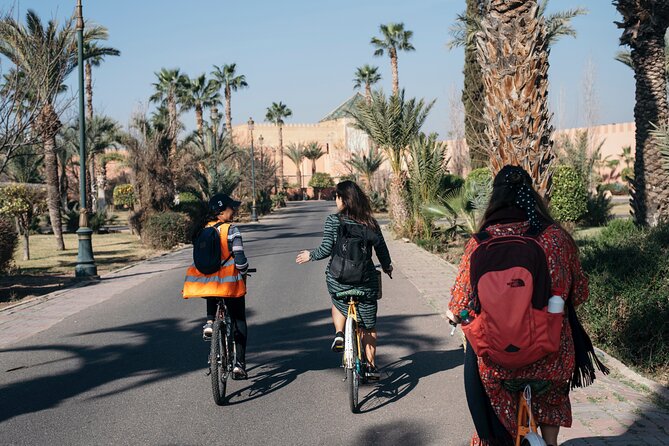
Marrakech can feel like it’s constantly moving—people, scooters, carts, and pedestrians all sharing the same narrow streets. A bike tour is a smart way to deal with that. You cover ground fast, but you’re still low-speed enough to notice daily rhythm: how shop fronts spill into the sidewalk, how workers move between corners, and how neighborhoods quietly change as you turn a single street.
This tour is also built around a social mission. Pikala isn’t just selling a route. The guides are part of a local non-profit project, trained to share what it’s like growing up in Morocco—especially the balance between tradition and modern life. That adds a human layer that you don’t get from a standard sightseeing walk.
You can also read our reviews of more tours and experiences in Marrakech.

Meet the Pikala Guides and What They’ll Explain While You Ride
The tour is guided by local young Moroccans trained by Pikala. In plain terms, you’re not just borrowing their eyes—you’re getting their context. The tour’s framing includes how family matters day to day, how people approach religion, and how they think about modernization.
In the reviews, guides named Yasser, Hamit, Kaula, Zouhair, Mo, and Khawla come up again and again. What that signals to me is that you’re likely to get someone who can switch between history-like storytelling and real-life answers—like why certain areas feel busy at certain times, or how daily routines shape what you see on the street.
Tip: if a guide asks a question like where you’re from or what you’ve noticed so far, answer honestly. These tours run best when you’re curious and willing to talk for 30 seconds at a time.
Morning vs Afternoon Departures: Pick the Timing That Matches Your Comfort
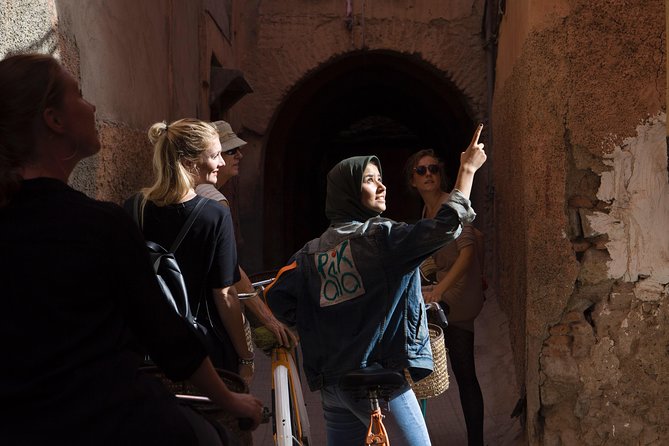
You can choose either a morning or afternoon departure. Since your ride time is about 3 hours, the main planning issue is heat and street intensity.
- Morning usually feels cooler and can make the Medina ride easier on your energy.
- Afternoon can be great for atmosphere and light for photos, but traffic can feel intense and you’ll still be riding in the city’s busiest feel.
If you’re someone who gets tense riding near fast-moving scooters, lean toward the time when you think you’ll be the calmest.
Getting Started at 29 Rue Riad Laarous (and Why the First Minutes Matter)
The tour meets at 29 Rue Riad Laarous, Marrakesh 40000, Morocco, and returns to the same spot at the end.
That matters because the first stretch sets your expectations. Even before you hit the most famous areas, you’ll already be entering the flow of real streets—busy, narrow, and shared. You’ll want to treat the opening minutes like a warm-up: get settled on the bike, follow the guide’s line, and don’t try to pass slower riders.
Practical detail: this is a mobile ticket activity. Have your confirmation handy on your phone so you’re not hunting it out mid-day.
Pedaling Through the Medina: Small Streets, Big Energy
The Medina ride is where Marrakech changes shape in your mind. The streets can be tight and chaotic, and you’ll see a lot more “in between” than you would on a driving tour. Expect turns that feel sudden, frequent stopping for photos, and quick moments where you’re close enough to hear conversations and see work happening in tiny storefront spaces.
This is one of the tour’s big reasons to book: you don’t just view the Medina—you move through it with local guidance. The route also includes stops that show how people live, not just what’s famous.
Safety reality check (based on the tour feedback you have here): several experiences note that you need to be alert. It’s not a quiet bike path. It’s city riding, with scooters and pedestrians all mixing together. If that sounds like stress for you, it may not be the right fit.

Gueliz and the New Town Contrast: A Breather With Different Views
After the Medina, you’ll cycle into Gueliz, the newer part of the city. This contrast is worth it. It changes the vibe from maze-like and dense to more open and legible. You’ll still get city life, but the streets often feel easier to manage.
This part also helps you reset. When you switch neighborhoods, you’ll often realize you can breathe again and focus more on the sights and the guide’s stories, instead of just navigating.
The Big Landmark Stops: Koutoubia, Kasbah, and Agdal Gardens
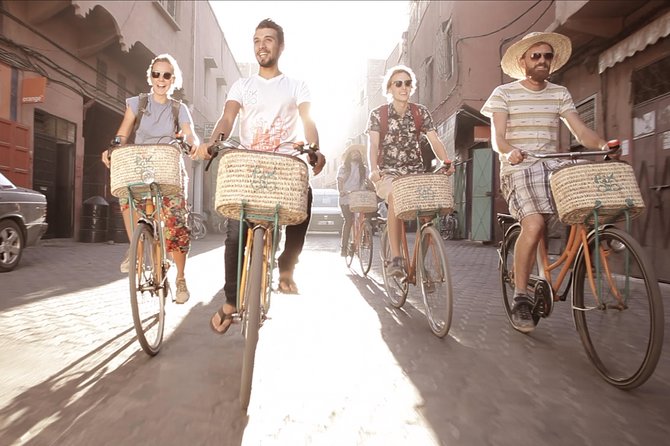
The tour does pass some famous spots, including:
- Koutoubia
- Kasbah
- Agdal gardens
What makes these stops useful on a bike tour is the pacing. You’re not stuck standing in a single place for a long time. You can look, shoot a few photos, and then get back on the bike while the guide links what you’re seeing to the city’s layout and social life.
The best part? These aren’t treated like the whole point. They’re markers along the way—signposts that help you understand where you are, then you keep moving into the less touristy areas.
A Local Public Bakery Stop: Smell, Share, and Keep Riding
One of the tour’s most “real life” moments is visiting a local public bakery. This is the kind of stop that’s hard to replicate on your own unless you get very lucky.
You’ll get to see daily food preparation, and it makes Marrakech feel personal fast. It’s not just architecture and viewpoints. It’s the stuff people eat and work around every day.
And yes, it pairs well with the tour’s snack rhythm. You’re already cycling for hours, so the breaks don’t feel random—they keep you energized while you keep moving.
Hammam Time: Traditional Bathhouse Experience in the Middle of the Route
A key stop is an old traditional bathhouse called a hammam. Even if you’ve heard of hammams before, seeing one inside the flow of local neighborhood life is different. It connects to how people handle cleanliness, routine, and social spaces in a way you won’t get from a pure sightseeing stop.
One note: hammams can be sensitive spaces. You’ll want to follow your guide’s directions closely about what you should and shouldn’t do, and how you should behave while inside.
Cafe Clock, Juice, Sweets, and a Pause That Actually Feels Like a Visit
You’ll stop at Cafe Clock for included juice and sweets. This is a smart design choice for a 3-hour tour. It’s not just refueling; it’s also your chance to slow down, talk with your guide, and let the busy streets fade for a moment.
A couple reviews also mention an iced tea and a calmer cafe break feel. That fits the pattern: you get a proper pause, not a rushed snack.
The Enormous Second-Hand Market: Browsing With a Local Lens
The itinerary includes a visit to an enormous second-hand market. Market time can go two ways on tours: either it’s a photo break that feels superficial, or it’s a guided “how to look” lesson.
Here, it tends to work because your guide frames what you’re seeing in terms of daily trade and neighborhood life. You’ll likely walk away with a stronger sense for how everyday commerce functions in Marrakech.
If you enjoy wandering, this is one of those moments where you’ll want to stay close to your group but still take your time looking.
Tomb Stop: Visiting the Tomb of One of the Seven Saints of Marrakech
The ride wraps with a visit to the tomb of one of the seven saints of Marrakech. This kind of stop adds a spiritual and cultural layer, but it’s still practical within the tour structure: short enough to keep the ride moving, meaningful enough to give the city more depth than landmarks alone.
Dress and manners matter in religious or sacred places. If you’re not sure what’s expected, the safest approach is to follow your guide’s cues without overthinking it.
How Hard Is This Ride, Really?
This is the big question, and you deserve a straight answer.
- The tour notes that most travelers can participate, and it runs for about 3 hours.
- But multiple reviews stress that it’s not for the faint hearted and that you need to be a confident cyclist. Expect street chaos and vigilant riding.
- Bike quality may vary. One review reports bikes that weren’t ideal, while others describe bikes as modern and easy to ride.
So here’s my practical take:
- If you can handle city cycling—tight turns, quick stops, sharing space—you’ll likely enjoy it a lot.
- If you’re unsure around traffic, you’ll probably find the experience stressful no matter how friendly the guide is.
Also consider timing. One review specifically suggests not doing it in summer when it’s busier, because that’s when road conditions and heat can combine into a harder ride.
Value for $33.28: What You’re Paying For (Besides the Bike)
At about $33.28 per person for roughly 3 hours, this tour can be strong value for three reasons:
- You get more than a route: the tour is built around local guides and local life topics—family, religion, and modernization—plus everyday stops like bakery and hammam.
- You get included refreshment: bottled water, and juice and sweets at Cafe Clock aren’t add-ons you have to hunt for.
- You support a mission: Pikala is a non-profit project, and the guides are part of that system. That social purpose changes how the tour feels.
Is it the cheapest thing in Marrakech? Likely not. But if you want a short, guided way to understand neighborhoods beyond the usual hits, this is a reasonable spend.
Should You Book Pikala Bikes in Marrakech?
Book it if you want:
- a bike tour that mixes Medina + Gueliz instead of just one area
- real-life stops like a public bakery and hammam
- frequent breaks and included snacks
- a chance to talk with local guides about how Moroccan life works
Skip or reconsider if:
- you’re nervous cycling in traffic
- you’re only comfortable on quiet lanes
- you expect a relaxed ride like a park loop
If you’re in the first group, this tour sounds like one of the best ways to feel the city’s rhythm in a few hours—street-level, human-paced, and tied to a local community project.
FAQ
How long is the Pikala bike tour in Marrakech?
The tour lasts about 3 hours.
Where does the tour start and end?
It starts at 29 Rue Riad Laarous, Marrakesh 40000, Morocco, and ends back at the meeting point.
What’s the price per person?
The price is $33.28 per person.
Is there a morning or afternoon option?
Yes. You can choose between a morning or afternoon tour departure.
What’s included during the tour?
The tour includes juice and sweets at Cafe Clock, plus bottled water and snack stops along the way. It also includes visits such as a local bakery and a hammam.
Does the tour include the Medina and other neighborhoods?
Yes. You cycle through the Medina and also into the new town area called Gueliz.
How big are the groups?
The tour has a maximum of 20 travelers.
Do I need to be an experienced cyclist?
Most travelers can participate, but it’s described as not for the faint hearted, with traffic that can feel chaotic. If you’re not confident cycling in city traffic, this may be stressful.
Is a mobile ticket provided?
Yes. It’s listed as a mobile ticket.
Is free cancellation available?
Yes. You can cancel for a full refund up to 24 hours in advance of the experience start time.