REVIEW · HYOGO PREFECTURE
Kinosaki Onsen Cycling Tour Kinosaki & Riverside Experience
Book on Viator →Operated by 城崎サイクリング 城崎&リバーサイドエクスペリエンス · Bookable on Viator
Kinosaki by bike turns a hot-spring town into a living, moving story. I like how the ride connects Kinosaki Onsen streets with river life, not just big-ticket sights. I also love that you get a Sea of Japan viewpoint moment as part of a relaxed route you can actually enjoy at a human pace.
The one thing to think about: this is still a cycling tour. You’ll cover about 15 km in roughly 3 hours, and the tour asks for moderate physical fitness and a height of at least 140 cm, so it’s best if you’re comfortable on a bike for a steady chunk of time.
In This Review
- Key highlights
- Why Kinosaki & Riverside works so well by bicycle
- Getting rolling: the meeting spot and what you’ll want to know
- Street of Kinosaki Onsen: start where the town’s personality shows
- The ride itself: an easy 15 km that follows the river’s logic
- The guide effect: patient storytelling, seasonal focus, and group size
- San-in Coast Geopark and topography: learning without turning it into a lecture
- Ramsar wetland sightings: wildlife context on the way to the sea
- Sea of Japan viewpoint: the payoff moment built into the route
- Earthquake recovery and Siebold-linked craft: heritage beyond postcards
- Price and value: what you’re paying for (and what you get instead)
- Who should book this (and who should skip it)
- Practical tips to make the ride more comfortable
- Should you book the Kinosaki & Riverside Cycling Tour?
- FAQ
- How long is the Kinosaki Onsen Cycling Tour?
- How far do you cycle?
- Is the route flat or hilly?
- Where do I meet, and where does the tour end?
- Who can join physically and by height?
- What if I need to cancel?
Key highlights
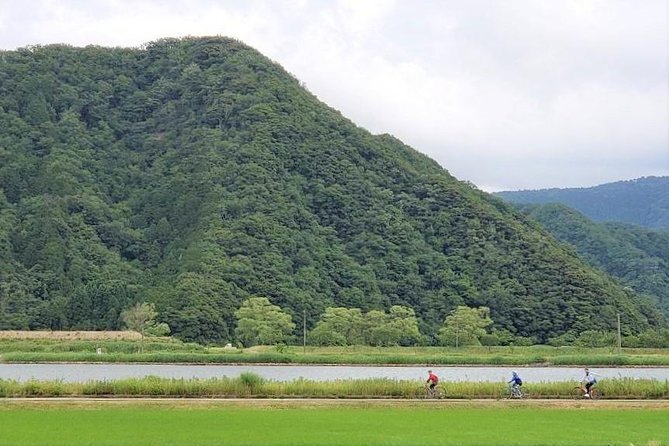
- An easy, almost-flat 15 km route paced for a slow ride
- Street of Kinosaki Onsen at the start, so you’re oriented fast
- Riverside cycling to Sea of Japan viewpoints, including a memorable look out
- San-in Coast Geopark and a Ramsar wetland focus, with nature explained on the move
- Small group size (max 5) for a calmer, more personal feel
- Guide-led seasonal plant and local-area talk, including named guides like Natsuko in prior groups
Why Kinosaki & Riverside works so well by bicycle
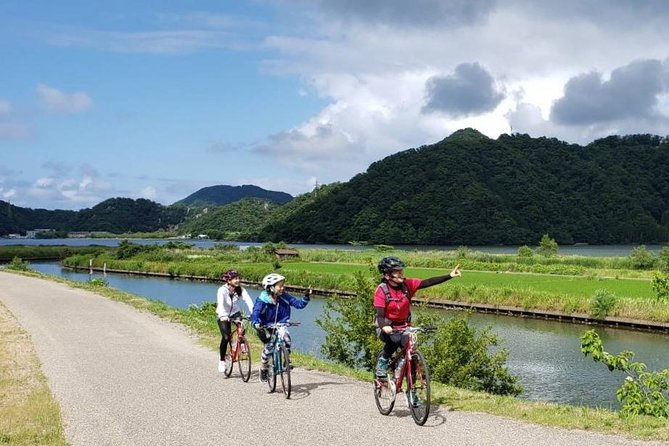
Kinosaki is the kind of place where details matter. By bike, you catch small rhythms that don’t show up when you arrive, pose, and leave—side streets, river bends, and the slow change from town to farmland.
I particularly like that the guide doesn’t treat this like a checklist. You’re cycling along a path that’s meant to teach you the area’s layers: hot-spring heritage, nature, and the geology/topography stories behind the region.
The result is a tour that feels practical. You get movement and fresh air, but you’re not rushing. This is a round trip that keeps the pace easy, so you can actually pay attention.
Getting rolling: the meeting spot and what you’ll want to know
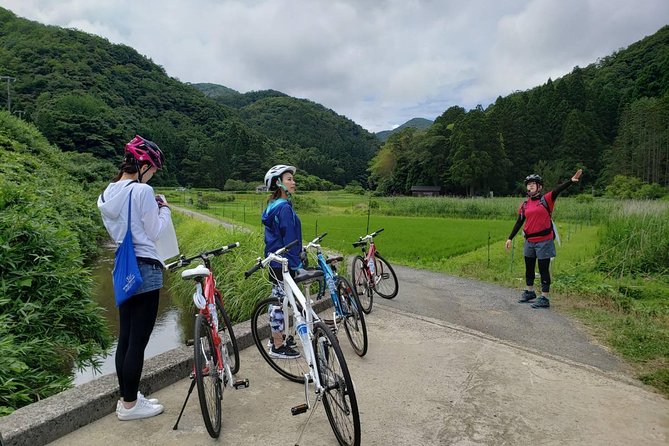
You’ll start at Koyado EnnJapan (〒669-6101 Hyogo, Toyooka, Kinosakichō Yushima, 219 小宿 縁 1F). The end point is back at the same place, so you’re not trying to navigate a bike route on your own afterward.
Because the tour uses a mobile ticket, you’ll want your phone ready and your ticket accessible. It also runs close to public transportation, which helps if you’re arriving from elsewhere in Hyogo.
One more practical point: with a maximum of 5 travelers, the group stays small. That’s great for questions, but it also means the tour is better when you’re flexible—small groups depend on good turnout.
Street of Kinosaki Onsen: start where the town’s personality shows
You begin with the Street of Kinosaki Onsen, and that’s a smart move. Early on, you’re in the zone where the town’s hot-spring identity is easiest to read—this is where the atmosphere feels most “Kinosaki,” not just “Japan.”
From there, the guide frames what you’re seeing with context. You’ll hear about the legend of the hot springs and how the area’s story connects to major events, including recovery after an earthquake. That kind of framing matters because Kinosaki isn’t only a scenic stop; it’s a place with lived history.
If you’re the type who likes to understand what you’re looking at, this opening section helps you connect dots fast. Even if you’ve seen photos of Kinosaki, the street-level focus makes the town feel grounded.
The ride itself: an easy 15 km that follows the river’s logic
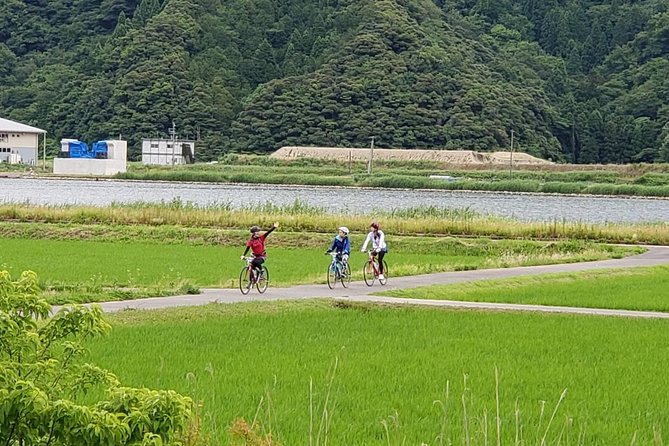
This tour covers about 15 km at a slow pace, and the route is described as almost flat. That combination is what makes it approachable: you can concentrate on views and explanations instead of fighting hills or speed.
The path runs from Kinosaki Town along the river, gradually changing the feel of your surroundings. You’re moving from town streets toward open edges where the countryside becomes more visible, and you can often see farmland elements such as rice fields along the way.
This is also the part where the cycling helps more than walking. On foot, you might rush between stops. On a bike, you travel far enough to feel like you left the center of town, but you still come back within a few hours.
The guide effect: patient storytelling, seasonal focus, and group size
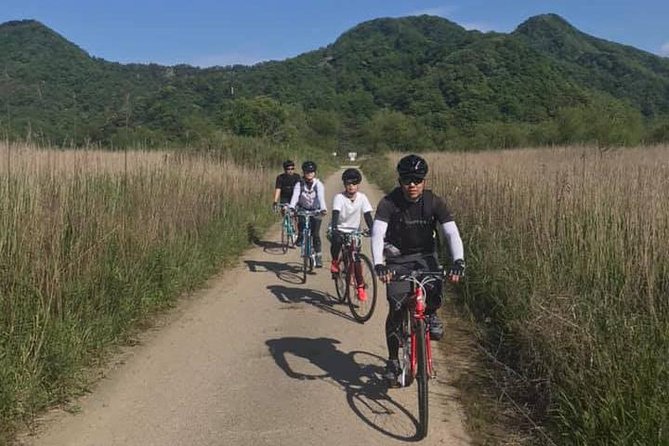
A big reason this ride earns top marks is the human factor. The tour’s guides are described as patient and easy to laugh with, and one guide name that comes up is Natsuko. That matters because this is a learning-focused tour—if the conversation is comfortable, the whole experience lands better.
Guides also focus on seasonal plants, the sky, and the local area. Even if you’re not a “nature person,” that style nudges you to look at small things: what grows where, how the light changes over water, and how the seasons shape what you notice.
With a maximum of 5 travelers, the group stays quiet enough that you’re not competing with a crowd. It’s the kind of setup that makes questions feel normal.
San-in Coast Geopark and topography: learning without turning it into a lecture
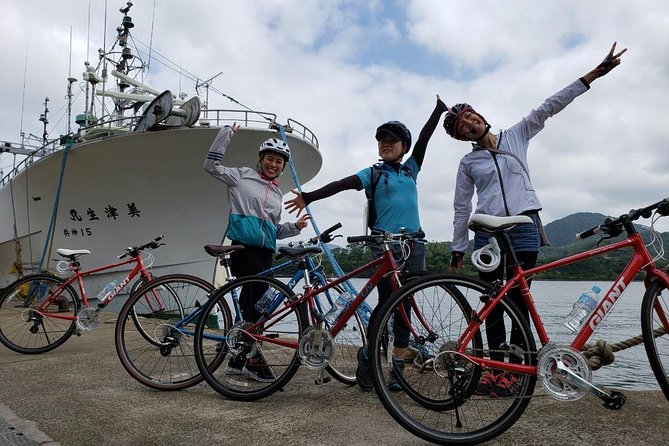
One of the tour’s defining features is the Geopark angle. The route is tied to the San-in Coast Geopark and the idea of world heritage topography, which is a fancy way of saying the landforms here have real significance.
Cycling makes these explanations easier to follow. You’re not staring at a single sign and hoping it clicks—you’re moving across the region, so the geography the guide is describing starts to feel connected to the views in front of you.
The tour also includes the “earth” side of travel. You’ll hear how Kinosaki’s setting connects to larger natural systems, including the wider region around the Sea of Japan. It’s the sort of context that can make future sightseeing in the area make more sense.
If you like tours where the “why” is as important as the “what,” this portion is a strong reason to book.
Ramsar wetland sightings: wildlife context on the way to the sea
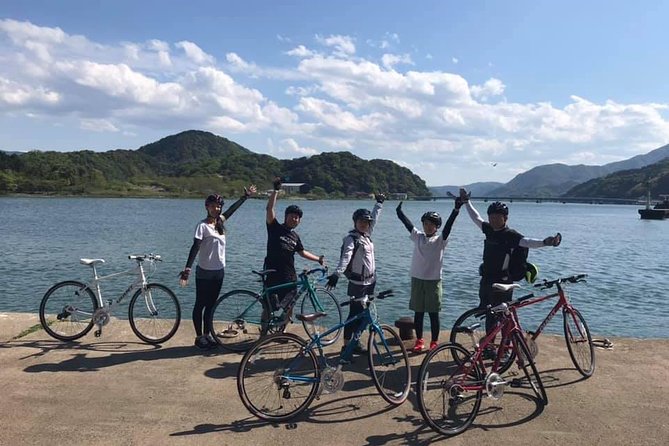
Another standout topic is the Ramsar wetland focus. This type of wetland designation signals an internationally important habitat for waterfowl, and the tour connects it to real bird life such as storks and notes it as a natural monument.
You won’t just get a general nature stop. You’re on a route that connects wetland habitat to the larger journey toward the coastline. That makes the bird-and-water story feel coherent, not random.
And it’s one of those details that you can only really understand by being in the area’s geography. The cycling keeps you moving through the region’s “in-between” spaces—those edges where town meets countryside and water becomes the dominant presence.
Sea of Japan viewpoint: the payoff moment built into the route
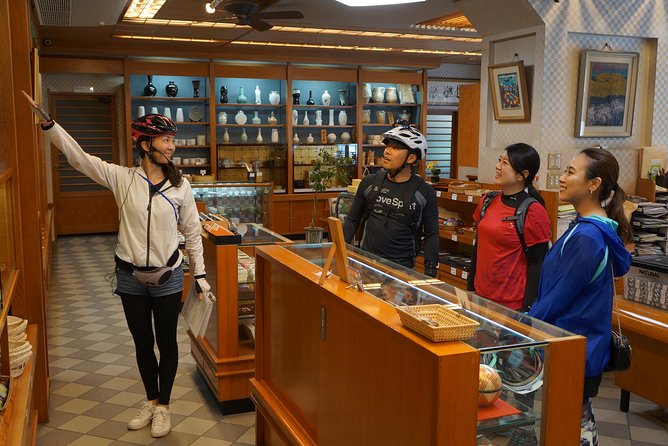
The most frequently praised highlight is the viewpoint to the Sea of Japan. It’s not treated like a random photo stop; it’s part of the ride’s flow, so you reach it with momentum and perspective.
This is where the tour’s round-trip design pays off. You don’t have to guess how far you’ll get before something opens up. The route intentionally shifts from town textures into coastal air, and the viewpoint is the moment the change becomes obvious.
If you want Kinosaki to feel more than a hot-spring day, this coastline piece is what pushes the experience into “worth the hours” territory.
Earthquake recovery and Siebold-linked craft: heritage beyond postcards
Kinosaki isn’t only about nature. The tour also includes cultural threads, including the legend of the hot springs and mention of recovery following an earthquake.
There’s also a craft story tied to Siebold. The tour references a traditional craft connected to him making a collection, which gives you a historical hook that goes beyond local branding.
I appreciate heritage when it’s connected to place. Even if you don’t know Siebold before you arrive, the point here isn’t academic trivia—it’s that Kinosaki’s traditions have been noticed and carried beyond the region.
Price and value: what you’re paying for (and what you get instead)
At $110.76 per person, this is not a bargain-bin activity. But the value is in the structure: a guided ride over about 15 km, with explanation focused on geopark/topography and wetland context, plus a town-and-coast route you’d likely struggle to string together yourself.
Also, the small group size matters. When the group is limited to 5, the guide can slow down for questions and adapt explanations to the pace of the ride. That’s hard to replicate on self-guided bike rental days.
For me, the most persuasive value argument is simple: you get a route that links hot-spring-town streets to countryside river edges and then to the Sea of Japan—without needing local routing skills.
Who should book this (and who should skip it)
This tour fits best if you want a guided, moderate-effort activity that feels authentic and place-based. You’ll likely enjoy it if you like learning while moving and you’re comfortable riding for about 3 hours at a slow pace.
It’s also a good match if you’re traveling with an interest in nature and geology topics, since the Geopark and Ramsar wetland themes are central, not tacked on.
Skip it if cycling for 15 km feels like more effort than you want right now. The tour asks for moderate physical fitness, and height needs to be at least 140 cm. If you’re unsure, consider what a comfortable day of biking looks like for you and then compare it to 3 hours on an easy route.
Practical tips to make the ride more comfortable
Since the tour depends on good weather, aim to dress for shifting conditions in Hyogo. Bring layers you can adjust, and plan for the kind of outdoor time where the sky matters to the guide’s commentary.
Wear shoes you can ride in without fuss. And because this is a mobile-ticket experience, keep your phone charged enough that you’re not scrambling mid-ride.
Lastly, go in expecting a guided conversation, not just scenic cycling. When you do, you’ll get more out of the geopark and wetland explanations—and you’ll notice more along the river.
Should you book the Kinosaki & Riverside Cycling Tour?
If you want Kinosaki to feel like a living place—town streets, river life, and coastline views in one easy loop—this is a strong choice. The combination of an almost-flat 15 km ride, small group size, and clear nature/geography focus makes it a smart way to spend half a day.
I’d book it if you care about understanding what you’re seeing, not just checking boxes. I’d pass only if cycling time feels like a stretch for your comfort level or if your schedule can’t flex if weather becomes an issue.
FAQ
How long is the Kinosaki Onsen Cycling Tour?
The tour takes about 3 hours (approximately).
How far do you cycle?
The distance is about 15 km.
Is the route flat or hilly?
The course is described as almost flat and progresses at a slow pace.
Where do I meet, and where does the tour end?
You start at Koyado EnnJapan (〒669-6101 Hyogo, Toyooka, Kinosakichō Yushima, 219 小宿 縁 1F). The tour ends back at the meeting point.
Who can join physically and by height?
The tour requires moderate physical fitness and corresponds to a height of 140 cm or more.
What if I need to cancel?
Free cancellation is available up to 24 hours in advance for a full refund, and the experience may also be rescheduled or refunded if canceled due to poor weather.