REVIEW · KUALA LUMPUR
Cycling Through the Heart of Kuala Lumpur with Hotel Pickup
Book on Viator →Operated by Asni Tours & Travel (M) Sdn Bhd · Bookable on Viator
Two wheels cut through KL’s grid.
This small-group bike tour (up to 15 people) mixes iconic sights and street-level culture with a local English-speaking guide, plus an easy one-way shared transfer and bottled water.
What I love is the small-group feel—you get personalized attention, and guides keep a close eye on everyone. I also like that the ride is planned for real sightseeing time, not just “cycle, cycle, stop,” with frequent photo and rest breaks around places like Merdeka Square and the Petronas area.
One consideration: you need real cycle experience, including starting and stopping smoothly in traffic. Helmets aren’t required, but Kuala Lumpur traffic means you should take the safety guidance seriously.
In This Review
- Key things to know before you pedal KL
- Why Kuala Lumpur feels faster (and friendlier) by bicycle
- Pickup and the small-group setup that keeps the ride enjoyable
- The ride through Merdeka Square and the colonial city core
- Central Market (Pasar Seni): where shopping meets local memory
- Petaling Street and the “shopping energy” moment
- Sin Sze Si Ya Temple (1864) and the Taoist story on the route
- Sri Mahamariamman Temple and the tile-and-gold details
- Kampong Baru’s rural lanes: a slower KL moment
- Petronas Twin Towers: the skyline finale you can actually enjoy
- Bikes, safety, and what “safe in traffic” really means here
- Heat, rain, and what to wear so you don’t suffer
- Price and value: what $166.32 buys you in KL time
- Who should book this cycling tour—and who should skip it
- Should you book? My call
- FAQ
- FAQ
- Do I need to have previous cycling experience?
- Is a helmet required?
- How long is the tour?
- Is pickup included?
- What’s included in the price?
- Will the tour run in the rain?
- What should I wear for temple stops?
- Are there any footwear recommendations?
- What language are the guides?
- How big is the group?
Key things to know before you pedal KL
- Small-group ride (max 15): you’re not stuck with a huge crowd and a loud guide over a bus.
- Safety vest + bottled water: hydration and visibility are part of the plan from the start.
- Cycling experience required: comfort with starts/stops in traffic is a must.
- Temple-ready clothing: cover knees and shoulders for stops on the route.
- Rain doesn’t cancel the plan: you’ll still ride through showers (KL weather is fast-changing).
- Guide energy matters: names like Andrew, Tony, Salle, and Hang come up for a reason—storytelling plus active traffic management.
Why Kuala Lumpur feels faster (and friendlier) by bicycle
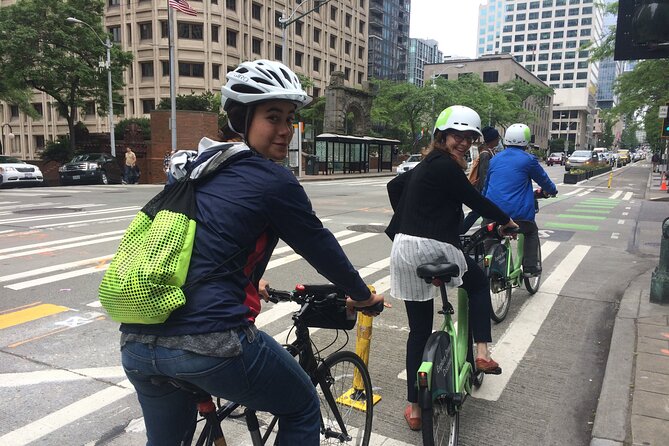
Kuala Lumpur can be a lot by car and overwhelming on foot. By bike, you get a middle ground: you’re moving through the city at a human pace, but you still cover serious distance compared with walking. The payoff is perspective. You’re watching daily life unfold in the lanes and shopfronts, then you’re gliding toward the big-picture landmarks without spending half your time inside taxis.
This tour is also built for attention. With a guide steering the group and managing traffic flow, you spend more time looking at what’s around you and less time figuring out how to get from A to B. If it’s your first time in KL, that’s a big deal. You leave with a mental map, not just a camera roll.
And yes, the skyline moments land well—especially when you reach the Petronas Twin Towers after riding through older neighborhoods and temple streets.
You can also read our reviews of more tours and experiences in Kuala Lumpur.
Pickup and the small-group setup that keeps the ride enjoyable
You’ll get hotel pickup offered and a one-way shared transfer as part of the experience. That matters in KL because “how do we get there” can eat your energy on Day 1. Shared transfer also usually means you won’t lose time to a long, complicated door-to-door route.
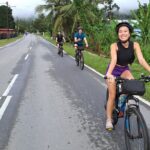
Once you’re with the group, the structure is what makes this type of tour work. The max group size is 15, so you’re not fighting for space around the guide at each stop. Guides also have you in mind as a group—keeping track of everyone and supporting safer movement through busy streets. In reviews, names like Andrew, Tony, and Hang come up repeatedly in connection with feeling safe and organized.
The guide is an English-speaking local guide, so you can ask questions on the spot rather than translating your way through history or culture.
The ride through Merdeka Square and the colonial city core
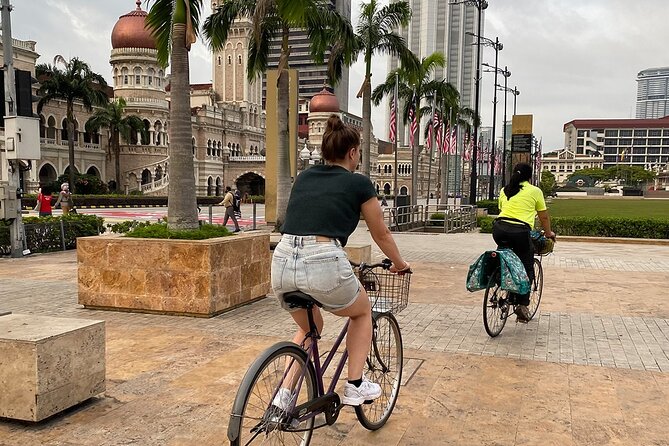
Merdeka Square (Dataran Merdeka) is KL’s signature landmark for a reason. It’s the kind of place where you can instantly understand the city’s identity: a big open space right in the center of historic government buildings.
On this route, you’re positioned with the Sultan Abdul Samad Building right in front of you. That setting helps you appreciate the contrast: modern KL right nearby, but history still shaping what’s around you. It’s a powerful stop for photos because the square gives you space to step back and see the geometry of the buildings, not just the crowd.
A practical note: in the open area, sun can be intense. Wear sunscreen, and use the hat/cap guidance seriously. The good part of a bike tour is you can cool down between stops rather than waiting in lines for long stretches.
Central Market (Pasar Seni): where shopping meets local memory
Central Market is the kind of place you can miss if you only chase “big attractions.” The building is called Pasar Seni, and it’s not new—it traces back to 1888. That long timeline is part of the charm. You’re shopping, eating, and browsing, but you’re also in a space that has served a similar role for generations.
What you’ll likely enjoy here is the texture of market life: stalls, craft items, and a mix of visitors and locals moving through the same corridors. It’s also an easy stop to slow down at. Unlike a rapid viewpoint, this is a place where you can look, compare, and pick up small souvenirs without turning the whole tour into a shopping errand.
A small drawback: markets can be crowded. If you’re the type who likes breathing room for photos, plan for that. The upside is that it’s exactly why this works—street-level scenes are part of the value.
Petaling Street and the “shopping energy” moment
South of Jalan Hang Lekir, the route heads toward Petaling Street, the famous shopper’s haven. This is where KL’s energy feels more immediate. You’ll sense it in the sidewalks, shopfront signs, and the constant rhythm of people moving in and out of stalls.
Petaling Street also works as a reset after the more structured landmark feeling of Merdeka Square. You go from wide-open views to tight streets and storefront details. It’s a good change of pace, especially because you’re on a bike: you can keep momentum while still seeing enough detail to understand the vibe.
If you’re hoping to buy things, give yourself realistic expectations. Your time is limited by the ride schedule, so shop with a clear idea of what you want (souvenirs, snacks, textiles, small crafts) instead of wandering for an hour.
Sin Sze Si Ya Temple (1864) and the Taoist story on the route
One stop is Sin Sze Si Ya Temple, built in 1864 by Kapitan Yap Ah Loy. It’s noted as the oldest Taoist temple in Kuala Lumpur, and it sits only a short walk from Petaling Street. That proximity is useful. You can understand how commerce and worship exist side by side in the same city blocks.
This is also the kind of stop that helps you connect the dots. Market streets tell you what people do now; temples help explain what people valued long ago and still value today. Even if you don’t read every plaque, you’ll feel the cultural purpose of the place.
Keep in mind the tour’s clothing guidance: you’ll visit a temple, so cover your knees and shoulders. That’s not just for rules—it makes the whole stop smoother and more respectful.
Sri Mahamariamman Temple and the tile-and-gold details
South of Jalan Hang Lekir is Sri Mahamariamman Temple, known for its extravagantly decorated design. It’s described as featuring Spanish and Italian tiles, plus precious stones and gold in the detailing. Whether you love architecture or just like colorful photo stops, this one earns its time on the route.
The real value here is seeing craftsmanship up close. A lot of landmark sites are best viewed from a distance. Temples like this reward closer attention—patterns, materials, and the way decorative elements frame the space.
Drawback: it can be easy to rush if you’re treating temple stops like quick checkmarks. Take a minute to slow down, look up, and notice details. Your bike tour schedule won’t let you linger forever, but you’ll get more out of the stop if you treat it like a cultural pause, not a photo sprint.
Kampong Baru’s rural lanes: a slower KL moment
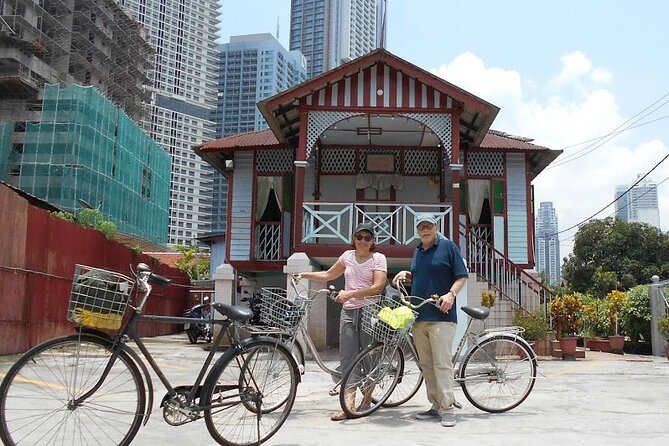
Kampong Baru is where the city feels almost rural. The area is known for traditional Malay wooden stilt houses, coconut palms, and banana trees, with chickens and goats sometimes roaming nearby. Street-food stalls line narrow lanes, giving you a “small neighborhood” experience inside a major metropolis.
This stop is important because it balances the rest of the tour. You’ve already seen big monuments and dense market streets. Kampong Baru reminds you KL isn’t only towers and traffic. It has living neighborhood culture, and the textures here—wood houses, greenery, everyday animals—make the contrast obvious.
In practical terms, expect uneven footing in old lanes and narrower roads. Good shoes help. The tour recommends shoes or fixed sandals rather than slippers, which makes sense when you’re stepping off the bike and walking short distances.
Petronas Twin Towers: the skyline finale you can actually enjoy
The Petronas Twin Towers are the obvious headline, but the bike-tour way to see them feels different. You’re not just standing near a major landmark; you’ve been cycling through KL’s layers first. That build-up makes the towers more than a postcard.
These twin structures were once the tallest buildings in the world and are noted as being joined at the 41st level. They were designed by Cesar Pelli & Associates. Even if you’ve seen photos before, seeing them at the end of your ride often changes how you judge scale. You’ve been weaving through smaller streets, so the sudden shift to mega-architecture hits harder.
One more good thing: you arrive with momentum. By the time you reach this finale, you’ve already exercised and checked off multiple neighborhoods. You’re ready to stand, look, and take photos without feeling like the whole tour is just a long queue to the skyline.
Bikes, safety, and what “safe in traffic” really means here
This tour says cycling is safe and that traffic is reasonably ordered for an Asian city, with cyclists accounted for. That’s useful—but you still need to bring the right mindset. It’s not a car-free path. It’s road riding, and your comfort level matters.
Helmets aren’t mandatory, but they’re strongly recommended. The tour provides a high-visibility safety vest, and you’re required to wear it during the ride. That visibility piece is not optional. It helps drivers see you earlier, which makes a big difference in mixed traffic.
You also need basic cycling competence: balance on the bike, and the ability to start and stop smoothly. If you’re nervous about traffic control signals or you can’t confidently handle slow stops, you might feel stressed even if the guide is managing the group well.
A pattern that shows up in reviews is how guides keep track of riders and move assertively through traffic. Names like Salle, Arpit, Felix, Joseph, and Hing are tied to confidence-building support—guides staying close, checking for gaps, and keeping the group together.
Heat, rain, and what to wear so you don’t suffer
KL weather can make or break outdoor plans. This tour rides through rain showers. It’s normal to get wet, and the ride is said to keep going because showers are often short.
So you’ll want to prepare for changing conditions:
- Light, comfortable clothes
- A hat or cap for sun protection
- Sunscreen
- Shoes or fixed sandals for control
- Clothing that covers knees and shoulders for temple stops
- Keep your water bottle habits strong, since bottled water is provided at the start
About the heat: biking gives you a breeze, and the tour runs at a quiet pace with plenty of rest periods. That matters because “sightseeing” isn’t only about what you see—it’s about energy. You’re active, but you’re not sprinting across the city.
If you hate getting slightly damp, consider a rain mindset. This is a bike ride. You can stay comfortable with the right clothing choices, but you should still expect some weather impact.
Price and value: what $166.32 buys you in KL time
At $166.32 per person for about 3 to 4 hours, this tour sits in the middle of the KL experience range. The value comes from what’s bundled:
- Bike provided
- Experienced local English-speaking guide
- Safety vest
- Bottled water
- One-way shared transfer
- Small-group attention (max 15)
You’re also getting access to multiple landmark types in one go: a major square, a historic market building, shopping street energy, temple interiors/exteriors, a neighborhood with stilt houses, and the Petronas skyline.
Food is not automatically included in every version, since the tour info says food and drinks beyond what’s on the itinerary aren’t included. Still, some departures mention a brunch or local meal stop in the reviews, so it’s worth checking what your exact booking includes.
A realistic way to judge value: if you were to recreate this yourself, you’d spend time sorting transport, figuring out safe road routes, and managing the sequence of stops. Here, the guide handles traffic flow and routing, and you get “more KL per hour” compared with a walking tour—without losing the close-up street feel.
Who should book this cycling tour—and who should skip it
Book it if:
- You want your first-time KL orientation with a mix of neighborhoods
- You’re comfortable cycling in busy areas
- You like stories tied to places, not just photos at points on a map
- You prefer an active sightseeing day without going all-day
Skip it (or reconsider timing) if:
- You can’t confidently start/stop a bike and handle street riding basics
- You’re uncomfortable in rain and expect dry conditions no matter what
- Temple visits with dress rules make you feel stressed
It’s a strong fit for couples, solo travelers who like company, and families with teenagers who can ride. Reviews also point to the teen-friendly aspect when the group feels safe and organized, though you should still judge based on your own comfort cycling in traffic.
Should you book? My call
If you’re the type who wants KL to make sense fast, this is a good booking. You cover major sights like Merdeka Square and the Petronas Twin Towers, but the real win is the middle layer: markets, shopping streets, and temple stops that put you in daily life and cultural context.
The main “yes/no” factor is your cycling comfort. If you meet the cycling requirement, this half-day format gives you a lot of value for the time you have.
FAQ
FAQ
Do I need to have previous cycling experience?
Yes. You need cycle experience, including the ability to cycle in traffic in a safe way, with basic balance and the ability to start and stop.
Is a helmet required?
No. Wearing a helmet is not obligatory, but it is strongly recommended.
How long is the tour?
The duration is about 3 to 4 hours.
Is pickup included?
Hotel pickup is offered, and the tour also includes a one-way shared transfer.
What’s included in the price?
Included items are a bike, bottle of water, an experienced local English-speaking guide, and a safety vest.
Will the tour run in the rain?
Yes. The bike tours always do, and rain showers in Kuala Lumpur are considered part of the experience.
What should I wear for temple stops?
You’ll visit temples, so clothing that covers knees and shoulders is appreciated. Light, comfortable clothing is recommended, along with a hat or cap for sun protection.
Are there any footwear recommendations?
The tour suggests shoes or fixed sandals for better control, and notes that slippers are not ideal.
What language are the guides?
The tour is conducted only in English.
How big is the group?
This tour has a maximum of 15 travelers.
If you want, tell me your comfort level with road cycling (gear bike vs simple bike, traffic experience, rain tolerance), and I’ll help you decide if this ride matches your style.