Trade-route roads beat Tokyo heat. This Okutama Historical Road cycling tour swaps trains and traffic for springs, wasabi fields, shrines, and mountain villages just outside Tokyo. You’ll reach Lake Okutama for museum time and lake views, then ride back for a relaxing onsen-style break.
Two things I especially like: the mix of small, quiet stops (like the drinkable spring and the shrine under a big rock) with real outdoor motion, and the fact that the day ends with a practical recovery moment at a local foot-soak onsen. One drawback to plan around: if rain shows up, you’ll want your own waterproof gear—rainwear isn’t included.
In This Review
- Key highlights you’ll care about
- Tokyo’s Okutama old road: why it feels so different
- Cycling through Okutama Mukashimichi: spring water, wasabi, shrines, and a foot bridge
- Stop 1: Okutama Mukashimichi
- Lake Okutama’s museum-and-dam walk: calm water, simple culture, and the floating bridge
- Stop 2: Lake Okutama
- Stop 3: Mugiyama Floating Bridge
- The ending you’ll remember: foot-soak onsen and easy souvenir time
- Pacing, bikes, helmets, and how a small group helps
- Price and value: is about $184 fair for 3.5 hours?
- Weather reality: rain delays, waterproof gear, and wildlife expectations
- Who should book this tour?
- Should you book the Okutama Historical Road cycling tour?
- FAQ
- How long is the Okutama Historical Road cycling tour?
- What’s included in the price around $184.61?
- What should I do about rain?
- How fit do I need to be?
- Is it a small group tour?
- Is there an age limit for kids?
- Where does the tour start and what time is it?
Key highlights you’ll care about
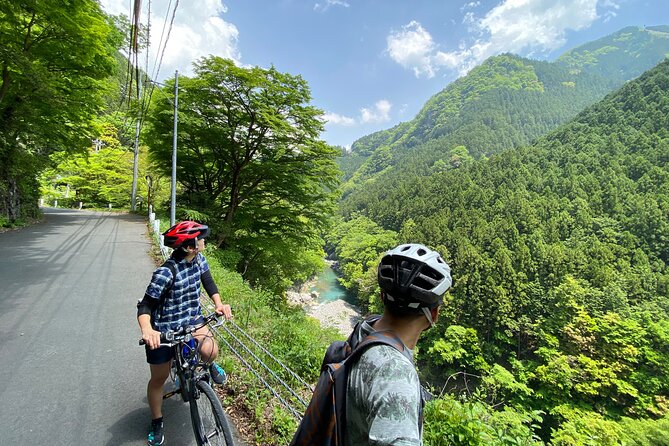
- Drinkable spring + wasabi fields right on the route, not tacked on at the end
- Scenic suspension foot bridge with a real chance of wildlife spotting, especially monkeys
- Lake Okutama stops that feel slow and local, including a dam walk and the Mugiyama floating bridge
- Small group size (max 6) helps you move as a team and get attentive guidance
- Intercom helmet keeps instructions clear on busy corners and quiet roads
- Onsen foot soak + souvenir shopping gives the ride an easy, complete ending
Tokyo’s Okutama old road: why it feels so different
If you’ve only seen Tokyo from the train window, this day trip changes your sense of scale fast. Okutama sits in Tokyo Prefecture, but the world here runs on river valleys, forests, and small mountain communities—not neon and crowds. You’re not just sightseeing; you’re traveling by bike along an old road that once helped move goods toward Tokyo.
I like that the tour doesn’t rush you through “big highlights.” It strings together a chain of nature and culture moments that make the area feel lived-in: mountain shrines, roadside statues, quiet village lanes, and water you can actually drink. It’s also the kind of outing where you feel the distance between Tokyo and countryside in your legs, not just on a map.
The ride is built for a full half-day feel without demanding an all-day trek. You’re looking at about 3 hours 30 minutes, with stops along the way and an easy wind-down at the end.
You can also read our reviews of more tours and experiences in Tokyo Prefecture.
Cycling through Okutama Mukashimichi: spring water, wasabi, shrines, and a foot bridge
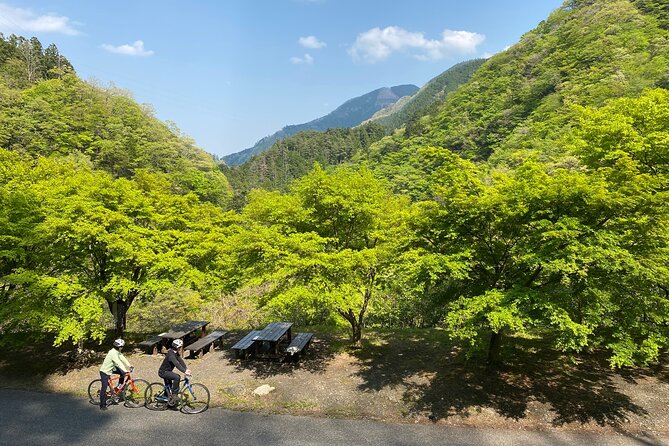
The tour begins in Okutama (in Tokyo’s Nishitama District area). You’ll check in at least 30 minutes early so you can get ready before the start time of 1:00 pm. From there, you roll into Okutama Mukashimichi and the mood shifts quickly.
Stop 1: Okutama Mukashimichi
This first stretch is where the tour earns its “hidden nature” label.
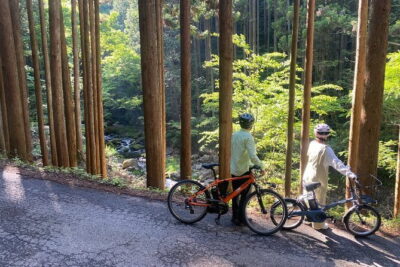
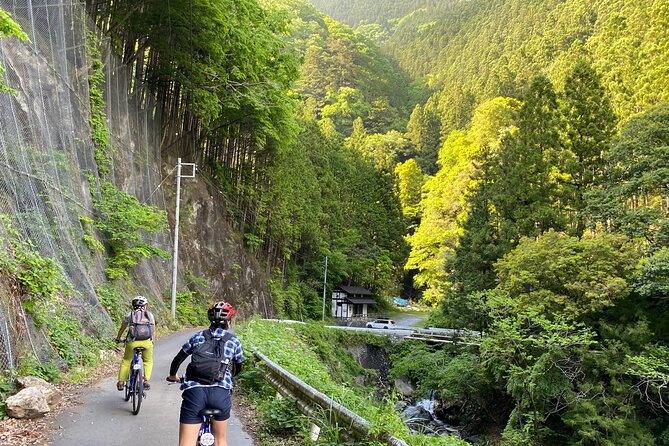
You start cycling through a forest route and soon reach a small mountain village scene. One of the coolest details is that there’s a spring water source you can drink, and you can also see wasabi being grown. It’s one of those moments that feels simple, but it’s exactly the kind of real-world touch that makes countryside travel click.
Next up: a mountain shrine built under a large rock. This isn’t just a shrine sign on a post—it’s a structure tied to the terrain, and it helps you understand how people adapted worship to the landscape rather than rearranging nature.
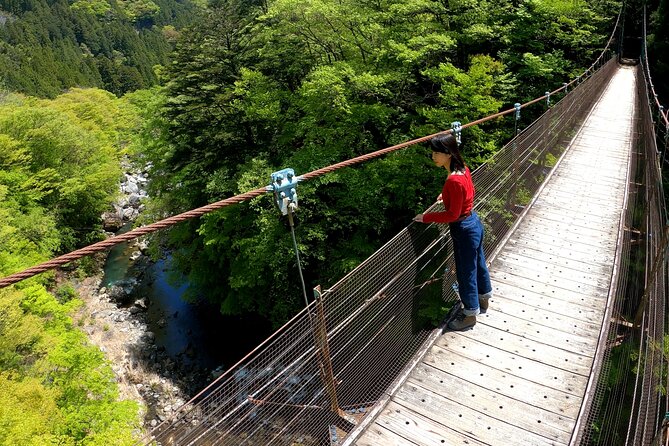
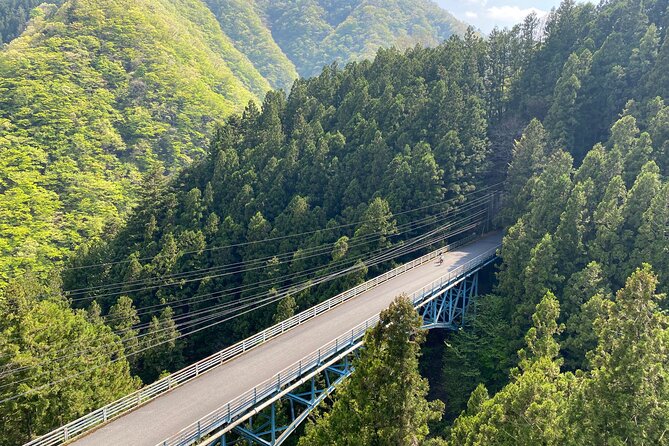
Then the route climbs toward an old suspension foot bridge high over the river valley. This part is all about views and atmosphere. It’s also where wildlife spotting becomes part of the day’s suspense. The tour notes a good chance of seeing local wildlife, especially monkeys, depending on conditions. I’d treat wildlife as a bonus, not a guarantee, but the placement of the bridge gives you the best odds without adding extra hiking.
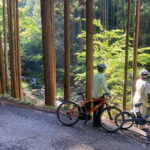
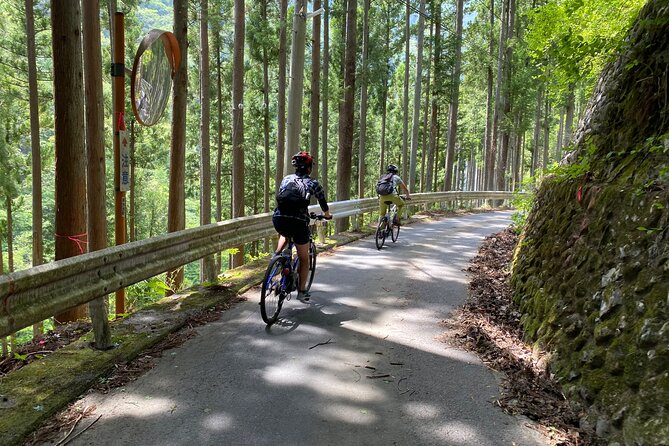
While you bike, your guide also points out the small shrines and statues that have been placed along the old road. These aren’t random ornaments. They help explain how travel through mountainous areas was guided—spiritually, historically, and practically.
Time on this section: about 1 hour 30 minutes with the stop itself described as admission-free.
What to watch for: this is the most “outdoor sensing” part of the day. If you get motion sickness easily, tell the guide early and focus on steady breathing and eye level ahead. If you’re comfortable on a bicycle, you’re in good shape.
Lake Okutama’s museum-and-dam walk: calm water, simple culture, and the floating bridge
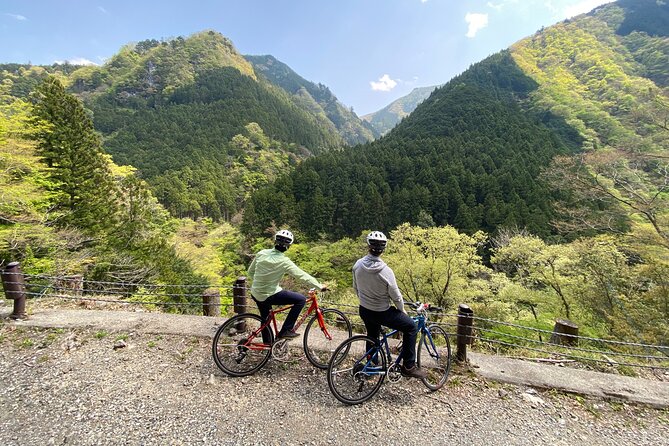
Once you reach Lake Okutama, the day slows down in a good way. You’re leaving the forest feel behind and stepping into a broad water setting. Lake Okutama is a large man-made lake, and it’s the kind of place where the sky and shoreline both seem to matter more than landmarks.
Stop 2: Lake Okutama
When you arrive, you’ll get time to view the lake and then visit a small museum focused on local heritage and historic artifacts. You also walk along the dam. That combination is smart: the museum gives context, and then the dam walk helps you understand the lake not just as scenery, but as infrastructure that shaped life around it.
Time on this section: about 30 minutes, and admission is free.
You’ll also notice the contrast in sound. Forest roads tend to have moving-water whispers and leaf noise. Lake time feels more open—wind, water texture, and distant calls. It’s a helpful mental reset before the ride continues.
Stop 3: Mugiyama Floating Bridge
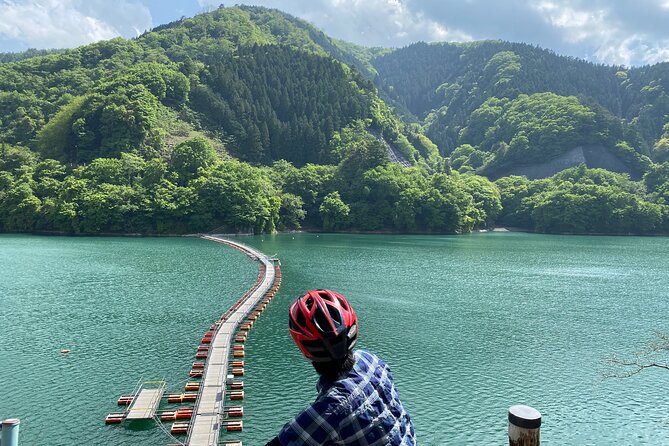
Halfway along the lake, you’ll find the Mugiyama Floating Bridge. This is a short stop—about 15 minutes—but it changes the feel of the lake. Standing or moving near a floating structure gives you that gentle, stable calm that’s hard to get from a quick photo stop.
This is one of those moments where you should slow down and look around. You’ll likely see people taking it easy, and you’ll understand why: the lake isn’t trying to entertain you. It’s just there, doing lake-things.
Time on this section: about 15 minutes, admission free.
What to watch for: lake weather can shift quickly. Even when Tokyo feels mild, you might feel breeze on the open water side.
The ending you’ll remember: foot-soak onsen and easy souvenir time
After cycling out and back, the day finishes with something that makes practical sense. Your legs get exercise, and then you get to take the edge off.
The tour returns to town and then you can soak your feet at a local onsen. This isn’t a long formal spa day. It’s the kind of reset that fits a half-day cycling plan: you go in a little tired, you come out a little more human.
After that, there’s time to shop for souvenirs. This part matters because it keeps the day from feeling like a “ride-only” experience. You can grab small items connected to the area while your memory is fresh.
If you want to keep it comfortable, bring a change of socks if you can. You’ll be drying off after the foot soak, and it’s just nicer.
Pacing, bikes, helmets, and how a small group helps
This tour caps at 6 travelers, and I think that’s more than a number—it affects the whole day. With fewer people, you get clearer guidance, less waiting, and a better chance to stop when something interesting appears along the route (like a roadside shrine detail or a wildlife spotting opportunity).
You’ll ride with intercom helmets, which is a huge plus in forest segments and when the group stretches out. It makes instructions easier, and it helps you avoid missing the moment where the group needs to gather.
Fitness level is listed as moderate. That means it’s not a technical mountain-biking mission, but it’s also not an easy cruise where you do nothing. If you can ride a bike for a bit and you’re okay with some gentle effort, you should be fine.
Bikes and water are included:
- bicycle use
- water
- intercom helmet
Rain gear isn’t included—this is the one “bring your own” item that can really matter for comfort.
One rider’s note I found particularly useful: the ride can feel approachable even for people who are active but not super fit, and e-bike assistance may be an option on the day. If you’d like extra help on climbs or want to conserve energy for stops, ask when you check in.
Price and value: is about $184 fair for 3.5 hours?
At $184.61 per person, this isn’t the cheapest thing you can do from Tokyo. But it also isn’t a generic city tour stretched into something long. You’re paying for a guided countryside route, bike provision, safety equipment (that intercom helmet), and a planned sequence of stops that includes museum time and an onsen foot soak.
Here’s what you’re effectively getting for the price:
- Time-saving planning: you don’t have to figure out how to reach Okutama, what to do once you’re there, or how to connect multiple stops into one ride.
- Equipment included: bike + helmet + water means you’re not piecing together rentals and supplies.
- Guidance included: the guide’s job is to explain what you’re looking at—shrines, statues, historical road references, and the logic of where each stop fits.
- A smoother day: the small-group size helps you spend less time waiting and more time experiencing.
Also, the tour stops include free admission items (the route’s main stop and the museum access are described as free). That’s a quiet value win: it keeps spending predictable.
If you’re trying to squeeze in countryside without the hassle, the cost starts to look reasonable.
Weather reality: rain delays, waterproof gear, and wildlife expectations
The tour depends on good weather. If it’s canceled due to poor weather, you’ll be offered a different date or a full refund. That’s good insurance.
But what if the weather turns while you’re already out there? This is where you should take the waterproof warning seriously. Waterproof wear is explicitly not included, so bring something that covers you well—especially because forests and rivers can mean wet surprises.
One practical note: even when conditions were unpleasant for a moment, the ride can still work out once the storm passes. Still, don’t treat a “maybe rain” forecast as harmless. Dress for comfort and protect your electronics and clothing.
Wildlife is another “try, not guarantee” area. The route includes an elevated foot bridge where wildlife is more likely—especially monkeys—but you’re still riding a natural area. If you spot nothing, you’ll still have the shrines, wasabi, spring water, lake calm, and the bridge views.
Who should book this tour?
This is ideal if you want:
- a countryside day without committing to a full hiking schedule
- guided context on what you’re seeing—shrines, historical road details, and local heritage
- a structured ride with a clear ending (on the onsen foot soak side)
- a small group experience rather than a big bus style outing
It’s also a smart pick if you like biking but you want someone to manage the stop sequence. And if you’re traveling solo or as a pair, the max 6 travelers setup usually keeps the atmosphere friendly and easy.
If you hate riding in any chance of rain, you may want to plan carefully. The tour is weather-dependent and waterproof gear isn’t included.
Should you book the Okutama Historical Road cycling tour?
Yes—if you want a change of pace that feels genuinely different from central Tokyo. The whole day is designed around contrasts: forest village to lake dam, shrine and statues to calm bridges, then a simple foot-soak onsen to land the experience.
I’d book this if you value three things: real countryside details, a route you can’t easily stitch together alone, and a guided explanation that makes small stops mean something. The price is fair when you factor in the bike, helmet system, water, and the planned museum and onsen-style finish.
I’d hesitate only if rain gear is a problem for you or if moderate physical effort sounds stressful. Otherwise, it’s one of the more memorable ways to spend a few hours outside Tokyo—without turning it into a long, exhausting ordeal.
FAQ
How long is the Okutama Historical Road cycling tour?
It runs for about 3 hours 30 minutes (approx.).
What’s included in the price around $184.61?
The tour includes bicycle use, water, and an intercom helmet. Admission at the listed stops is free.
What should I do about rain?
The tour requires good weather. If it’s forecast rain and you go anyway, waterproof wear is not included, so plan to bring your own. If the tour is canceled due to poor weather, you’ll be offered a different date or a full refund.
How fit do I need to be?
The tour is listed as moderate physical fitness. It’s suitable if you can handle a few hours of cycling with stops.
Is it a small group tour?
Yes. It has a maximum of 6 travelers.
Is there an age limit for kids?
Children over 12 or over 150 cm tall can join.
Where does the tour start and what time is it?
It starts in Okutama, Nishitama District, Tokyo and ends back at the meeting point. The start time is 1:00 pm, and you should arrive 30 minutes early to check in and get ready.