REVIEW · NAHA
Zodiac Shrines and Naha Backstreets Cycling Tour
Book on Viator →Operated by Discovery Bicycle Tours Okinawa / e-CHARIty Naha · Bookable on Viator
Naha’s temples have a road-trip rhythm. This Zodiac Shrines and Naha Backstreets Cycling Tour strings together Okinawa’s worship traditions—from Ryukyu Kingdom-era spirit culture to everyday shrine visits—while you glide through side streets on an e-bike. I like the practical setup here: electric bicycles help you keep energy for photo stops and short walks. I also like that the sights are tightly focused and the key stops have free admission, so your money goes into the experience, not extra fees.
The main thing to think about is ride conditions: part of the route includes busy streets, and the tour description doesn’t include bottled water (so plan to bring your own).
You’ll meet near Makishi Monorail Station, get a safety intro, and then pedal your way through a string of sacred places in about 4 hours total. The itinerary is timed for quick immersion at each stop (usually around 15–20 minutes), which works well when you want a lot of meaning without being stuck in lines all day.
Weather matters. If precipitation probability is high (over 70%) or conditions turn severe, the plan can change and you’ll be contacted the day before. That’s a smart reality check for an outdoor cycling tour.
In This Review
- Key Points You’ll Actually Care About
- Why Cycle the Zodiac Shrines of Naha and Shuri?
- Meeting at Makishi and Getting Set Up on the E-Bike
- Stop-by-Stop Pilgrimage: 8 Sacred Places in About 4 Hours
- Shuri Kannondo: Kannon Bodhisattva and Vermilion Views
- Ankoku-ji Temple: Okinawan Buddhism and Everyday Old Houses
- Shuri Castle’s Ceremonial Gate: A Photo Moment With Context
- Sairaiin (Daruma Temple): Prayers for Health and Pregnancy
- Seikoji: Temple Quiet Under the Monorail
- Shuritobarucho: A Miraculous Spring With Royal-Era Clues
- Sogenji-dori: Downhill to the Royal Entombment Park
- Wrap-Up at the Shop: Return the Bicycle and Catch the City
- The Guide Makes It: Friendly Explanations and Better Photos
- Value Check: Is $108.72 a Good Deal?
- How Hard Is the Ride, Really?
- What’s Included, What to Bring, and What to Skip
- Who This Tour Fits Best
- Should You Book This Zodiac Shrines and Naha Backstreets Cycling Tour?
- FAQ
- How long is the Zodiac Shrines and Naha Backstreets Cycling Tour?
- Where do I meet for the tour?
- What’s included in the price?
- Are there admission fees for the stops?
- Does the tour include bottled water or drink breaks?
- What if the weather is bad?
- What’s the group size?
- What is the cancellation policy?
Key Points You’ll Actually Care About
- Small group feel (max 5 people), so your guide can answer questions without rushing you.
- Free entry at each main stop, keeping the day’s cost more predictable.
- Goshuin-cho included, so you can participate in the pilgrimage vibe beyond just sightseeing.
- E-bikes for hills and energy, especially when the route dips toward the royal mausoleum area.
- A mix of temples, springs, and royal-era sites rather than a single religious theme.
- Snack breaks plus guide-led context, so you understand what you’re seeing while you’re moving.
Why Cycle the Zodiac Shrines of Naha and Shuri?

This tour is for people who are tired of only seeing postcard sights. Naha and Shuri can feel like a patchwork of eras—Ryukyu Kingdom symbolism, postwar rebuilding, and modern daily life all sitting side by side. Cycling between sacred stops makes that contrast easier to notice, because you’re not stuck in one neighborhood for the whole day.
The core idea is a pilgrimage-by-bike. You’re not just passing shrines and temples; you’re learning what people come to pray for and how worship shows up in the physical space—gates, carvings, sacred springs, and even the way a park preserves what used to be a royal burial area.
What makes it special is that Okinawan spirituality isn’t treated like a museum exhibit. The tour is set up so you can watch modern-day Okinawans continue worship traditions that trace back to the Ryukyu Kingdom era, then connect that continuity to the places you visit.
You can also read our reviews of more tours and experiences in Naha.

Meeting at Makishi and Getting Set Up on the E-Bike
Your day starts close to transit, which matters in Naha. You’ll meet at 3-chōme-13-20 Makishi, and it’s a short walk from Makishi Monorail Station. That convenience is a quiet win if you’re already using the monorail to get around.
Once you arrive, the group picks up electric bicycles and gets a brief information session. You’ll also use an installed cycling helmet, which is exactly what you want on a city route with mixed traffic. The tour runs about 4 hours total, and the pacing is built around short stays at each stop so you can keep moving without feeling like you’re constantly rushing.
Included snacks keep energy steady for a cycling morning, but you should still plan to manage your own hydration. Bottled water isn’t included, so it’s smart to carry your own.
Stop-by-Stop Pilgrimage: 8 Sacred Places in About 4 Hours
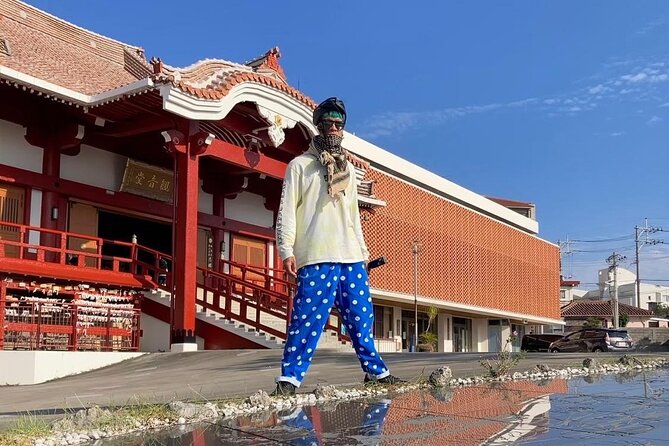
Here’s how the route comes together, and why each stop earns its place.
Shuri Kannondo: Kannon Bodhisattva and Vermilion Views
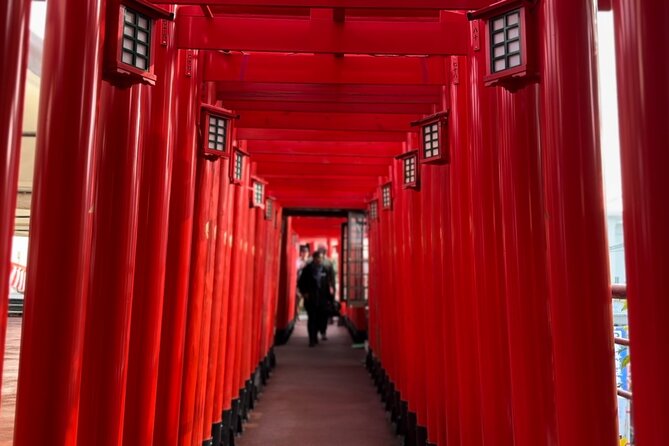
At Shuri Kannondo, you’ll see Kannon Bodhisattva, described as the guardian deity of the Ryukyu Kingdom. The temple setting emphasizes details—carvings and ornaments—and the vermilion color is a visual anchor in Shuri. You also get a viewpoint over the cityscape from the temple area, which helps you connect the religious symbolism to the geography of Shuri itself.
This is a good early stop because it sets tone. You’re not starting with something vague; you’re starting with a clear spiritual figure and a sense of place.
Ankoku-ji Temple: Okinawan Buddhism and Everyday Old Houses
Next up is Ankoku-ji Temple, where Okinawan Buddhism has been practiced for over 500 years. The ride between stops matters here. You’ll pass through a local stretch of Naha where traditional houses remain, so you’re not just riding past walls—you’re moving through a living neighborhood texture.
Then you arrive at a temple that has been around long enough to feel grounded. The short visit window still gives you time to take in the atmosphere and the meaning your guide connects to the site.
Shuri Castle’s Ceremonial Gate: A Photo Moment With Context
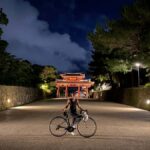
Then you hit Shuri Castle, focusing on its special ceremonial gate—a vermilion landmark that symbolizes Okinawa. You can take a photo with your bicycle right in front of the gate, and that’s not a throwaway detail. It gives you a personal souvenir tied to the ride itself, not just a standard temple snapshot.
Even if you’ve seen Shuri Castle in photos before, this route makes it feel like you arrived there as part of a journey, not just as a destination.
Sairaiin (Daruma Temple): Prayers for Health and Pregnancy
At Sairaiin (Daruma Temple), the vibe shifts toward everyday hopes. This is visited by devotees who make pilgrimages for good health and pregnancy, while also giving thanks for their current life.
You’ll notice the look of the place right away: the tour description points out the bright red daruma dolls. When a site is visually strong like this, it helps the meaning stick, even during a short stop.
Seikoji: Temple Quiet Under the Monorail
Seikoji is one of those moments where you feel the city change in a few seconds. You cross the main street, and then you pass beneath the monorail that runs above in mid-air. After that, you arrive at a temple with a more sacred atmosphere.
The description also notes that a nearby new temple was rebuilt after the war, and it’s adjacent to an older structure (described as an ancient portion). That pairing is a reminder that religious sites in Okinawa aren’t frozen in time—they’re repaired, reused, and continued.
Shuritobarucho: A Miraculous Spring With Royal-Era Clues
The route then includes Shuritobarucho, a spring connected to a story about water being found deep in the forest. The trigger for the discovery is tied to an Okinawan princess noticing waterfowl, and the water is presented as carrying a historical connection that still matters today.
This stop works well because it’s not only about buildings. It’s about a natural feature treated as sacred—something you can sense as part of the pilgrimage theme.
Sogenji-dori: Downhill to the Royal Entombment Park
Near the end, you’ll enjoy a thrilling downhill ride to Sogenji-dori, described as the sacred area where successive Ryukyu Kingdom kings were entombed. While it’s now a park, the route keeps the symbolism visible through features like a stone gate and a banyan tree (mentioned as part of what you’ll see).
This is also where the e-bike earns its keep. Downhill is fun, but the day still involves city riding. You’ll feel the route’s intent: the cycle isn’t random; it’s paced to place you at the right kind of site at the right kind of moment in the day.
Wrap-Up at the Shop: Return the Bicycle and Catch the City
The tour ends back at the starting area/shop, where you return the bicycle. After that, you’re free to continue exploring Naha on your own—useful if you want to add extra time at a favorite neighborhood or eat before the crowds shift.
The Guide Makes It: Friendly Explanations and Better Photos
The difference between a decent city tour and a good one is the guide’s ability to translate meaning into moments you can actually notice. In this tour, you’ll see that approach in how guides explain what you’re looking at—like why a gate matters, what a temple represents, and how worship shows up in everyday Okinawan life.
The guides’ names show up in real-world experiences: Maria is praised for getting people around and explaining Okinawan culture in a way that made the ride smooth. Jojo is noted for being friendly, open to questions, and willing to help take photos. Sally is described as knowledgeable and guiding people to the castle and other spots in a nature-leaning version of the day. Even smaller groups can feel personal—one experience included a near-private setup.
If you want maximum value, ask questions while you’re biking between stops. When the guide has you moving, it’s easier to connect the explanation to what you’re seeing immediately.
Value Check: Is $108.72 a Good Deal?
At $108.72 per person for about 4 hours, you’re paying for transportation, guiding, and a set of high-context stops—not just admission.
Here’s where the value shows up:
- You get the bicycle and helmet, which removes the biggest friction of cycling in a city.
- Admission tickets are free at the listed sites, so you’re not doubling up on temple fees.
- You receive Goshuin-cho plus snacks, which adds to the pilgrimage feeling.
- The group size cap (max 5) helps the guide spend time with you, not just the schedule.
The one thing that might change your personal math is what you need to carry. Since bottled water isn’t included, you should budget a little for hydration. Also, camera gear and phone mounts aren’t provided, so you may want to bring what you use if you like taking videos or steady shots.
Even with those notes, the combination of guided context + included cycling gear + free entry makes this one feel like a fair-priced cultural day rather than a pricey bus ride.
How Hard Is the Ride, Really?

This is a cycling tour in an urban area, so it comes with two realities:
- Parts of the route include busy streets.
- There are hills, and that’s where e-bikes become more than a convenience.
The tour is explicitly designed to be rideable because the bikes are electric. That means you can keep your attention on turns, signs, and the sacred sites ahead, instead of spending the day fighting the bike.
Still, use common sense. If you’re prone to getting winded, take advantage of the e-assist early. If you’re a confident rider, you’ll likely enjoy the momentum between stops. If you’re not, keep your speed steady and let the guide set the pace.
The best mindset is to treat it like a moving guided walk—just faster.
What’s Included, What to Bring, and What to Skip
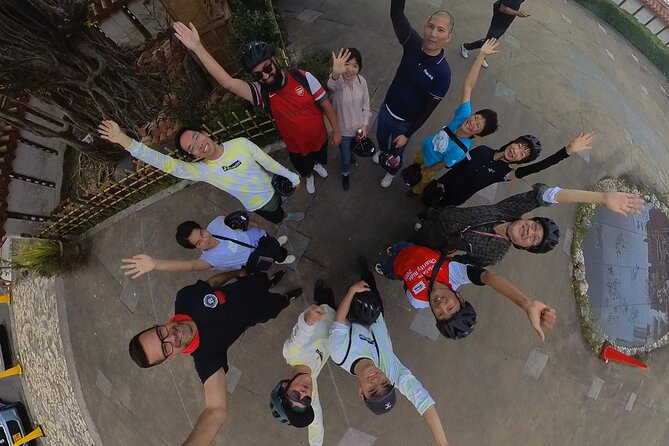
Here’s the practical list so you don’t arrive underprepared.
Included:
- Use of bicycle (electric)
- Installed cycling helmet
- Pilgrim’s book: Goshuin-cho
- Snacks
Not included:
- Bottled water
- Camera mounts
- Mobile phone holder
So what should you bring?
- Your own water bottle
- A simple way to secure your phone/camera if you want stable shots
- Comfortable clothes for short temple walks and a bike ride
- A little patience for city traffic and monorail crossings
Also remember: the tour can switch if weather gets bad, based on precipitation probability. If you’re planning a tight schedule day, keep some flexibility.
Who This Tour Fits Best
This works especially well if you:
- Want an Okinawa culture experience that’s more than sightseeing photos
- Prefer movement (cycling) over sitting for long stretches
- Like structured stops with enough time to look around
- Enjoy short, meaningful visits rather than spending hours at one site
It’s also a strong option for first-time visitors to Naha who want to understand the Shuri-to-Naha relationship without trying to build an itinerary from scratch.
If you’re only interested in one or two major landmarks, it might feel like a lot at once. But if you like variety—temples, gates, springs, and the royal entombment area—this is a tidy package.
Should You Book This Zodiac Shrines and Naha Backstreets Cycling Tour?
Book it if you want a day that feels like a pilgrimage with actual logistics handled for you. The included bike and helmet, the free admissions, and the guide-led meaning make the cost feel more grounded than many “see a few things” tours.
Skip it (or at least reconsider) if you hate mixed traffic cycling, or if you need lots of time at a single site. The stops are short by design, so you’re sampling a chain of places rather than lingering all afternoon in one.
My call: this is a great choice for travelers who like momentum and context. You’ll leave with a better sense of how Okinawan spirituality lives in both grand symbolism and everyday routes through the city.
FAQ
How long is the Zodiac Shrines and Naha Backstreets Cycling Tour?
The tour runs about 4 hours (approximately).
Where do I meet for the tour?
You meet at 3-chōme-13-20 Makishi, Naha, Okinawa 900-0013, Japan, near Makishi Monorail Station (about a 1-minute walk).
What’s included in the price?
The tour includes bicycle use, an installed cycling helmet, the pilgrim book Goshuin-cho, and snacks.
Are there admission fees for the stops?
Admission tickets for the listed stops are free.
Does the tour include bottled water or drink breaks?
Bottled water is not included. Snacks are included during the tour.
What if the weather is bad?
If precipitation probability exceeds 70% or there is severe weather, the tour may change plans. You’ll be contacted the day before, and in that case you may be offered a different date or a full refund.
What’s the group size?
This experience has a maximum of 5 travelers.
What is the cancellation policy?
You can cancel for a full refund up to 24 hours in advance of the experience start time. If you cancel less than 24 hours before, the amount paid is not refunded.