REVIEW · NAHA
Okinawa: Afternoon Cycling Tour with Local Guide
Book on GetYourGuide →Operated by イーチャリティ那覇国際通り本店 · Bookable on GetYourGuide
Naha on two wheels feels personal. This afternoon cycling tour takes you past Okinawan neighborhoods and into Shuri’s historic areas, with electric-assisted bicycles that make the climbs feel doable.
What I liked most was how the route mixes craft streets and old-city atmosphere, not just the usual photo stops.
Two big wins for me: you ride through the Yachimun pottery workshops area, where Okinawan ceramics have roots that go back centuries, and you get a real payoff at the Shuri hilltop/viewpoint break with sweeping city scenery. You also move at a human pace in small streets that you can’t really “tour-walk” without turning it into a workout.
One thing to consider: this is for people who can comfortably ride a bike (and it’s not for wheelchair users). If weather turns bad, the plan may change since they’ll monitor precipitation and contact you the day before.
In This Review
- Key highlights before you go
- Getting started near Makishi Monorail: the ride begins fast
- Tsuboya and Yachimun pottery streets on an e-bike
- Sliding through local Naha: everyday streets, not just attractions
- Entering Shuri Castle town: cobblestones, temples, and sacred lanes
- The Shuri Castle Park moment: plants, walls, and the Shureimon look
- The hilltop viewpoint break: afternoon city views over Naha
- Asato Shotengai near the tour end: food energy for later
- Price and time: is $87 worth it?
- What to bring (and what to skip) for a smooth afternoon
- What the guides do well: clear instructions and good pacing
- Who should book this tour
- Should you book this Okinawa afternoon cycling tour?
- FAQ
- Where do I meet the guide?
- How long is the tour?
- What’s the group size?
- What language is the live guide?
- What’s included in the price?
- What should I bring?
- What happens if the weather is bad?
Key highlights before you go
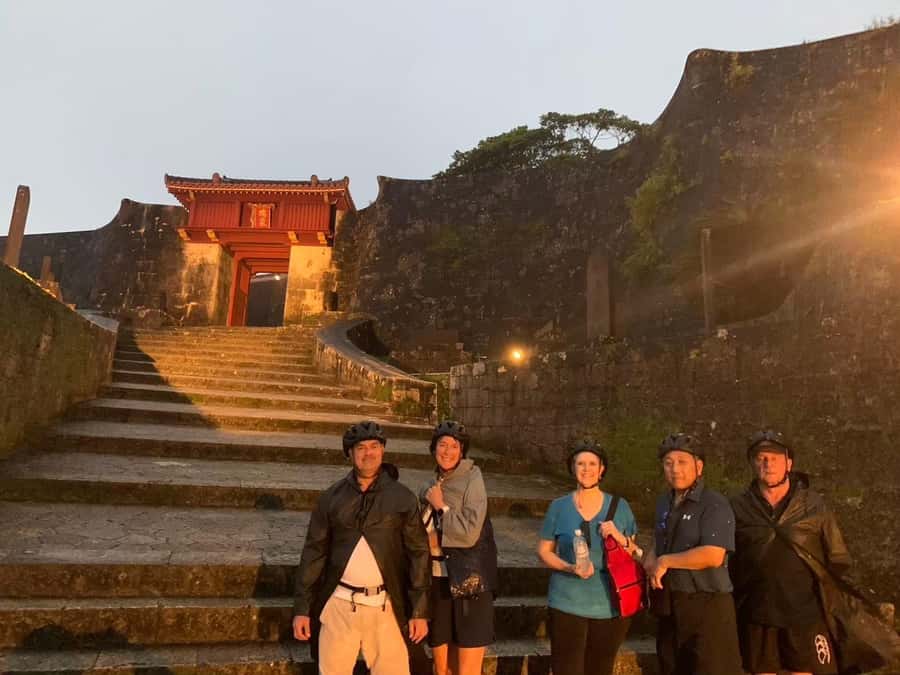
- Electric-assisted biking that helps you handle Shuri’s elevation without burning out
- Yachimun pottery lane ride through the historic workshop-street vibe
- Small-group energy (max 5 people) so the guide can keep an eye on everyone
- Shuri Castle area photo stops around sacred streets, gates, and park scenery
- A viewpoint break designed for afternoon light and Naha city views
- Asato Shotengai area pass so you can roll straight into evening food afterward
Getting started near Makishi Monorail: the ride begins fast
The meeting point is easy: the shop is next to Makishi Post Office, about a 1-minute walk from Makishi Monorail station. You arrive, pick up your bike, then get a quick safety briefing so you’re not guessing how the group moves on the road. That matters here because you’ll be cycling through regular streets, not a sealed-off park path.
You get the basics that actually improve the experience: a helmet and an intercom system so you can hear your guide without craning your neck. The intercom sounds like a small detail until you’re riding past slower traffic or down a narrow lane—then you’ll be glad you can follow directions clearly.
This tour runs about 210 minutes (roughly 3 to 3.5 hours). That’s a sweet spot: long enough to feel like you saw more than just a couple of landmarks, short enough that you still have your evening free.
You can also read our reviews of more tours and experiences in Naha.

Tsuboya and Yachimun pottery streets on an e-bike
One of the most memorable parts is the ride through the historic pottery-workshop area. Even the name gives you a shortcut to what you’re seeing: Yachimun means pottery in Okinawan. Here, the story is older than it sounds—around 300 years ago, the Ryukyu Kingdom pulled together scattered pottery kilns into this area, which is why the neighborhood became known for ceramics.
When you cycle through workshop streets by bike, the experience feels different than watching pottery ads from a bus window. You’re moving slowly enough to notice the real-world rhythm: quiet storefronts, lanes that feel built for pedestrians, and back-street corners that have that “locals actually use this” vibe.
And because the bikes are electric-assisted, you’re not constantly thinking about your legs. You can pay attention instead—like watching how the streets tighten up, then open, then tighten again. The route also includes small roads with a nostalgic atmosphere that you generally can’t reach easily on foot at a relaxed pace.
Sliding through local Naha: everyday streets, not just attractions
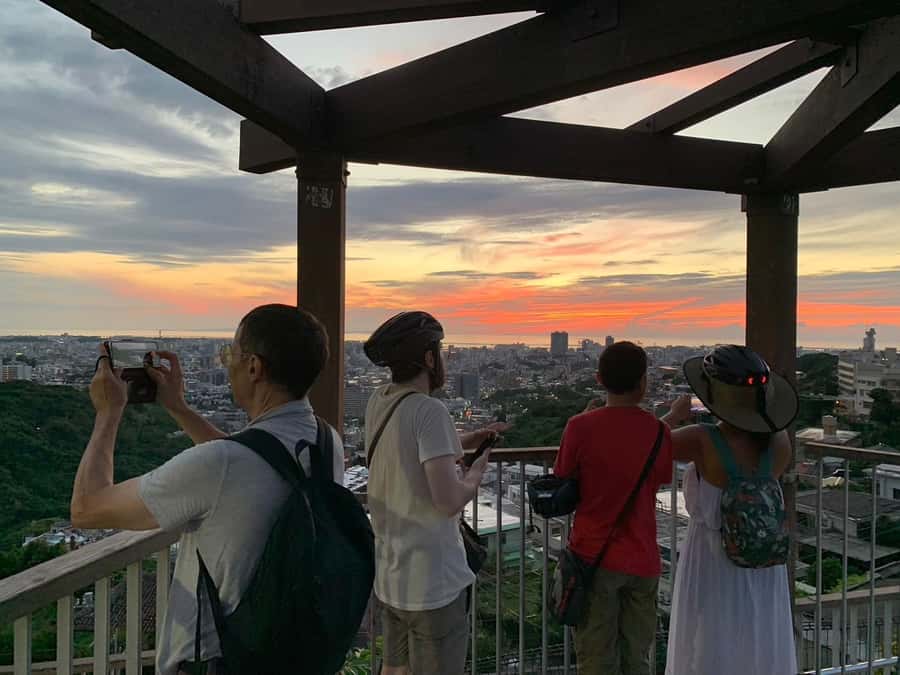
After the pottery area, the ride turns into a “how Okinawa actually feels” section. You pass through Naha’s local neighborhoods where a few traditional houses still remain. That’s a big deal if you’re trying to avoid an all-famous-sites itinerary.
Here’s the practical advantage: cycling lets you see the shape of daily life—street scale, front gates, neighborhood temples and shrines, and the way people move in the afternoon. You also get a chance to reset your expectations. Naha isn’t only about cast-iron tourist sights; it’s also about ordinary streets that happen to be layered with culture.
The guide helps connect those details. You’re not just riding through; you’re getting explanations that make the street view feel meaningful. In particular, the tour includes time to stop for photos, so you can switch from “ride mode” to “look closer” mode without feeling rushed.
Entering Shuri Castle town: cobblestones, temples, and sacred lanes

Shuri Castle was the capital area of the Ryukyu Kingdom, and the tour treats this section with the respect it deserves. You’ll wander through streets with cobblestones, plus temples and sacred shrines that show the religious texture of Okinawa.
This isn’t the kind of place where you win by speed. It’s the kind of place where you win by slowing down for a few key moments—standing still long enough to register patterns in the stones, the layout of the lane, and the way shrines and temples sit along the route.
A benefit of doing this by bike: you can cover the area without turning it into a long walking grind. The electric assist keeps you from spending all your attention fighting your own stamina. You’ll still feel like you’re exploring, but you won’t be wrecked before the best views.
The Shuri Castle Park moment: plants, walls, and the Shureimon look
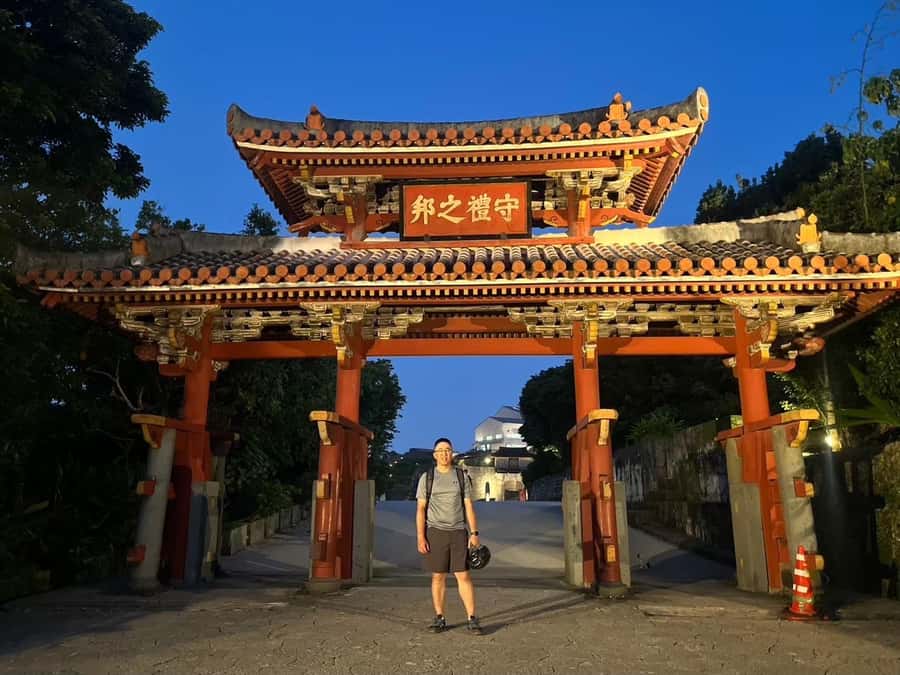
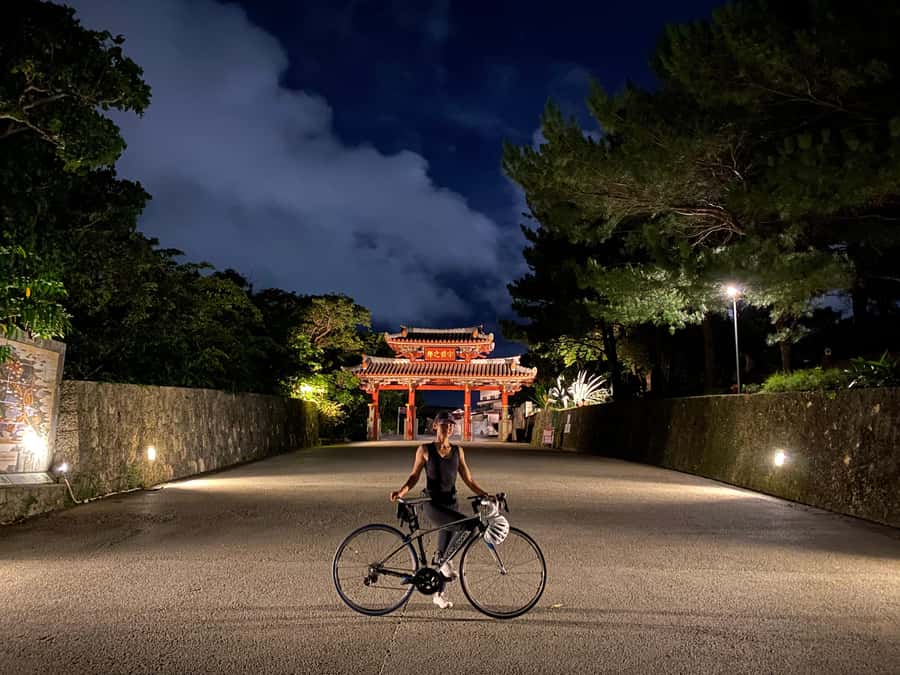
As you move through the Shuri Castle Park area, you get scenes built for photos and calm wandering. You’ll pass through the park, with seasonal plants that look especially good in afternoon light. The route also includes photogenic architecture—illuminated stone walls and the Shureimon gate.
A practical note: “illuminated” can mean that lighting is planned for evening timing, but even if it’s not at full effect when you arrive, the gate and stonework are still worth seeing. This stop is basically a chance to line up one of those classic Ryukyu-era visuals.
If you’re the type who likes to take photos and still keep your body comfortable, this is a good segment. You’re stopping at the right times rather than forcing yourself to guess where the best angles are.
The hilltop viewpoint break: afternoon city views over Naha

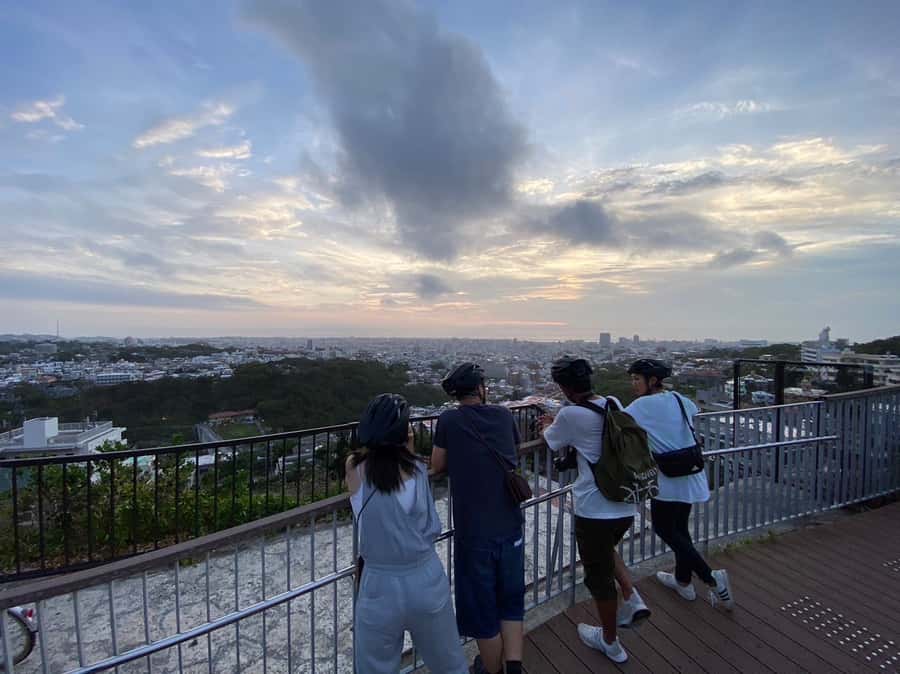
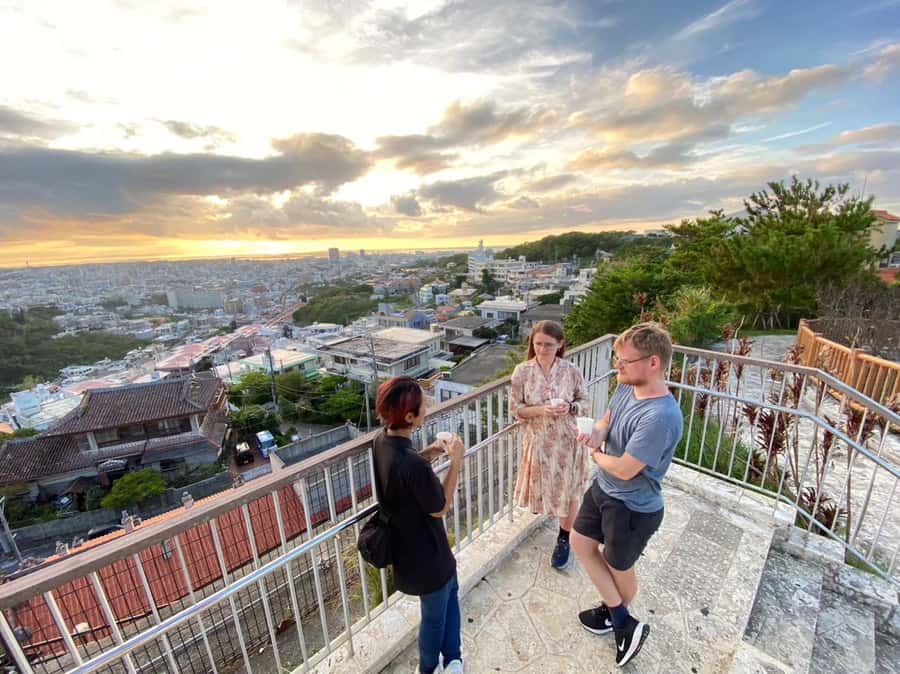
The tour includes a viewpoint break time with a photo stop and scenic views along the way. The big promise here is a look at the cityscape of Naha, from higher ground in the Shuri area.
This is where the afternoon cycling starts to feel like a reward. The ride builds up to it—pottery streets, local lanes, then historic Shuri—so when you stop at the viewpoint, you get a clear sense of place. You’re not just seeing landmarks; you’re seeing how Naha spreads out around them.
Even better, electric assistance means you arrive without feeling like your legs are negotiating with gravity. You can stand, look, and take in the scenery instead of thinking about whether you’ll make it back to the bike.
Asato Shotengai near the tour end: food energy for later
After the Shuri highlights, the route passes in the vicinity of Asato Shotengai, an area that was once known as a red-light district. The interesting part isn’t just the history—it’s what happens after the tour ends.
In the evening, this is the kind of place that comes alive with izakayas and other eateries. The tour basically sets you up to transition smoothly from sightseeing to dinner. If you like to keep your plan flexible, this is a smart way to get local nightlife energy without having to figure it out from scratch.
Also, because your tour ends back at the start point, you’re not stuck with a half-day logistics problem. You finish, park your bike, and you can decide how you want to spend the rest of the night.
Price and time: is $87 worth it?
$87 per person for about 210 minutes is not a bargain, but it also isn’t just “rent a bike and go.” You’re paying for a real guided route, plus equipment that removes common headaches.
Here’s what you’re getting for your money:
- A live English/Japanese guide
- Electric-assisted bicycles
- Helmet
- Intercom so directions stay clear
- A route designed to include older streets and less-frequented lanes
If you were to bike on your own, you’d likely spend time figuring out where the pottery lanes and Shuri-side streets actually connect. The guide handles that, and you get context while you ride.
The small-group size (limited to 5 participants) is another value point. With that setup, the guide can keep pace with the group and give clearer instructions—especially if you’re not used to city cycling.
What to bring (and what to skip) for a smooth afternoon
This tour is easier than a full-on bike day, but it’s still outdoors and still on streets. Bring:
- Comfortable shoes
- Warm clothing (evenings can cool down)
- Sports shoes if you have them
A couple items matter more than you’d think:
- The tour doesn’t include camera mounts or mobile phone holders, so plan for hand-holding or bringing a strap.
- If you’re sensitive to cold air late in the ride, pack a layer. They specifically recommend warm clothes for colder evening conditions.
For families: children aged 1 to 5 can ride with a child seat attached to the parent’s bicycle, but you need to consult the staff. Also, the tour is not suitable for people who can’t ride a bike.
What the guides do well: clear instructions and good pacing
The guiding style seems consistent across the tour experience: upbeat, patient, and very focused on keeping you safe. Names that have shown up with this tour include Jojo, Aki, Tony, Reiji, and Yuri—and in all cases, the recurring theme is that the guide makes cycling feel manageable, even if it’s your first time doing a city bike tour.
One practical detail I’d take seriously: the guide gives clear instructions about cycling on roads. That’s a big deal in Naha where streets can feel busy even when you’re moving through quieter lanes. With the intercom doing the communication work, you spend less time wondering and more time riding.
Who should book this tour
I think this fits best if you:
- Want to see Naha and Shuri without spending the whole day walking
- Like culture and street-level exploring—pottery lanes, shrines, and neighborhood textures
- Want city cycling with guidance, especially if you’re new to biking in traffic
- Prefer smaller groups and a relaxed pace with photo stops
It might not be the right match if you:
- Can’t comfortably ride a bike
- Need wheelchair accessibility (this tour isn’t set up for wheelchairs)
Should you book this Okinawa afternoon cycling tour?
Book it if you want an afternoon that feels local, not packaged. The combination of Yachimun pottery streets, a guided walk-through of Shuri Castle town, and a payoff hilltop viewpoint over Naha is exactly the kind of route that saves you time while still giving you real scenes.
Skip it if you’re looking for a purely indoor, no-street-ride experience, or if biking just isn’t comfortable for you. Also, if weather is iffy, keep flexibility in mind since the plan may change if precipitation risk gets high.
If you’re comfortable on a bike and want to cover more Okinawa in a few hours—this is a very practical way to do it, and it ends at a spot where dinner plans are easy.
FAQ
Where do I meet the guide?
You meet at the shop near Makishi Monorail station, about a 1-minute walk from the station next to Makishi Post Office.
How long is the tour?
The tour is scheduled for about 210 minutes, roughly 3 hours to 3 hours and 30 minutes.
What’s the group size?
It’s a small group limited to 5 participants.
What language is the live guide?
The guide offers live tour commentary in English and Japanese.
What’s included in the price?
The tour includes the bicycle tour, a guide, a helmet, use of an electric-assisted bicycle, and an intercom system.
What should I bring?
Bring comfortable shoes, sports shoes if you have them, and warm clothing for cooler evening conditions. If you plan to carry a phone or camera, note that camera mounts and phone holders aren’t included.
What happens if the weather is bad?
If precipitation probability exceeds 70% or there is severe weather, they may change the plan and contact you the day before.