REVIEW · HANOI
Bicycle Tour Full Day Explore Red River Delta & Rural Villages
Book on Viator →Operated by Bicycle Tours Hanoi · Bookable on Viator
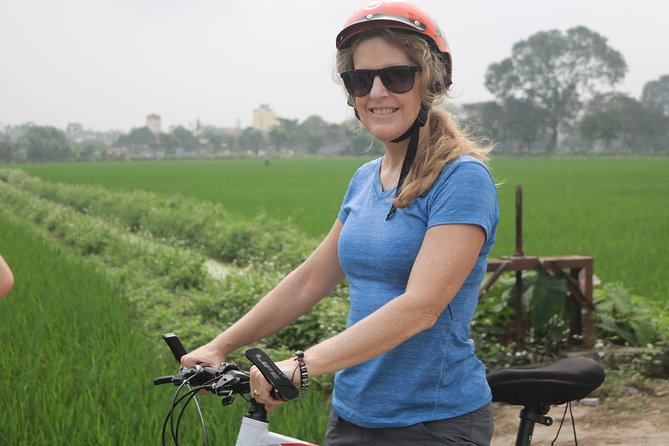
Hanoi on a bicycle feels like a cheat code: you get the city speed, then the countryside calm. This full-day ride takes you from the Old Quarter out into the Red River Delta, with backstreet traffic, rice paddies, local villages, and Vietnam history at Co Loa. I also like that you start with a real bike setup and safety briefing, so you’re not guessing your way into Hanoi’s motorbike chaos.
What I really like is the balance of scenes. You’ll cross Long Bien Bridge area, roll through rural roads and dirt tracks, and make stops tied to wet-rice life and everyday markets that most people skip. I also enjoy that the tour includes a local lunch plus practical extras like water and a rain poncho, so you’re not spending the day hunting for basics.
One consideration: this is not a casual pedal-in-the-park outing. You’ll be riding in busy Hanoi streets, and if you’re not comfortable with traffic, you may find it stressful even though the guides are there to help you manage it.
In This Review
- Quick hits before you pedal
- From Old Quarter pickup to your bike reality check
- Long Bien Bridge: city alleyways to river-crossing perspective
- Rolling into rice country near Co Loa
- Co Loa Citadel and An Duong Vuong temple: why this history matters
- Wet rice culture and rural roads that don’t show up on maps
- Local family visit: tropical fruit and real conversation time
- Lunch that fits the ride: local food, not a tourist reset
- How hard is the cycling really in Hanoi
- Price vs. what you get for $98
- Small-group energy and the guide names to watch for
- Who this tour suits best
- Should you book this Hanoi cycling day?
- FAQ
- What time does the tour start?
- How long does the full-day cycling tour take?
- Where do you get picked up and dropped off?
- Is lunch included?
- Do you provide the bicycle and rain protection?
- Are entrance fees included for the stops?
- Is bottled water provided during the ride?
- How many people are in the group?
- What is the cancellation policy?
Quick hits before you pedal
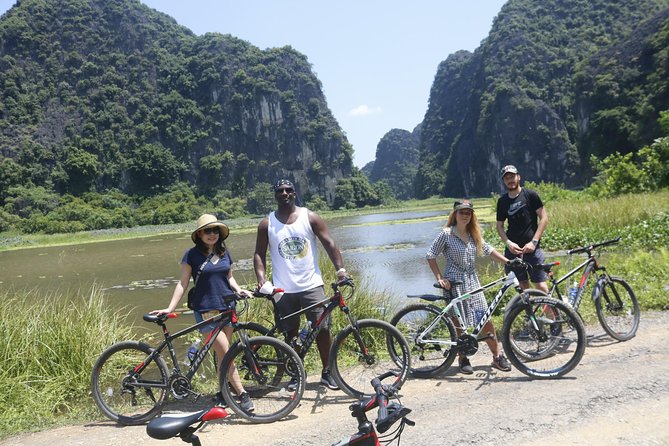
- Old Quarter start + bike fitting so you can get comfortable early, before the road gets serious.
- Long Bien Bridge crossing where you move from alleyways into big river views and market energy.
- Co Loa Citadel (275 BC) + An Duong Vuong temple for Vietnam’s early story in a real-world setting.
- Rice paddies and wet-rice culture made visible on backroads, not just explained on a sign.
- Local family visit and tropical fruit picking for a hands-on look at how people live outside tourist lanes.
- Small group (up to 14) that usually makes it easier to stay together on narrow village roads.
From Old Quarter pickup to your bike reality check
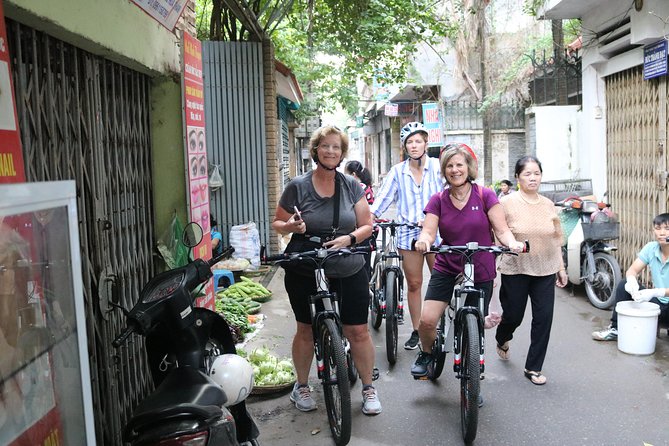
The day begins around 8:00 am with hotel pickup focused on the Old Quarter area. You’re then transferred to a bicycle store where you’ll choose a suitable bike and get a short safety briefing. This matters more than it sounds: Hanoi cycling is all about positioning, predictability, and knowing what to do at junctions, not heroics.
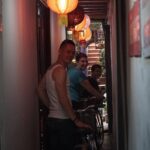
Once you’re fitted and briefed, you head out from the Old Quarter. Expect the rhythm of the city first: tight lanes, motorbikes weaving, and drivers who treat space like a suggestion. A good guide helps you keep your line and timing, so the ride feels like moving with the flow instead of fighting it.
You can also read our reviews of more tours and experiences in Hanoi.


Long Bien Bridge: city alleyways to river-crossing perspective
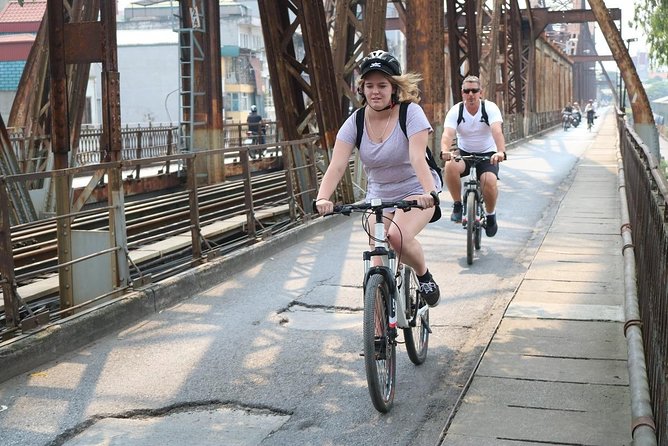
After the first set-up minutes, the route pushes you through backstreet cycling in the Red River Delta area. You’ll pass through alleyways and smaller roads, then work your way toward a busy market zone around Long Bien.
Crossing toward Long Bien Bridge is where the day starts to broaden visually. You go from street-level motion to big river energy, with a chance to re-center mentally before the countryside portion. It’s also a useful gear-check moment: if you feel okay on the bike by now, you’re probably set for the rest of the day’s mix of road surfaces.
Time-wise, this segment is about getting you out of central traffic while keeping you in the biking zone the whole way. You’re not just touring sights from a vehicle window—you’re actually part of the local route.
Rolling into rice country near Co Loa
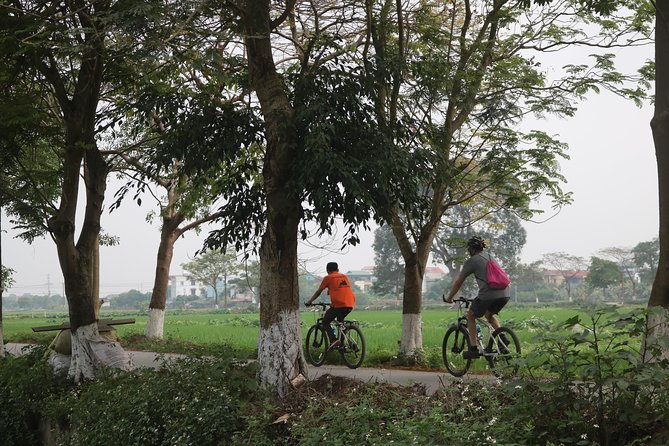
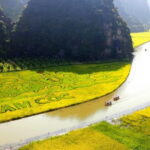
Once you leave the bridge area behind, the ride shifts from city navigation to countryside pacing. The route heads toward the Co Loa area, and along the way you’ll cycle through green rice and vegetable fields on backroads. This is where the Red River Delta stops being a phrase and becomes a daily-life machine: fields, irrigation habits, and the farm work that shapes the seasons.
The tour’s format keeps you moving, so you’ll feel the change gradually rather than all at once. One stretch moves you along the red river banks into a quieter countryside pattern—more straight lines, fewer sudden stops, and more time to look around without holding your breath.
Then you reach the first Co Loa-focused stop: you spend around two hours here, with time to absorb the setting and learn the context behind what you’re seeing. The citadel area is a strong anchor for the day because it ties the land to the story of Vietnam’s past.
Co Loa Citadel and An Duong Vuong temple: why this history matters
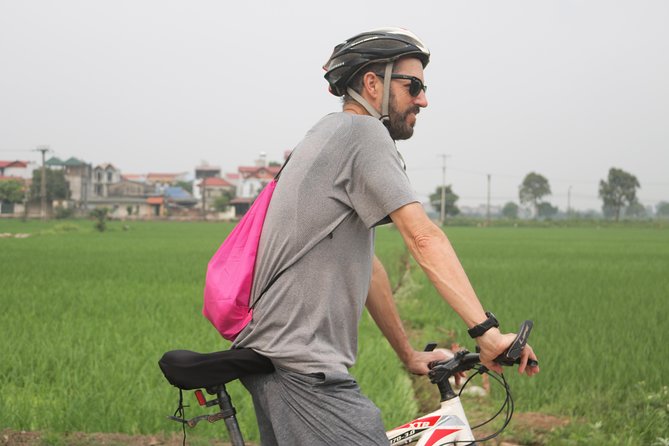
Co Loa is famous for being built long ago—around 275 BC—and the tour frames it as more than an impressive ruin. You learn about how Vietnam’s early power was shaped and how the people managed the country’s defense and identity against outside forces. That explanation matters because it turns the site from a photo stop into a place with stakes.
An additional highlight is the visit to the An Duong Vuong temple, where you get historical context connected to the area’s legacy. If you like history, this is where the ride earns its keep: you’re not hopping from one landmark to the next. You’re linking landscape, settlement, and belief.
You’ll also spend another hour and a half at the Co Loa citadel area overall, so it’s not rushed. That extra time gives you room to walk the grounds calmly and take in how people interact with the site now, not just how it looked in ancient times.
Wet rice culture and rural roads that don’t show up on maps
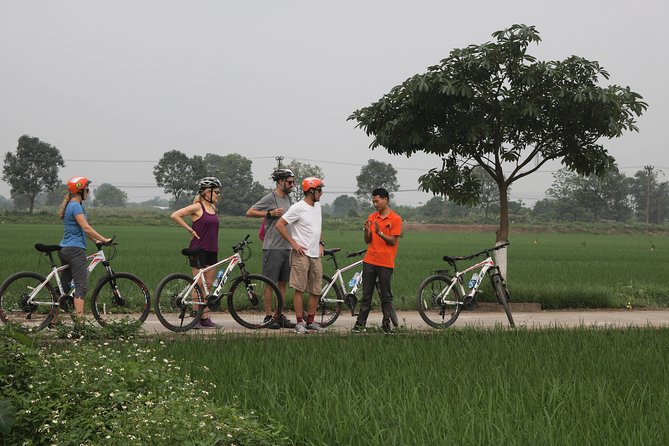
Between the big history stops, the tour leans hard into how rural life works—especially wet rice culture. You’ll cycle through countryside roads and sometimes dirt paths as you move between village sections. This is where the experience feels distinctly different from an all-car day trip. The bike pace lets you notice irrigation edges, field boundaries, and the way village roads connect farms to homes.
One of the most practical things here is how the route is set up: you’re guided through areas where the context is clear as you see it. Rice paddies aren’t just scenery; they’re part of the workflow the guide can connect to what you’re seeing in front of you.
You’ll also stop at a local market area where you can get a sense of real daily life for people who aren’t there for photos. Markets like this are often noisy and very local—exactly the kind of place that makes you understand why people plan their day around food supply, cooking needs, and household use.


Local family visit: tropical fruit and real conversation time
Later in the day, the route shifts again toward village life. You’ll continue through rural paths and dirt roads to reach a local family visit. This is one of those moments where you can slow down and switch from sightseeing mode to human mode.
The idea is simple and effective: you get a chance to enjoy tropical fruit you can pick from the farm, learn how people live, and see parts of daily routine up close. In a country where food, family, and farming are tightly linked, this kind of stop turns the story into something you can actually taste and picture.
If you’re the type who likes asking questions, you’re going to have opportunities here. If you’re shy, you can still enjoy the experience by paying attention to how the place works—how tasks are done, how spaces are organized, and how guests are welcomed.
Also, the day includes viewing traditional houses and village scenes that many standard itineraries never reach. It’s not about big-ticket architecture; it’s about what these structures say about how life is built around weather and farming.
Lunch that fits the ride: local food, not a tourist reset
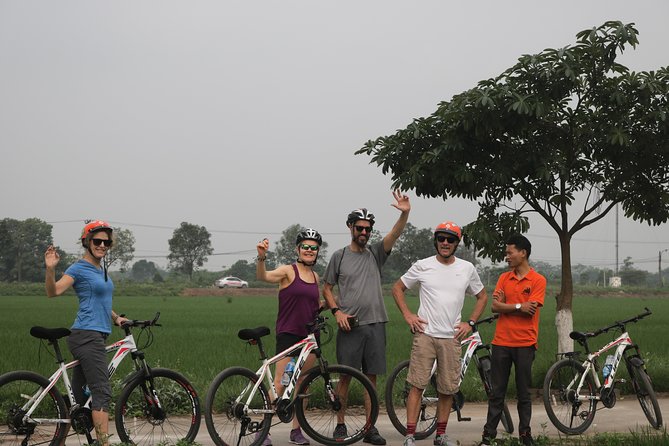
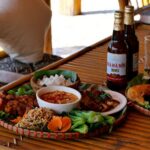
Lunch is included at a local restaurant. That’s a big value point for a full-day cycling outing because you don’t have to make decisions mid-ride while you’re tired. You’ll already have water on board during the tour, but lunch becomes your energy and comfort reset.
I’d treat lunch as part of the cultural experience rather than just fuel. When a tour is built around local markets and village stops, the meal usually aligns with the same everyday reality—foods prepared for people who live there, not for people passing through.
How hard is the cycling really in Hanoi
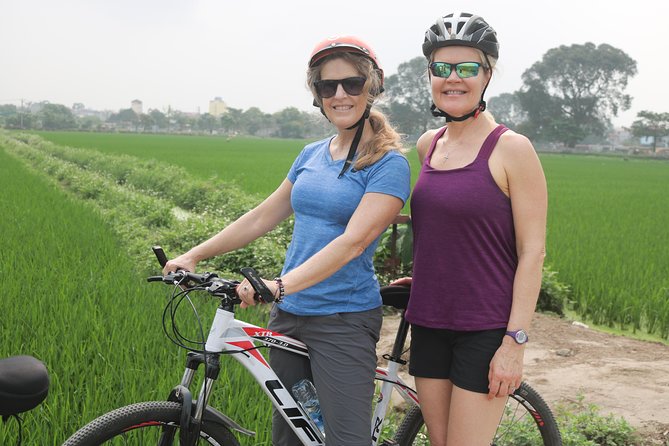
This is where honesty helps. You’re riding in a city environment with lots of motorbikes and cars, and the experience can feel challenging if you’re not used to traffic. The good news: you’re not thrown in alone. The tour is built around having a guide with you to help manage the flow and keep the ride safe.
In practice, you should expect a mix of:
- Busy street sections where you need calm focus and steady pedaling
- Quieter countryside stretches where you can relax and look around
- Mixed surfaces, including dirt roads on the rural stretches
One review detail worth using as a mental model: the ride distance can be on the order of about 30 km for a typical day. That’s far enough to feel like a workout, but not so far that you’re destroyed by the end if you pace yourself.
If you want to self-assess, ask yourself this: can you handle stopping and starting repeatedly while cars and motorbikes pass nearby? If yes, you’ll likely enjoy the day’s rhythm. If no, consider a gentler Hanoi option.
Price vs. what you get for $98
At $98 per person for a full day (about 7 hours), this is priced like an all-in experience: you’re paying for time, local guidance, and the fact that biking logistics plus rural access aren’t free.
Here’s what’s included, and why it matters for value:
- Professional English-speaking guide (so you get meaning, not just motion)
- Hotel pickup and drop-off around the Old Quarter area
- All entrance fees for the stops
- Lunch at a local restaurant
- Mountain bicycle plus a rain poncho if needed
- Bottled water during the tour
What you pay extra for is mostly optional life stuff like tips and personal expenses. Considering you’re getting bike time, meals, and site entry wrapped into one price, it can be a good deal—especially if you don’t want to spend hours figuring out transport, permissions, and route planning.
Small-group energy and the guide names to watch for
This tour caps at 14 travelers, which helps on narrow village roads and keeps you from stretching too far apart. It also tends to make Q&A easier during stops.
Guides mentioned in past groups include Pink, Nguyễn Thế Đạt, Tristan and Thanh, Kien, and Edward. Their common thread in the feedback you’ll see is straightforward: they’re friendly, answer questions about Vietnam culture, and keep the ride organized so you can focus on the scenery rather than logistics.
If you’re choosing this tour for the chance to ask questions, that guide quality is part of what you’re buying.
Who this tour suits best
This is a great fit if you want:
- A real bike ride instead of a drive-by day
- A blend of city-to-rice-country scenery
- Vietnam history tied to place, especially Co Loa and An Duong Vuong
- A chance to see villages and traditional houses you wouldn’t easily reach on your own
It’s also a good choice if you like markets and daily life details, and you’re curious enough to talk to people during the family visit.
It may not be your best match if you:
- Are very nervous around traffic
- Want a fully car-free day with no urban riding sections
- Prefer a short, easy loop rather than a full-day route
Should you book this Hanoi cycling day?
Yes, I’d book it if you want an honest Hanoi experience that includes both the noise of the city and the quiet logic of rice paddies. The value is strong because the price covers bike time, guide time, entrance fees, lunch, and practical gear like rain ponchos and water.
Choose it with eyes open if you’re worried about traffic. If you can stay calm in moving chaos for a while, the countryside sections and Co Loa history are well worth the effort.
FAQ
What time does the tour start?
The start time is 8:00 am.
How long does the full-day cycling tour take?
It runs for about 7 hours.
Where do you get picked up and dropped off?
Pickup and drop-off are offered at your hotel around the Old Quarter.
Is lunch included?
Yes, lunch at a local restaurant is included.
Do you provide the bicycle and rain protection?
The tour includes a mountain bicycle and a rain poncho if needed.
Are entrance fees included for the stops?
Yes, all entrance fees for the visits are included.
Is bottled water provided during the ride?
Yes, bottle(s) of water are provided during the tour.
How many people are in the group?
The maximum group size is 14 travelers.
What is the cancellation policy?
Cancellation is free up to 24 hours in advance for a full refund. If you cancel less than 24 hours before the experience starts, the amount paid is not refunded.