REVIEW · HIROSHIMA
Hiroshima 3hr Peace Cycling Tour with Local Guide
Book on Viator →Operated by Attractive JAPAN · Bookable on Viator
August 6 shows up in motion. This 3-hour peace cycling ride strings together Hiroshima’s most important remains and memorials, with a local guide translating what you see into plain human stories. You pedal (mostly with help) from Peace Memorial Park to the Atomic Bomb Dome and beyond, with just enough stops to make it feel personal instead of rushed.
I especially love the small group size (max 10), which keeps questions from getting lost. And I like that the tour handles the practical stuff: entrance fees are included, electric bikes make the ride manageable, and your guide stays focused on both past and reconstruction rather than just photo ops.
One thing to plan around: the route depends on weather, and you’ll want to be on time. If you’re late without notice, the tour can be cancelled with a non-refundable fee—so build in buffer time at the Peace Park area.
In This Review
- Key things to know before you ride
- Why Hiroshima is better seen by bike (for this route)
- Price and what you get for $85.89
- Meet-up, bikes, and the safety vibe
- The 3-hour itinerary, stop by stop (what to watch for)
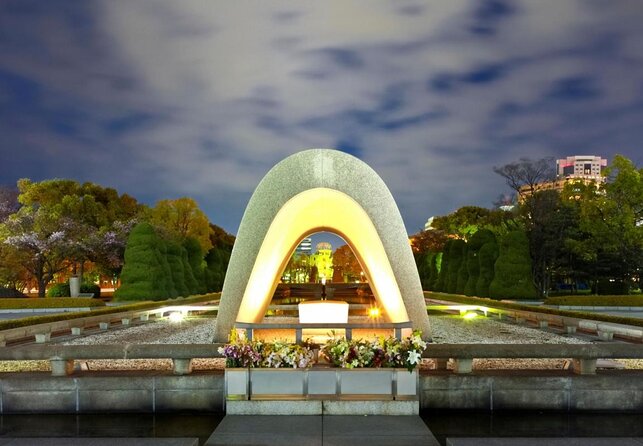
- Stop 1: Hiroshima Peace Memorial Park (meet at the Rest House)
- Stop 2: Hiroshima Castle (pre-war context and wartime echoes)
- Stop 3: Hiroshimagokoku Shrine and the shrine gate
- Stop 4: Chuo Park (slow down and breathe)
- Stop 5: Aioi Bridge (the bombing target you can still find)
- Stop 6: Atomic Bomb Dome (the world-famous anchor)
- Stop 7: Motoyasu River and the Peace Bridge (life continues)
- Stop 8: Higashisenda Park (trees from around the world)
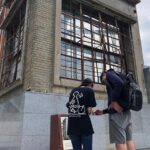
- Stop 9: Atomic Bomb Window Frame Monument / Red Cross Hospital remnants
- Stop 10: Hiroshima Railway (survivors in motion)
- Stop 11: Miyuki Bridge and Kobayashi River (the end of the reach)
- Stop 12: Surviving Weeping Willow Tree (a living contradiction)
- Stop 13: Peace Boulevard (monuments plus a functioning city)
- Stop 14: Back to Hiroshima Peace Memorial Park (wrap-up)
- Guides who make it personal: Shin, Moe, Kana, Toma, Thomas, Moet
- What to do with the rest of your day in Hiroshima
- Practical tips that keep this tour smooth
- Should you book this Hiroshima Peace Cycling Tour?
- FAQ
- How long is the Hiroshima Peace Cycling Tour?
- Where does the tour meet and end?
- How big is the group?
- Are entrance fees included?
- What kind of bike do I ride?
- Can my child join?
- Is Wi‑Fi available during the tour?
- What happens if it rains?
- What if I’m late for the meeting time?
Key things to know before you ride
- Local guide stories, not just facts: many guides share family connections to August 6, which changes the tone from sightseeing to real perspective.
- E-bikes make the ride easy: even in summer, the electric assist helps you cover more ground without a sweat-fest.
- Entrance fees are built in: you don’t have to pay at each site or worry about ticket lines.
- A tight, focused 3 hours: you finish with the rest of the day left for your own pace.
- Shared group, adjusted rhythm: if the group includes less-confident cyclists, the guide slows down and keeps everyone together.
- Rain options exist: there’s a Rainy Day Limited Peace Route or a walking alternative, depending on conditions.
Why Hiroshima is better seen by bike (for this route)
Peace Memorial Park is powerful on its own, but bike travel changes how you experience it. On foot, you often feel like you’re marching from one monument to the next. By bicycle, you get short pauses for meaning—then you’re moving again, gliding along streets and bridges where the city still lives its life.
I like that this tour is built for both heads and hearts. Your guide points out what survived, what was rebuilt, and what still holds memories—often with family stories that explain why the details matter. That combination is the real value: you’re not just seeing Hiroshima’s landmarks, you’re understanding how ordinary people kept going, even after the unimaginable.
And practical note: the route is designed to be gentle enough for most people, especially with electric bikes. You still get a little exercise, but the ride stays low-stress. Think of it as a smart way to cover a lot of ground without burning half your day.
You can also read our reviews of more tours and experiences in Hiroshima.

Price and what you get for $85.89
At about $85.89 per person, this isn’t a bargain-tour price, but it also isn’t trying to be one. What you’re paying for is: a local guide, a small group, electric bike time, and entrance fees being included for the sites where admissions apply. That usually means fewer surprises during your morning.
You also get bicycle accident insurance included, plus a structured route (about three hours) so you’re not spending time figuring out logistics around the Peace area. If you want the “one good morning” version of Hiroshima Peace—where you see the key places and learn what they mean—this is a sensible spend.
Meet-up, bikes, and the safety vibe
You meet at the Hiroshima Peace Memorial Park Rest House (near public transportation). The tour starts with greetings and an overview of the route, plus COVID-style safety procedures like temperature checks. Then you’re off.
Bikes are a big part of why this tour works well for most people:
- You need an adult electric bicycle height requirement of 145 cm or more.
- Children use smaller cross bikes (availability is limited to two children’s bikes per booking), and children under 15 can use either children’s bikes or adult bikes at the child rate if they meet height limits.
- There are specific limits for child seats on adult bikes (under 22 kg and under 115 cm).
One more thing I appreciate: the pace can be adjusted if someone in the group isn’t used to cycling, especially when children are part of the group. This keeps the tour from turning into a single-file endurance test.
No drama about phones, either. There’s no free Wi‑Fi provided on the tour, though you can use Hiroshima’s city free Wi‑Fi if you need it.
The 3-hour itinerary, stop by stop (what to watch for)
Below is the flow you’ll follow, roughly in the order listed. Times can shift a bit based on day conditions, but the structure stays the same: a short introductory start, then a chain of sites tied to the bombing and the city’s rebuilding.
Stop 1: Hiroshima Peace Memorial Park (meet at the Rest House)
You start with a quick orientation—route explanation, group setup, and temperature checks. This is a useful warm-up because it frames the morning: you’re about to move through a place that holds heavy meaning, so you want to know what you’ll see and why.
Tip: arrive early enough to settle your bike and meet your guide without rushing. That buffer matters here.
Stop 2: Hiroshima Castle (pre-war context and wartime echoes)
From Peace Park, you ride to Hiroshima Castle. Your guide connects it to the wartime setting, including the detail that Hiroshima Castle area relates to a military fort that was among the first to report information about the atomic bomb.
This stop gives you a different angle: you’re not only looking at the aftermath. You’re also reminded that the city had a life, a structure, and a system before August 6.
Stop 3: Hiroshimagokoku Shrine and the shrine gate
Next is Hiroshima Gokoku Shrine, including the shrine gate that is said to have withstood the atomic bomb. You’ll also hear about elements like the guardian dog statue, which helps you see the site as more than a symbol—it’s part of a living tradition.
This is one of those stops where the guide’s explanation matters, because the objects themselves are small compared to the big memorial spaces you’ll hit later.
Stop 4: Chuo Park (slow down and breathe)
At Hiroshima Central Park, you walk through a green stretch. It’s an intentional pause. You’re still in Hiroshima, not in a museum hallway, and the quiet moments help you reset so the next hard stops land with less overload.
Stop 5: Aioi Bridge (the bombing target you can still find)
You then reach Aioi Bridge, associated with the bombing target. The bridge and river remain from that era, which makes it feel less theoretical. This is one of the places where your guide’s framing—what happened here and what changed—turns the view into meaning fast.
Watch for: the way the river and bridge hold their shape, even with everything around them transformed.
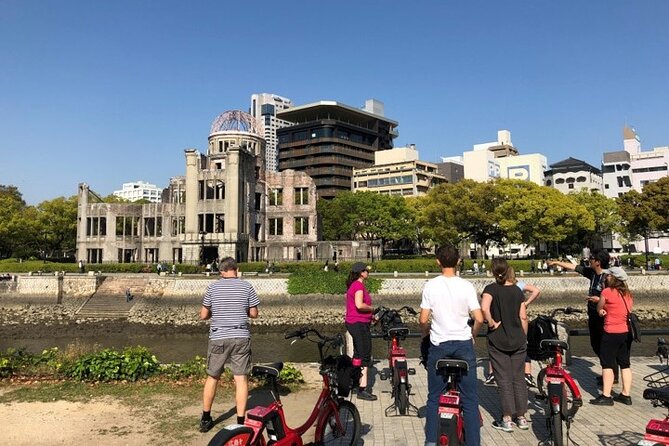
Stop 6: Atomic Bomb Dome (the world-famous anchor)
The big stop: the Atomic Bomb Dome. You’ll spend time here learning stories and memories connected to local people, not just a general summary of the day.
This is the moment when the tour’s tone often shifts. People tend to slow down, listen harder, and ask better questions. If you want one landmark to really “get,” this is it.
Stop 7: Motoyasu River and the Peace Bridge (life continues)
Moving south toward suburbs, you see Motoyasu River and the Peace Bridge. Your guide talks about the riverside nature and connects it back to Hiroshima’s continuity.
I like this stop because it stops the tour from becoming only “before vs after.” You see that Hiroshima’s daily geography still works—people live near it, walk it, and cross it.
Stop 8: Higashisenda Park (trees from around the world)
At Higashisenda Park, you’ll hear about trees sent from other countries. It’s about memory that’s been carried and replanted—an international layer of remembrance that fits Hiroshima’s role in global peace.
This stop is also a good mental breather after the Atomic Bomb Dome area.
Stop 9: Atomic Bomb Window Frame Monument / Red Cross Hospital remnants
Next is the site linked to the Hiroshima Red Cross Hospital building remnants, discussed as being about 1.5 km from the blast center. You’ll face how strong the bomb was through what remains.
This stop is emotionally heavier than it sounds on paper. The guide’s careful explanation is what keeps it from feeling like horror tourism.
Stop 10: Hiroshima Railway (survivors in motion)
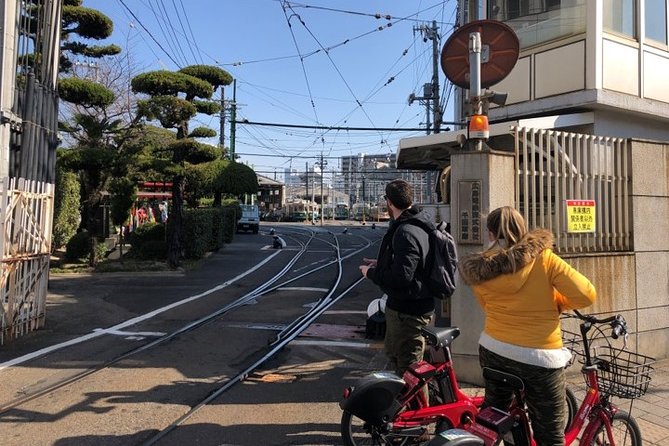
At the Hiroshima Railway area, you’ll learn a detail about trains that survived the blast and still run today. It’s a reminder that rebuilding isn’t abstract. It’s rail lines, schedules, and people commuting.
If you like practical context: this is a great counterweight to the memorial spaces.
Stop 11: Miyuki Bridge and Kobayashi River (the end of the reach)
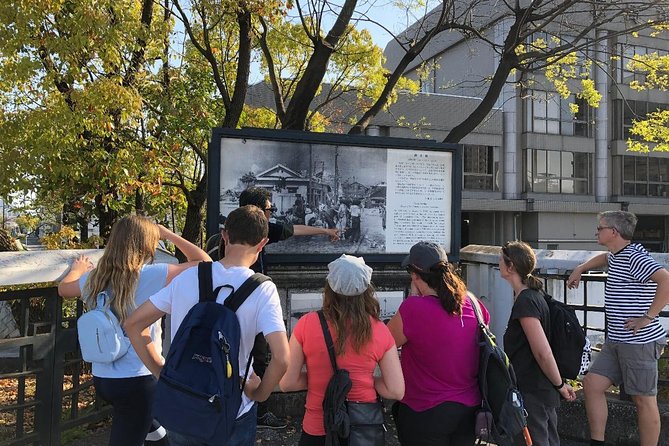
You’ll see a monument associated with the Miyuki Bridge and Kobayashi River, including a displayed image showing the reality of difference between then and now.
This is the kind of stop that helps you picture scale. Where the blast reached becomes easier to grasp when you can connect it to a specific spot.
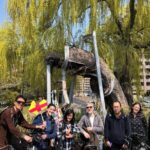
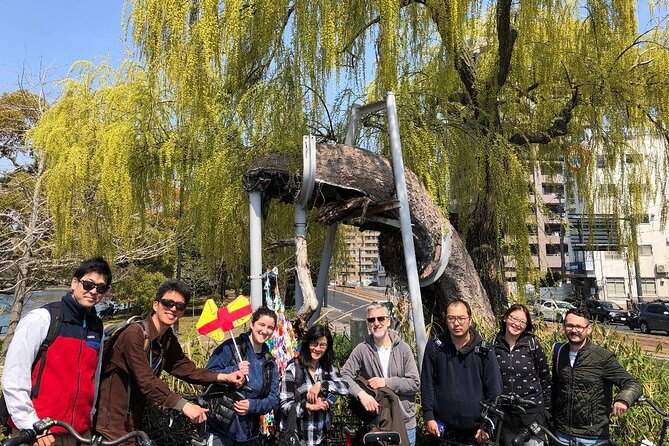
Stop 12: Surviving Weeping Willow Tree (a living contradiction)
The highlight here is the Surviving Weeping Willow Tree. Your guide explains how it kept growing despite rumors about natural growth being impossible for decades.
I like this stop because it doesn’t require imagination. It’s a living thing showing how Hiroshima didn’t just recover—it kept moving forward.
Stop 13: Peace Boulevard (monuments plus a functioning city)
On the return toward Peace Park, you ride along Peace Boulevard, passing monuments and trees tied to Hiroshima’s history, while also noticing the city thriving in the present.
This is a good place to ask your guide a question like: what should I prioritize in the afternoon now that I’ve got the framework?
Stop 14: Back to Hiroshima Peace Memorial Park (wrap-up)
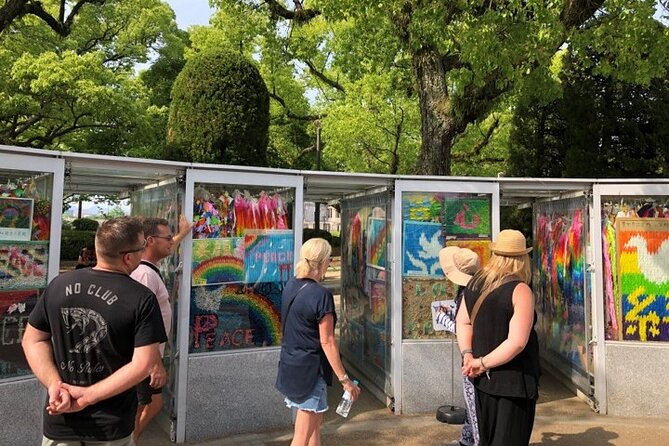
You roll back to Hiroshima Peace Memorial Park and the tour ends. You’ll have covered the key sights in a structured loop, with just enough time left for your own exploration.
Guides who make it personal: Shin, Moe, Kana, Toma, Thomas, Moet
The biggest “upgrade” you can hope for is the guide style. In the best moments, the guide isn’t only reciting history—they’re connecting it to family and lived perspective.
You might encounter guides like Shin, who shared detailed personal stories tied to August 6. Or Moe / Moet, who can bring a careful emotional depth through family connections. Kana is another name you may see, known for clear explanations and a strong voice while riding along the river.
Some guides also recommend places to eat afterward, which is a practical benefit if you want to keep the day going without hunting for ideas first.
What to do with the rest of your day in Hiroshima
Because this tour is only about three hours, you can build the rest of your schedule around your mood.
If you want more context, stay in the Peace Park area and spend time with other exhibits at your own pace. If you want lighter energy, head out into other parts of Hiroshima and let your brain reset. Cycling in the morning helps here—you’re not locked into a full-day itinerary.
Also, the timing works well if you like to travel on your own afterward. You finish back at the Peace Park area, so you can decide next steps based on what moved you most.
Practical tips that keep this tour smooth
- Use a buffer at check-in. Being late can lead to cancellation and a non-refundable fee, so give yourself extra minutes.
- No luggage storage on site. There’s no place to leave luggage at the Rest House. You can use nearby coin lockers at the International Conference Center Hiroshima or Hiroshima Peace Memorial Museum (about a 6-minute walk).
- Bring hydration. Even with e-bikes, the morning sun can be real. Your guide will manage the pace, but you’ll still want water.
- Ask your guide what to focus on next. The tour gives you a framework; a quick question can save you time later.
- Plan for weather. If rain hits, you’ll switch to a Rainy Day Limited Peace Route or a walking tour option, or you can choose a refund option depending on what’s offered.
Should you book this Hiroshima Peace Cycling Tour?
I think you should book it if you want:
- a small-group guided morning
- an easy ride using electric bikes
- a route that connects the bombing sites to reconstruction and present-day Hiroshima
- more meaning than a quick museum visit alone
Skip it if:
- you don’t want to cycle at all (even with e-bikes, it’s still a riding tour)
- you’re likely to arrive late and can’t reliably make the start time
- weather is uncertain and you’d rather plan a fully flexible day without alternatives
If you do book it, go with an open mind. This tour is structured to move you from landmark to landmark, but the real take-away is how Hiroshima holds memory—and how it still functions.
FAQ
How long is the Hiroshima Peace Cycling Tour?
It runs about 3 hours and returns to the meeting point at the Peace Memorial Park area.
Where does the tour meet and end?
You meet at the Hiroshima Peace Memorial Park Rest House. The tour ends back at the meeting point.
How big is the group?
This is a shared mixed tour with a maximum of 10 travelers.
Are entrance fees included?
Yes. The tour includes entrance fees for the stops that require admission, so you don’t need to pay on the spot.
What kind of bike do I ride?
You’ll use an adult electric bicycle if you meet the height requirement (145 cm or more). There are children’s bikes available for children who meet the height and category guidelines.
Can my child join?
Yes, children can join with the appropriate bike type and height range. Children under 15 may use both children’s bikes and adult bikes at the child rate if they meet the height requirements. There are also limits for child seats by weight and height.
Is Wi‑Fi available during the tour?
No free Wi‑Fi is provided on the tour itself. Hiroshima’s free Wi‑Fi is available across the city.
What happens if it rains?
If the tour can’t run as planned due to rain, you can choose a Rainy Day Limited Peace Route or switch to a walking tour option. If you don’t want the change, a refund option is available.
What if I’m late for the meeting time?
If you’re late for the meeting time without prior notice, the tour may be cancelled, and a 100% cancellation fee can be incurred on the day of the tour (non-refundable in that case).