REVIEW · GIFU PREFECTURE
Short Morning Cycling Tour in Hida
Book on Viator →Operated by SATOYAMA EXPERIENCE · Bookable on Viator
Pedal into real Hida life. This short morning cycling tour in Hida Furukawa is built for getting out of the car mindset and into everyday countryside rhythms, with a guide explaining local history, farming, and culture. You’ll also stop at places that feel off the main tourist loop and get chances to talk with locals, not just take photos and keep moving.
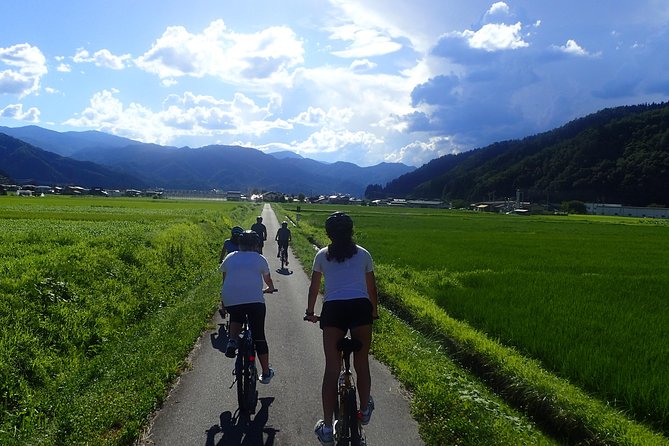
Two things I really like: first, the ride stays small—a maximum of eight people—so questions actually get answered. Second, the route is a mostly flat 12 km that feels doable even if you do not think of yourself as a cyclist.
One consideration: you’re not going to leave full like you would after a big meal tour. You get snacks plus coffee/tea, but food and drinks beyond that are not included.
In This Review
- Key highlights that make this ride worth your time
- Why this short morning ride fits Hida so well
- Meeting at Furukawa office and rolling out at 10:15
- The 12 km route: mostly flat, family-friendly, and not a grind
- What you actually see: town streets, farming villages, and satoyama views
- Market stop, shrimp-water breaks, shrines, and other everyday culture stops
- Tea break and snacks: small comforts that keep the ride pleasant
- Guides in the spotlight: how Nanami, Marino, Miyuki, Ryoto, and Akiko shape the day
- Price and value: what $161.18 buys you in Hida
- What to bring (and what you don’t need to stress about)
- Who should book this Hida cycling tour
- Should you book this tour in Hida?
- FAQ
- What is the duration of the cycling tour in Hida?
- How far will we ride?
- When and where does the tour start?
- How large is the group?
- Is the route hard to cycle?
- What’s the minimum age and height requirement?
- What’s included for food and drinks?
- What if it rains or plans change?
Key highlights that make this ride worth your time
- Small-group size (up to 8) means you move at a human pace and can actually ask questions.
- Mostly-flat 12 km is a smart choice for families and for travelers who want countryside without suffering.
- Local stops go beyond view-touring, including a market stop and cultural sites like shrines.
- Snacks and coffee/tea keep the morning comfortable during the ride.
- Guides with standout energy like Nanami and Marino (and others) turn farm talk into fun.
- Rain-ready planning: waterproof gear can be provided if the weather turns.
Why this short morning ride fits Hida so well
In Japan, it’s easy to fill your days with temples, trains, and checklists. This tour offers a different kind of travel: slow wheels, fresh air, and a guide connecting what you’re seeing to how people live in Gifu’s Hida region. The timing is also smart—morning means calmer streets and a cooler start for biking.
Because it’s only about 2.5 hours, it doesn’t fight the rest of your itinerary. You’ll still have time to explore Hida Furukawa after, without feeling like your whole day got traded away for one activity.
You can also read our reviews of more tours and experiences in Gifu Prefecture.
Meeting at Furukawa office and rolling out at 10:15
You meet at 11-32 Furukawachō Ninomachi, Hida, Gifu 509-4235, at the Furukawa office area. The tour departs at 10:15 am, and you return to the same meeting point at the end.
You’ll be near public transportation, which matters here because Hida Furukawa is much easier to enjoy when you’re not forced into car logistics. If you’re booking ahead, you’ll typically receive confirmation within 48 hours, depending on availability.
And yes, you get a mobile ticket. In a place where paper can feel oddly optional, that’s one less thing to juggle.
The 12 km route: mostly flat, family-friendly, and not a grind
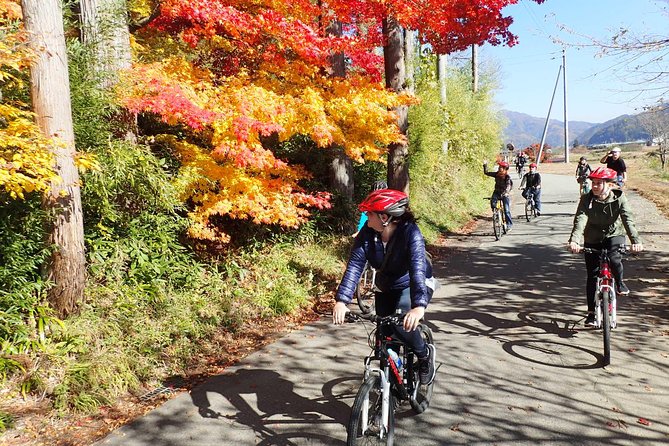
This is a guided cycling tour on a mostly flat course. The distance is about 12 km, so the goal is cruising and learning, not training for a race. Most travelers can join, and the minimum age is 6 years with a minimum height of 125 cm (about 4.1 feet).
Helmets are included, and insurance is part of the package. That doesn’t eliminate all risk (roads always have their quirks), but it does add a layer of practical comfort.
Also, a heads-up that affects how you travel: there’s no basket attached to the bike. If you’re the type who likes a tote bag with snacks, souvenirs, and a camera case all within arm’s reach, plan for carrying your stuff instead.
What you actually see: town streets, farming villages, and satoyama views
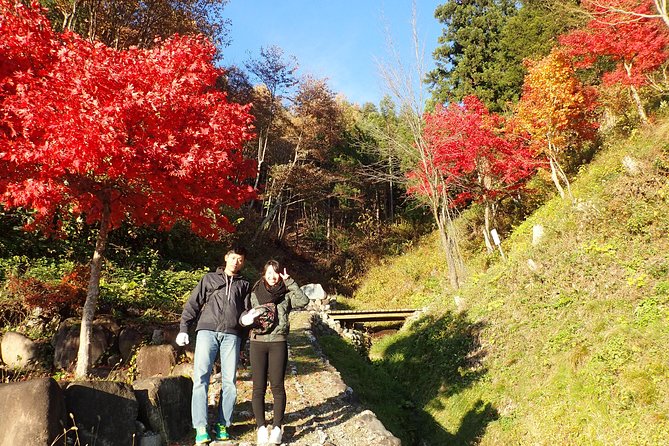
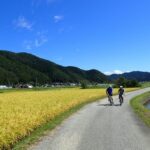
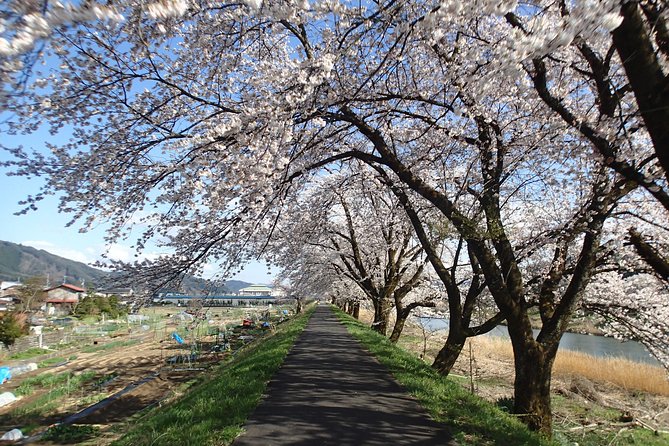
Your ride moves through a mix of settings—peaceful town sections, a farming village feel, and the satoyama scenery that defines this part of Japan. You’re looking at the real working backdrop: rice fields spreading outward, mountains surrounding the valley, and the daily details that visitors often miss when they only drive through.
One of the best parts is the pacing. You’re not stuck in one “photo stop” zone. Instead, the changing scenery happens as part of the ride, with time to look, listen, and ask why something is grown, built, or maintained the way it is.
You’ll also pass by old folk houses and areas where local life is visible in small, specific ways—like how farms and homes fit into the land’s rhythm.
Market stop, shrimp-water breaks, shrines, and other everyday culture stops
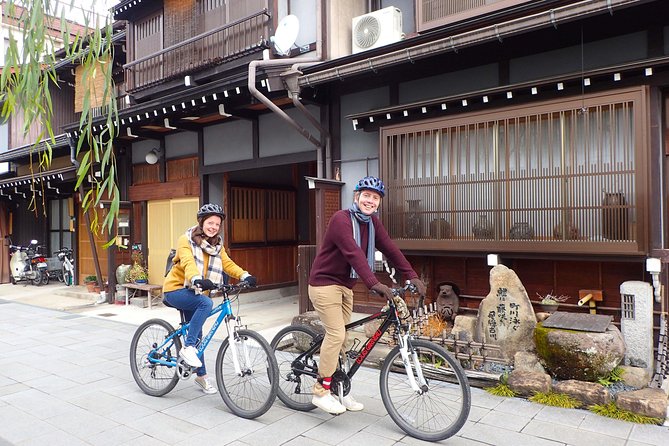
A big reason people love this tour is that it leans into everyday culture, not just scenic countryside. Mid-morning, you’ll stop at a local market where you can see (and sometimes purchase) local vegetables lined up like you’d expect in a working community.
Then come the cultural and quiet moments. Several guides build in a culturally focused stop such as shrines—and in some rides, you may also get a spring-water element (including a mention of a small waterfall in one itinerary). It’s the kind of pause that turns the ride into a story, not just movement.
There’s also time for conversation with your guide, and these detours tend to connect to themes like rice growing and local plant knowledge. One guide named Nanami is specifically praised for explaining local plants and wildlife with energy and organization, which makes the countryside feel like a living lesson instead of a generic view.
Tea break and snacks: small comforts that keep the ride pleasant
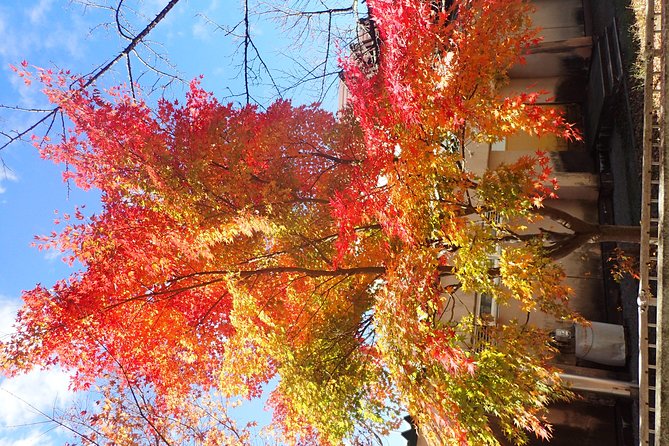
This tour includes snacks, plus coffee and/or tea. A mid-tour tea break shows up in multiple experiences, and it’s a perfect reset: sit, cool down a bit, and let your brain catch up with everything you’ve been seeing.
Because food beyond that is not included, I treat this tour like the morning portion of a bigger day. If you know you’ll want a real meal right after, plan for it. Think of it as a guided ride with light fuel—great for energy, not designed to replace lunch.
Guides in the spotlight: how Nanami, Marino, Miyuki, Ryoto, and Akiko shape the day
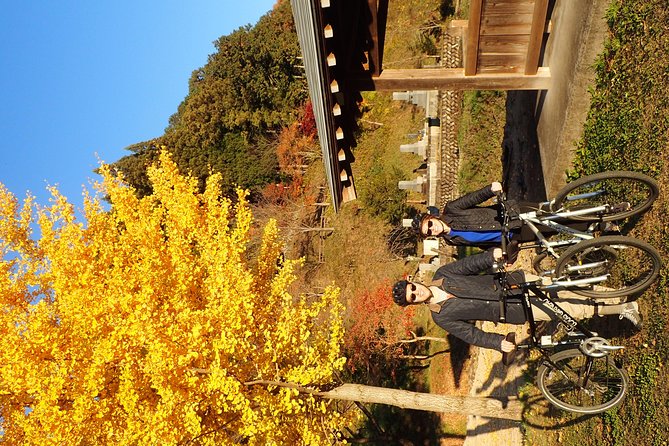
This is where the tour earns its high rating. A cycling route is only half the experience; the other half is what your guide decides to point out and how clearly they connect it to daily life.
- Nanami: praised for being engaging and passionate, especially when talking about local farming, plants, and wildlife. People also highlight her organization and how she leads with warmth.
- Marino: noted for friendly, knowledgeable explanations as a local who can answer questions and bring the area’s history and people into focus. The vibe here is curious and conversational.
- Miyuki: described as kind and informative, with explanations that cover rice farming and old houses.
- Ryoto: mentioned as a francophone guide with a style that works well for families and children, including showing temples and village life details.
- Akiko: remembered for attentive guidance on a tour that included a shrine and a small waterfall element.
Across the experiences, guides also show up as safety-minded and responsive. One rider specifically called out that full waterproofs were provided when the weather got nasty, and that the guide stayed cheerful even in rain—important, because weather is always a wild card in a countryside morning.
Price and value: what $161.18 buys you in Hida
At $161.18 per person, you’re paying for more than a bicycle rental. This price covers a local guide, the bicycle, helmet use, insurance, and local taxes—plus snacks and coffee/tea.
That matters because a DIY ride in rural Japan is totally possible, but access and interpretation are the hard parts. The value here is the guided context: understanding why a market sells what it sells, what farmers are thinking about in the season you’re riding, and how locals relate to the shrines, old houses, and farmland layout.
Also, the tour runs with group discounts and has a small-group max of eight, which often keeps the experience personal without turning it into a private-expensive-only activity.
If you’re looking for a “do it yourself but with a guide’s brain” type of experience, this price starts to make sense fast.
What to bring (and what you don’t need to stress about)
You do not need to worry about a helmet. It’s included, and you’ll use it during the ride.
You should, however, plan around what’s not included:
- Food and drinks beyond the included snacks and coffee/tea.
- A basket on the bike, so you’ll want to carry items in a way that doesn’t rely on stashing them on the bicycle.
And because weather happens, take advantage of the tour’s practical rain readiness. In one experience, waterproofs were provided for anyone who needed them, which tells me this operator thinks about real-world conditions, not just sunny-day photos.
Who should book this Hida cycling tour
This is a great fit if you:
- Want Hida Furukawa countryside life without driving.
- Prefer a short, gentle ride over a long athletic day.
- Like learning through conversation and small stops, especially with a guide who can explain rice farming, local plants, and cultural sites.
It may not be the best fit if you’re expecting a high-speed cycling adventure or a full-day food tour. This ride is for enjoying the pace and the people behind the landscape—without turning your morning into a marathon.
Also, it’s well-suited for families. The minimum age and height rules are clear, and several experiences mention kids enjoying the ride and learning through the stops.
Should you book this tour in Hida?
Yes, if your priority is a local-style morning with context—farming, markets, shrines, and conversation—within a manageable time window. The combination of small-group size, a mostly flat 12 km route, and guides who bring the region to life (Nanami, Marino, Ryoto, Akiko, Miyuki, and others) makes it easy to see why the rating is so consistently high.
If you’re the type who needs a full meal experience or you’re coming with a lot of bulky carry items, adjust your expectations: bring what you need for personal comfort and plan meals around the snacks/tea provided.
FAQ
What is the duration of the cycling tour in Hida?
The tour runs for about 2 hours 30 minutes.
How far will we ride?
The route is about 12 km.
When and where does the tour start?
The tour departs at 10:15 am. You meet at 11-32 Furukawachō Ninomachi, Hida, Gifu 509-4235, Japan (the Furukawa office area). It ends back at the same meeting point.
How large is the group?
The tour is limited to a maximum of 8 people per booking.
Is the route hard to cycle?
The course is described as mostly flat, and most travelers can participate.
What’s the minimum age and height requirement?
Minimum age is 6 years, with a minimum height of about 125 cm (4.1 ft).
What’s included for food and drinks?
You’ll get snacks and coffee and/or tea. Food and drinks beyond that are not included.
What if it rains or plans change?
If weather is rainy, waterproofs may be provided for those who need them. For cancellations, you can cancel for a full refund up to 24 hours before the experience start time.