REVIEW · YOGYAKARTA
Yogyakarta: Countryside Cycling and Cooking Class Experience
Book on GetYourGuide →Operated by Jogja Borobudur Tour & Travel · Bookable on GetYourGuide
Spices, bikes, and dinner at a real home. This day tour feels special because it starts with a local market walk and ends with a shared meal cooked in a family kitchen, guided by friendly people like Maxi, Desy, and Sari. I like that you don’t just watch food being made—you learn the ingredients, handle the spices, and eat what you cooked while it’s still hot.
What I really loved is the combo: a countryside bike ride through rice fields and village lanes, paired with hands-on cooking that covers common ingredients like rice, herbs, vegetables, and spices. One possible drawback: the cycling portion can feel a bit rushed if your guide is moving quickly or staying far ahead, so if you like to stop for explanations, you’ll want to speak up and ask for a slower pace.
In This Review
- Key highlights worth circling on your Yogyakarta map
- Leaving Yogyakarta behind: market meet-up and countryside shift
- Traditional market shopping: how your cooking class starts making sense
- Family-style cooking class: step-by-step, then plate and eat
- Getting your hands dirty: what you actually learn in the kitchen
- Recipes to take home: the value beyond the meal
- Cycling through rice fields and village lanes: old bikes, low-stress roads
- Local interaction points: meeting people, not just passing by
- Food culture side stops: tempe workshop and cracker-making demos
- Meals and pacing: how a long day stays relaxing
- Guide dynamics and English explanations: you’ll get what you ask for
- Price and value: is $41 a smart move?
- What to bring for a smooth countryside day
- Who should book this tour (and who might want to skip it)
- Should you book this Yogyakarta cycling and cooking class?
- FAQ
- FAQ
- How long is the Yogyakarta cycling and cooking class experience?
- What language is the tour guide?
- How big is the group?
- What is included in the price?
- Does the tour include hotel pickup and drop-off?
- Will I get recipes to take home?
- Is there free cancellation?
- Can I reserve now and pay later?
Key highlights worth circling on your Yogyakarta map
- Market morning: meet up, shop for ingredients, and get context for the spices you’ll cook with
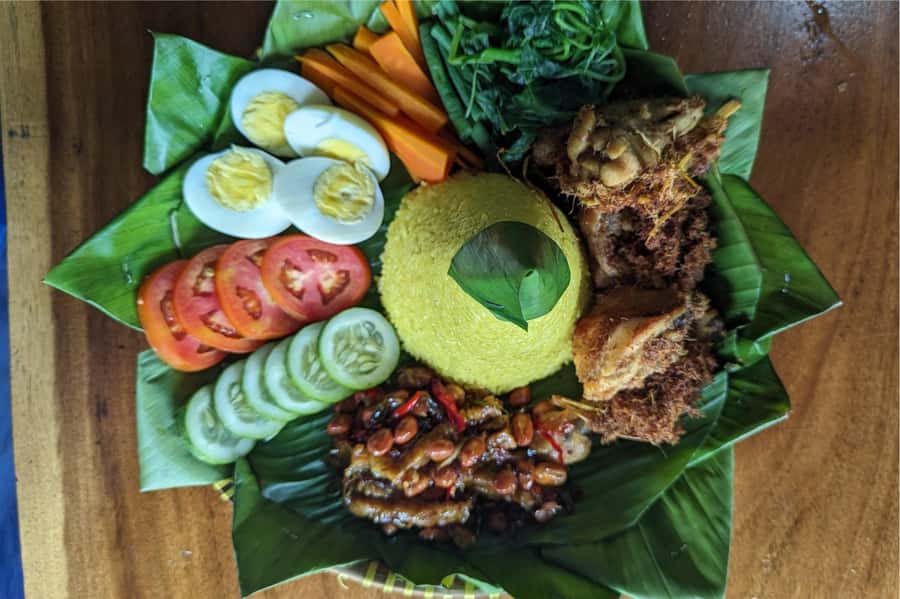
- Home-kitchen cooking: roll up your sleeves for a multi-course meal you eat together
- English guidance in a small group: limited to 8 people, so it’s easier to ask questions
- Countryside cycling: quiet roads, rice fields, and chances to chat with locals
- Real food culture stops: tempe factory views and cracker-making demonstrations can be part of the day
- Recipes to take home: you leave with the instructions so you can recreate the dishes later
Leaving Yogyakarta behind: market meet-up and countryside shift
The day starts with pickup from your accommodation in Yogyakarta, then you leave the noise behind. Before you ever touch a stove, you’ll head to a traditional market where the focus is practical: what ingredients are used, what they look like, and how they fit into Indonesian cooking.
This is one of the best parts because it changes how you experience food. Instead of thinking of dishes as a mystery you order, you start seeing the building blocks—spices, herbs, and vegetables—right at the source.
You can also read our reviews of more tours and experiences in Yogyakarta.


Traditional market shopping: how your cooking class starts making sense
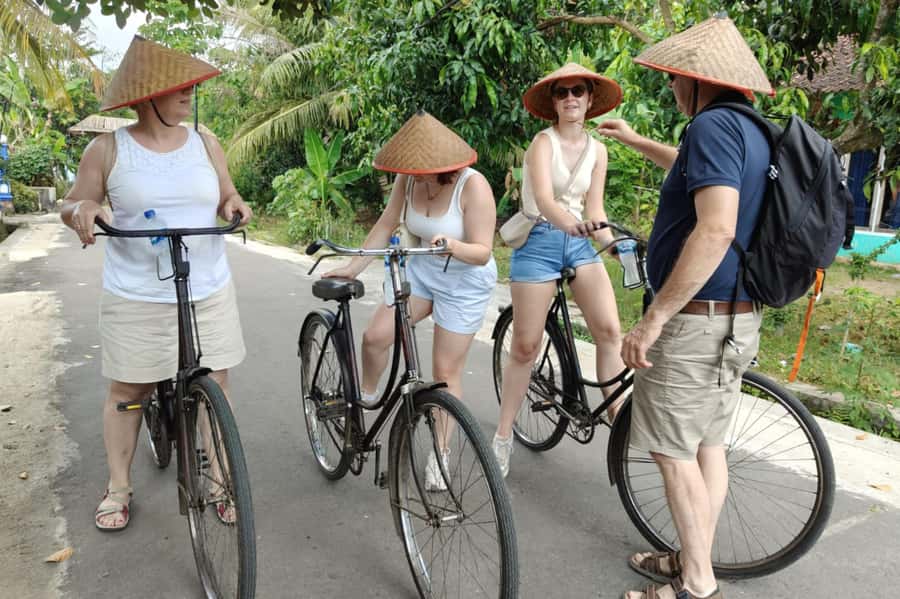
In the market, you’ll walk and learn with your guide (names you may meet include Maxi and Desy). The goal isn’t a fast “look and move on” tour. You’re there to buy the items you’ll cook with, so you can connect the smell and the setup with the final dishes.
One thing I appreciate: the market visit makes the rest of the day feel less like a workshop and more like a culture lesson. When you later slice, grind, stir, and taste, you already know what ingredient family you’re working with.
Family-style cooking class: step-by-step, then plate and eat
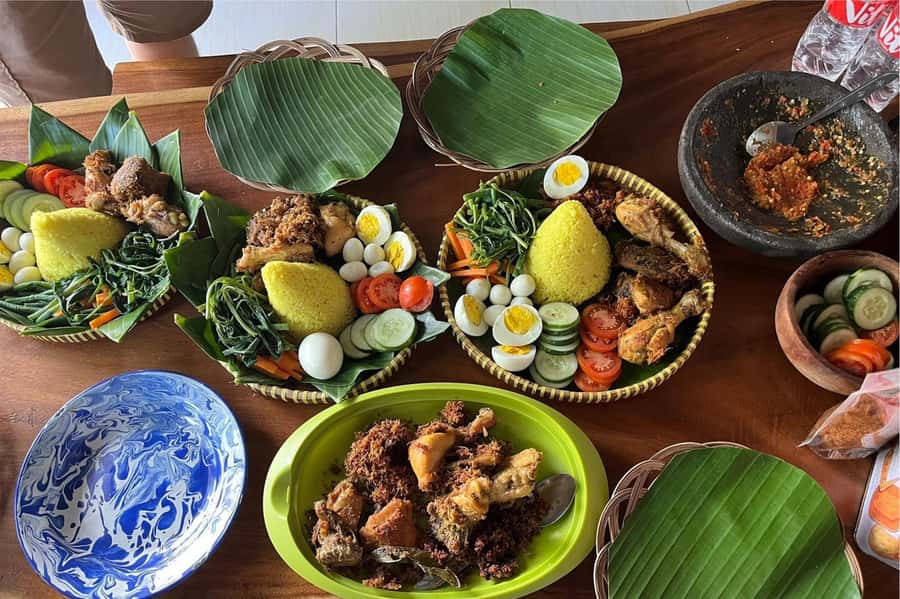
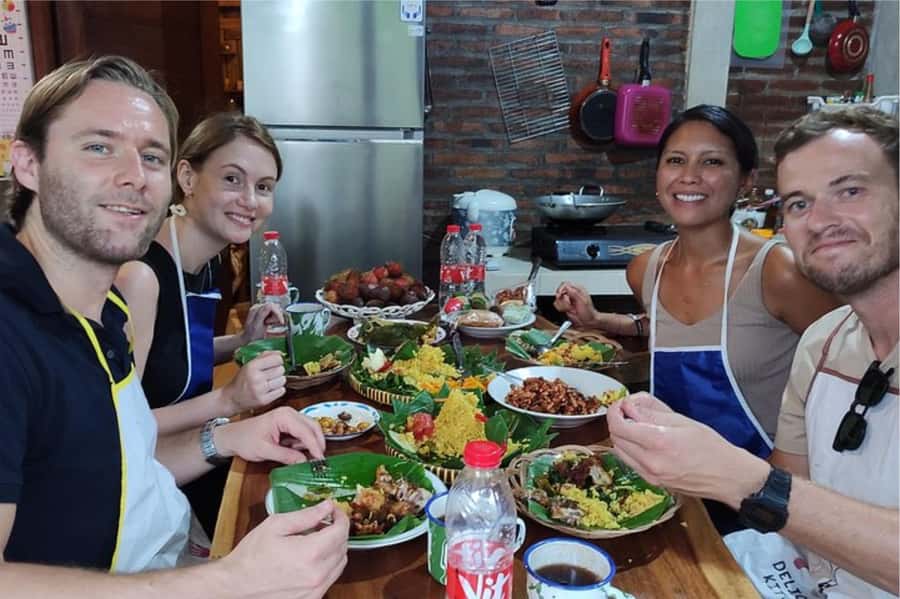
Next comes the cooking phase, typically several hours in a family kitchen. You’ll be taught how to prepare local dishes from scratch using ingredients like rice, fresh vegetables, herbs, and spices—then you’ll cook and eat them while they’re still hot.
The best cooking-class moments are usually the small teachable steps: how to balance flavors, how to prep ingredients so they cook properly, and how to recognize when a dish is ready. The instructors (Desy is one name that comes up often) explain clearly and patiently, and you’re not left flailing over a cutting board.
Depending on the day, the menu can vary. Some people end up cooking a three-course-style meal, while others mention learning six different Indonesian dishes. Either way, the structure stays the same: you work, you taste, you adjust, and then you sit down and eat as a group—kind of like a lovely family dinner, not a formal restaurant production.
Getting your hands dirty: what you actually learn in the kitchen
This is not just about following steps; it’s about building a basic cooking toolkit. You’ll learn practical techniques for handling common Indonesian flavors—especially how spices get used and how vegetables and rice work together in everyday dishes.
Even if you don’t think you’re a confident cook, this section often surprises people. One guest specifically said the class was great even for someone who usually doesn’t enjoy cooking, because the guidance is supportive and the tasks feel manageable.
And yes, you should expect to get a little messy. That’s the point. You’ll finish with the satisfaction of doing it yourself—not just photographing it.
Recipes to take home: the value beyond the meal
What makes the cooking part more than a one-day experience is that you take recipes with you. That matters because it turns a delicious afternoon into something you can repeat later, at home, for friends or for the next quiet night in.
So you’re not just paying for food and entertainment. You’re paying for a skill transfer: ingredient lists, basic methods, and a way to recreate those flavors without guessing.

Cycling through rice fields and village lanes: old bikes, low-stress roads
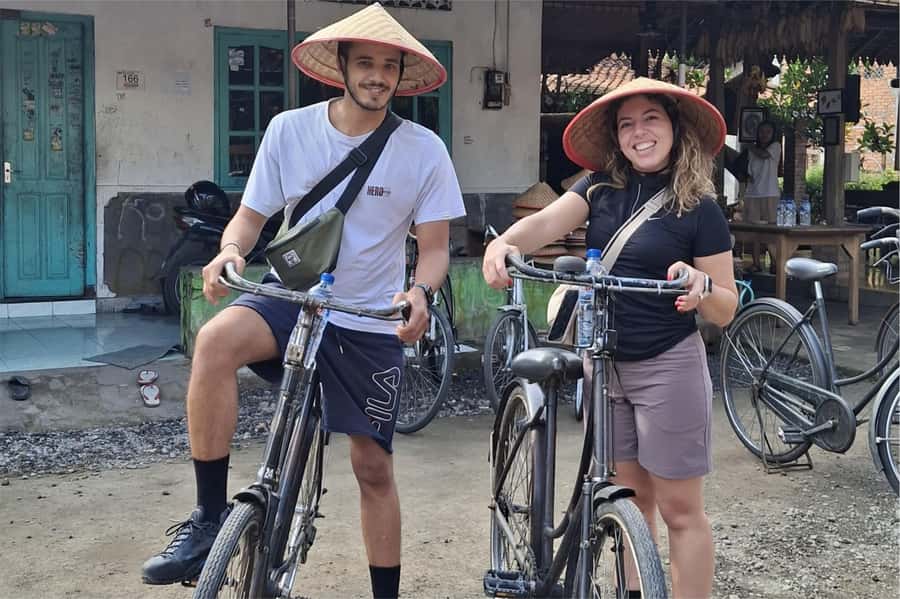
After cooking, you swap the stove for the saddle. The route focuses on peaceful village life—quiet lanes, rice fields, and everyday sights around homes and fields.
One reason this works well is that the countryside segment is generally calmer than what people expect from Indonesia traffic. Guests have mentioned that while they were initially a bit nervous, the village roads felt safe and not rushed. You’re moving slowly enough to notice details, and fast enough to feel like you’re part of the day, not stuck watching from the sidelines.
Also, you may ride on older-style bikes. That sounds like a downgrade, but in practice it adds to the authenticity. It’s more like a local village ride than a staged tour.
Local interaction points: meeting people, not just passing by
A big part of the experience is the human side. You get chances to interact with locals along the way, and you may see people stopping to chat or even ask for photos.
This matters because cycling helps you blend in. You’re not trapped in a car window, and you can slow down near interesting spots. It gives you a gentler way to understand what village life looks like beyond the city.
Food culture side stops: tempe workshop and cracker-making demos
Some itineraries on this day include extra food-culture stops. For example, you might visit a tempe factory and watch part of the process, then continue to a different private home for a cracker-making demonstration.
I like these stops because they show that Indonesian food isn’t only about one dish. It’s about production, technique, and small routines that create staples many people eat every day.
If your day includes these add-ons, treat them like bonus classes—watch closely, ask questions, and notice ingredients and textures. You’ll connect what you see back to what you cooked earlier.
Meals and pacing: how a long day stays relaxing
The total duration is usually 8 to 10 hours, so yes, it’s a full day. But the rhythm helps: market first, then cooking, then cycling and side stops, and finally a shared meal where you can settle in.
Because you’re in a small group, you’re not stuck waiting on a big crowd. You still need to pace yourself—drink water, take breaks when needed, and don’t assume you’ll eat everything without refueling—but overall the structure keeps the day from feeling chaotic.
Guide dynamics and English explanations: you’ll get what you ask for
A key detail here is the small group size—limited to 8 participants—and a live English tour guide. That combo makes it easier to ask for clarification, especially during cooking when questions are natural (and you’re holding food, which helps everyone learn).
Names that come up in positive experiences include Maxi (hotel pickup and market start), Desy (market and cooking guidance), and Sari (guiding the village/cycling portion). When you have a guide who’s confident and upbeat, the day feels smoother.
That said, one real consideration is that bike pace and positioning can affect how much you hear. If a guide rides too far ahead, the explanations can get lost. If that happens, simply group up again and ask them to repeat key points.
Price and value: is $41 a smart move?
At around $41 per person, the value is mainly in the mix. You’re paying for hotel pickup and drop-off (if that option is selected), cycling time, a cooking class with all ingredients, plus food and drinks.
Most tours in this price range focus on one activity—either a ride or a meal experience. Here, you get both, and you also leave with recipes, which increases the “repeatability” of what you learn. For me, that’s the real value: it’s not only about what you eat today, but what you can make again later.
The long day also spreads out the cost. You’re not paying for a short “sampling” session; you’re paying for a structured workflow—from ingredient shopping to cooking to eating.
What to bring for a smooth countryside day
Your best bet is to pack for a long, active day with some kitchen time. I suggest wearing comfortable clothes for cycling and shoes that won’t hate you on uneven village paths. Since you’re handling ingredients and cooking, consider clothes you don’t mind getting a bit spiced up.
If you’re sensitive to sun, bring something for it. And if you’re the type who likes a slower pace, mention that early so your guide can adjust where possible.
Who should book this tour (and who might want to skip it)
This is a great fit if you want hands-on food learning and prefer authentic, local settings over a scripted performance. It also works well for people who like a gentle countryside bike ride, plus the chance to talk with locals during stops and demonstrations.
You might skip it if your priority is a long, challenging cycling workout or if you need very detailed, consistent bike explanations while riding. One guest found the bike portion less satisfying because of how the guide covered ground and spoke from a distance. In other words: the cooking and hospitality are the anchor; the ride is the supporting act.
Should you book this Yogyakarta cycling and cooking class?
If you want a day that feels grounded—market to home kitchen to village life—this is a strong choice. The small group size, English guidance, and the fact that you cook and eat what you make are the big reasons to consider booking.
I’d book it if you’re excited by spices, rice, herbs, and the idea of learning techniques you can reuse at home. If you mostly want a fast cycling adventure, you may feel more satisfied with a bike route on its own.
FAQ
FAQ
How long is the Yogyakarta cycling and cooking class experience?
The duration is listed as 8 to 10 hours. Starting times depend on availability.
What language is the tour guide?
The live tour guide speaks English.
How big is the group?
The group is limited to 8 participants.
What is included in the price?
Included items are the cycling tour, cooking class with all ingredients, and food and drinks. Hotel pickup and drop-off are included if you select that option.
Does the tour include hotel pickup and drop-off?
Yes, hotel pickup & drop-off are included if the pickup option is selected.
Will I get recipes to take home?
Yes. You can take home all recipes after the cooking and meal.
Is there free cancellation?
Yes. You can cancel up to 24 hours in advance for a full refund.
Can I reserve now and pay later?
Yes. The experience offers a reserve now & pay later option, with no payment required today.