REVIEW · UBUD
Jatiluwih full day e-bike cycling with lunch & trekking program
Book on Viator →Operated by Green Bikes Bali · Bookable on Viator
Biking in Bali without breaking a sweat. This full-day Jatiluwih experience pairs an easy electric bike ride from Batukaru Temple to the UNESCO Jatiluwih rice terraces, then finishes with a calmer, slower afternoon trek. I love how the e-bikes make the route feel manageable, and I love getting onto the hiking trails when the crowds thin out.
One thing to think about first: you do include a 2–2.5 hour trek after lunch. If you want a mostly sit-and-snap photo day, this is probably not the right fit.
In This Review
- Key Things I’d Prioritize
- E-Bike Day Starts at Batukaru Temple: A Smooth Way Into Jatiluwih
- What the Electric Mountain Bikes Feel Like (and Why That Matters)
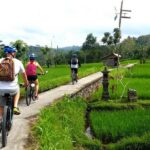
- Cycling Through Jatiluwih: Rice Terraces, Farmers, and a Volcanic Valley
- Lunch at Green Cafe in the Rice Fields: Nasi Campur Done Right
- Afternoon Trek Through the Rice Fields to the River
- Guides and Small Groups: The Difference Between Seeing and Understanding
- Pickup, Minivan Ride, and the Overall Day Pace
- Value Check: Is $88 Reasonable for This Mix of Bike + Trek + Lunch?
- Who This Tour Suits Best (and Who Might Want Another Option)
- Should You Book Jatiluwih Full Day E-Bike + Trek?
Key Things I’d Prioritize
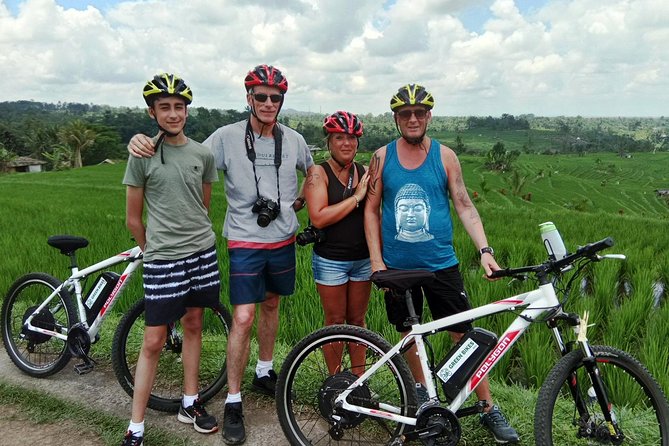
- E-bike route through the UNESCO Jatiluwih valley with traditional farming scenery all along the way
- Batukaru Temple start so you begin with a real Bali landmark, then ride out into the rice terraces area
- Green Cafe lunch in rice fields, served as traditional Balinese nasi campur
- Afternoon trekking off the main tourist routes, which keeps the day feeling quieter
- Small group size (max 12) plus local guides who explain what you’re seeing
- Hotel pickup and drop-off with a shared air-conditioned minivan
E-Bike Day Starts at Batukaru Temple: A Smooth Way Into Jatiluwih
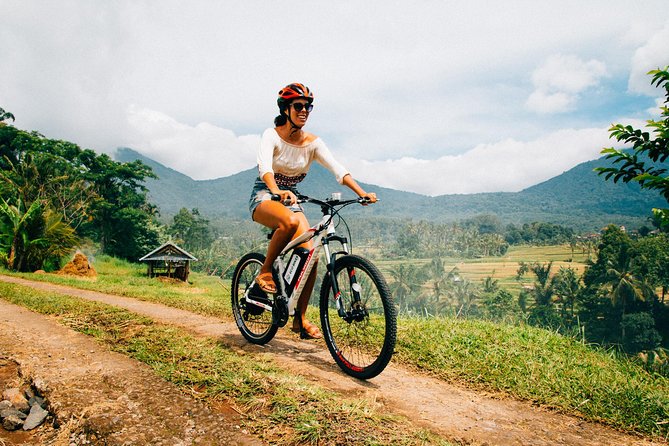
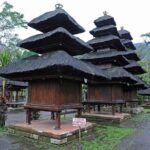
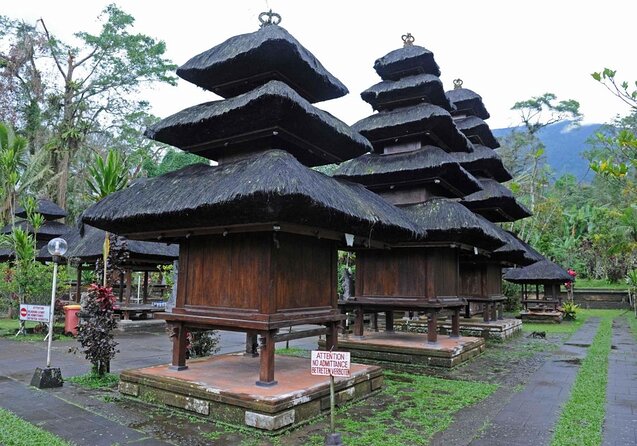
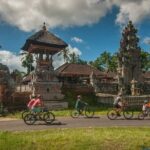
The day begins at 10:00 am, usually with pickup from your hotel and transport by air-conditioned minivan. You’re not starting in the middle of a crowded viewing area. Instead, you ease into the experience by riding out from Batukaru Temple, which gives you an actual sense of moving through the area—not just arriving at it.
The first big win is how the route is paced. You’ll spend about two hours cycling as you head toward Jatiluwih. It’s built as a progression: temple area to village roads, then into greener, more natural terrain.
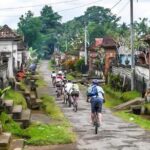
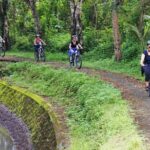
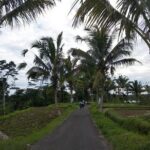
Along the way, you pass through places that are more practical than postcard-perfect. Think dense jungle and a bamboo forest, small rivers and streams, and quiet roads where local life shows up in the background.
You can also read our reviews of more tours and experiences in Ubud.
What the Electric Mountain Bikes Feel Like (and Why That Matters)
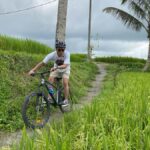
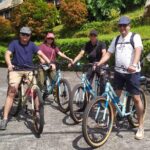
These are electric mountain bikes, plus a helmet. The bike setup matters because you’re sharing a day that also includes trekking later, so you want the riding to feel doable without draining your legs.
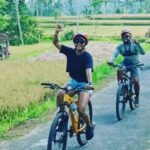
The way this tour is structured lets you ride comfortably even if you’re not a cyclist. The e-bike assist is the key here. In practice, it means you can keep a steady pace and focus on the scenery and the guide’s explanations instead of grinding uphill for every section.
There’s one simple requirement: you must be at least 150 cm tall, since the bikes aren’t made for smaller riders. If you fall below that, you may not be able to join.
Also, bring basic road sense. You’re cycling on real paths and roads in a rural setting, so you’ll want to stay alert, keep a relaxed grip, and follow the guide’s instructions.
Cycling Through Jatiluwih: Rice Terraces, Farmers, and a Volcanic Valley
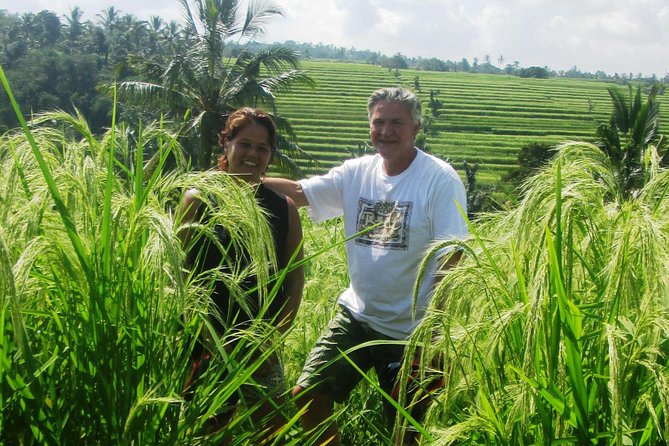
Once you reach Jatiluwih, you’re entering a UNESCO World Heritage site made up of more than 300 hectares of rice terraces and tropical vegetation. This area sits in a valley connected to four extinct volcanoes, which helps explain why the terrain here has that long, layered look.
You cycle through the center of the site, not just the edges. That difference is huge for how the day feels. You get multiple angles on terraces rather than a single viewpoint.
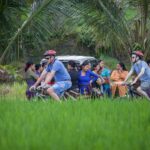
One of the most satisfying parts is seeing how farmers work the fields using traditional methods. You’re not just watching the landscape; you’re passing by working rice paddies and noticing the patterns of daily care.
And because the cycling guides are local—people who grew up in this area—they can answer practical questions as you ride. You’ll get context for what you’re seeing, not just a “look over there” routine.
Lunch at Green Cafe in the Rice Fields: Nasi Campur Done Right
After the morning cycling, you stop for lunch at Green Cafe, served in the middle of the rice fields. This is one of those moments that makes the active day feel balanced. You’re not rushed into a generic meal; you’re eating with the scenery around you.
The included lunch is traditional Balinese nasi campur, with water, and coffee/tea. Bottled water is also provided, and beverages are part of the included package too.
One practical note: alcohol isn’t included, but you can purchase it on-site. If you like to keep your day light, this setup makes it easy to stick to non-alcoholic drinks and save your energy for the trek afterward.
If you’re wondering whether the lunch will be satisfying after biking, it should be. Nasi campur is filling by design, and the timing is meant to refuel you before you start walking.
Afternoon Trek Through the Rice Fields to the River
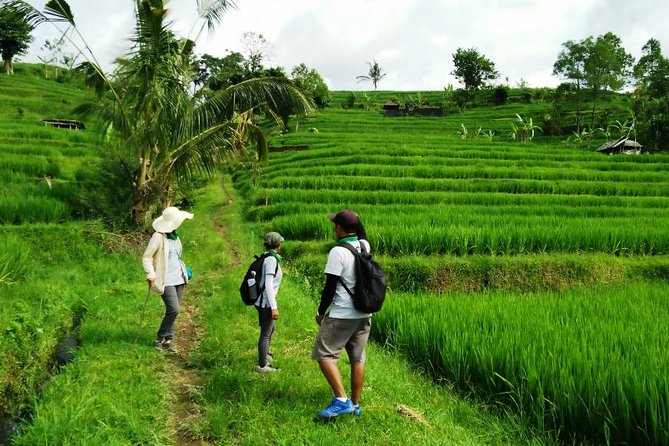
Here’s where the day turns from “cycling views” to “walking discovery.” After lunch, you trek for about 2 to 2.5 hours.
The goal is to get you into the rice fields and then down toward the river, moving through terrain that feels less staged than the main tourist routes. Based on what I’ve learned from the experience, the afternoon timing is a major reason the trails feel quieter. If you love photos but hate crowds in your shot, this is a smart schedule choice.
The trekking itself is part hike, part landscape-reading. You’ll spend time moving through paths that let you see how the terraces and waterways relate to each other. Even when you’re not stopping constantly, the sense of scale grows as you walk deeper.
Bring comfortable shoes that you trust on uneven ground. The tour advises comfortable clothing and footwear for exactly this reason.
Guides and Small Groups: The Difference Between Seeing and Understanding
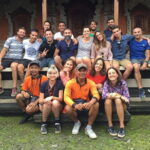
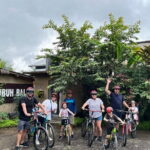
This tour caps at 12 travelers, which changes the vibe. You can actually hear your guide, and you’re not stuck waiting behind a long line of bikes or walkers.
Guides also make a real difference with a day like this. Local guides can point out details you’d otherwise miss, especially around rice farming and the way the area is laid out. In one instance, the experience was highlighted specifically for guides Agus and Koman, who helped make the day unforgettable by sharing what they know and keeping the pace right.
That local knowledge is also practical. When you understand what you’re seeing—why certain areas look the way they do, what farmers are doing, and how the terrain connects—you stop feeling like you’re just passing through.
Pickup, Minivan Ride, and the Overall Day Pace
The tour is built as one full day, roughly 7 hours total. That includes pickup and drop-off, the bike ride, lunch, and the trekking portion.
The start time is 10:00 am, so you’re not dealing with an ultra-early morning. Still, plan for a full day away from the hotel. If your Bali itinerary is packed, this one is best when you can protect your time block.
You’ll travel by air-conditioned minivan between segments of the day. You’re also covered by insurance included in the package, and the tour provides bottled water and beverages, so you’re not constantly scrambling for supplies.
Value Check: Is $88 Reasonable for This Mix of Bike + Trek + Lunch?
At $88 per person, you’re paying for a bundle: e-bike use, helmet, a local guide, lunch, beverages and bottled water, transport by minivan, trekking time, and insurance. For many people, the value is strongest because you’re not just buying entry tickets. You’re buying guided movement through a large, working agricultural site.
If you were to try to DIY this day, you’d run into two common problems: transport logistics and guidance. Getting a reliable bike arrangement plus a meaningful trekking route isn’t always simple when you’re working in rural areas. Here, the structure does that work for you.
The small-group size also affects perceived value. You’re paying a little more than a generic bus tour because you get a more controlled pace, more guide attention, and fewer bottlenecks.
The main “cost” isn’t money—it’s effort. You do ride and you do trek. If you’re okay with that, the $88 feels like a fair exchange for a full active day and a meal included.
Who This Tour Suits Best (and Who Might Want Another Option)
This experience is set up for most people who can handle a moderate day outdoors. The tour advises comfortable clothes, comfortable shoes, and sunblock, which is your hint that you’ll be outside long enough to need basic weather readiness.
You’ll likely love it if:
- You want a real UNESCO site experience without exhausting yourself on a bicycle
- You’re comfortable walking for a couple hours after lunch
- You like local guides and want explanations, not just views
- You prefer fewer people on the trails, especially later in the day
It may not be for you if:
- You want minimal walking and mostly flat, short stops
- You’re concerned about heat and sun and won’t prepare (sun protection matters here)
- You’re under 150 cm, since bike sizes aren’t available for smaller riders
Should You Book Jatiluwih Full Day E-Bike + Trek?
If you want one Bali day that blends easy electric cycling with a meaningful trek through the rice terraces—and you want lunch included at a fieldside spot—this is a strong choice. The mix of morning ride, refueling lunch, and quieter afternoon trails is exactly how you turn a UNESCO visit into something that feels personal, not crowded.
Book it if you’re excited to move through the area and you’re fine planning for about 7 hours outdoors. Skip it if you’re chasing a low-effort itinerary.