REVIEW · SIEM REAP
Angkor Sunrise Expedition Cycling Through Serene Backroads
Book on Viator →Operated by Journey Cambodia · Bookable on Viator
Early mornings can be worth it.
This Angkor Wat sunrise cycling tour starts before the temple crowds feel real, then shifts into calm pedaling on easy backroads through the Angkor area. I love the combo of a slow, atmospheric start at dawn and the practical payoff of seeing temple walls and village paths without burning out on foot. The big consideration is that it begins extremely early, with pickup around 4:30am, so you’ll want to plan sleep accordingly.
What I really like is the way the ride helps you move through Angkor without doing the classic nonstop walking circuit. I also like that the day is structured: you get breakfast and a setup break, then you cycle about 15–25 km at an easy pace, with bottled water and a cool towel waiting for you.
The only real downside: the wake-up call is brutal. If you’re the type who hates pre-dawn starts, this will feel like hard work instead of magic.
In This Review
- Key things you’ll notice fast
- Why Angkor sunrise feels different from a bike saddle
- The pre-dawn pickup and your Angkor Wat viewing window
- Srah Srang breakfast break and easy riding setup
- Ta Prohm and the back roads through local villages
- Angkor Thom wall cycling: moat on one side, jungle on the other
- Bayon faces, then the ride back to Siem Reap comfort
- Price and temple pass reality: is it good value?
- What the small-group bike format feels like on the ground
- Should you book this Angkor sunrise cycling tour?
- FAQ
- What time does the tour start?
- How long is the experience?
- Is the temple pass included in the price?
- What’s included with the tour?
- How much cycling will I do?
- Is Angkor Thom included for free?
- Can I cancel and get a refund?
Key things you’ll notice fast
- Sunrise first, then cycling: breakfast and bike setup happen after the dawn viewing
- Small group size: maximum 9 travelers, so it feels more personal than a bus line
- Easy distance: about 15–25 km, built for comfort, not fitness bragging
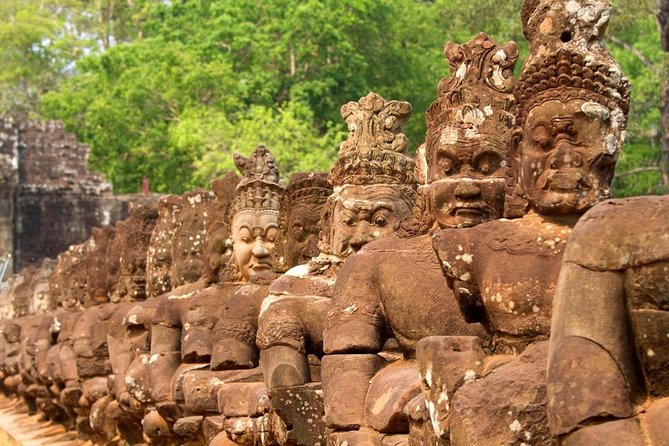
- Temple mix with variety: Angkor Wat, Ta Prohm, Angkor Thom wall ride, then Bayon faces
- Support on hand: a support van/tuk tuk plus air-conditioned vehicle time
Why Angkor sunrise feels different from a bike saddle
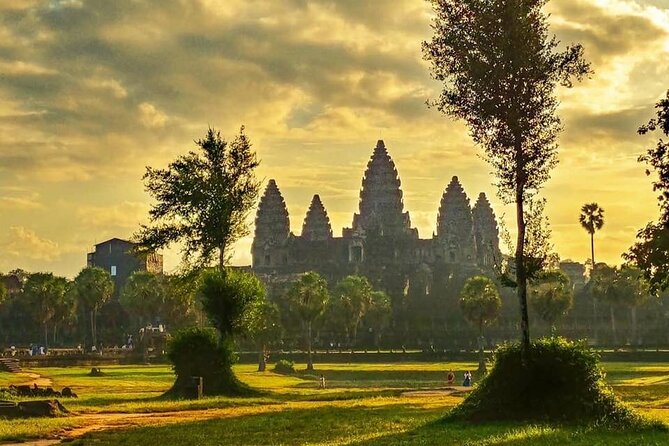
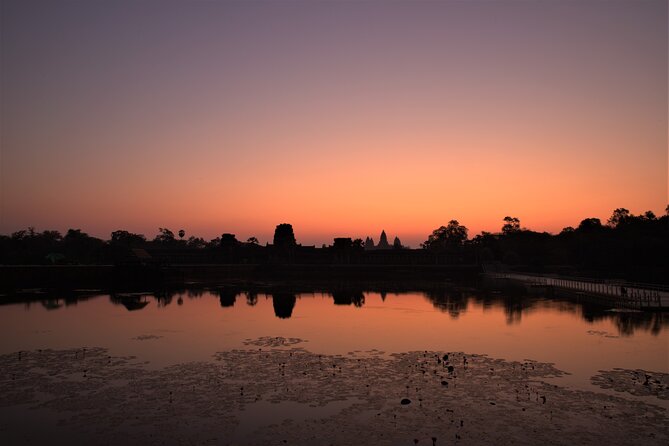
Angkor at sunrise is one of those rare travel moments where timing matters more than “what you bought.” The tour gets you moving early enough to reach Angkor Wat when the scene is quiet and the light is doing the heavy lifting. Then, instead of turning your day into a long stair-and-stone shuffle, you switch gears into an easy bike day.
From a value standpoint, I like that this isn’t just a temple checklist. The cycling part is what makes the experience feel like you’re traveling through the area, not just passing through it. You’ll ride along paths that help you avoid most walking crowds, which can mean more time looking and less time squeezing.
And if skies aren’t perfect, don’t overthink it. One review noted sunrise with clouds, and even then it still felt special—because the early morning atmosphere carries the day.
You can also read our reviews of more tours and experiences in Siem Reap.
The pre-dawn pickup and your Angkor Wat viewing window
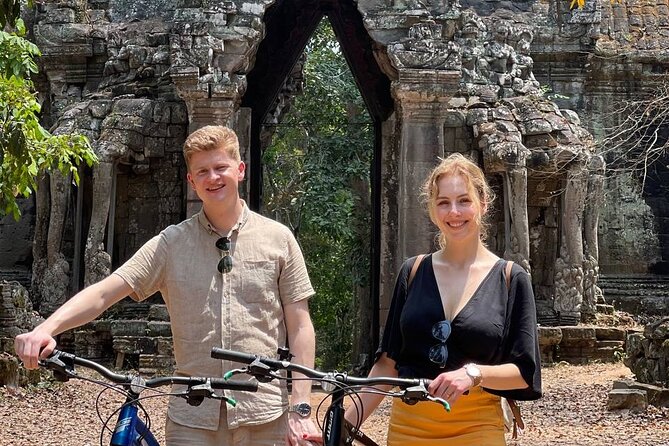
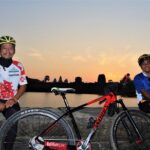
The day starts with pickup by tuk tuk or mini-van (depending on group size) between 4:30–4:40am from your Siem Reap hotel. You head to Angkor Wat early enough that you’re not arriving in the middle of the chaos.
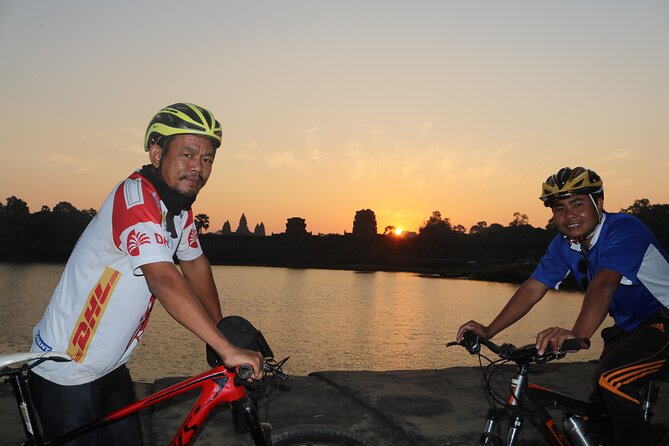
You spend about 3 hours at Angkor Wat. That’s enough time to find a good viewing spot, watch the sky change, and then settle into the temple details as the morning wakes up. Just know the temple pass isn’t included in your tour price—you’ll pay directly to the site (more on that later).
This is also where your mental pacing changes. Sitting still for dawn takes a different kind of patience than riding. If you’re traveling with someone who gets restless fast, this stop is the easiest time to show them why you came early.
Practical tip: bring something warm-ish. Even if Cambodia is generally warm later, early starts can still feel chilly before the sun climbs.
Srah Srang breakfast break and easy riding setup
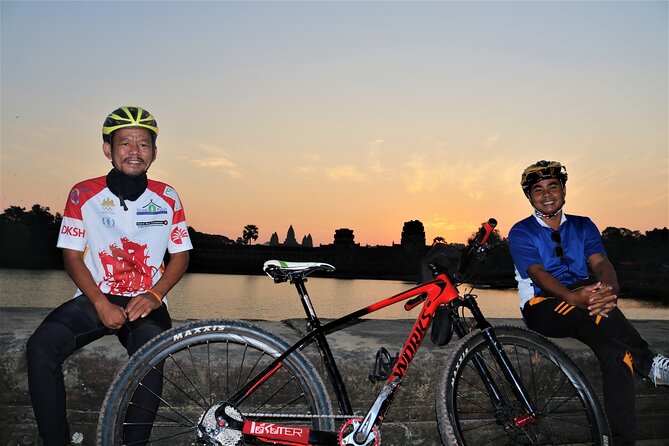
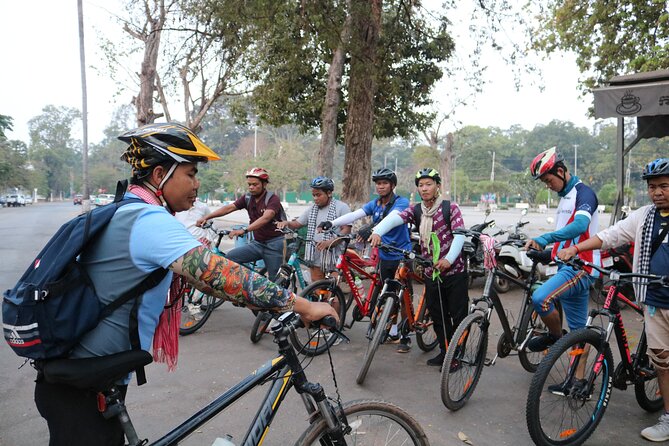
After sunrise, you enjoy breakfast and then take a rest before cycling. You’ll set up your mountain bike here, which matters more than it sounds. A lot of “bike tours” throw gear at you and expect you to be ready instantly. This one gives you a proper transition from temple mode to ride mode.
Stop 2 is Srah Srang, a water-and-ruins area where the scenery helps you feel like you’re moving through an older, quieter Angkor rhythm. Expect about 1 hour total here. If you’ve seen photos of the site, you’ll recognize the water features—one of the most praised parts in reviews is riding past the reservoir area.
How this helps your day: breakfast plus setup means you’re not starting the ride tired and unprepared. You also get a natural pause before the rest of the circuit.
Minor consideration: since the ride starts after Angkor Wat and breakfast, you shouldn’t plan to do anything else that morning before pickup. This tour owns your schedule from the first tuk tuk out the door.
Ta Prohm and the back roads through local villages
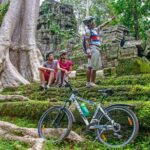
Next up is Ta Prohm (about 1 hour). This is the temple famous for roots and tree growth wrapped around structures, giving the place a haunting, lived-in look. The emotional hit here is real, but the ride is what makes it different: you take back roads through the area and into the Angkor complex rather than walking straight in with the crowd.
You can also think of Ta Prohm as the “change in pace” stop. After the calmer cycling sections, you’re back to a temple visit where you slow down again and let the details pull you in. If your group is split between people who love photos and people who love moving, this stop usually works because there’s enough to do in both modes.
What can be a drawback: Ta Prohm is photogenic, so you’ll likely want extra time. The tour keeps it to about 1 hour, which is enough to see the highlights, but not enough for a long, wandering session. If you’re the type who wants to sit and stare for ages, you’ll need to manage your expectations.
Angkor Thom wall cycling: moat on one side, jungle on the other
Stop 4 is Angkor Thom, and here the day shifts into a very specific kind of satisfaction: riding the ancient city walls. You get about 1 hour for this section, and it’s noted as admission free.
The ride is the feature. Reviews highlight the feeling of gliding along the temple wall route while keeping an eye on the moat and the surrounding greenery. One of the best parts is the contrast: water and structure on one side, and dense vegetation on the other. Even if you’ve seen Angkor Thom before, this wall ride gives you a different perspective than typical temple touring.
Why this section is valuable: it’s a “travel through” moment. You’re not just stopping and staring—you’re moving along a line that guides your attention. It also tends to break up the day nicely, so you don’t feel like you’re constantly arriving at one viewpoint after another.
If you’re worried about how you’ll handle biking in ancient surroundings, this is where the tour’s easy-pace design shines. You still get motion and scenery without turning it into a punishment.
Bayon faces, then the ride back to Siem Reap comfort
The final temple stop is Bayon (about 1 hour). Bayon is famous for its central towers covered in more than 200 enormous faces. It’s one of those sights where your brain keeps trying to count them, then gives up and just watches.
After Bayon, you return to your hotel. The tour timing is built for a full morning-and-midday day: about 8 hours total, with enough breaks to keep you from feeling wrecked when you get back.
This ending matters. A lot of temple tours don’t have a satisfying “out” point. Here, you get the big face-tower finale and then you’re done—no hours of extra wandering, no pressure to keep squeezing sights in after you’re tired.
One small comfort note: the tour includes bottled water and a cool towel, plus a support van/tuk tuk. That’s the kind of practical detail that makes the day feel easier than it sounds on paper.
Price and temple pass reality: is it good value?
The tour price is $69 per person, and that’s not counting the entrance fee for the temple pass. The temple pass is listed as $37 per person, paid directly at the sites.
So what does that mean for value? Even with the pass added, you’re paying for more than a “temple visit.” You’re getting:
- an English-speaking biking tour guide
- bicycle and helmet
- bottled water and a cool towel
- support van/tuk tuk
- an air-conditioned vehicle
- first aid kit
For Angkor, the pass cost is the unavoidable baseline. The real question is what you get above that. In this case, you’re paying for the logistics and the ride—an easier way to cover ground around Angkor and a route that tries to reduce the worst crowd crush.
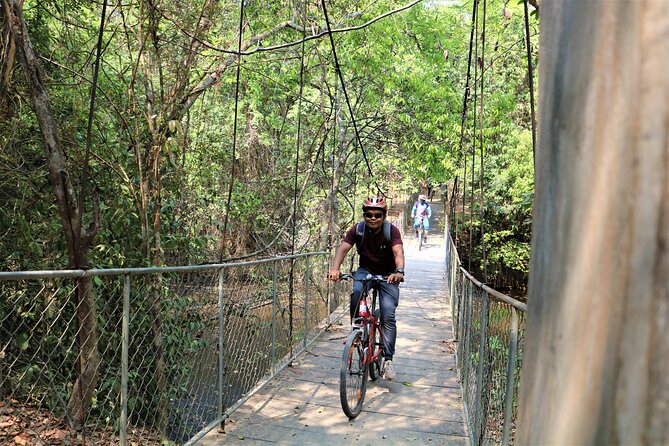
And reviews back up the payoff. The most praised parts include the sunrise itself, riding through wooded paths, and the temple wall experience. One standout detail: guide Chayy was described as fun and knowledgeable, and he offered an option to ride on-road or take a single-track style route to see more hidden temples. That kind of guidance turns the day from “look at this” into “experience the area.”
What the small-group bike format feels like on the ground
This is a small group tour with a maximum of 9 travelers. That size matters. With fewer people, the pacing feels calmer, and your guide can actually check that everyone is okay on the bike.
You’ll also want to understand the structure:
- You start early at Angkor Wat.
- You get breakfast and bike setup after that.
- You ride an easy loop covering multiple temple stops.
- You end at Bayon and return to your hotel.
It’s described as suitable for most travelers and the ride is around 15–25 km at an easy pace. That doesn’t mean it’s nothing. You’ll still be on the move, and your early start will add up. But it’s clearly not designed to be a “train for a marathon” day.
If you like guided walks but hate slow crowds, this format is a nice middle path: you get motion, but you’re not going solo.
Should you book this Angkor sunrise cycling tour?
If your ideal day is sunrise at Angkor Wat plus calm sightseeing with a bike, I think you’ll enjoy this. It’s especially worth booking if:
- you want to avoid the most crowded feel by using cycling to move between areas
- you’re curious about the quieter back roads around the temple complex
- you like having a guide manage timing so you don’t spend your morning guessing
I’d hesitate if you hate waking up before sunrise. The tour starts around 4:30am, and the day runs long enough that a late-night plan can backfire.
One last decision trick: add up your priorities. If your top priority is only the temples and you don’t care about riding, a standard temple tour might be simpler. But if you want Angkor with movement and variety, this bike day is one of the more satisfying ways to do it.
FAQ
What time does the tour start?
The tour starts at 4:30am, with hotel pickup between about 4:30 and 4:40am depending on your group.
How long is the experience?
It runs about 8 hours (approx.).
Is the temple pass included in the price?
No. You’ll need to pay the entrance fee/temple pass directly to the site. The listed temple pass cost is $37 per person.
What’s included with the tour?
The tour includes an English-speaking biking guide, bottled water, a cool towel, bicycle and helmet, a support van or tuk tuk, an air-conditioned vehicle, and a first aid kit.
How much cycling will I do?
You’ll ride about 15–25 km on an easy route.
Is Angkor Thom included for free?
Angkor Thom is listed as admission free for the stop within the tour.
Can I cancel and get a refund?
Yes. You can cancel for a full refund up to 24 hours in advance. Poor weather can also lead to a different date or a full refund.
—
If you tell me your travel dates and your biking comfort level (first time vs. regular rider), I can help you decide whether the early start and easy distance will feel like fun or like a chore.