Kyoto on wheels beats the walking slog. I love how this private e-bike tour helps you check off key landmarks fast while still keeping a human pace. You’ll ride past places like Fushimi Inari and Tofuku-ji, with stories timed to what you’re seeing.
Two things I really like: e-bike rental is included, so you’re not hunting gear or wasting energy on setup. I also like the private format, which means your guide can tailor the ride and make space for what you care about, like family-friendly pacing and extra photo stops.
One consideration: you do need to be able to ride a bicycle and handle crowded streets. If you’re not comfortable on a bike for a few hours, this could feel more like work than fun.
In This Review
- Key highlights that matter in real life
- Fast Kyoto starts at Sunny CycleJapan
- Why an e-bike beats Kyoto walking time
- Fushimi Inari and Tofuku-ji: the big Kyoto intro
- Yasaka Pagoda, Yasui-Konpiragu, and the alley-to-river feel
- Heian Jingu torii and Nanzen-ji’s brick aqueduct moment
- Philosopher’s Walk and Honen-in: where the pace can soften
- Shimogamo, the Kamo Delta, and a more local end of day
- Teramachi-dori and Sanjo: use your momentum wisely
- Price and what you actually get for $198.15
- The practical stuff: timing, ride comfort, and choosing your energy level
- So who should book this, and who should skip it?
- Should you book this Kyoto private e-cycling tour?
- FAQ
- How long is KIYOTO’s Kyoto private e-cycling tour?
- Is the e-bike included, or do I need to bring my own?
- Is this a private tour?
- Are temple or shrine entrance fees included?
- What’s the meeting point?
- Do I need to be able to ride a bicycle?
- Can kids join the tour?
- Can I get a refund if I cancel?
Key highlights that matter in real life
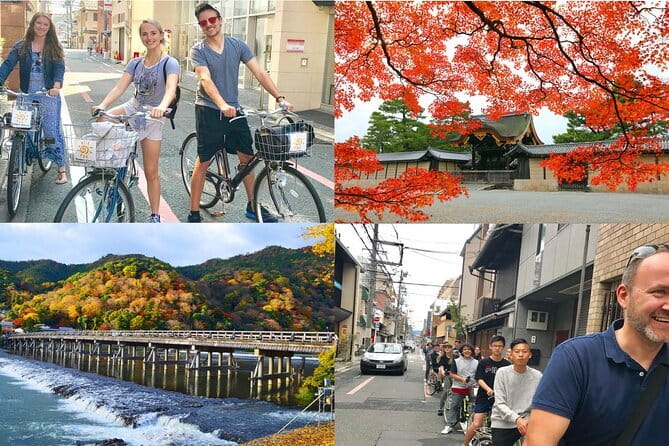
- E-bike rental included, plus a normal-cycle option if you prefer pedal power
- Private tour pace, so the day can flex to your group and energy level
- Photo-friendly guide style, with a knack for snapping great shots along the way
- Major sites + quieter stretches, combining big names with more local-feeling Kyoto
- Most stops are free to enter, with some paid temple spots possible along the route
Fast Kyoto starts at Sunny CycleJapan
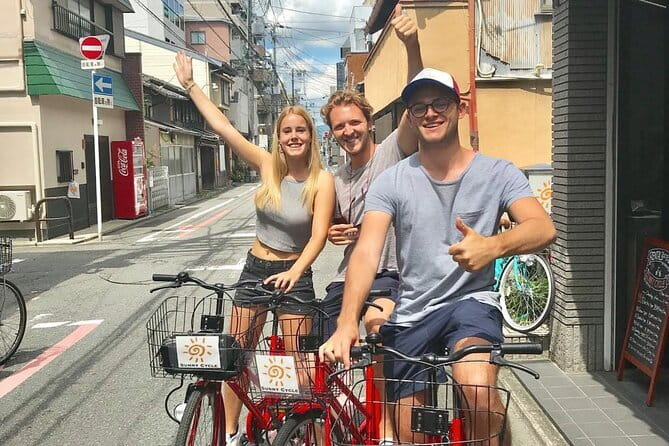
The tour kicks off at Sunny CycleJapan, right in Shimogyo Ward (Ōhorichō, 477 1F). The practical win here is simple: you meet, get your e-bike, and you’re moving quickly instead of spending half the day figuring out transportation.
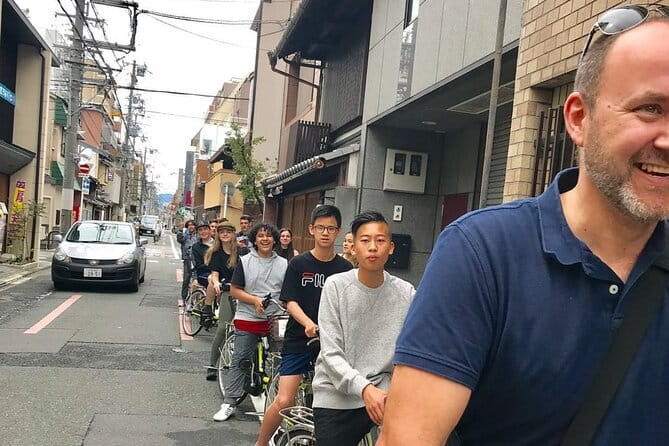
Because it’s private, you’re not stuck with a group that walks faster or slower than you do. Your guide can keep the ride moving while still slowing down for photo moments and questions.
There’s also a solid “real-world” vibe from the guide service: friendly help before you go, clear guidance while riding, and a strong sense of Japanese hospitality (omotenashi). In past bookings, guides with names like Yonnie, Yuhey, Yuichi, Mana, Polina, and Kento have been praised for being fun, attentive to safety, and willing to tailor the route.
You can also read our reviews of more tours and experiences in Kyoto.

Why an e-bike beats Kyoto walking time
Kyoto is packed. Even the “easy” routes can feel like nonstop dodging crowds, zigzagging through lanes, and adding distance just to reach your next temple. An e-bike lets you move Kyoto-wide without turning your day into sore-feet survival.
This tour is built for that kind of efficiency. It’s designed to help you see a lot—shrines, temple grounds, river areas, and scenic walkways—without rushing the moment you arrive.
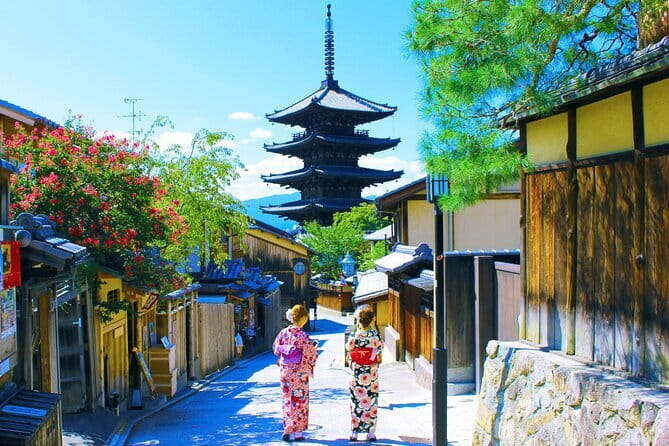
The e-bike also changes how you experience the city. Instead of arriving only to look and leave, you can actually pause at key places like the torii tunnels of Fushimi Inari, the view from Tofuku-ji’s Tsutenkyo Bridge, or the classic Higashiyama-feeling angles around Yasaka Pagoda.
Fushimi Inari and Tofuku-ji: the big Kyoto intro
The ride commonly starts with major spiritual and historic stops, like Higashi Hongan-ji (a major Jodo Shinshu Buddhist temple founded in 1602). Even before the more famous red gates, this sets the tone: large grounds, big architecture, and that sense of Kyoto as a living religious capital.
From there, you’re in Fushimi Inari-taisha Shrine, the headline act for many first-timers. The thousand or so vermilion torii gates form trails up the mountain side, and this place is famous for a reason—it’s visually intense and easy to understand once you’re there.
Next comes the calmer rhythm around Komyo-in Temple, a sub-temple of Tofuku-ji known for its tranquil garden. One note: admission here is listed as not included, so if you want to enter, you’ll likely pay separately.
Then you reach Tofuku-ji Temple and the famous Tsutenkyo Bridge. Even with a short stop, the payoff is high because it’s all about the panoramic framing—especially in autumn—when the valley view turns dramatic. You get the viewpoint without feeling like you need to spend the whole day there to justify it.
Yasaka Pagoda, Yasui-Konpiragu, and the alley-to-river feel
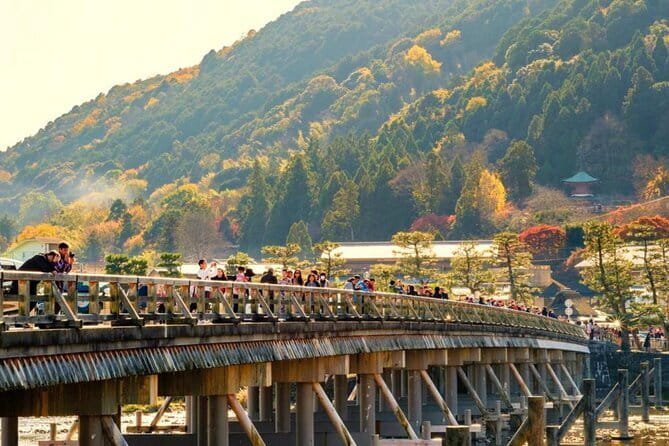
After the temple powerhouses, the tour shifts into Kyoto’s atmospheric storytelling. You’ll visit Hōkan-ji (Yasaka Pagoda), where the iconic silhouette is easy to appreciate—especially once you get the angle with the historic Higashiyama district behind it.
Then there’s Yasui-Konpiragu, known for prayers connected to breaking bad relationship ties and inviting good ones. This is one of those places where you’ll feel the everyday “people come here for life stuff” side of shrine culture, not just sightseeing.
From there, you roll into Hanamikoji Street in Gion—traditional tea houses and restaurant-lined lanes that help you understand how Kyoto keeps its identity in the middle of tourist traffic. It’s also a great time for your guide to point out small cultural cues and customs you’d otherwise miss.
If you like quieter scenes, you’ll also hit Tatsumi Bridge and then move into the Shirakawa River area: Shirakawa Canal, River Terrace (Shirakawa Shinsui Terrace), and the classic “river pause” moments where Kyoto feels less like a checklist and more like a slow stroll.
Heian Jingu torii and Nanzen-ji’s brick aqueduct moment
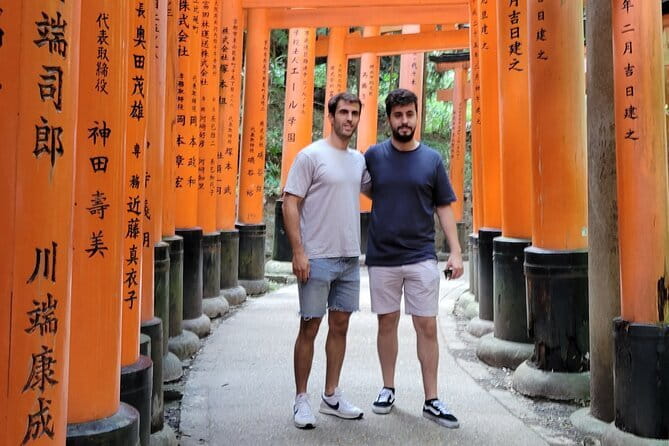
One of the strongest “wow” shifts is Heian Jingu Shrine’s Otorii, a giant red gate built in 1929 (reinforced concrete) to mark Emperor Showa’s enthronement. It’s not just big—it’s a strong photo anchor, and the scale makes it feel like you’re entering a different world.
From there, the tour often heads to Nanzen-ji Temple in the Sakyo Ward. Nanzen-ji is known for its gardens and long history, and even a short stop gives you a sense of the place as a serious religious site, not just a scenic detour.
Then comes Nanzenji Suirokaku, the brick aqueduct completed in 1888. It’s one of those structures you can understand immediately from the way it’s built and what it represents: water engineering tied to daily life. It also gives you a break from the repeated torii-and-gates visual pattern.
Philosopher’s Walk and Honen-in: where the pace can soften
After the major sites, you get the option of Philosopher’s Walk, a scenic walkway about 2 kilometers along the banks of the Biwa Canal. Even if you don’t do the whole stretch, the point is to feel how Kyoto’s famous “walk corridors” work as a city living space.
Nearby is Honen-in Temple, a quieter Zen stop said to be founded by Honen Shonin in the 13th century. It’s set in a forest-like feel, and for many people it becomes a reset after more crowded areas.
Short stops can be a drawback here if you love slow meditation-style visits. But with a private tour, you can ask your guide to spend a few extra minutes at the spots that matter most to you, instead of rushing through everything the same way.
Shimogamo, the Kamo Delta, and a more local end of day
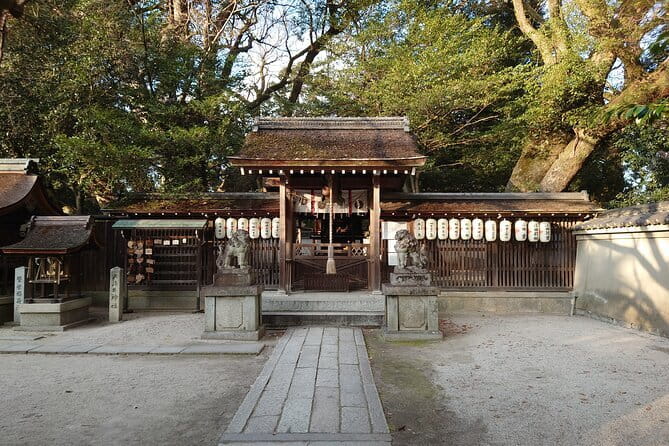
To keep Kyoto from turning into only postcard landmarks, the route can reach Shimogamo Jinja (also called Kamomioya Shrine), one of the oldest Shinto shrines in the region, with roots traced back around 90 BC. If you like history that isn’t just 1,000-year-old statues but living tradition, this one’s a meaningful stop.
Then you may continue toward the Kamogawa Delta (Kyoto Prefectural Kamogawa Park), where the Kamo and Takano rivers meet. The stepping stones shaped like turtles and birds are the kind of Kyoto detail you’d miss if you only focused on the biggest names.
From there, the day can include Kyoto Gyoen, the large park area around the old Imperial Palace. It’s a local-relax type of place—nature all year, historic buildings nearby, and it’s well known for cherry blossoms. Even outside peak bloom season, it works as a breather between heavier temple visits.
You might also stop at Ebisugawa Tobiishi (stepping stones at Kojin)—a fun hop-across-photo moment that helps make the route feel playful rather than solemn all day.
Teramachi-dori and Sanjo: use your momentum wisely
Once you’ve done the Kyoto “sacred track” part of the day, you can ride into the city’s everyday energy. Teramachi-dori Street runs north-south and is known as a lively shopping street with traditional Japanese goods, cafes, and fashion shops.
Then you may move near Sanjo Street, a major east-west hub that’s close to Kawaramachi and the Kamo River. This ending stretch is useful because you can decide on the fly where you want dinner and dessert without feeling like you’re crossing the city cold.
If you’re hungry, plan ahead. Food and drink aren’t included, so you’ll want to treat this as a day for cycling and sightseeing, then let the city feed you afterward.
Price and what you actually get for $198.15
At $198.15 per person, this is not a budget “just rent a bike and go” option. You’re paying for the whole package: an e-bike (and a normal bike option), a private guide, and guidance that helps you get to a lot of places without dead time.
Is it worth it? For most people, yes—because the alternative is either:
1) using transit plus walking (time adds up fast), or
2) piecing together a route yourself (and still dealing with crowd flow and finding good angles).
Also, your guide is expected to provide cultural and historical context as you ride. That matters because Kyoto’s sites are meaningful, not interchangeable. If you care about understanding what you’re seeing—rather than just snapping photos—this format can make the day feel more satisfying per hour.
The practical stuff: timing, ride comfort, and choosing your energy level
The tour runs 4 to 8 hours (approx.), and the private setup helps make that range work. A shorter day can focus on the strongest highlights. A longer day gives more room for the calmer stretches like riverside paths and shaded temple areas.
You should have moderate physical fitness and be able to ride a bicycle. E-bike assistance helps, but it doesn’t replace balance and steering. Kyoto streets can be crowded, so you’ll want to feel confident staying aware and following your guide’s pace.
Kids can come too. Kids’ bikes are non-electric, and availability is limited, so you’ll want to request it when booking. There are also kids’ seats for children who can’t ride independently, but those are limited as well.
So who should book this, and who should skip it?
Book this if you want a Kyoto day that’s:
- heavy on sights but light on stress
- structured enough that you don’t have to plan every turn
- flexible enough to adjust to your group’s rhythm
Skip it if your idea of a perfect Kyoto day is a slow, wandering temple-and-garden marathon with long sitting time. This tour is designed for movement and efficient seeing, not for extended stays inside every building.
It’s also a good fit if you’re traveling with family and want a guide who can keep kids engaged while still moving safely through traffic-heavy areas.
Should you book this Kyoto private e-cycling tour?
Yes, if you want maximum Kyoto highlights without spending your day in transit lines and street zigzags. The biggest strength is the mix: major icons like Fushimi Inari and Heian Jingu, plus calmer stops like Honen-in and the Shirakawa river stretch.
Also, you’re not paying just for biking—you’re paying for route know-how, safety guidance, and cultural context timed to where you are. Just be honest with yourself about bike comfort and crowd navigation, because that’s the one real trade-off.
FAQ
How long is KIYOTO’s Kyoto private e-cycling tour?
The duration is approximately 4 to 8 hours, depending on how your day is set up.
Is the e-bike included, or do I need to bring my own?
The e-bike rental is included. There is also a normal cycle available as an option.
Is this a private tour?
Yes. It’s a private tour/activity, so only your group participates.
Are temple or shrine entrance fees included?
Food and drink are not included, and paid entrance to temples and shrines is not included. Some stops are listed as free, but you should expect that some locations may require separate payment.
What’s the meeting point?
You meet at Sunny CycleJapan, 600-8419 Kyoto, Shimogyo Ward, Ōhorichō, 477 1F. The tour ends back at the meeting point.
Do I need to be able to ride a bicycle?
Yes. Participants must be able to ride a bicycle. The tour is designed for people with moderate physical fitness.
Can kids join the tour?
Yes. Kids’ bikes (non-electric) are available in limited quantities, and kids’ seats are also available in limited units. Request these at booking.
Can I get a refund if I cancel?
Yes. Free cancellation is available up to 24 hours before the experience starts. If you cancel less than 24 hours before, the amount paid is not refunded.