Kyoto feels different on two wheels. This Kyoto Shogun Cycling Tour pairs an easy downhill ride with guided visits to the Golden Pavilion, Toji-in Temple, and Nijo Castle—places tied to the power of Japan’s shogun eras.
I like two things most. First, you don’t have to think about basics: the tour supplies the bicycle, helmet, and rain gear, and the temple admissions are built in. Second, the guides tend to be strong in clear English and street-smart local routing—names you may see like Seiya, Makoto, and Nozomi show up again and again.
One thing to keep in mind: it runs in rain, and Kyoto summer heat can hit hard. The poncho helps, but if weather turns ugly, the mood can get slower and more practical than poetic.
In This Review
- Kyoto Shogun Cycling Tour: What You’re Really Signing Up For
- The Ride Plan: Easy Downhill Cycling That Still Feels Like Kyoto
- Stop 1: Kinkakuji Golden Pavilion Gardens in One Focused Hour
- Stop 2: Toji-in Temple and Wabi-Sabi Stillness (Plus a Tea-House Vibe)
- Stop 3: Nijo Castle Grounds and the Late Shogun Turning Point
- What Makes the Tour Feel Worth It: Guide Skills and Real-World Confidence
- Bikes, Helmets, and Rain Plans: Handling Kyoto Weather Like a Pro
- Price and Value: Is $153.50 for 3.5 Hours a Good Deal?
- Who Should Book This Tour (and Who Might Think Twice)
- Quick Practical Tips Before You Go
- Should You Book the Kyoto Shogun Cycling Tour?
- FAQ
- How long is the Kyoto Shogun Cycling Tour?
- What stops are included in the tour?
- Is admission included for the temples?
- What’s included in the tour price?
- Does the tour run in the rain?
- How many people go on one guide’s tour?
- What is the cancellation policy?
Kyoto Shogun Cycling Tour: What You’re Really Signing Up For
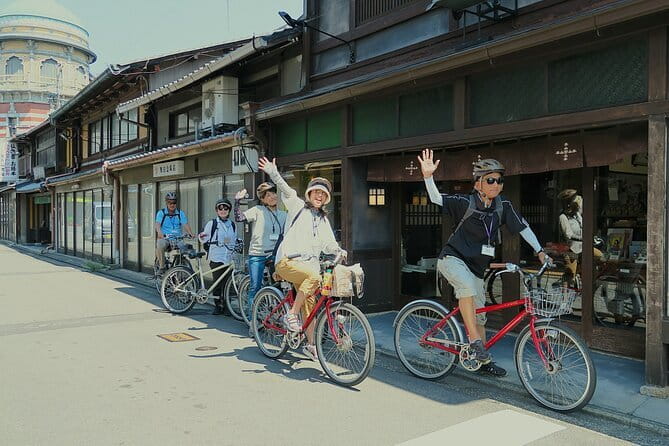
This is a private bike tour in Kyoto with a simple goal: connect you to shogun-era Kyoto fast, without turning your day into a long slog of buses and lines. The route is described as easy downhill and designed for most people, and the total time lands around 3 hours 30 minutes. That timing matters. It’s long enough to see major sights with context, but not so long that you feel wrecked the rest of the day.
The tour format is also clean. You’ll have a guide, you’ll cycle between sights, and you’ll spend real time inside the main stops—each with admissions included. You’ll start at Wara Tenjin mae in Kyoto’s Kita Ward area, then finish at Kyoto Station Cycle Terminal. That last detail is practical: Kyoto Station is a handy anchor if you want to keep moving after the tour.
The Ride Plan: Easy Downhill Cycling That Still Feels Like Kyoto
You’re not just pedaling around for exercise. The tour is built around sight stops that are close enough to connect by bike, while the route shape (easy downhill) helps you keep energy for the temples.
That said, biking in Kyoto still means you’re on real streets. The tour has a clear rule for kids: they must be at least 10 years old, 145 cm or taller, and able to ride safely on the road unassisted. Even if you’re an adult, that tells you the operator expects riders to be comfortable in traffic conditions.
A smart way to set yourself up:
- Wear whatever you’d normally bike in, but plan for stop-and-go. Temples mean walking sections after you park your bike.
- If you tend to get chilled in rain wind, bring a layer even with the rainwear provided.
You can also read our reviews of more tours and experiences in Kyoto.

Stop 1: Kinkakuji Golden Pavilion Gardens in One Focused Hour
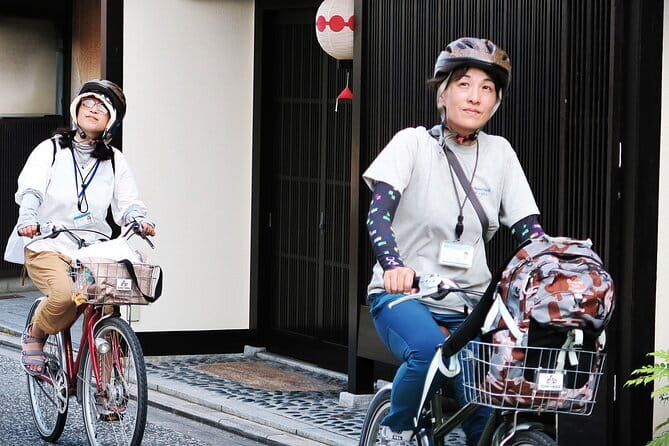
Kinkakuji, the Golden Pavilion Temple, is the headline for a reason. This stop is about more than seeing shiny buildings. You’ll visit with your guide and also walk through the gardens that surround the temple building.
The shogun connection is part of what makes it stick. The tour frames Kinkakuji as a former center of government for the Ashikaga Shoguns. In other words, you’re not only looking at a famous postcard view—you’re learning why the place mattered in the way power worked back then.
Your time here is about 1 hour, and admission is included. That hour is a good balance:
- Long enough to slow down in the gardens.
- Short enough that you’re not rushing for the perfect angle the whole time.
A practical note: gardens look simple, but they have a lot of visual rhythm—paths, edges, and sightlines. Going with a guide helps you notice what you might otherwise miss in a casual walk.
Stop 2: Toji-in Temple and Wabi-Sabi Stillness (Plus a Tea-House Vibe)
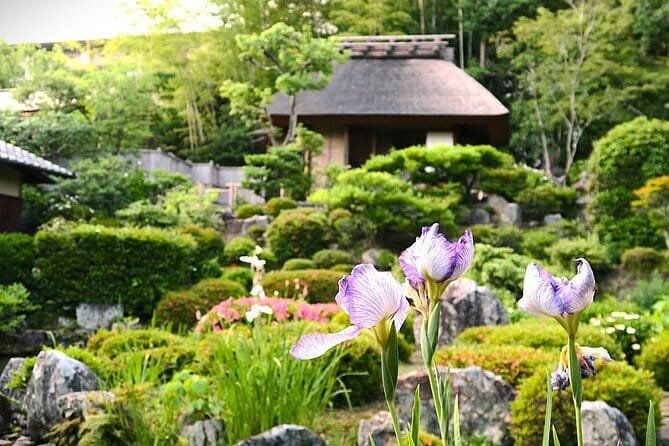
Next up is Toji-in Temple, a quieter stop that shifts the tone from “icon sight” to “how it feels to sit in Japan.” You’ll get about 1 hour here, including access to the temple interior, and the focus is on the garden and a quaint tea house.
This is where the tour leans into a specific aesthetic idea: wabi-sabi, described as a form of Zen minimalism. The point isn’t to turn philosophy class. It’s to help you notice the calm details—what looks simple, what feels intentionally unfinished, and how space is used for reflection.
The historical thread is also direct. The tour says Toji-in is the resting place of the Ashikaga. So you’re standing in a site that isn’t only about scenery; it’s about memory—people once came here to contemplate the world, and Zen masters would have done that in the hall.
Here’s a small detail that can matter: the tour says matcha service is not included. Since there’s a tea house element in the stop description, you might see matcha offered on-site. If you want it, plan to pay separately.
Stop 3: Nijo Castle Grounds and the Late Shogun Turning Point
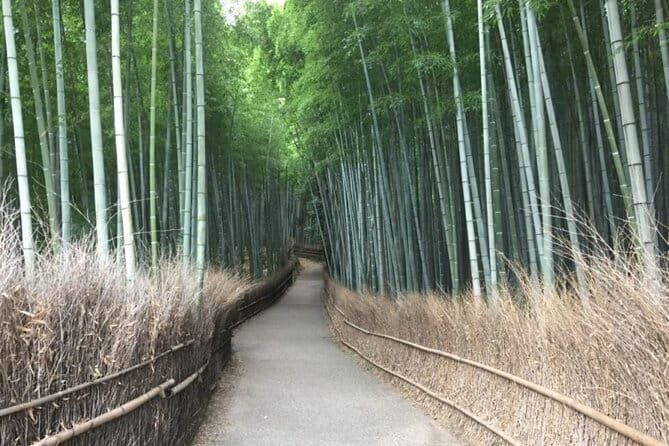
Your final stop is Nijo Castle, and this one comes with a built-in storyline. The tour presents Nijo Castle as a magnificent fortress that signaled the beginning of the end of the shogun era. It was also the residence in Kyoto for the final shoguns, and it’s tied to historical events that shaped Japan’s destiny.
This matters because castles can feel like big walls and photos. But Nijo Castle is easier to enjoy when you understand its role: it’s not just architecture, it’s timing—how power shifted.
You’ll spend about 1 hour 30 minutes at Nijo Castle, with admission included. That extra half hour compared to the other stops is well-judged. Castle grounds and major buildings need time, even if you’re not a hardcore history buff.
A practical way to enjoy this stop:
- Take a few minutes at the start to get your bearings.
- Let the guide show you what to look for beyond the main facade—ornamental carvings are part of what the tour highlights.
- If you’re into details, ask questions. Castle design is full of choices.
What Makes the Tour Feel Worth It: Guide Skills and Real-World Confidence
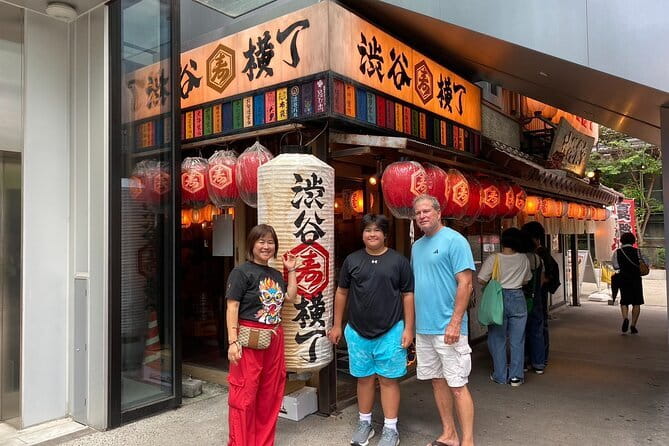
This tour is rated very high: 4.9 with 100% recommended across 13 reviews. The common thread isn’t just that people liked temples. It’s that the rides felt guided in a way that made Kyoto easier to understand.
You can expect three big guide strengths:
- Clear English and confident explanations. Multiple reviews mention excellent English, which is a big deal in Kyoto where names and eras can blur fast.
- Comfort and pacing that works for families. One review highlights how the guide handled a 12-year-old—meaning you won’t just get a lecture; the day should stay lively.
- Good routing choices. Reviews repeatedly praise “insider tips,” which usually means the guide doesn’t only choose big sights. They also help with the in-between moments—where you stop for the best views, how you avoid stress, and how you keep momentum.
You may also see references to specific guides like Seiya, Makoto, Yutaka Kaneda, Yasunobu Yagyu, Kaz, JJ, and Nozomi. Different guides, same pattern: they help you see Kyoto as a lived-in place rather than a checklist.
That’s the real value of a private tour: if something is slow, the guide can adjust. If a local festival is happening nearby, you might even get extra time for it. That sort of flexibility can turn a good tour into a memorable one.
Bikes, Helmets, and Rain Plans: Handling Kyoto Weather Like a Pro
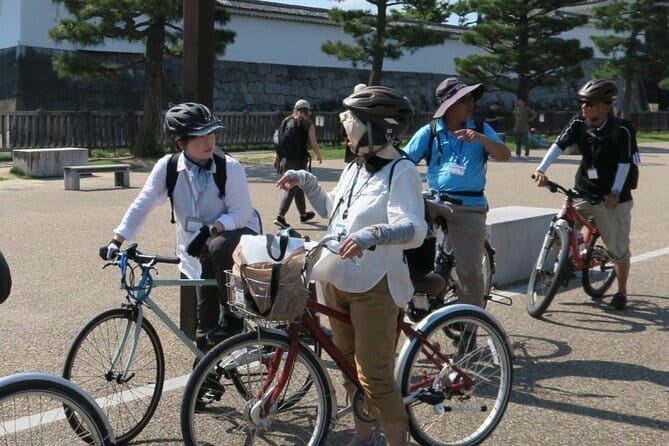
You don’t have to guess what to bring. The tour includes use of bicycle, rainwear, and a helmet. In Kyoto, that’s not a small thing—rain can roll in without warning, and the streets still need careful attention.
The rain policy is practical:
- The tour runs in rain using bikes with the provided rain poncho.
- If you prefer, you can switch to a walking tour using public transportation (bus or metro), and it’s included in the tour fee.
So you’re not trapped in a wet ride if you hate weather. You get options.
Safety-wise, the most useful thing is mindset. Don’t treat it like a casual cruise. Treat it like a guided bike walk with momentum. Slow down at turns, keep your eyes up, and be ready to stop when the guide stops.
If you’re traveling with kids, this tour has clear minimums for age and height, and the requirement to ride unassisted on the road. That’s a sign the operator takes safety seriously.
Price and Value: Is $153.50 for 3.5 Hours a Good Deal?
At $153.50 per person for about 3 hours 30 minutes, the price looks fair once you break down what’s included. You’re not just paying for bike rental. You’re paying for:
- a private guided experience,
- bicycle + helmet + rainwear,
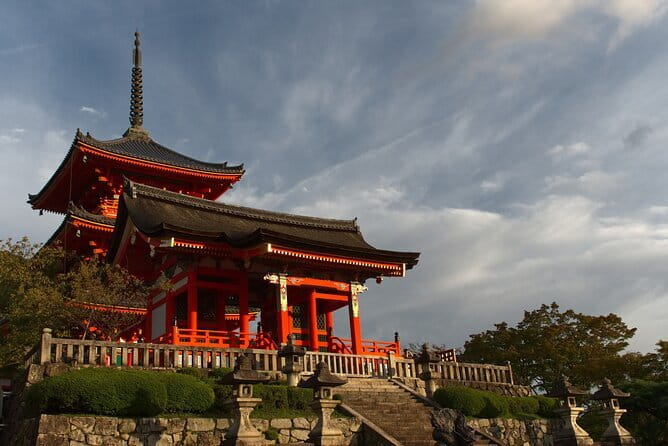
- admissions included for Kinkakuji, Toji-in, and Nijo Castle.
For many visitors, temple admission plus a guide saves time and stress. Kyoto days can become chaotic if you try to DIY everything—tickets, directions, and figuring out what’s worth your attention all add up.
Group size also supports value. The tour is guided for min. 2 and max. 6 guests per guide, and if your group is 7–12, an extra guide can be arranged. That means you’re likely to get a “real tour” feel rather than a crowded scramble.
If you’re two people, it’s usually a sweet spot: you get private attention without paying an outsize rate for a long private driver day.
Who Should Book This Tour (and Who Might Think Twice)
This tour is a strong match if you want:
- a smooth introduction to Kyoto’s shogun-era sites,
- a bike day that isn’t too athletic,
- guided context that makes the sights feel connected.
It’s also a good option for people who like to avoid long indoor museum time. You’ll be outside a lot, and the pacing is built for walking and looking, not just sitting.
You might think twice if:
- you hate biking on streets even with a helmet,
- weather is a big deal for you (rain runs happen here),
- your group needs a super long midday break. The schedule is tight by design.
Quick Practical Tips Before You Go
A few small moves will make the day feel easier:
- Wear closed shoes that handle damp conditions.
- Bring a small bottle of water, especially in hotter months. The ride includes time outdoors.
- Don’t plan a complicated second activity immediately after the tour ends. You’ll finish near Kyoto Station Cycle Terminal, which is convenient, but you’ll likely want a calm wind-down.
Should You Book the Kyoto Shogun Cycling Tour?
I’d book it if you want a low-stress bike day with major Kyoto sights and enough guidance to turn them into a story. The included admissions, the rain-ready setup, and the small-group private format are the big wins.
If you’re torn between DIY sightseeing and a guided ride, this tour is a smart compromise. It gives you the freedom of cycling between landmarks without the mental load of navigation and planning every ticket.
Pick it when you want Kyoto to feel like a real route you can follow, not just separate boxes you check off.
FAQ
How long is the Kyoto Shogun Cycling Tour?
The tour is about 3 hours 30 minutes.
What stops are included in the tour?
You’ll visit Kinkakuji (Golden Pavilion Temple), Toji-in Temple, and Nijo Castle.
Is admission included for the temples?
Yes. Admission tickets are included for each stop.
What’s included in the tour price?
The tour includes the bicycle, helmet, rainwear, and admission tickets. Matcha service is not included.
Does the tour run in the rain?
Yes, it operates in rain. Rain poncho is provided, and you can also choose to switch to a walking tour using public transportation (bus or metro).
How many people go on one guide’s tour?
The tour accepts a minimum of 2 and a maximum of 6 guests per guide. If your group is 7–12, an extra guide can be arranged.
What is the cancellation policy?
The provided policy states the experience is non-refundable and cannot be changed for any reason. If the tour is canceled because the minimum isn’t met, you’ll be offered a different date or a full refund.