REVIEW · TOKYO
Tokyo Night Bike Tour: From Shibuya to Tokyo Tower via Roppongi
Book on Viator →Operated by COG EXPLORER JAPAN · Bookable on Viator
Night Tokyo turns into a bike-friendly city. This 2-hour ride is a practical way to see Tokyo’s famous sights after dark, with cooler air and calmer streets. I like that you get a full Tokyo Tower moment in a route built for moving, not waiting.
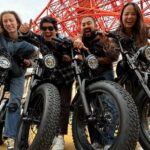
The best part is the human guidance. With small-group pacing and a guide who can explain what you’re actually looking at (including Taichi and Ikeda), the ride feels safe and focused rather than like you’re just dodging bicycles and pedestrians.
One drawback: you do need real comfort on a bike. You’ll pedal steadily (about 15 km/h) and handle pavements, cross traffic lights, and tight spots, and there’s no dinner stop, so snack planning matters.
In This Review
- Key things that make this night bike tour worth your time
- Why this Shibuya-to-Tokyo-Tower ride works at night
- Getting to the meeting point near Yoyogi and Shinjuku
- The route: Tokyo Tower, Roppongi, and the quieter edges of Aoyama
- Tokyo Tower at night: the big payoff
- Meiji Jingu Gaien: wide streets and a softer mood
- Omotesando: style, street life, and easy photo angles
- Roppongi and Keyakizaka Dori: neon energy with structure
- Azabujuban and the sense of Tokyo away from the crowds
- Aoyama Cemetery: unexpected calm at bike speed
- Wrapping with Roppongi and Nishiazabu lanes
- What the ride feels like: speed, safety, and skill requirements
- What to bring, and how to make the most of the night
- Price and value: what $56.01 buys you in 2 hours
- Weather reality: light rain and possible cancellations
- Who this tour is best for (and who should choose something else)
- Should you book this Tokyo Night Bike Tour from Shibuya to Tokyo Tower?
- FAQ
- What time does the tour start?
- How long is the tour?
- What’s included in the ticket price?
- Is dinner included or do you stop to eat?
- How large is the group?
- How fast will we ride?
- Is there free cancellation?
Key things that make this night bike tour worth your time
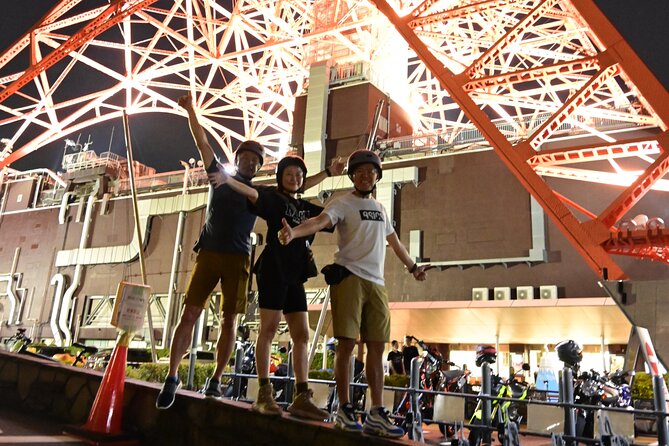
- Tokyo Tower by night without the daytime crowd crush
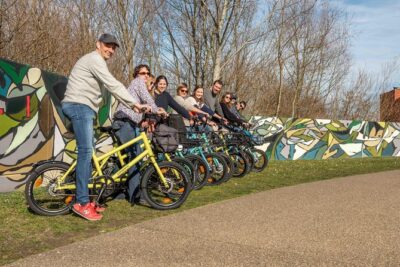
- Small-group size (max 6) for easier guidance and safer navigation
- Off-public-transport streets like Jingu Gaien and Aoyama Cemetery after dark
- Helmet and bike included, so you travel light and start fast
- Photo-friendly stops where your guide helps you get in the right spot
Why this Shibuya-to-Tokyo-Tower ride works at night
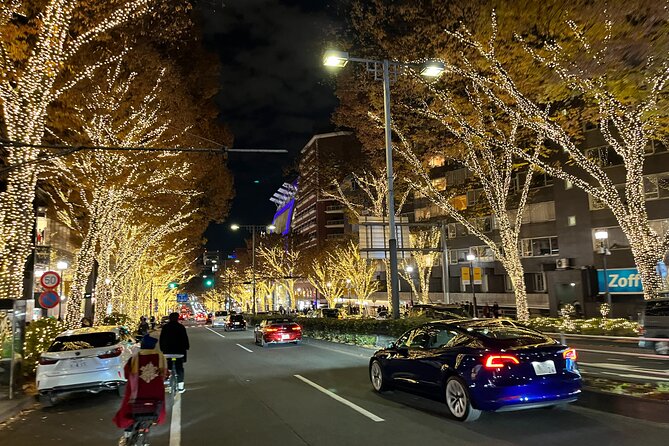
Tokyo at night isn’t only neon and lights. It’s also when you can finally move through the city without feeling like you’re competing with the middle-of-the-day crowd. This tour uses that timing: you cycle after dark, when many streets feel less hectic and the air is often cooler.
I also like how the route stays purposeful. You’re not just circling the most photographed blocks. You ride through big-name areas like Roppongi and Omotesando, then you keep going to quieter, more local-feeling corners where the city looks different than it does in photos.
The other win is the “more ground, less confusion” approach. With a guide, you’re not spending your evening trying to decode complicated crossings and finding the next turn in the dark.
You can also read our reviews of more tours and experiences in Tokyo.
Getting to the meeting point near Yoyogi and Shinjuku
The start is easy to reach by train: Umayamichi Park in Sendagaya (Shibuya area) at 8:00 pm. It’s listed as about 10 minutes from Shinjuku Station and about 1 minute from Yoyogi Station, which is a big deal when you’re trying to stay on schedule.
You’ll also want to plan the “pre-ride basics.” Because you start at night, you’ll be pairing dinner with this tour, not replacing it. The tour explicitly does not stop for dinner, so eat before you go, or bring a snack you can handle quickly.
Bring what you need for a cool evening ride: light layers you can move in, plus simple rain protection in case the weather turns.
The route: Tokyo Tower, Roppongi, and the quieter edges of Aoyama
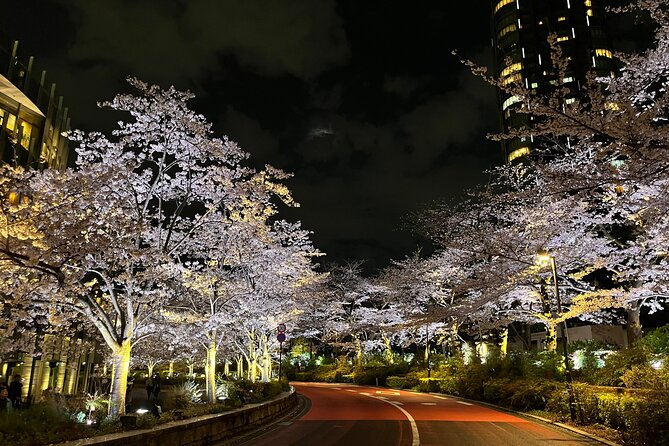
This is a guided sweep from Shibuya-side streets toward Tokyo Tower, then into Roppongi and the upscale residential lanes around Nishiazabu and Azabujuban. You’ll pass both headline sights and calmer neighborhoods that many visitors never get to on foot.
Tokyo Tower at night: the big payoff
You start with Tokyo Tower as your first major visual anchor. Seeing it after dark is a different experience than daytime: the lighting is already doing the heavy lifting, and the area feels more “movie scene” than “walk-and-squint.”
The benefit of starting here is momentum. Once you’ve got that landmark in view, everything else feels like part of the same story rather than scattered stops.
Meiji Jingu Gaien: wide streets and a softer mood
Next up is Meiji Jingu Gaien. At night, the feel is less about hustle and more about rhythm—space, lighting, and long sightlines that work well when you’re moving at a steady pace.
It’s also a nice contrast to the shopping-area energy you’ll see later. You get a breather while staying in motion.
Omotesando: style, street life, and easy photo angles
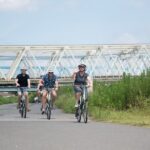
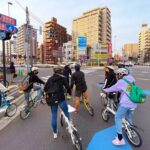
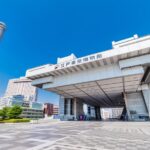
You’ll cycle through Omotesando, a district known for design-forward streets. This is where the visuals shift from “iconic landmark” to “Tokyo as fashion and architecture.”
A practical tip: use your guide to time your shots. You’re moving through urban spaces where stopping randomly can be awkward, so it helps to know where your guide wants you to line up.
Roppongi and Keyakizaka Dori: neon energy with structure
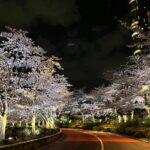
Then comes Roppongi and Keyakizaka Dori. This is one of the most entertaining sections of the ride because the city lights feel close and layered.
The upside of doing it at night on a bike is that you can cover the area without draining yourself in constant walking. The downside is you still need to ride confidently in busy sidewalks and intersections, because Roppongi is not empty after dark.
Azabujuban and the sense of Tokyo away from the crowds
You continue to Azabujuban, where the vibe shifts again. Instead of only headline attractions, you start noticing residential textures and quieter streets that feel more local.
This part of the route is exactly why a guided bike tour can be more satisfying than hopping between a few day landmarks. You get a “Tokyo in between” that’s hard to reproduce with public transport alone.
Aoyama Cemetery: unexpected calm at bike speed
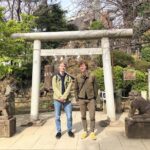
One of the standout stops is Aoyama Cemetery. It’s not what most people expect from a night bike tour, and that contrast is part of the charm. The lighting and the stillness can make this feel like a pause inside the city.
The consideration here is simple: the tour still moves as a group. So even though the place may feel quiet, you’ll only have a short window to take it in before you’re back on the road.
Wrapping with Roppongi and Nishiazabu lanes
After Aoyama, the ride continues through Roppongi again and into Nishiazabu. This gives you a final set of perspectives before you return to the meeting point.
By the end, you should feel like you’ve “mapped” the area. Not just seen it.
What the ride feels like: speed, safety, and skill requirements
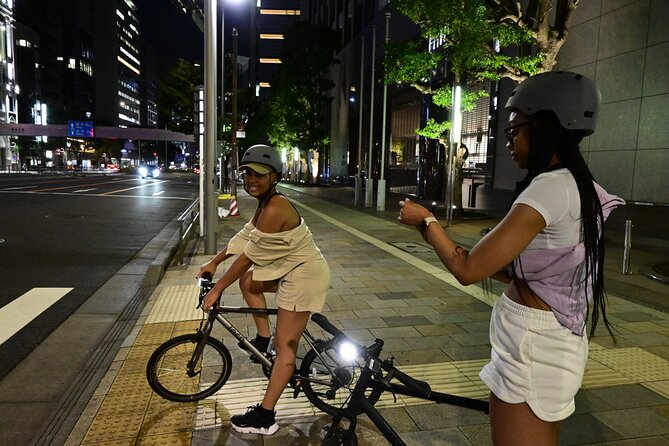
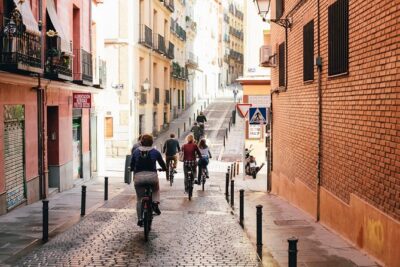
The tour runs at an approximate 15 km/h pace. That’s not slow sightseeing cycling, and it’s not racing either. It’s the kind of speed that keeps the group flowing and lets you cover more than you would on foot.
You’re expected to be comfortable riding on pavements and handling cross traffic lights confidently. The tour also notes you should manage crowded and tight spaces.
This is where the guide matters. A solid guide reduces stress by guiding the flow, calling out what’s coming, and keeping the group together. The feedback associated with this tour repeatedly highlights safety and organization, with guides like Taichi described as easy to follow and supportive on city streets.
If you’re a cautious cyclist, that’s not a deal-breaker. It’s a cue to be honest with yourself about comfort in busy intersections. If you can ride confidently in motion and hold your line, you’ll enjoy this much more.
What to bring, and how to make the most of the night
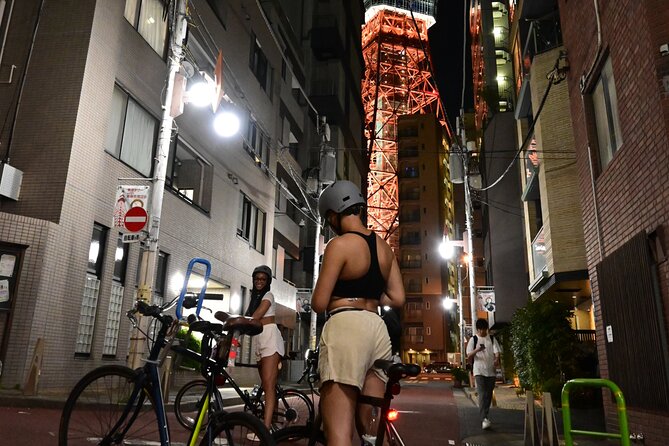
Because the tour includes the bicycle and helmet, you’re not fighting baggage logistics. That said, you should still prep your body and your timing.
Plan on eating beforehand. Since there’s no dinner stop, a small pre-tour snack can rescue you if you’re hungry when you start at 8:00 pm.
For gear, think practical:
- Light layers for temperature changes
- Something simple for rain in case weather shifts
- Comfortable shoes you can walk in briefly at stops
- A charged phone, since night photos are a big part of the fun
One more thing: the tour is designed for active travelers. It’s not a sit-and-zoom version of Tokyo. You’ll be riding, paying attention, and staying engaged the whole time.
Price and value: what $56.01 buys you in 2 hours
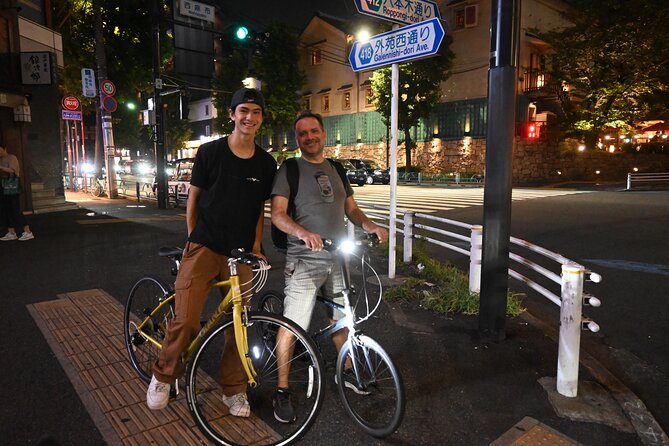
At $56.01 per person for roughly 2 hours, this isn’t a budget “half-hour loop.” It’s priced for guidance, included equipment, and a route that would be hard to replicate on your own after dark.
Here’s why it can feel like good value:
- Bike + helmet included, so you don’t pay extra to rent
- Small group (maximum 6), which tends to mean better guidance and less waiting
- A route built around both famous sights and less reachable areas
- A tour window that helps you see a lot without exhausting yourself
The “value” test for you is simple: do you want the night version of Tokyo across multiple neighborhoods, with less navigation stress? If yes, the price starts to make sense.
Weather reality: light rain and possible cancellations
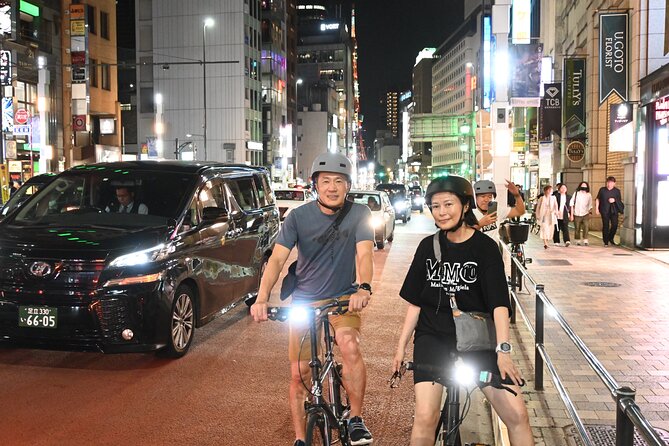
The tour goes ahead in light rain, but it may cancel due to sudden weather changes. So treat it like a night activity with one foot in “plan A” and another in “have a backup evening.”
Your best move is to check the forecast closely the day you ride. If rain is heavy or storms are likely, you may want to plan something flexible for the night.
Who this tour is best for (and who should choose something else)
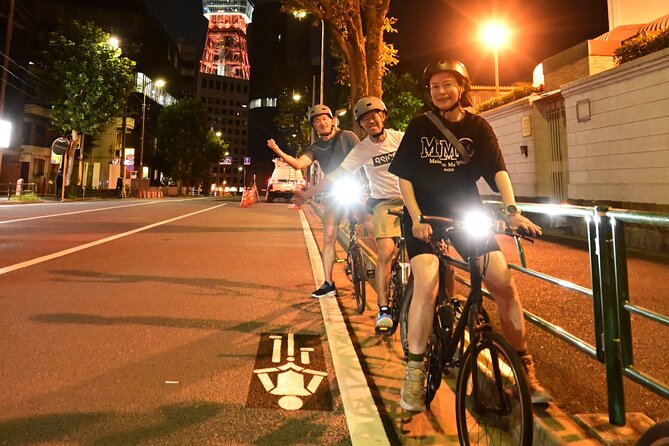
This fits you if you:
- Like active travel and want to feel Tokyo’s night energy on your own legs
- Want a structured route rather than guessing your way through dark intersections
- Prefer seeing more than one neighborhood in a short time
- Appreciate a guide who shares context, not just directions
It might not fit you if you:
- Aren’t comfortable cycling in crowded streets or across busy lights
- Want a food-focused experience (there’s no dinner stop)
- Hate uncertainty about weather, since light rain may still happen and cancellations are possible
Should you book this Tokyo Night Bike Tour from Shibuya to Tokyo Tower?
Yes, you should book if you want a high-return night overview that combines big landmarks with calmer areas you usually won’t reach easily. I like that it’s short enough to feel manageable, but structured enough that you don’t lose time figuring things out.
Before you click, be honest about one thing: your bike comfort level. The tour expects confidence in busy city movement, and it runs at a real cycling pace. If you’re comfortable with that, this is a fun, safe-feeling way to see Tokyo at night with purpose.
If you’re planning ahead, note it’s often booked about 6 days in advance on average. That’s a sign to reserve earlier rather than gambling on last-minute availability.
FAQ
What time does the tour start?
The Tokyo Night Bike Tour starts at 8:00 pm.
How long is the tour?
The ride lasts about 2 hours (approximately).
What’s included in the ticket price?
Your ticket includes a bicycle and a helmet.
Is dinner included or do you stop to eat?
There is no dinner stop. You should eat before the tour or bring a snack.
How large is the group?
The tour has a maximum of 6 travelers, and it’s described as a small-group experience.
How fast will we ride?
The group travels at approximately 15 kilometers per hour. You’re expected to ride at that speed confidently.
Is there free cancellation?
Yes. You can cancel for a full refund if you cancel at least 24 hours before the start time, and you can cancel up to 24 hours in advance for a full refund.