REVIEW · TOKYO
Tokyo West-Side Cycling & Food Tour
Book on Viator →Operated by DIG Tokyo Tours · Bookable on Viator
Tokyo’s best memories happen on two wheels. This West Tokyo cycling-and-food tour is built around everyday streets, not big-ticket sights, using salvaged mamachari bikes and stop-and-snack breaks that feel like being shown around by a local friend.
I love the small group size (max 8), which keeps the pace relaxed and the vibe social. I also love the focus on how people actually live in Nakano, Koenji, and Asagaya—back streets, river paths, and real neighborhood food. One thing to think about first: it’s an urban bike ride, and you’re expected to ride confidently through narrow, crowded streets and uneven spots for about 12–15 km.
In This Review
- Key Highlights at a Glance
- Why West Tokyo on Mamachari Bikes Feels Like Real Tokyo
- Meeting Point at Kōenji Station: Where the Morning Starts
- Nakano, Koenji, Asagaya, and Zenpukuji River: The Route That Changes Your Perspective
- Snacks, Noodles, and a Local-Style Lunch: What Included Food Actually Means
- The Cycling Reality Check: Distance, Surface, and Bike Comfort
- Andy and the Local-Life Storytelling That Makes the Stops Stick
- Price and Value: Why $99.49 Can Be a Smart Use of Time
- Weather and Timing: Planning Your Day Without Panic
- Who Should Book This Bike-and-Food Tour (and Who Might Rethink It)
- Should You Book the Tokyo West-Side Cycling & Food Tour?
- FAQ
- How many people are in the group?
- How long is the tour?
- Where does the tour start?
- How far do you cycle?
- What kind of bikes do you use?
- Is there food included?
- Do I need to be a strong cyclist?
- Can helmets be provided?
- What happens if it rains?
- Are dietary needs and allergies accommodated?
Key Highlights at a Glance
- Max 8 people keeps the tour personal and the guide easy to talk to
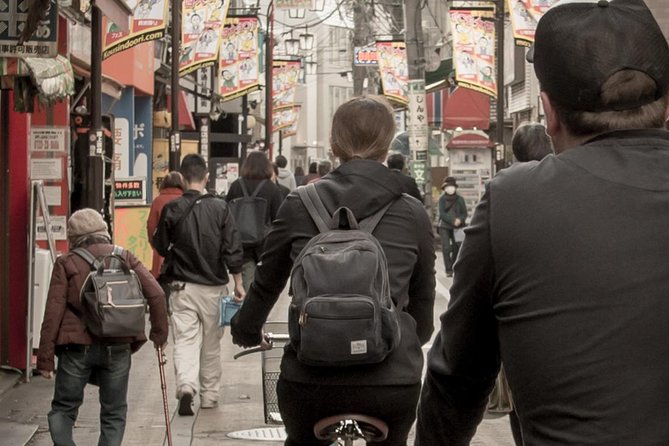
- Mamachari bikes with baskets make it feel practical, not like a stunt
- Backstreets plus Zenpukuji River get you away from the main tourist loops
- Street snacks + local-style lunch are part of the price, not add-ons
- Bicycle parking know-how (and the way locals manage it) turns a small detail into a fun story
- All-season riding with ponchos if it rains, so you’re not always stuck waiting
Why West Tokyo on Mamachari Bikes Feels Like Real Tokyo
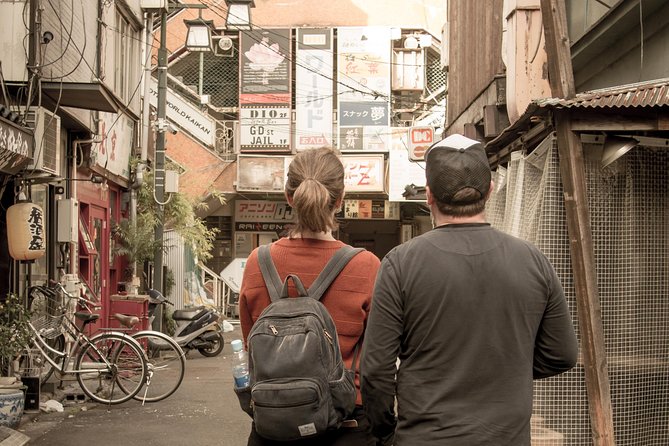
If Tokyo is on your list, you probably have a hit list already: famous temples, iconic bridges, the usual photos. This tour gives you something different. You’ll pedal through working neighborhoods where you see bike culture as normal, not as an attraction.
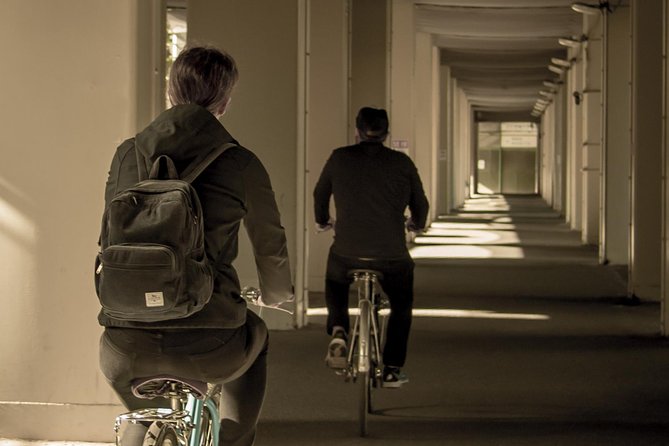
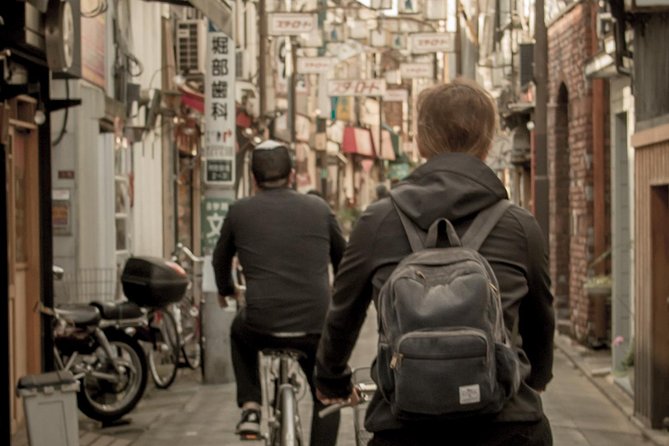
You ride a salvaged mamachari—the common Japanese commuter bike style—with a front basket. That basket matters. It makes the day feel easy and everyday, like you’re actually moving around town rather than “touring” in a bubble.
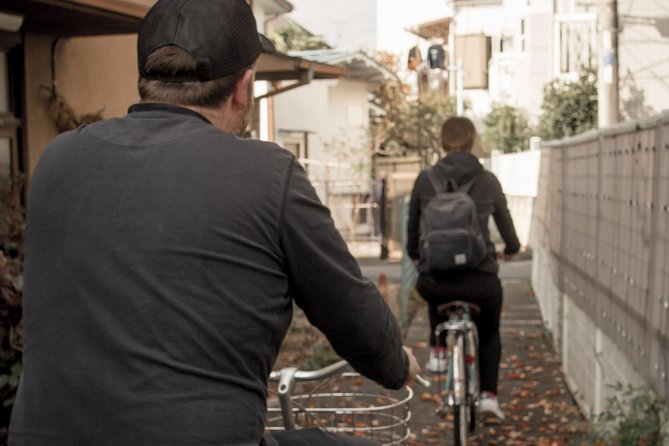
You’re also not stuck with the postcard version of Tokyo. Instead, you get twisting back streets and riverside bike paths that most visitors skip. The feel is calmer. Even when you’re near busy areas, the route is aimed at local life.
You can also read our reviews of more tours and experiences in Tokyo.
Meeting Point at Kōenji Station: Where the Morning Starts
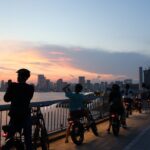
The tour begins at Kōenji Station (4-chōme-48-2 Kōenjiminami, Suginami City). The activity ends back at the meeting point, so you’re not guessing about logistics for the rest of your day.
Kōenji is a good choice for this kind of ride. It’s not one of those “stand in line for a landmark” neighborhoods. It’s more about streets, routines, and how people get around. Starting there also helps you settle fast. Before you know it, you’re rolling on local streets with other riders, not waiting around for the day to begin.
Nakano, Koenji, Asagaya, and Zenpukuji River: The Route That Changes Your Perspective
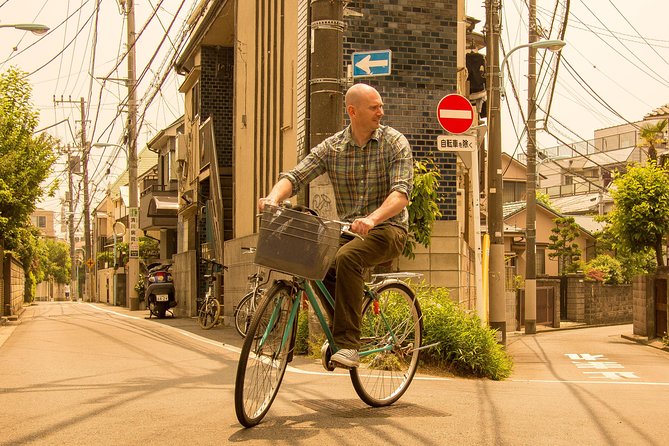
The heart of the tour is simple: you bike and walk through West Tokyo neighborhoods—Nakano, Koenji, and Asagaya—then you catch a scenic stretch along Zenpukuji River.
Here’s what that mix does for you:
- The neighborhoods give you texture—small storefronts, residential rhythms, and street life that’s hard to see from a train window.
- The river path gives you a breather—space to reset your senses and feel the motion of Tokyo without constant stoplights and crowds.
You’ll also practice what Tokyo bike life looks like in the real world. One of the standout moments is the way you learn about bicycle parking systems—yes, even the rules and quirks. It sounds small, but it’s exactly the kind of detail that helps you understand how the city works.
And because the tour isn’t just bikes-only, you get short walking bits too. Those moments are when you slow down enough to take in what’s around you and ask questions.
Snacks, Noodles, and a Local-Style Lunch: What Included Food Actually Means
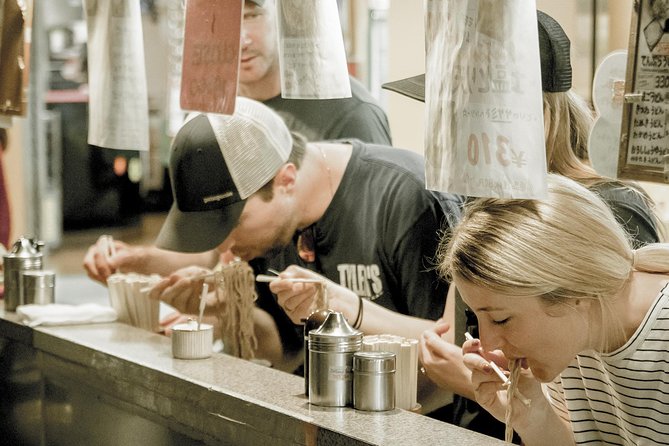
This tour is explicitly built around food you can’t plan as easily on your own. You get included street food snacks and a Japanese-style lunch. That’s the big “all-inclusive” promise here—no major fine-dining detour, no long sit-down meal that kills your momentum.
What you can expect from the food side:
- Snack stops that help you try more than one type of bite
- A lunch that’s local-style rather than “tourist set menu”
- Chances to see how locals eat in smaller eateries, including busy counter service
One review detail that fits the vibe: you might end up in spots for noodles along with snacks. The tour also sets you up for the reality of popular local counters—think tight spaces and the energy of people in a lunch rush.
A practical note: Japanese meals often use dashi (a common base ingredient), and meat/seafood show up often. The tour does say it can be difficult to cater to allergies or strict preferences, since the stops are local eateries.
The Cycling Reality Check: Distance, Surface, and Bike Comfort
Let’s talk about the riding. This is not a casual “sit back and cruise” bike tour. You’re expected to be competent riding a bicycle in an urban environment—including narrow, crowded streets and uneven surfaces. The ride distance is roughly 12–15 km.
Most people find the route mostly manageable because it’s designed as a neighborhood jaunt, but you still need the confidence to steer and react in real traffic patterns. If you’re nervous on a bike in a city, bring extra practice before your trip, or consider a slower format.
The bikes help. They’re Japanese-sized and come with front baskets that can hold a standard-sized backpack. Many riders also find them comfortable for this type of city distance, since they’re meant for everyday Tokyo commuting.
Also, safety gear is available if you request it. Helmets can be provided for participants. Height-wise, riders should be over 140 cm to comfortably use the bikes.

Andy and the Local-Life Storytelling That Makes the Stops Stick
The tour’s energy often comes down to the guide. Here, the name that shows up again and again is Andy. People point out that he’s engaging, friendly, and answers questions easily. He also brings real local context—he’s lived in Japan for years and shares how neighborhoods work day to day.
You’ll hear stories tied to what you see, like:
- How everyday Tokyo life feels in these specific neighborhoods
- How people think about school, housing, and community routines
- What to notice as you ride—so you understand the city, not just pass through it
This is one reason the tour scores so high. It’s not only about moving. It’s about translating Tokyo’s everyday systems into something you can recognize later, even when you’re on your own.
Price and Value: Why $99.49 Can Be a Smart Use of Time
At $99.49 per person, this sits in the “serious but not excessive” range for Tokyo. The value comes from a few places:
- Small group size (max 8): you’re not lost in a crowd, and you get time with your guide.
- Included food: street snacks plus a local-style lunch means you’re not spending additional meal money at tourist places.
- Time in neighborhoods: the route is designed to get you into parts of Tokyo many visitors skip—so you’re buying access to everyday life, not just transportation.
If you’re doing Tokyo for the first time and you keep bouncing between train stops and major sights, this tour is a good “balance move.” It gives you a different angle on the city—and it tends to feel like a highlight because it’s active, social, and grounded.
Weather and Timing: Planning Your Day Without Panic
This is an outdoor cycling-and-walking tour, so weather matters. The good news: it’s all-season / all-weather, and if it rains you’ll get basic ponchos and the tour generally continues.
Time-wise, expect about 3.5 to 4 hours total. That matters because it’s a great half-day slot—enough time to feel like you went somewhere, not so long that it dominates your whole schedule.
Also, note that group eating and cycling speed affects the finish time. If you like a more unhurried pace, you may naturally end closer to the longer side.
Who Should Book This Bike-and-Food Tour (and Who Might Rethink It)
This tour is ideal if you:
- Like exploring away from the most obvious tourist circuits
- Enjoy active sightseeing—bikes plus short walks
- Want food included, but not in a fancy restaurant setting
- Prefer a guide who talks about daily life, not just monument facts
It may be a tougher match if you:
- Don’t feel confident riding a bike in city traffic and tight lanes
- Have strict dietary needs or allergies and need guaranteed accommodation (the tour notes that it can be difficult)
- Want a mostly sightseeing-focused day with minimal physical effort
If you’re traveling with family, you should feel encouraged by the record here—people have done it with kids, and the ride is designed as a neighborhood loop. Just remember: you still need the bike competence requirement.
Should You Book the Tokyo West-Side Cycling & Food Tour?
I’d book it if your goal is to understand Tokyo as a lived-in place. The combination of small group, mamachari riding, real neighborhoods (Nakano, Koenji, Asagaya), and included street snacks plus lunch is exactly the kind of experience that makes a short Tokyo trip feel fuller.
Skip it if you want easy, no-stress sightseeing or you’re not comfortable riding in a busy urban environment. Also think ahead if you have dietary restrictions—this is built around typical local eateries, and flexibility can be limited.
One last practical nudge: because it’s popular and runs on limited group size (max 8), grab a time that fits your energy level. Then show up ready to pedal. The payoff is seeing Tokyo the way people actually use it.
FAQ
How many people are in the group?
The tour has a maximum of 8 travelers, which is meant to keep the experience personal and interactive.
How long is the tour?
The duration is about 3 hours 30 minutes, with a rough finish time guide of around 3.5 to 4 hours depending on group pace.
Where does the tour start?
It starts at Kōenji Station at 4-chōme-48-2 Kōenjiminami, Suginami City, Tokyo 166-0003, Japan.
How far do you cycle?
You’ll ride roughly 12–15 km through urban streets and uneven surfaces.
What kind of bikes do you use?
You ride salvaged mamachari bicycles. They are Japanese-sized and equipped with front baskets that can hold a standard-sized backpack.
Is there food included?
Yes. The tour includes street food snacks and a Japanese-style lunch. It also notes there won’t be major sightseeing or fine dining stops.
Do I need to be a strong cyclist?
You should be competent riding a bicycle in an urban environment, including narrow and potentially crowded streets and uneven surfaces.
Can helmets be provided?
Helmets can be provided for participants on request. Riders should be over 140 cm in height to comfortably ride the bikes.
What happens if it rains?
The tour is designed for all-weather conditions. Basic ponchos are provided, and the tour generally proceeds as planned.
Are dietary needs and allergies accommodated?
The tour says Japanese cuisine often includes meat and seafood elements, and it can be difficult to cater to personal tastes, dietary requirements, and food allergies since it visits typical local eateries.